Circus Lane, Edinburgh: The Cobbled Mews Street Worth the Walk
Circus Lane is a curved, cobblestone mews street in Stockbridge, lined with converted stable cottages, window boxes, and a quiet residential character that shifts dramatically with the seasons. Free to visit at any time, it rewards early risers and photographers most of all.
Quick Facts
- Location
- Circus Lane, Edinburgh EH3 6SU (Stockbridge)
- Getting There
- Lothian Buses route 42, Royal Circus bus stop (immediately beside Circus Lane)
- Time Needed
- 15–30 minutes on the lane; pair with a longer Stockbridge walk
- Cost
- Free — public street, no tickets required
- Best for
- Photography, slow walks, seasonal colour, architecture fans
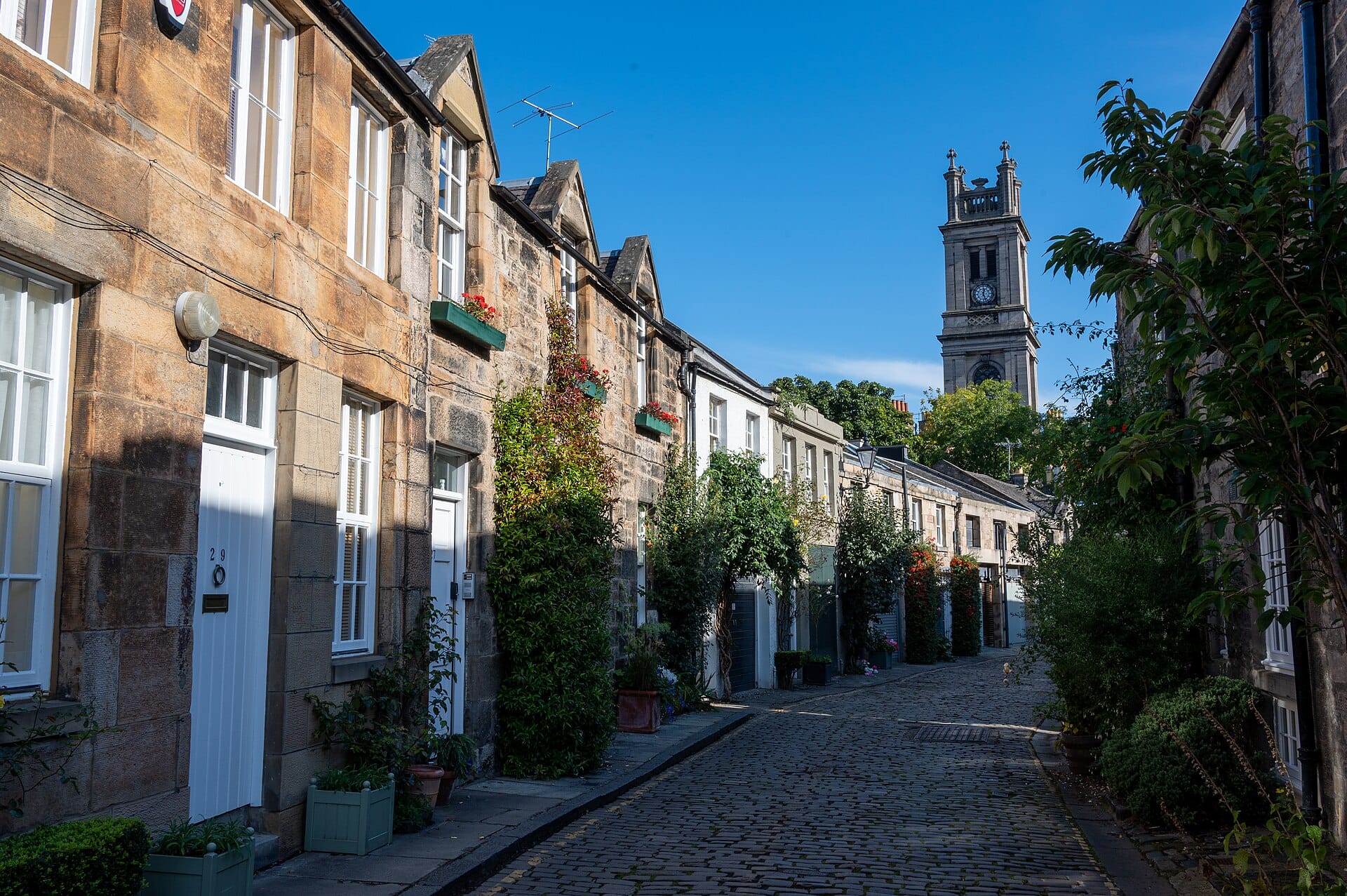
What Circus Lane Actually Is
Circus Lane is a short, curved cobblestone mews street in the Stockbridge neighbourhood, running between Circus Place and St Vincent Street. It is a functioning residential road, not a managed attraction. Nobody takes your ticket. There are no signs pointing the way. You arrive, you walk, you leave. That simplicity is exactly what makes it work.
The lane was built in the early 19th century as a service street for the wealthier Georgian townhouses of the expanding New Town. The cottages that line it were originally stables and carriage houses, providing storage, horses, and working quarters for the families who lived on the grander streets above. Today those former stables are private homes, their low stone facades softened by hanging flower baskets and climbing plants. The bones of the mews are unchanged.
Circus Lane sits at the northern edge of Edinburgh's Stockbridge district, which developed as a distinct village before being absorbed into the city. That village quality still defines the area: independent cafes, a weekly market, streets that feel lived-in rather than curated for visitors.
How the Lane Changes Through the Day
Visit early in the morning, ideally before 9am, and you have the lane almost entirely to yourself. The cobblestones are damp and dark from overnight rain, the window boxes are backlit by low angled light, and the only sounds are pigeons and the occasional resident leaving for work. This is the version of Circus Lane that photographs well and feels genuinely quiet.
By late morning on weekends, especially in summer, the lane sees a steady stream of visitors. Couples stop for photographs. Solo travellers work their way down the curve with their phones raised. It never becomes crowded in the way that the Royal Mile does, but the sense of private stillness dissolves. If photography is your reason for coming, the hour after sunrise or the golden light of late afternoon on a clear day are your two best windows.
Winter visits have their own appeal. When frost coats the cobblestones and the stone walls are bare of summer flowers, the lane looks distinctly different: starker, older, and in overcast light, almost cinematic. Snow is rare in Edinburgh but when it falls, Circus Lane is one of the city's most striking streetscapes. Autumn brings a colour shift as climbing plants turn before losing their leaves.
💡 Local tip
For the best light and fewest visitors, arrive before 9am on any day, or after 5pm on a weekday in spring or summer. Midday on a summer Saturday brings the most foot traffic.
Tickets & tours
Live prices and dates from our booking partner. If you book, we may earn a commission at no extra cost to you.
West Highland Lochs, mountains and castles tour from Edinburgh
From 61 €Instant confirmationFree cancellationLoch Ness, Glen Coe and the Highlands tour from Edinburgh
From 66 €Instant confirmationFree cancellationDay Trip to Holy Island, Alnwick Castle and Northumbria from Edinburgh
From 60 €Instant confirmationFree cancellationLoch Ness Explorer Day Trip from Edinburgh
From 60 €Instant confirmationFree cancellation
The Architecture Up Close
The cottages along Circus Lane are low, typically one or two storeys, built from the same pale sandstone used throughout Edinburgh's New Town. Many still have wide wooden garage-style doors, a direct echo of their stable origins, although these now shelter cars rather than horses. The scale of the street is deliberately modest: it was designed as a service lane, set back and below the grand terraces it supported.
The curve of the lane is one of its defining features. Unlike the straight Georgian streets above, Circus Lane bends gently as it follows the edge of the circus-shaped road plan it was named after. That curve means you can never see the full length of the street from any single point, which gives the illusion that the lane extends further than it does and creates a natural composition for photography.
The surrounding streetscape places Circus Lane firmly in Edinburgh's Georgian expansion, the same period that produced the formal architecture now visible at the Georgian House on Charlotte Square. The mews sits in direct service relationship to that kind of wealth, which makes the contrast in scale and finish all the more legible when you see them side by side.
Getting There and Getting Around
From Edinburgh Waverley station, the walk to Circus Lane takes roughly 20 minutes on foot. Head up The Mound or Hanover Street into New Town, then continue north toward Stockbridge via Frederick Street or George Street. The lane sits just past the point where Stockbridge begins to feel less urban and more neighbourhood-scaled.
Lothian Buses route 42 stops at Royal Circus, less than a minute's walk from the lane, and other city routes also serve the surrounding New Town and Stockbridge streets. Driving is possible but parking on nearby streets can be limited and in some cases subject to resident permit restrictions; check current city council signage on arrival.
⚠️ What to skip
The cobblestones on Circus Lane are uneven and can be slippery when wet. Wheelchair users and anyone with mobility limitations should be aware that there is no step-free infrastructure and the surface is rough throughout. Flat, grippy footwear is advisable for everyone.
Circus Lane is most rewarding when paired with a longer walk through Stockbridge itself. The Water of Leith Walkway passes through nearby and connects the area to Dean Village and beyond. The Stockbridge Market runs on Sundays and is a ten-minute walk away, making a natural pairing for a Sunday morning visit.
Photography: What Works and What Doesn't
The lane photographs well in all four seasons but for different reasons. In spring and early summer, flower baskets and window boxes provide bursts of colour against the grey stone. In autumn, the creeping plants on some of the cottage walls go red and amber. In winter, the starkness of the stone and the dark cobbles create a moodier, more compositionally demanding scene.
The curve of the street is your primary compositional tool. Position yourself at one end and shoot toward the bend: this is the lane's signature image. A wide to standard focal length (equivalent to 24mm–50mm) handles the street width comfortably. In low light, bring a camera that performs well without flash; flash on cobblestones tends to flatten the texture that makes the lane visually interesting.
One honest note: Circus Lane has become one of Edinburgh's most replicated photography locations. Thousands of near-identical images of this street exist. If you are coming for photography, it is worth thinking about what angle or season might separate your work from the obvious shot.
How It Fits Into a Stockbridge Visit
Circus Lane is best treated as a ten-to-fifteen-minute stop within a broader Stockbridge afternoon rather than a standalone destination. Combined with the Water of Leith walk, a browse along St Stephen Street, and a coffee stop at one of Stockbridge's independent cafes, it forms part of a genuinely satisfying half-day away from Edinburgh's main tourist circuit. For visitors wanting a break from the density of the Old Town, Stockbridge offers a different register entirely.
If you are building a wider Edinburgh itinerary, the Royal Botanic Garden Edinburgh is a short walk from Stockbridge and makes a logical addition, particularly in spring when both the garden and the lane's flowers are at their peak. The two sites together occupy a comfortable morning or afternoon without requiring any transport.
Who should probably skip this: anyone visiting Edinburgh for the first time with limited time and a long list of major sights. Circus Lane is not in the same category as Edinburgh Castle or the Holyrood Palace. It is a residential street. If your schedule is tight and you are choosing between this and Scotland's national collections or a walk up to Calton Hill, the lane should come further down the list. It rewards the unhurried.
Insider Tips
- Visit on a weekday morning rather than a weekend: the lane sees noticeably less foot traffic and residents are more likely to be inside rather than moving cars or loading deliveries, which can disrupt photographs.
- The end of the lane near Circus Place gives the clearest view of the curve. Stand close to that junction and shoot back into the lane for the composition that works best in morning light.
- In early spring, before the tourist season properly begins, the lane often has light frost on the cobblestones until mid-morning. That frost catches light in a way that summer green never does.
- Combine your visit with St Stephen Street, one block south: it has good independent shops and a stronger sense of neighbourhood character than the lane itself, which is purely residential.
- If it has just rained, the dark wet cobblestones reflect the cottage facades and any overhead colour, producing richer images than a dry, flat-lit midday visit.
Who Is Circus Lane For?
- Photographers looking for a classic Edinburgh street scene with genuine historical texture
- Architecture and Georgian history enthusiasts wanting to understand how New Town mews streets functioned
- Slow travellers who want unhurried time away from Edinburgh's main tourist corridor
- Couples looking for a quiet, atmospheric walking moment without crowds
- Visitors pairing a Stockbridge afternoon with the Water of Leith or Royal Botanic Garden
Nearby Attractions
Other things to see while in Stockbridge:
- Royal Botanic Garden Edinburgh
Founded in 1670 and free to enter, the Royal Botanic Garden Edinburgh spans 28 hectares in Stockbridge, offering world-class plant collections, sweeping views of the city skyline, and a pace of life that stands apart from the tourist trail. Whether you have an hour or a full afternoon, the garden rewards on every visit.
- Stockbridge Market
Every Sunday morning, a corner of Stockbridge transforms into one of Edinburgh's most enjoyable outdoor markets. Free to enter and running year-round since 2011, Stockbridge Market draws locals and visitors alike with Scottish food producers, independent craftspeople, and a neighbourhood atmosphere that no indoor shopping centre can replicate.
Planning a trip? Discover personalized activities with the Nomado app.