Chinatown Brisbane: What to Know Before You Visit
Chinatown Brisbane sits along Duncan Street in Fortitude Valley, a compact pedestrian mall that opened in 1987. It draws visitors for its Asian restaurants, specialty grocers, and cultural streetscape, and is most alive in the evenings when the lanterns glow and restaurants fill.
Quick Facts
- Location
- Duncan Street, Fortitude Valley, QLD 4006
- Getting There
- Fortitude Valley railway station (short walk)
- Time Needed
- 1–2 hours for a relaxed visit; longer if dining
- Cost
- Free to enter the public mall; restaurants and shops charge individually
- Best for
- Dinner with a group, weekend lantern browsing, Asian grocery shopping
What Chinatown Brisbane Actually Is
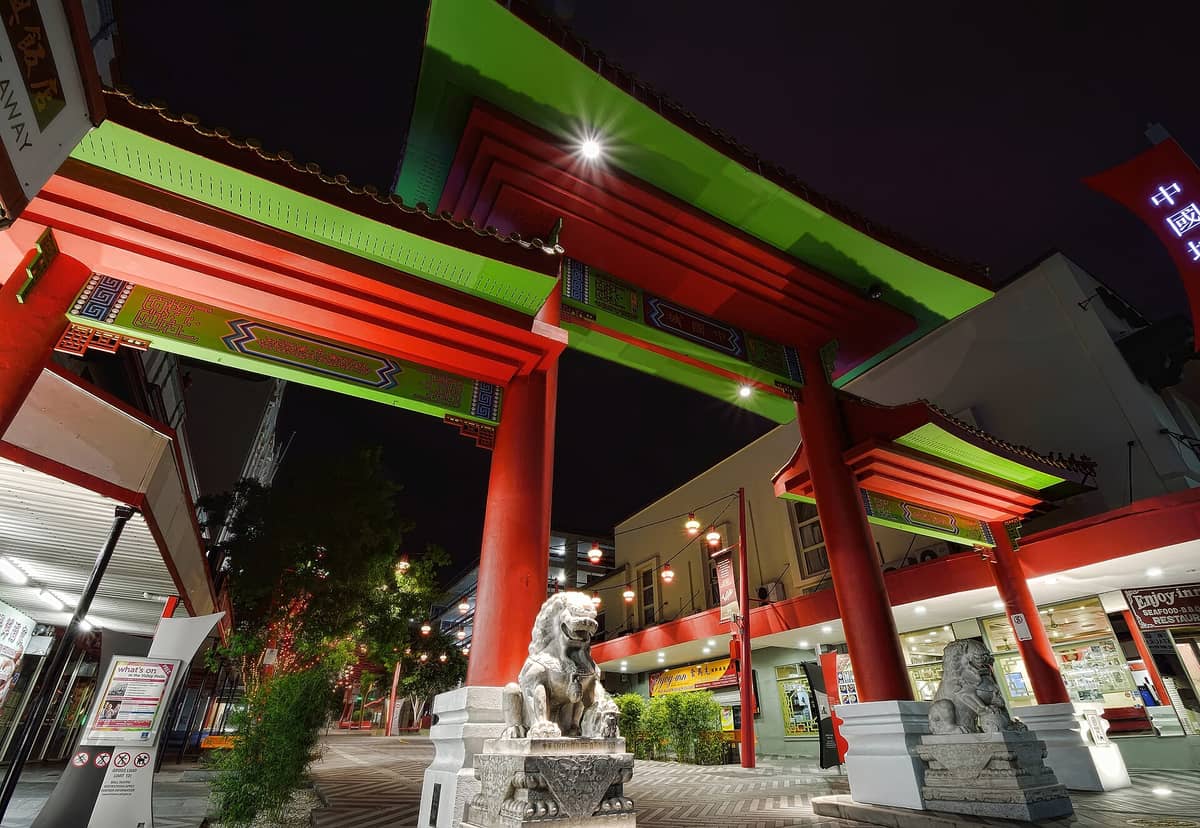
Chinatown Brisbane, officially the Chinatown Mall, is a pedestrian precinct along Duncan Street in Fortitude Valley. Its official Chinese name is 布里斯班唐人街. The mall is relatively compact by international standards, stretching a single block, but it carries a genuine sense of place: decorative archways, Chinese lanterns strung overhead, and a mix of restaurants, herbal medicine shops, and Asian grocery stores give the street a distinct identity within a broader neighborhood that already thrives on cultural variety.
The precinct opened officially on 29 January 1987, a date chosen to align with Lunar New Year celebrations. It was developed as a formal recognition of Brisbane's Chinese community, which has been present in the city since the colonial era. What exists today is more of a dining and retail destination than a residential ethnic enclave, but it remains a meaningful cultural anchor for Brisbane's Chinese and broader Asian communities.
ℹ️ Good to know
The mall itself is a public space with no entry fee. Most restaurants and shops broadly trade from around 9am to late, with Brisbane City Council noting that Valley Mall businesses generally operate until 2am daily. Verify individual business hours before a specific visit.
How the Experience Changes Through the Day
Morning visits are quiet and practical. The grocery stores and herbal shops open early and draw locals picking up fresh produce, dried goods, or traditional ingredients. The smells shift depending on where you stand: medicinal herbs near the medicine shops, something sweet from a bakery, then the sharper scent of fresh vegetables outside the produce stores. The streetscape is easier to read in the morning light when fewer people are around, and the painted archways and hanging lanterns have a calm presence without the evening crowd.
Lunchtime brings a rush, particularly on weekends. Yum cha is the main event: groups cluster around tables ordering steaming dim sum baskets, and the clatter of trolleys and Cantonese being spoken over round tables creates an atmosphere you would not find in most other parts of Brisbane. Arriving before noon on a Sunday gives you a better chance at a table without a significant wait at the more popular restaurants.
Evenings are when the precinct is most photogenic. The red lanterns illuminate around dusk and the narrow pedestrian mall feels enclosed in a warm way. Restaurants fill from around 6pm, and the foot traffic from the broader Fortitude Valley nightlife scene means the area stays active well into the night. This is also the hour when the gap between tourist and local narrows: families, student groups, couples, and people ending a work week all move through the same space.
Tickets & tours
Live prices and dates from our booking partner. If you book, we may earn a commission at no extra cost to you.
Luggage Storage in Brisbane
From 5 €Instant confirmationFree cancellationBrisbane's dark stories true crime tour
From 21 €Instant confirmationFree cancellationFull-day Mount Tamborine winery tour from Brisbane with lunch
From 140 €Instant confirmationFree cancellationEscape Tour self-guided, interactive city challenge in Brisbane
From 30 €Instant confirmation
What You Will Find in the Precinct
The food options lean heavily toward Chinese regional cuisines, but the broader category of pan-Asian dining is well represented. Cantonese roast meat shops display lacquered ducks in the window. Vietnamese restaurants serve pho and bánh mì a short walk from bubble tea cafés. Japanese and Korean options have grown in number over recent years, reflecting changes in Brisbane's Asian population. The quality varies considerably between venues, so checking recent reviews before committing to a sit-down dinner is worth the two minutes it takes.
Beyond food, the specialty stores are genuinely useful for self-catering travelers or anyone interested in ingredients uncommon in mainstream supermarkets. You will find dried shiitake mushrooms sold by weight, varieties of tofu not stocked elsewhere in the city, and a solid selection of Asian condiments and sauces. The herbal medicine shops carry a different kind of inventory and have staff who can advise on traditional preparations, though the experience requires patience and a degree of openness if you are not already familiar with the practice.
Fortitude Valley as a whole is worth understanding as context. The neighborhood is covered in more detail in the Fortitude Valley neighborhood guide, which explains how Chinatown fits alongside the Valley's music venues, independent shopping, and dense café scene. If you are planning a full day in the area, the precinct works well as a dinner endpoint after an afternoon exploring the wider streets.
Getting There and Getting Around
Fortitude Valley railway station is the most straightforward option from the CBD, a short walk from the mall. The station sits on the Citytrain network and is served by multiple lines, making it easy to reach from Roma Street, Central, or South Bank. Travel time from Central Station is minimal. Several bus routes also stop nearby, and the Translink journey planner can confirm current routing.
Walking from the CBD is feasible and takes roughly 20–25 minutes depending on your starting point. The route along Ann Street is flat and passes through the transition from the city center into the Valley's denser urban fabric. Rideshare drop-off on Duncan Street itself can be awkward given the pedestrian-only layout; nearby streets on either side of the mall are easier.
💡 Local tip
If you are visiting on a weekend evening, consider arriving before 6pm. Parking in Fortitude Valley fills quickly after dark, and the most popular restaurants do not always take reservations.
Cultural Context and Heritage Significance
The formal establishment of Chinatown Mall in 1987 was a deliberate civic act, not just a commercial development. It was designed to give physical shape to a community whose history in Queensland stretched back to the gold rush era of the 19th century, when Chinese migrants arrived in significant numbers despite facing legal restrictions including the Chinese Immigration Act of 1877. By the late 20th century, the political context had changed substantially, and the mall represented a more inclusive civic acknowledgment of Brisbane's multicultural character.
Lunar New Year is the precinct's highest-profile moment. The celebrations spill well beyond Duncan Street and attract large crowds across Fortitude Valley. If your travel dates overlap with the festival period, check the Brisbane festivals and events guide for specifics on timing and programming. The crowds during Lunar New Year are significant, but the energy of the celebration is worth it if you are prepared for a busy street.
The Braille trail running along Chinatown Mall is a notable accessibility feature. Brisbane City Council has documented it as part of the precinct's infrastructure, making it one of the more considered public spaces in the inner city for visitors with vision impairments.
Practical Notes and Honest Assessment
Chinatown Brisbane is worth your time primarily as a place to eat and absorb a distinct slice of the city's cultural landscape. It is not a sprawling precinct filled with historic temples or large-scale market halls. Travelers expecting something on the scale of Sydney's Dixon Street or Melbourne's Little Bourke Street should calibrate their expectations: this is a single-block mall with genuine character but limited physical scope.
Where it succeeds is in concentration. Within a few hundred meters you can eat well, browse specialty groceries, and observe a cross-section of Brisbane life that reflects decades of Asian migration. The evening atmosphere is the strongest argument for a visit, and the proximity to the rest of Fortitude Valley means it is easy to combine with a broader evening out.
Travelers focused primarily on nightlife may find that Chinatown functions better as a dinner stop before moving into the Valley's broader entertainment options. Those more interested in food culture across Brisbane should also look at what to eat in Brisbane for a wider view of how Asian cuisines feature across the city, not just within this precinct.
⚠️ What to skip
Some shops and restaurants in the precinct keep irregular hours or close for short periods between lunch and dinner service. Calling ahead is worth doing if you have a specific restaurant in mind for a midweek visit.
Who Should Skip This
If your time in Brisbane is very limited and you are prioritizing major cultural or natural landmarks, Chinatown may not rank high enough to justify the trip to Fortitude Valley on its own. It works well as part of a broader Valley afternoon or evening rather than as a standalone destination requiring significant travel from the CBD or South Bank. Travelers who prefer uncrowded spaces may find Sunday lunchtime and Friday evenings more stressful than rewarding.
Those looking for a wider range of free cultural attractions may find more value at nearby institutions like the Queensland Art Gallery or the Gallery of Modern Art, both of which offer free general admission and represent a different dimension of Brisbane's cultural life.
Insider Tips
- Sunday yum cha at the larger Cantonese restaurants fills fast. Arrive before 11am or expect to queue, especially on long weekends or during Lunar New Year period.
- The herbal medicine shops can be excellent places to pick up unusual gifts, but take time to ask questions before buying. Staff are generally knowledgeable and patient with curious visitors.
- Duncan Street itself is pedestrianized, but the cross streets at either end have good spots for photographing the archways, especially in the early evening when the lanterns are lit but the crowd has not yet peaked.
- The Asian grocery stores stock a range of snacks and drinks at prices significantly lower than convenience stores or supermarkets in the CBD. Stock up on drinks before an evening out in the Valley.
- Brisbane City Council's heritage trail document for the Valley includes stops in and around Chinatown, offering walking context for the broader history of the precinct. It is available as a free PDF from the Council website.
Who Is Chinatown Brisbane For?
- Food-focused travelers looking for Chinese regional cuisine, yum cha, and pan-Asian dining options
- Visitors who want to experience a culturally specific neighborhood rather than generic tourist attractions
- Groups heading out for an evening in Fortitude Valley who want to start with dinner
- Families with older children who are comfortable in a lively urban precinct on weekends
- Anyone in Brisbane during Lunar New Year who wants to be close to the celebrations
Nearby Attractions
Other things to see while in Fortitude Valley:
- James Street Precinct
James Street Precinct is Fortitude Valley's upscale retail and dining corridor, known for independent boutiques, design stores, and some of Brisbane's most consistently good restaurants. It's compact, walkable, and refreshingly free of the chaos that defines most city shopping centres.
Planning a trip? Discover personalized activities with the Nomado app.