Bopiliao Historic Block: Taipei's Best-Preserved Slice of Qing Dynasty Street Life
Bopiliao Historic Block is a restored Qing-era street in Wanhua District that survived decades of urban pressure to become Taipei's most atmospheric heritage site. Free to enter, quietly fascinating, and often overlooked by tourists racing to nearby Longshan Temple.
Quick Facts
- Location
- No. 101, Guangzhou St., Wanhua District, Taipei City
- Getting There
- Longshan Temple Station (MRT Bannan Line, Exit 3) — about 3 minutes on foot
- Time Needed
- 45 minutes to 1.5 hours depending on exhibitions
- Cost
- Free admission (entire site, including indoor exhibitions)
- Best for
- History lovers, architecture fans, photography, slow travel
- Official website
- www.bopiliao.taipei
What Is Bopiliao Historic Block?
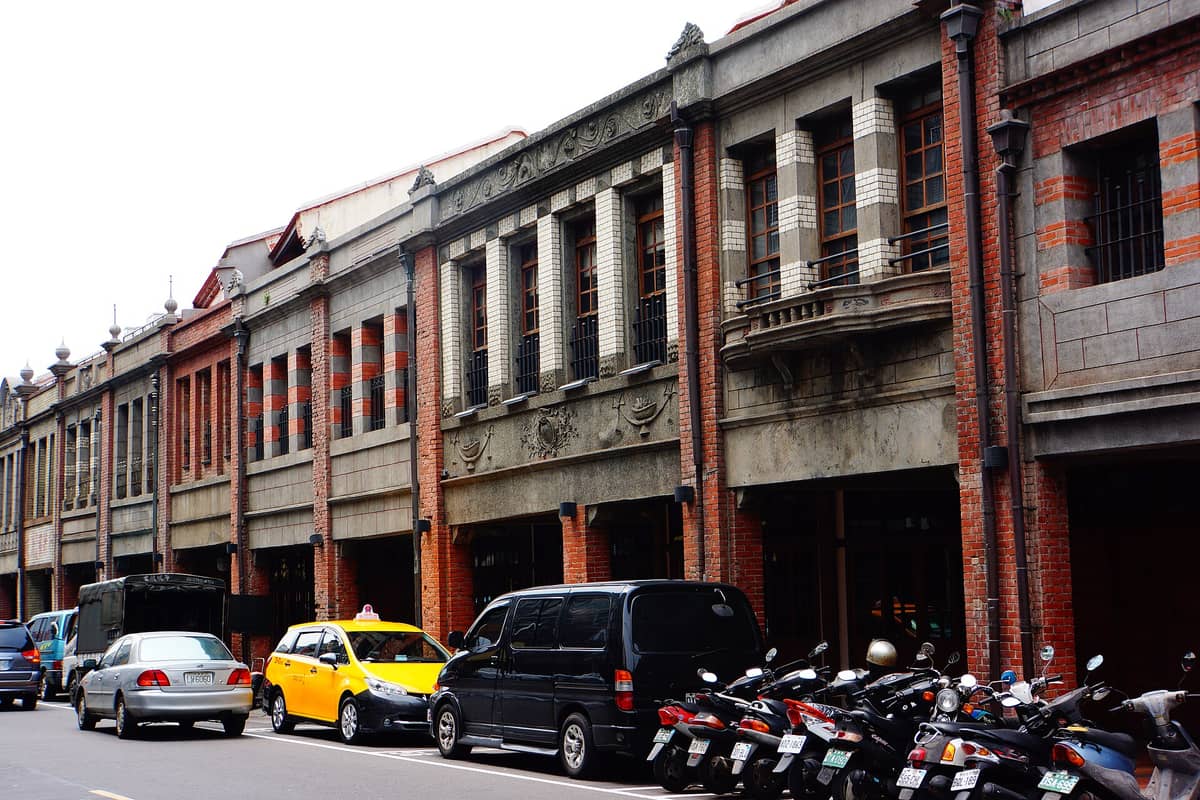
Bopiliao Historic Block, officially 剝皮寮歷史街區, is a preserved stretch of late-Qing Dynasty commercial architecture at the intersection of Guangzhou Street and Kangding Road in Wanhua District. The block dates to the early Qing period, making it one of the oldest surviving streetscapes in Taipei. After years of deterioration and partial use as storage by a neighboring elementary school, Taipei City Government completed a careful restoration and reopened the site to the public in 2009. The block dates to the early Qing period, making it one of the oldest surviving streetscapes in Taipei. After years of deterioration and partial use as storage by a neighboring elementary school, Taipei City Government completed a careful restoration and reopened the site to the public in 2009.
What you find here is a stretch of connected shophouses with characteristic red-brick facades, recessed arcaded walkways, and timber-framed interiors. Some buildings have been converted into exhibition galleries managed by the Taipei Department of Cultural Affairs. Others remain deliberately unfurnished, letting the exposed brick, worn thresholds, and wooden ceiling beams carry the atmosphere on their own. Some buildings have been converted into exhibition galleries managed by the Taipei Department of Cultural Affairs. Others remain deliberately unfurnished, letting the exposed brick, worn thresholds, and wooden ceiling beams carry the atmosphere on their own.
ℹ️ Good to know
Opening hours: Outdoor area 9:00 a.m. to 9:00 p.m. Indoor exhibitions 9:00 a.m. to 6:00 p.m. Closed Mondays (except when holidays are announced differently by the site). Admission is free.
The Architecture: What You're Actually Looking At
The shophouse form visible at Bopiliao is a standard typology of Hokkien commercial architecture that spread across Taiwan during the Qing Dynasty. Ground floors were used for trade; families lived above. The covered arcade running along the front of the buildings, known locally as a 亭仔腳 (ting-a-kha in Taiwanese Hokkien), kept merchants and customers dry during Taipei's heavy rain months, and the rhythm of these arches gives the block its most recognizable visual quality.
Look closely at the facades and you notice two distinct eras layered on top of each other. The earlier structures are southern Fujian-style brick, heavy and relatively plain. Later Japanese colonial-era renovations added plaster ornamental friezes and Western-inflected detailing to some of the upper facades, producing a hybrid streetscape that reflects the political and commercial transitions Wanhua underwent between the 18th and early 20th centuries.
The restoration work is sympathetic rather than reconstructive. Where materials were missing or too deteriorated to save, restorers have generally left the evidence visible rather than plastering everything smooth. This makes Bopiliao more interesting to a careful observer than a fully reconstructed heritage site would be: the building's age is part of its texture.
Morning, Afternoon, and Evening: How the Block Changes
The outdoor area is accessible until 9:00 p.m., which gives you real options depending on your schedule. Early mornings before 10:00 a.m. are the most peaceful time to visit. The light comes in at a low angle from the east, catching the red-brick surfaces and throwing long shadows under the arcades. At this hour the block is often nearly empty, and the sounds filtering in from the surrounding neighborhood, the hum of a tofu vendor somewhere nearby, distant temple music from Longshan, give the place a genuinely lived-in quality rather than a museum stillness.
Midday visits in summer can feel oppressive. Wanhua is a low-elevation, densely built district with little shade outside the block itself, and the walk from the MRT can leave you overheated before you arrive. The arcaded walkways do provide some relief, but bring water. The official FAQ confirms that drinking fountains are available in the outdoor plaza and near the accessible restroom.
Evening visits have a different character entirely. After 6:00 p.m. the indoor exhibitions close, but the outdoor lanes remain open and are lit with warm functional lighting that suits the brick tones well. On weekday evenings the block is quiet enough that you can hear your own footsteps. Weekend evenings occasionally attract small groups of photographers or art students sketching the facades. The contrast with the chaotic nighttime energy of the surrounding Wanhua streets is part of what makes this hour work.
💡 Local tip
For photography: morning light is best for the red-brick facades. Evening visits after 7:00 p.m. offer dramatic contrast between the lit block and the darker surrounding lanes. Tripods are generally tolerated in the outdoor areas.
Inside the Exhibitions
The indoor galleries rotate throughout the year and vary considerably in quality and relevance. Some exhibitions have focused directly on Wanhua's history as Taipei's first commercial district, with maps, archival photographs, and reconstructed merchant interiors that genuinely reward the time you spend in them. Others are contemporary art shows that happen to use the space, with only an incidental connection to the site's history.
Check the official website before you visit if the exhibitions are a priority for you. The permanent interpretive materials, primarily in Chinese with some English panels, cover the block's Qing-era origins, the Japanese colonial transformation of the neighborhood, and the 20th-century decline that led to the restoration project. These are worth reading even if your Chinese is limited, because the photographs alone tell a significant story.
The block is located directly north of Longshan Elementary School, which is part of why the site survived demolition during Taipei's rapid urban redevelopment periods. The school used several buildings for storage and classroom overflow, which was destructive in some respects but also prevented outright clearance. Longshan Temple, one of Taipei's most important places of worship, is less than a three-minute walk south, making a combined visit logical and natural.
Getting There and Practical Details
Bopiliao sits in Wanhua District, which is well-served by the MRT Blue Line (Bannan Line). Alight at Longshan Temple Station and use Exit 3. From there, walk north on Xichang Street, then turn left onto Guangzhou Street. The red-brick arcade is visible within a few minutes. The walk is flat and takes about five minutes at a relaxed pace.
Motorcycles, bicycles, and skateboards are not permitted inside the block, which is stated clearly on the official FAQ. The outdoor lanes are paved and generally accessible, though some interior gallery spaces may have thresholds or uneven surfaces. Contact the site directly for specific accessibility requirements.
Wanhua is Taipei's oldest district and offers more than just Bopiliao and Longshan Temple. Dihua StreetDihua Street in the adjacent Datong District is a comparable heritage street with a more commercial character, and a comparison between the two makes for a useful half-day itinerary for anyone interested in Taipei's pre-modern urban fabric.
⚠️ What to skip
The block is closed on Mondays. If you are visiting over a long weekend, check the official site for any holiday schedule adjustments before making the trip.
Honest Assessment: Who Will Love This, and Who Won't
Bopiliao is not a spectacle. There are no entry gates, no gift shops, no guided tours running on the hour. The interpretive signage, while present, is not designed for someone with no prior context for Qing-era Taiwan. Visitors who come expecting the density and activity of a night market, or the visual drama of Taipei 101, will find the block underwhelming. The value here is atmospheric and architectural, not performative.
For travelers with a genuine interest in how cities accumulate history, or for anyone following a deeper itinerary of Taipei's heritage sites, Bopiliao is one of the most authentic places in the city. Unlike some restored heritage zones in other Asian capitals that have been converted into upscale retail, this block has kept a low-key character. It is quiet without being sterile, and its location in working-class Wanhua means the neighborhood context, traditional medicine shops, incense suppliers, and local temples, reinforces rather than contradicts the history on display. See our guide to Taipei's temples to plan a full day in the area.
If you are putting together a three-day itinerary for Taipei, Bopiliao works best as part of a Wanhua morning that starts at Longshan Temple, walks through the historic block, and then follows Guangzhou Street west toward the old town core. For more route ideas, the 3-day Taipei itinerary covers this district in context.
Insider Tips
- Visit on a Tuesday or Wednesday morning if possible. Weekend crowds at Longshan Temple spill into the surrounding streets, and even though Bopiliao itself rarely gets packed, the approach from the MRT is significantly calmer on weekday mornings.
- The covered arcades are almost entirely unlit during the day, which creates a strong contrast between the shaded walkway and the sunlit courtyard lanes. This contrast photographs well but means your eyes need a moment to adjust when moving between the two zones.
- Check the current exhibition schedule on the official site (bopiliao.taipei) before visiting. The difference between a strong history-focused show and a generic contemporary art rotation is significant enough to affect how long you spend here.
- The elementary school adjacent to the block is active on weekdays during the school year. If you visit in the late morning you may hear children at recess, which adds an unexpectedly lively counterpoint to the otherwise still atmosphere of the heritage street.
- Combine Bopiliao with the Qingshui Zushi Temple on Kangding Road nearby and Longshan Temple to the south for a compact walking route through three distinct layers of Wanhua's religious and commercial history, all within 10 minutes on foot.
Who Is Bopiliao Historic Block For?
- Architecture and urban history enthusiasts who want to understand how old Taipei actually looked
- Photographers working in the early morning, when light and absence of crowds align
- Travelers on a budget: the entire site is free, and it pairs naturally with free attractions nearby
- Anyone combining a Wanhua temple walk with a break from the sensory intensity of Longshan's crowds
- Slow travelers with an afternoon to wander without a fixed agenda
Nearby Attractions
Other things to see while in Wanhua District:
- Longshan Temple
Founded in 1738 by Fujianese settlers, Longshan Temple in Wanhua District is one of Taipei's oldest and most historically significant temples. With over 100 deities, intricate Qing-era architecture, and a courtyard that hums with incense smoke at any hour, this is a living religious site that rewards visitors who take their time.