Áo Dài Museum: Vietnam's Shrine to Its Most Iconic Garment
The Áo Dài Museum in Ho Chi Minh City is the only institution in Vietnam dedicated entirely to the country's national dress. Set across a 2-hectare garden estate in Long Phuoc Ward, it combines exhibition halls, outdoor pavilions, and costume displays to tell the full story of Vietnamese identity through fabric and form.
Quick Facts
- Location
- 206/19/30 Long Thuan Street, Long Phuoc Ward, Thu Duc City, Ho Chi Minh City
- Getting There
- Taxi or ride-hail from downtown: ~250,000–300,000 VND (45–60 min). Buses No. 76 and 88 (90+ min).
- Time Needed
- 1–2 hours
- Cost
- 50,000 VND adults / Free under 2 & people with disabilities
- Best for
- Fashion history, Vietnamese culture, photography, family visits
- Official website
- www.baotangaodaivietnam.com
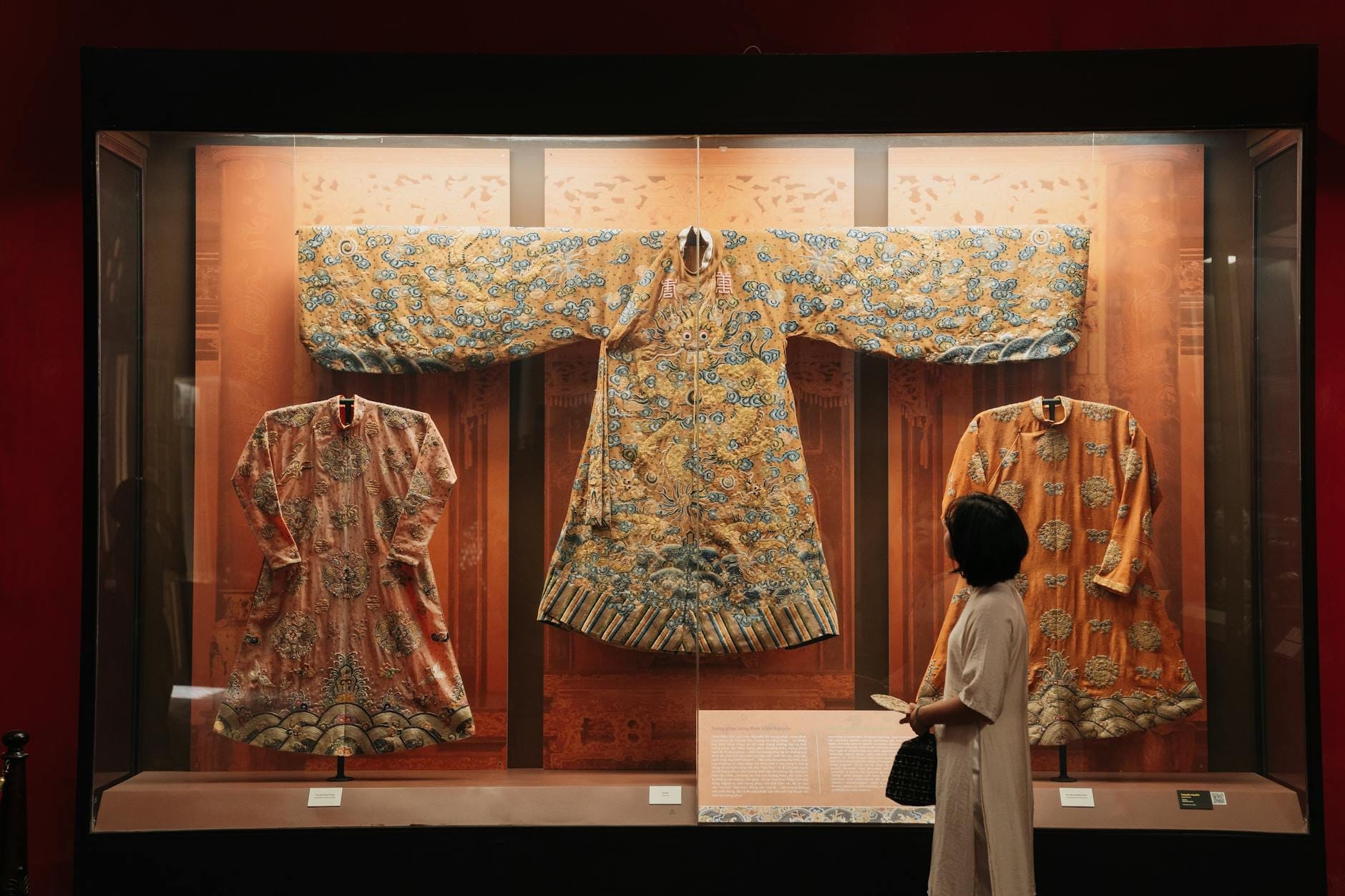
What the Áo Dài Museum Actually Is
The Áo Dài Museum (Bảo Tàng Áo Dài) opened in 2014 as a private initiative by artist and designer Sĩ Hoàng, one of Vietnam's most prominent figures in áo dài revival. It is the only institution in the country dedicated exclusively to the garment — a silk tunic worn over wide-leg trousers — that has been the de facto national dress for centuries. The museum is not a government facility, which gives it a more personal curatorial voice than most state-run institutions in the city.
The site sprawls across 2 hectares in Long Phuoc Ward, a semi-rural area in Thu Duc City (formerly District 9). The grounds blend traditional Vietnamese garden architecture with open-air exhibition space, creating an atmosphere quite different from the dense urban museums of District 1. Arriving here feels like stepping out of Saigon entirely.
ℹ️ Good to know
Opening hours: 8:30 AM – 5:30 PM daily. Closed on Mondays. Arrive by 4:30 PM to give yourself enough time to explore comfortably before closing.
The Garment and Its History
The áo dài in its modern form evolved from an 18th-century court garment introduced under the Nguyễn lords, later refined during the French colonial period into the sleek, figure-fitting silhouette recognized today. Through cycles of political change, war, and economic hardship, the garment fell in and out of favor. During the post-reunification period after 1975, it was at times discouraged as a symbol of the old South Vietnamese bourgeoisie. Its revival in the late 1980s and 1990s, coinciding with Vietnam's Đổi Mới economic reforms, was as much political as it was aesthetic.
The museum covers this full arc. Displays trace the áo dài's evolution from the loosely cut ngũ thân (five-panel robe) of earlier centuries through its 1930s Westernized transformation, to contemporary interpretations shown by modern Vietnamese designers. The curation is accessible rather than academic, with garments at the center and explanatory text kept short and readable.
For visitors already curious about Vietnamese material culture, pairing this with a visit to the Museum of Fine Arts in District 1 gives a broader picture of how aesthetics and identity intersect across different eras of Vietnamese history.
Tickets & tours
Live prices and dates from our booking partner. If you book, we may earn a commission at no extra cost to you.
Cao Dai Temple and Ba Den Mountain full-day tour
From 70 €Instant confirmationFree cancellationCao Dai Temple and Black Lady Mountain tour with lunch
From 127 €Instant confirmationFree cancellationAo Dai fitting and photoshoot tour in Ho Chi Minh City
From 30 €Instant confirmationBa Den Mountain and Cao Dai Temple private tour from Ho Chi Minh City
From 191 €Instant confirmationFree cancellation
What You'll See: The Layout and Galleries
The museum is organized across several buildings connected by garden pathways. The main exhibition hall houses the core historical displays: mannequins dressed in period-accurate áo dài styles, archival photographs, and interpretive panels explaining the social contexts in which each style emerged. Light filters through wooden lattice screens, keeping the interior cool and giving the displays a warm, golden quality in the afternoons.
A second building focuses on regional and ethnic variations, showing how the garment was adapted by different communities across Vietnam. This section is frequently overlooked by visitors who rush through the main hall, but it contains some of the most visually striking pieces — particularly the embroidered festival robes from central Vietnam.
The outdoor areas are as much a part of the visit as the indoor galleries. Traditional garden structures, ornamental ponds, and carefully maintained greenery provide a series of natural backdrops. On clear mornings, the light across the garden is genuinely good for photography. By midday the sun is harsh; late afternoon softens things considerably. The on-site restaurant is a reasonable spot to stop before or after, serving simple Vietnamese dishes.
💡 Local tip
Photography tip: The garden pavilions photograph best between 8:30–10:30 AM or after 3:30 PM, when direct overhead light is not a factor. Bring a wide-angle lens if you have one — the building facades and courtyard proportions reward it.
Getting There: The Honest Picture
This is the most significant practical consideration about the Áo Dài Museum: it is far from downtown. The journey from the center of District 1 takes 45 to 60 minutes by taxi or ride-hailing app (Grab is the most reliable option), and costs approximately 250,000 to 300,000 VND each way. Budget for the return trip as well — taxis are not always available at the museum entrance, and calling a Grab from here can occasionally take longer than in central areas.
Buses No. 76 and No. 88 stop near the museum, but the journey exceeds 90 minutes and requires some navigation between stops. Unless you have specific reasons to take public transport, the taxi option is considerably more practical for most visitors.
Because of the distance, this visit works best as part of a longer day rather than a quick detour. Consider combining it with other sights in the eastern part of the city, or with a day structured around exploring areas away from the tourist core of District 1.
⚠️ What to skip
Do not underestimate the travel time. Many visitors who visit midday lose most of the afternoon to the round trip. Either go early and return for lunch, or plan it as a dedicated afternoon excursion.
Crowd Patterns and Atmosphere
The Áo Dài Museum attracts a noticeably different crowd than the downtown museums. Vietnamese women in their 20s and 30s, many dressed in áo dài themselves specifically for photographs, are a consistent presence, particularly on weekends. School groups arrive on weekday mornings. Foreign visitors tend to be travelers who have done some research and seek something beyond the standard circuit — you will not encounter the same volume of tour groups you find at, for example, the War Remnants Museum.
The overall atmosphere is quiet and unhurried. Staff are attentive without being intrusive. On weekdays, especially Tuesday through Thursday, you may find long stretches where you have sections of the garden entirely to yourself. Weekends, particularly Saturday mornings, are considerably busier, with photography sessions adding a festive quality but also some congestion around the best-known backdrops.
Who This Suits — and Who Should Think Twice
Travelers with a genuine interest in Vietnamese fashion history, textile culture, or the social history of dress will find this genuinely rewarding. It also works well for visitors who want a peaceful counterpoint to the density of central Saigon — the garden space alone offers something rare. Photography enthusiasts, especially those interested in portraiture or detail work, will find strong material here. Families with older children (roughly 8 and up) tend to do well; younger children may lose interest in the indoor displays quickly, though the garden holds attention longer. If you are traveling with children under 2, admission is free.
Travelers on a tight itinerary of one or two days in the city should weigh this carefully. The time cost is real. If your priority is covering central landmarks — the Reunification Palace, the War Remnants Museum, or the Notre-Dame Cathedral — the Áo Dài Museum may need to wait for a second visit or a day specifically allocated to it. Those who visit expecting a large, state-funded institution with exhaustive multilingual programming may also feel underwhelmed; this is a more intimate space, and its strengths lie in atmosphere and focus rather than scale.
💡 Local tip
Group discount: If you are visiting with 10 or more people, admission discounts apply — 5% for 10–50 guests, 10% for 50–100 guests, and 15% for groups of 100 or more. Contact aodai@baotangaodaivietnam.com or call 091 472 69 48 to arrange.
Insider Tips
- Book a Grab before you finish your visit rather than walking to the street to hail a taxi. The museum's location means ride availability from the front entrance can be inconsistent, especially in the early afternoon.
- The regional variations gallery in the secondary building is consistently undervisited. Spend time here — the embroidered pieces from central Vietnam are among the finest items on display and rarely have anyone standing in front of them.
- If you are interested in purchasing an áo dài, ask staff about nearby tailors in the area or inquire whether the on-site shop carries any commissioned pieces. The museum's connection to designer Sĩ Hoàng's broader work means staff can sometimes point you toward reputable options.
- Wear comfortable walking shoes. The 2-hectare garden looks manageable on a map but involves more walking than most visitors expect, particularly if you explore all the pavilion structures.
- Tuesday to Thursday mornings are the quietest periods. You will have the garden largely to yourself before tour groups and school visits arrive, typically around 9:30–10:00 AM.
Who Is Áo Dài Museum For?
- Travelers interested in Vietnamese fashion history and cultural identity
- Photography enthusiasts looking for garden and architectural backdrops
- Visitors seeking a quieter, more reflective experience away from the city center
- Families with older children (8+) who respond well to visual and tactile exhibits
- Anyone planning a longer stay in Ho Chi Minh City who has already covered the central landmarks
Planning a trip? Discover personalized activities with the Nomado app.