Anek Kusala Sala (Viharn Sien): Pattaya's Overlooked Chinese Art Treasure
Built in 1987 to house a remarkable gift to the Thai royal family, Anek Kusala Sala — also known as Viharn Sien — holds one of Southeast Asia's most concentrated collections of Chinese art outside China itself. terracotta warrior replicas, Taoist mythological scenes, and intricate bronzework fill a three-story hall on grounds that feel genuinely removed from Pattaya's coastal noise.
Quick Facts
- Location
- Near km 160, Sukhumvit Road, approx. 15–20 km south of central Pattaya, adjacent to Wat Yansangwararam
- Getting There
- Private taxi recommended; no direct songthaew route. Most Pattaya hotels can arrange a booking
- Time Needed
- 1.5–2.5 hours for a thorough visit
- Cost
- Free admission; current pricing not confirmed — verify locally before visiting
- Best for
- Art lovers, history enthusiasts, families seeking a quiet cultural half-day, photographers
What Anek Kusala Sala Actually Is
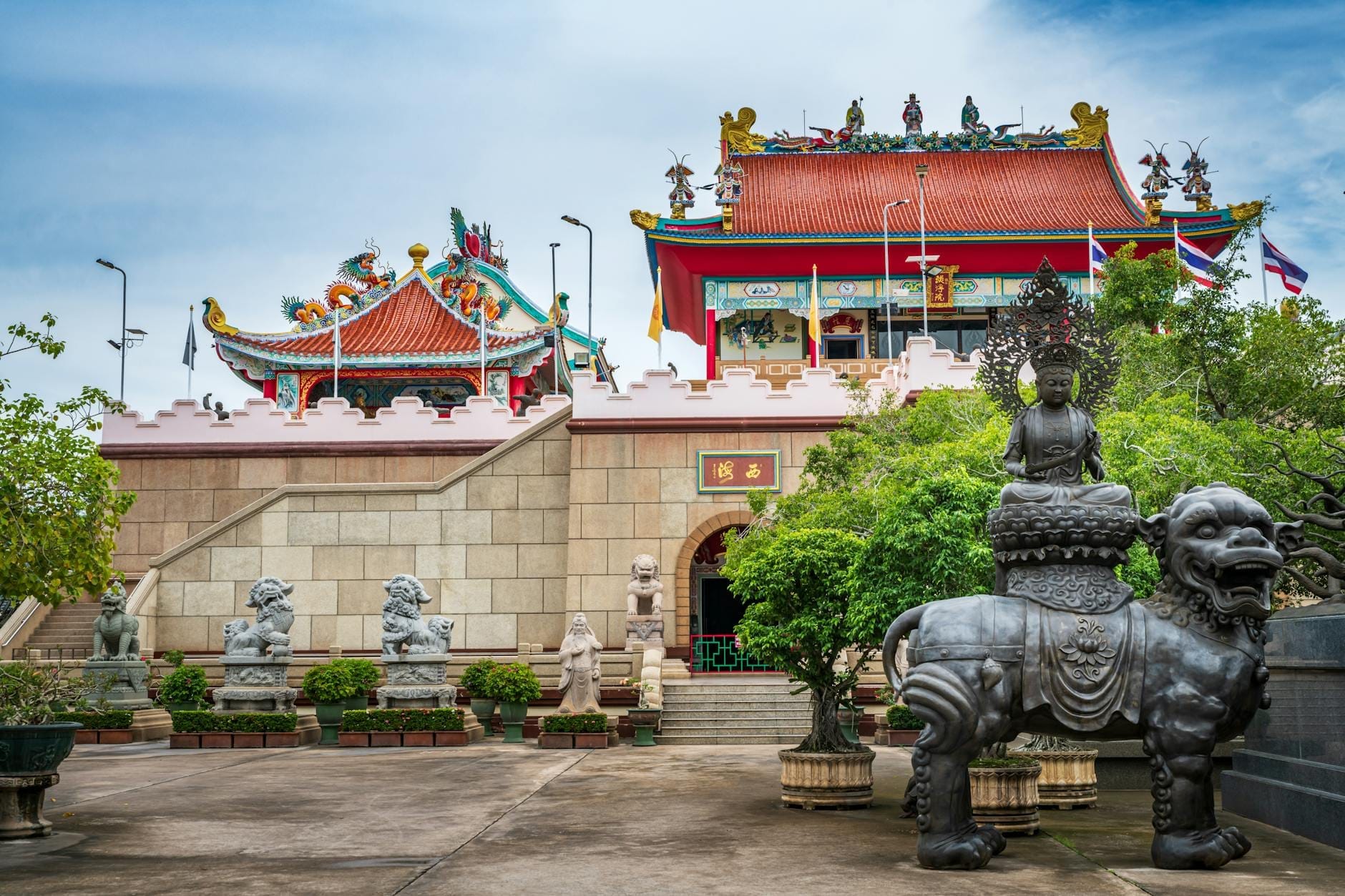
The full official name is Anek Kusala Sala (Thai: อเนกกุศลศาลา), though you will see it listed under various transliterations including Viharn Sien and Viharnra Sien. Whatever name appears on your map, the building is the same: a three-story Chinese-style structure sitting on roughly three acres of manicured grounds, connected in spirit and setting to the adjacent Wat Yansangwararam temple complex south of Pattaya.
The museum came about through an act of cultural diplomacy and personal passion. In 1987, Thai-Chinese collector Sa-nga Kulkobkiat assembled an enormous collection of Chinese art and artifacts intended as a gift to the Chakri royal dynasty. King Bhumibol Adulyadej (Rama IX) provided the land, and the hall was built to give the collection a permanent home worthy of its scale. That origin story matters when you walk inside: this is not a commercial tourist attraction assembled to fill a gap in the market. It is a curated royal gift, and the care taken in its presentation reflects that.
ℹ️ Good to know
Anek Kusala Sala sits immediately next to Wat Yansangwararam, a royal temple. Combining both in one trip is easy and adds considerable depth to the visit.
The Collection: Scale and Highlights
The most immediately striking element is the terracotta warrior collection. More than 300 replica figures from the original Xi'an burial army of Qin Shi Huang are displayed across the main hall, arranged in formations that echo the military geometry of the originals. The replicas range from foot soldiers to horses and officers, and they are close enough to examine at near eye-level, something you cannot do at the actual site in China. The quality of the craftsmanship is high enough that visitors who know the originals will find comparisons genuinely interesting.
Beyond the warriors, the collection spans Shaolin Kung Fu statues frozen mid-form, large porcelain pieces, ceremonial bronzework, and a significant sculptural scene depicting the Eight Immortals of Taoism. The Eight Immortals grouping is rendered at roughly eight meters across and commands its own dedicated space. Each figure is identifiable by its traditional attributes — fan, gourd, flute, lotus — and the scene doubles as an accessible introduction to Taoist iconography for visitors unfamiliar with it.
The pavilion halls branch off from the main building and vary noticeably in character. Some rooms feel dense and slightly overwhelming, stacked with artifacts and figurines from floor to ceiling. Others open into calmer gallery-style arrangements. Moving between them feels less like touring a single exhibit and more like exploring several connected collections under one roof, which is both the building's strength and occasionally its limitation.
Visitors who enjoy the cultural dimension here often also find value at the Big Buddha Temple and the nearby Wat Khao Phra Bat, both of which offer a different but complementary lens on religious art in the region.
Tickets & tours
Hand-picked options from our booking partner. Prices are indicative; availability and final rates are confirmed when you complete your booking.
Tuktuk Tour in Koh Sichang Island from Pattaya
From 106 €Instant confirmationFree cancellationIntroductory Group Muay Thai Boxing Lesson for Beginners in Pattaya
From 26 €Instant confirmationFree cancellationKoh Samet Island Self-Guided Tour from Pattaya
From 95 €Instant confirmationFree cancellationIntroductory private Muay Thai boxing lesson for beginners in Pattaya
From 79 €Instant confirmationFree cancellation
The Setting and Atmosphere
The exterior of Anek Kusala Sala is worth pausing at before you enter. The building draws on classical Chinese palatial architecture, with upswept tiled rooflines, carved stone balustrades, and gated courtyards that create a deliberate sense of transition from the surrounding Thai landscape. In the morning, the facade catches flat golden light and the grounds are quiet enough to hear birds in the trees along the boundary wall.
Inside, the atmosphere is dim and cool. The main hall is not aggressively air-conditioned, but the thick walls and high ceilings keep temperatures noticeably lower than outside. The smell is a mild combination of incense from the adjacent temple complex drifting through when doors open, and the faint earthy scent of old ceramics in enclosed spaces. It is a genuinely contemplative environment in the early hours. By late morning, organized tour groups begin arriving, and the halls become considerably louder.
💡 Local tip
Arrive at or shortly after 8:00 AM for the clearest light in the central hall and to avoid the tour group rush that typically builds between 10:00 AM and noon.
Practical Logistics: Getting There and Getting Around
Anek Kusala Sala sits near the kilometer 160 exit of Sukhumvit Road, approximately 15 to 20 kilometers south of central Pattaya. This is the critical practical fact: there is no straightforward public songthaew route from the city center directly to the museum. The realistic options are a private taxi, a ride-hailing app like Grab, or arranging transport through your hotel. Most hotels in Pattaya are familiar with this destination and can organize a return-trip taxi without difficulty.
Journey time from central Pattaya is typically 25 to 40 minutes depending on traffic. Sukhumvit Road south of the city can slow considerably during mid-morning and late afternoon. If you are combining this visit with Wat Yansangwararam, tell your driver in advance, as the two sites share a general area and it avoids confusion.
For planning your broader itinerary, the guide to getting around Pattaya covers transport options in detail, including songthaew routes and taxi negotiation.
The museum grounds are navigable on foot once you are inside, and the main building is accessible via a ground-floor entrance. The pavilion halls require some walking between connected structures, so flat shoes are more practical than sandals with poor grip. Wear shoes you can slip off quickly if you are uncertain about floor rules in any of the inner halls, though the main museum areas generally do not require shoe removal the way Thai temple interiors do.
Dress Code, Photography, and Practical Details
Appropriate dress is required, consistent with the site's quasi-sacred status as a royal-gifted collection adjacent to a functioning temple complex. Shoulders and knees should be covered. Lightweight long trousers or a sarong and a short-sleeved shirt with sleeves covering the upper arm are sufficient. The site is close to Wat Yansangwararam, so the dress expectation carries the same gravity as a temple visit. If you arrive underdressed, the site's entrance area may have wraps available, but it is better not to depend on this.
Photography is generally permitted in the main exhibit areas, and the collection rewards it. The terracotta warrior hall offers the most dramatic wide-angle compositions. A wide lens in the 16–24mm equivalent range works well for capturing formation depth. Natural light in the building is limited, so a camera that handles low light reasonably well is an advantage. Flash photography may be discouraged near more fragile ceramic pieces, so observe any posted restrictions.
Food and beverages are available on-site, which is useful given the relative distance from other dining options in this part of Sukhumvit. The catering is basic, suited for a snack or cold drink between sections of the museum rather than a full meal. Bottled water is recommended regardless, as tap water throughout Thailand should not be consumed.
⚠️ What to skip
Admission prices were not confirmed in available sources at the time of writing. Check the current rate when you arrive or ask your hotel before setting out, as pricing at smaller Thai museums can change without online updates.
Honest Assessment: Who This Is and Is Not For
Anek Kusala Sala is not a spectacle in the way that Pattaya's more commercialized attractions are. There are no interactive elements, no performances, and no themed environments. What it offers is a rare concentration of genuinely significant Chinese art objects in a setting that feels considered rather than manufactured. Visitors who approach it with some curiosity about Chinese history, Taoist symbolism, or royal patronage of the arts will find it rewarding.
Travelers looking for high-energy activity, visitors with young children who are not drawn to static exhibits, or anyone who finds the logistics of getting there without public transport a deterrent may reasonably skip this in favor of attractions closer to the central Pattaya waterfront. The distance is not prohibitive, but it does require deliberate planning in a way that beachside options do not.
If you are building a full cultural day in the south Pattaya area, the Nong Nooch Tropical Garden and the Sanctuary of Truth offer complementary experiences that span different artistic and natural traditions, and can be combined on the same day with reasonable planning.
For a broader view of what to prioritize during a short stay, the things to do in Pattaya guide helps distinguish between high-priority and supplementary stops depending on your interests.
Insider Tips
- Combine Anek Kusala Sala with Wat Yansangwararam in the same trip. The two sites share the area and visiting both takes roughly three to four hours total, making the taxi fare worthwhile.
- The Eight Immortals sculptural scene is in a side pavilion that some visitors miss by turning back after the main warrior hall. Walk the full circuit before leaving.
- If you have any background in Chinese mythology or history, bring a phone with a translation or reference app. Many of the figure labels are in Thai and Chinese only, with limited English explanation.
- Weekday mornings are significantly quieter than weekends. Tour groups tend to arrive mid-morning; arriving at opening at 8:00 AM gives you the first hour largely to yourself.
- The adjacent Wat Yansangwararam is a royal temple with its own substantial grounds and architecture. Budget extra time if you plan to explore it fully rather than just pass through.
Who Is Anek Kusala Sala (Viharn Sien) For?
- Art and history enthusiasts with an interest in Chinese culture or Taoist iconography
- Photographers looking for dramatic sculptural subjects in a low-crowd environment
- Travelers combining a cultural half-day with a visit to Wat Yansangwararam
- Visitors who have seen the standard Pattaya circuit and want something genuinely different
- Families with older children or teenagers who engage with history and art
Nearby Attractions
Other things to see while in North Pattaya & Naklua:
- Max Muay Thai Stadium
Max Muay Thai Stadium in North Pattaya hosts live Muay Thai bouts every night of the week, drawing serious fight fans and curious first-timers alike. With a capacity of around 2,000, it strikes a balance between spectacle and intimacy that larger Bangkok arenas rarely manage.
- Mini Siam
Mini Siam compresses Thailand's greatest monuments and Europe's iconic landmarks into a single open-air park on Sukhumvit Road. Opened in 1986, the park spans over 46,000 square meters and displays more than 100 replicas at 1:25 scale. It is a calm, walkable experience that rewards curious travelers and families with young children.
- Sanctuary of Truth
The Sanctuary of Truth is a colossal all-wood temple rising 105 meters, located on coastal land in North Pattaya in North Pattaya. Construction began in 1981 and continues today, which means every visit reveals something slightly different. Guided tours are mandatory, hard hats are required, and the sheer scale of the hand-carved woodwork is unlike anything else in Southeast Asia.
- Wat Khao Phra Bat
Perched on Pratumnak Hill in south Pattaya, Wat Khao Phra Bat (วัดเขาพระบาท) offers a rare combination of genuine religious atmosphere, an 18-metre standing Buddha, and panoramic views across Pattaya Bay. Entry is free, crowds are thin, and the experience feels a world apart from the beachfront below.