Yoros Castle and Anadolu Kavağı: Istanbul's Forgotten Northern Frontier
At the far northern tip of the Bosphorus, where the strait meets the Black Sea, a medieval Byzantine fortress watches over a sleepy fishing village. Yoros Castle is free to enter, rarely crowded, and rewards the uphill walk with one of the most dramatic panoramas in all of Istanbul.
Quick Facts
- Location
- Anadolu Kavağı, Beykoz district, Asian side of Istanbul
- Getting There
- Şehir Hatları Bosphorus ferry from Eminönü Pier to Anadolu Kavağı (approx. 2 hours)
- Time Needed
- 3–5 hours including the ferry journey each way
- Cost
- Free entry to the castle ruins; ferry fare applies (Istanbulkart accepted — verify current fares)
- Best for
- Panoramic views, Byzantine history, half-day escapes from the city center
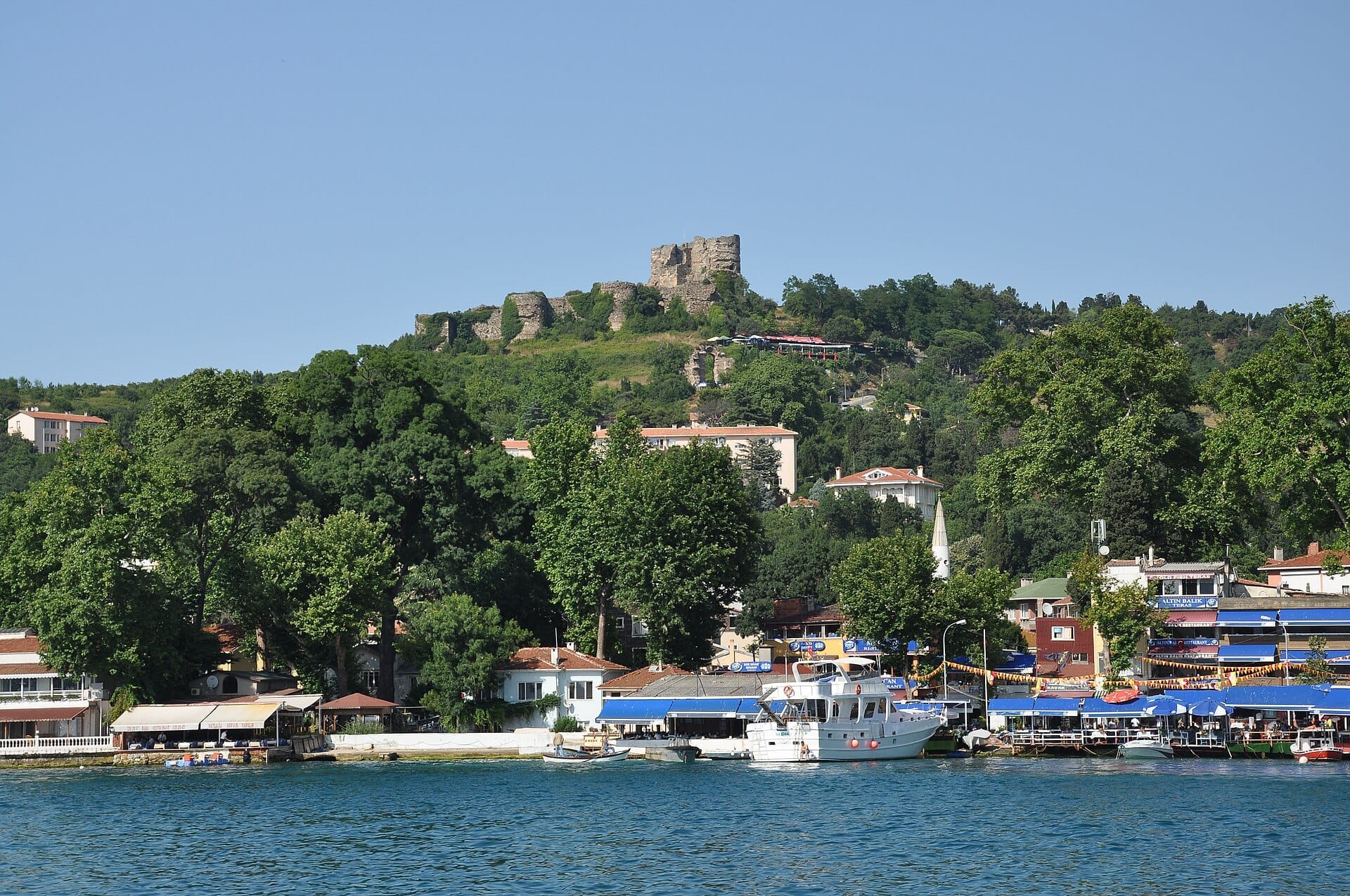
What Anadolu Kavağı and Yoros Castle Actually Are
Anadolu Kavağı is a small fishing village on the Asian shore of the Bosphorus, a short distance north of central Istanbul. It marks the last stop on the Şehir Hatları Bosphorus ferry route from Eminönü, which means most visitors who arrive here have spent the better part of two hours watching the strait's parade of mosques, palaces, and wooden summer houses slide past. Above the village, on a rocky promontory where the Bosphorus opens into the Black Sea, sit the ruins of Yoros Castle, known in Turkish as Yoros Kalesi.
This is not a polished tourist attraction with audio guides and souvenir shops. The castle is a largely unrestored medieval ruin with no official opening hours and no entrance fee. That informality is precisely its appeal. You walk uphill through a quiet neighborhood, pass a tea garden or two, and suddenly find yourself standing on ancient Byzantine walls with nothing between you and a horizon that stretches from the Bosphorus to the Black Sea.
ℹ️ Good to know
The castle grounds are generally open to the public without posted hours or an admission charge. However, portions of the surrounding hillside remain within a military zone and are closed to visitors. Stick to the clearly used paths and respect any signage you encounter.
The Ferry Journey: Half the Experience
The Şehir Hatları Bosphorus ferry from Eminönü Pier is not simply transport — it is the logical beginning of the visit. The full Bosphorus route, running from Eminönü on the European shore northward with stops on both the Asian and European banks, takes around two hours to reach Anadolu Kavağı at the northern end. On a clear morning, you pass Dolmabahçe Palace, the older wooden yalı summer residences near Bebek and Arnavutköy, the Ottoman military watchtower at Rumeli Hisarı, and the increasingly forested hillsides as the city thins out and the strait narrows.
On weekday mornings the ferry carries a mix of commuters and early tourists; on weekend afternoons it fills with Istanbul families heading to Anadolu Kavağı for a seafood lunch. The upper outdoor deck offers the best views in dry weather. Bring a layer: even in summer, the Bosphorus wind is sharp on the water. For more context on planning a dedicated Bosphorus trip, see the Bosphorus cruise guide, which covers the full route, timings, and what to look out for along the way.
Tickets & tours
Hand-picked options from our booking partner. Prices are indicative; availability and final rates are confirmed when you complete your booking.
Bosphorus sunset cruise on luxury yacht with guide
From 55 €Free cancellationIstanbul and Bosphorus cruise on private boat - half day afternoon tour
From 40 €Instant confirmationFree cancellationWhirling Dervishes live show and exhibition
From 29 €Instant confirmationBasilica Cistern fast-track entry ticket and optional audio guide
From 34 €Instant confirmation
The Village: Where to Eat Before You Climb
Anadolu Kavağı's small harbor front is lined almost entirely with fish restaurants, most of them displaying their catch on ice out front. The menus are similar across the board: grilled sea bass and bream caught in the strait, fried calamari, fish soup, and mezes heavy on olive oil and herbs. Prices are reasonable by Istanbul standards, though the tourist footfall from the ferry does push them slightly above what you'd pay in neighborhoods less visited. The smell of charcoal and fresh fish hangs over the quayside from mid-morning onward.
Most visitors eat either before or after the castle climb. If you're arriving on the morning ferry, consider climbing first while the air is cooler and the light is better for photographs, then eating on your way back to the dock. The village has a small produce market and a couple of bakeries tucked back from the waterfront if you want something lighter.
💡 Local tip
The ferry schedule means most visitors arrive in a cluster and leave on the same return boat. To avoid the lunchtime crowd at the harbor restaurants, eat early (around noon) or wait until 2 pm when the rush thins out.
The Climb to Yoros Castle
From the ferry dock, the walk to Yoros Castle takes around 10 to 15 minutes. The route is signposted as "Yoros Kalesi" and begins by passing through the village's narrow streets before ascending a steady hill. The path is paved in its lower section, then transitions to a rougher track as you near the ruins. Wear closed shoes with some grip; sandals work on a dry day but the final approach over loose stone and grass is easier in proper footwear.
The climb is not technically difficult, but the gradient is meaningful, especially on a warm afternoon. There are benches and small tea gardens partway up where you can rest. In spring, the hillside is green and wildflowers push through the grass around the walls. In July and August, the exposed upper slope can be uncomfortably hot by midday, which makes the morning ferry the clear choice in summer months.
Visitors with mobility impairments should be aware that there is no accessible route to the castle. The terrain is steep, uneven, and unpaved in sections, and there are no ramps or handrails along the approach path or within the ruins themselves.
Yoros Castle: History in the Walls
Yoros Castle is a Byzantine fortification, most likely constructed in the 13th and 14th centuries as a control point over the northern mouth of the Bosphorus. The site has strategic logic that is obvious the moment you stand on its walls: whoever held Yoros could observe and tax every ship moving between the Black Sea and the Mediterranean. The castle is sometimes called the Genoese Castle because it was held by Genoa in the mid-15th century, a period during which the Italian maritime republic maintained significant commercial interests along this corridor. After periods of Genoese control, the castle passed into Ottoman hands around 1391, well before the conquest of Constantinople in 1453.
What survives today is the shell of the citadel and substantial sections of the curtain walls, including several towers in varying states of preservation. A mosque that once stood within the compound has disappeared entirely. The scale of what remains is still impressive: the walls are thick enough to walk along in places, and the corner towers give a clear sense of the original defensive geometry. Archaeological excavations conducted between 2018 and 2021 temporarily restricted access to parts of the site; it has since been described as open again, though some peripheral areas remain off-limits.
For travelers interested in tracing Istanbul's layered Byzantine and Ottoman past, Yoros Castle fits naturally alongside other fortress sites across the city. The Rumeli Fortress on the European shore, built by Mehmed II just before the 1453 siege, is the obvious companion visit, sitting roughly midway down the Bosphorus and visible from the ferry on the way up. Together the two fortresses mark the northern and central choke points of the strait.
The View: What You're Actually Here For
The panorama from Yoros Castle is the reason to make the journey. To the north, the Bosphorus widens and the dark water of the Black Sea begins. To the south, the strait curves back toward the city, its shores lined with forested hills and occasional white buildings. On a clear day the view is almost disorienting in its breadth: you are looking at Europe to the west and Asia to the east simultaneously, with a straight line of water connecting two seas in between.
The quality of this experience is almost entirely dependent on weather. Fog is common in winter and early spring, and on an overcast day the Black Sea can be invisible behind a gray haze. The clearest conditions typically occur in late spring and early autumn, which also happen to be the most comfortable seasons for the uphill walk. For a broader sense of Istanbul's best panoramic spots, the Istanbul viewpoints guide compares Yoros to other high points across the city.
Photographers should note that the best light falls on the strait in the morning, when the sun is low in the east and casts warm tones across the water. By early afternoon the light is flatter and the slight haze that builds over the Black Sea tends to reduce contrast. Sunrise visits are theoretically possible since the castle has no set opening time, but the first ferry from Eminönü does not depart early enough to reach the site at dawn — you would need to drive or arrange private transport to achieve that.
Practical Details for Planning Your Visit
The Şehir Hatları Bosphorus ferry departs from Eminönü Pier on the European side. Check the current timetable directly with Şehir Hatları before your visit, as departure times vary by season and day of week. The journey to Anadolu Kavağı, the final stop, takes approximately two hours. The return journey follows the same route back to Eminönü. Fares are paid using the Istanbulkart contactless card, which is the standard payment method across Istanbul's public transport network; verify current fare amounts before travel as prices are subject to change.
There is no dedicated parking area near the castle, and the village streets are narrow. If arriving by road from the Asian side via Beykoz, expect limited parking and a walk through the village regardless. Most visitors find the ferry by far the more practical option, and it has the added value of the Bosphorus journey itself. If you are planning a broader Asian-side day, Anadolu Kavağı pairs well with other neighborhoods described in the Istanbul Asian side guide.
⚠️ What to skip
The castle is an unmanaged ruin. There are no staff on site, no safety barriers on the wall tops, and no first aid facilities. Children need close supervision. Take extra care on wet or dewy mornings when the stone and grass surfaces are slippery.
The best months to visit are April through June and September through October, when temperatures are mild and the sky is more reliably clear. July and August are manageable but hot on the exposed hillside. Winter visits are atmospheric if the weather cooperates, but fog and rain can completely obscure the view that makes the trip worthwhile, and some of the harbor restaurants reduce their hours outside peak season.
Insider Tips
- Take the earliest available ferry departure rather than a midday one. You arrive before the main crowd, the light is better for photography, and you have time for a relaxed lunch before the return boat rather than rushing to the dock after eating.
- The ferry timetable is the controlling factor for your day. Check the return departure times before you set off up the hill so you know exactly how long you have at the top without risking a missed boat.
- A tea garden partway up the hill toward the castle sells çay and simple snacks. It is a good spot to rest on the way back down, and the proprietors are used to waiting hikers and will tell you roughly how long remains on the path ahead.
- If the weather is clear, bring binoculars. From the castle walls you can watch large tankers and container ships navigating the Bosphorus-Black Sea transition, and on very clear days distant coastline is visible to the north.
- The surrounding hillside has areas that are part of an active military zone. These are marked with signage. Do not attempt to explore beyond the castle perimeter in the direction of the military installations.
Who Is Anadolu Kavağı & Yoros Castle For?
- History travelers wanting Byzantine and Genoese military architecture without museum crowds
- View-seekers looking for an alternative to Istanbul's more visited hilltop panoramas
- Day-trippers who want the full Bosphorus ferry experience combined with a destination worth arriving at
- Walkers and light hikers comfortable with a short but steep uphill approach
- Travelers spending multiple days in Istanbul who want a half-day outside the historic center
Nearby Attractions
Other things to see while in Bosphorus Villages:
- Arnavutköy
Arnavutköy is a historic neighbourhood on Istanbul's European Bosphorus shore, sitting between Ortaköy and Bebek in the Beşiktaş district. Its wooden Ottoman yalıs, cobblestone backstreets, and working waterfront make it one of the city's most atmospheric places to walk, eat seafood, and slow down.
- Bebek Waterfront
Bebek Waterfront stretches along one of the Bosphorus's most photogenic bays on Istanbul's European shore. Free to enter, open around the clock, and flanked by waterside cafes and 19th-century architecture, it offers a side of Istanbul that belongs to the city's residents as much as its visitors.
- Borusan Contemporary
Borusan Contemporary transforms the historic Perili Köşk mansion in Rumelihisarı into one of Istanbul's most distinctive art spaces. Housed inside Borusan Holding's headquarters, the collection spans video art, digital installations, and works by major Turkish and international contemporary artists.
- Emirgan Park
Emirgan Park, officially Emirgân Korusu, is one of Istanbul's largest public parks, stretching across forested hillsides above the Bosphorus shore in the Sarıyer district. Entry is free year-round, and the park holds particular fame as the principal venue for Istanbul's annual Tulip Festival each April.