Rumeli Fortress (Rumeli Hisarı): The Ottoman Stronghold That Changed History
Built in just four months by Sultan Mehmed II to strangle Constantinople's supply lines before the 1453 siege, Rumeli Hisarı stands at the narrowest point of the Bosphorus. Today it is one of Istanbul's most rewarding fortress complexes, offering dramatic water views, well-preserved towers, and a sense of scale that photographs simply cannot capture.
Quick Facts
- Location
- Yahya Kemal Caddesi No: 42, Sarıyer district, European shore of the Bosphorus
- Getting There
- Bus 25E from Karaköy/Kabataş; Bus 22 from Kabataş (after Tram T1); or Metro M6 to Levent then F4 funicular to Rumeli Hisarüstü and walk down
- Time Needed
- 1.5 to 2.5 hours
- Cost
- 6 EUR (approximately 200 TL) for foreign visitors; verify current price on-site as prices may change
- Best for
- History enthusiasts, photographers, Bosphorus views, architecture lovers
- Official website
- muze.gen.tr/muze-detay/rumeli
What Rumeli Hisarı Actually Is
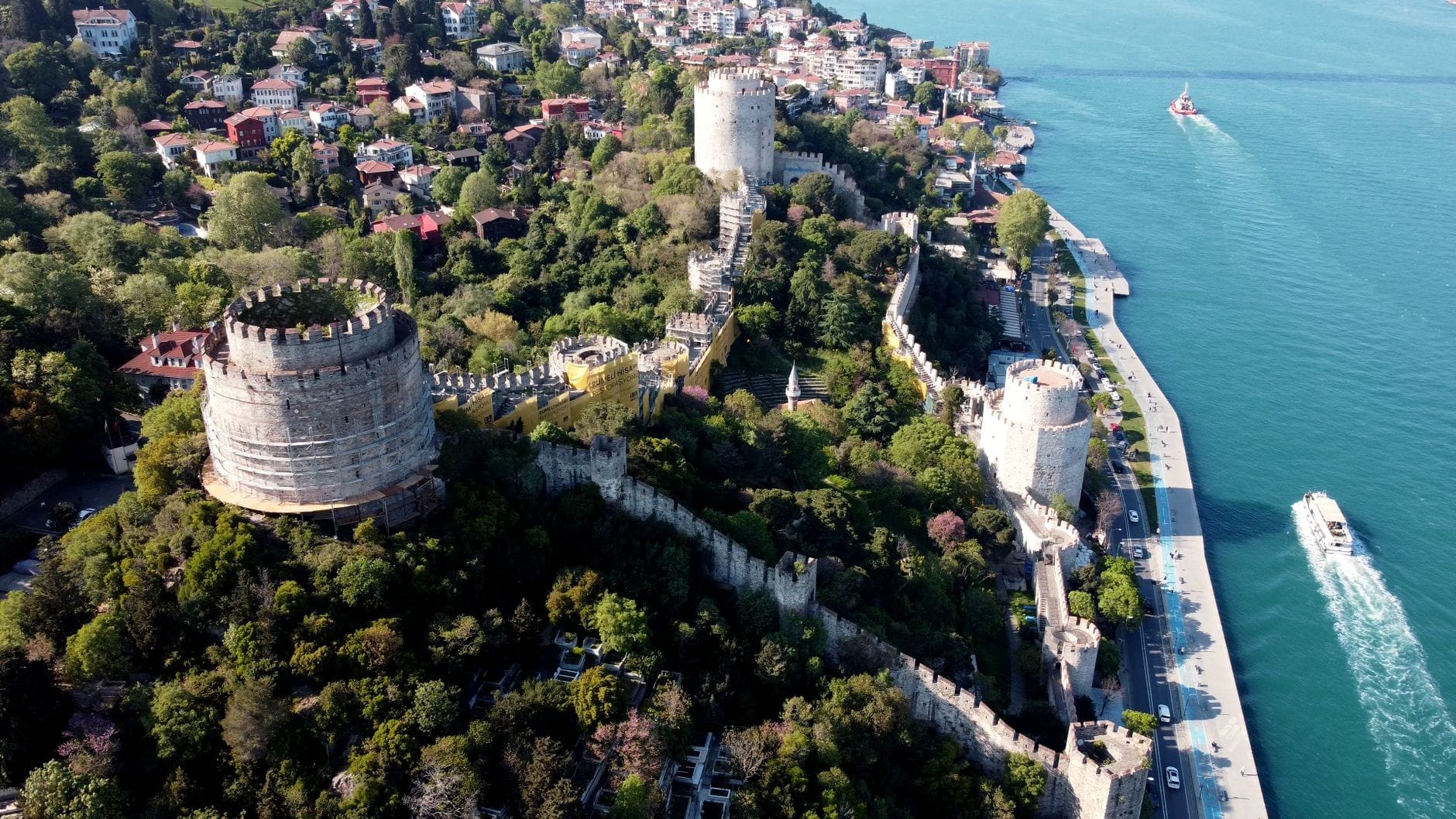
Rumeli Hisarı, officially the Rumeli Fortress Museum, is a 15th-century Ottoman military complex occupying a steep hillside on the European shore of the Bosphorus. It covers roughly 30,000 square metres and comprises three major towers, a curtain wall with multiple smaller towers, and an inner courtyard that has historically accommodated open-air cultural events. The scale is surprising from the inside.
The fortress was originally called Boğazkesen, meaning 'throat-cutter' or 'strait-cutter' in Turkish, a name that captures both its physical position and its strategic purpose. Later, it was renamed Rumeli Hisarı: 'fortress on the land of the Romans,' a reference to its location on the formerly Byzantine European shore. These two names together tell you almost everything you need to know about the building's historical significance.
The fortress sits opposite Anadolu Hisarı, the smaller Anatolian fortress on the Asian shore, which had been built by Sultan Bayezid I some 60 years earlier. Together, the two fortresses controlled the Bosphorus at its narrowest point, roughly 600 metres across. For a more thorough understanding of how this fits into Ottoman expansion, the Istanbul Ottoman history guide provides essential context.
The History Behind the Stones
Sultan Mehmed II ordered construction in 1451, and the fortress was completed in an extraordinary four months in 1452 — the speed itself a demonstration of Ottoman organizational power. With Rumeli Hisarı finished, Mehmed positioned heavy cannons in its towers and enforced a blockade: any ship attempting to pass the strait without permission was sunk. The Byzantine capital, Constantinople, was thus cut off from the Black Sea grain trade and any resupply route from Genoese colonies to the north.
The fall of Constantinople followed in May 1453. After the conquest, the fortress served briefly as a garrison and prison, but it never needed to function as a war fortress again. Over the following centuries it fell into partial disuse, was used as an Ottoman prison at various points, and suffered significant damage in an earthquake in 1509. Serious restoration work began in the 20th century, with the site opened to the public as a museum and cultural venue.
ℹ️ Good to know
Each of the three main towers was reportedly assigned to a different Ottoman vizier: Çandarlı Halil Pasha, Zağanos Pasha, and Saruca Pasha. The tallest of the three, known as Şikeli Tower, is the large cylindrical tower closest to the water and dominates photographs of the complex from the strait.
Tickets & tours
Hand-picked options from our booking partner. Prices are indicative; availability and final rates are confirmed when you complete your booking.
Rumeli Fortress Skip-the-Line Ticket with Audio Guide
From 15 €Instant confirmationFree cancellationBosphorus sunset cruise on luxury yacht with guide
From 55 €Free cancellationIstanbul and Bosphorus cruise on private boat - half day afternoon tour
From 40 €Instant confirmationFree cancellationWhirling Dervishes live show and exhibition
From 29 €Instant confirmation
What the Visit Feels Like
Entering through the main gate, you emerge into a large open courtyard with a small Ottoman mosque at its centre, now used as an exhibition space. The ground is uneven stone and packed earth; wear shoes with grip. The amphitheatre seating climbs the hillside to your left. Ahead, stone staircases lead up to the walls and towers.
The climb up the curtain walls is where the visit rewards effort. The wall path is not wide, and in places the parapet drops sharply to the hillside below, so this section is not suitable for young children without close supervision or for visitors with a significant fear of heights. But the view at the top is the payoff: the Bosphorus directly below, ferries and tankers moving slowly through the narrows, the Fatih Sultan Mehmet Bridge framing the north, and the hills of the Asian shore across the water.
The interior of the large cylindrical towers can be entered. The stone floors, thick walls, and narrow arrow-slit windows create a particular kind of damp, cool darkness that no amount of description quite prepares you for. The smell is old stone and faint sea air. Sound from outside disappears. These interiors are where the fortress stops feeling like a ruin and starts feeling like a place that was genuinely inhabited and defended.
💡 Local tip
Arrive in the first hour after opening. By mid-morning, tour groups fill the main stairways and the wall paths become congested. Early visitors often have the towers to themselves and get cleaner photographs of the Bosphorus without other people in frame.
Time of Day and Light
Morning light falls on the European shore from the east, which means the fortress itself is in partial shade in the early hours while the water is brilliantly lit. This creates excellent contrast for photography of the towers against the water. By mid-afternoon, the sun moves west and the stone walls of the fortress glow a warm honey colour, particularly striking in autumn when the hillside trees above are turning.
If you visit on a clear day in late afternoon, the view toward the Fatih Sultan Mehmet Bridge catches the low sun and the water takes on a deep blue. Overcast days reduce the colour contrast but actually make it easier to photograph the fortress architecture without harsh shadows cutting across the stonework. Rain makes the steep stone staircases slippery; the site does not close in light rain, so check the forecast and wear appropriate footwear.
The fortress grounds are also used for open-air concerts and cultural events in summer, particularly in July and August, when the amphitheatre hosts performances after dusk. Check the official museum page for seasonal programming. If you plan a broader day along the Bosphorus shore, the Bosphorus cruise guide explains how the fortress appears from the water, which is an entirely different and worthwhile perspective.
Getting There
The most straightforward route from the historic peninsula is Tram T1 to Kabataş, then bus 22 or 25E northward along the Bosphorus shore road to the Rumeli Hisarı stop. The bus ride itself is scenic, following the water with views of yalıs (Bosphorus waterfront mansions) and neighbourhood fishing piers. Journey time from Kabataş varies with traffic but is typically 25 to 40 minutes.
From Taksim, bus 559C runs to the neighbourhood above the fortress, from where it is approximately a 10-minute walk downhill to the entrance. The Metro M6 from Levent connects with the F4 funicular to Rumeli Hisarüstü, providing an alternative from the city's commercial centre. A taxi from Beşiktaş or Kabataş takes 15 to 30 minutes depending on traffic and is a practical option if you are travelling with luggage or children.
⚠️ What to skip
Multiple third‑party visitor reports have cited Wednesday as the fortress's closed day, but official museum information currently lists Monday as the weekly closure. Verify the current schedule before visiting, particularly if Monday or Wednesday is your only available date.
Opening Hours, Tickets, and Practical Notes
Rumeli Hisarı Museum is open 09:00 to 18:00 from 1 April through 31 October, and 09:00 to 17:00 from 31 October through 1 April, according to current official information. An admission fee applies; the current official price is 6 EUR (approximately 200 TL) for foreign visitors, but as Turkish museum prices are updated regularly, confirm the current price at the entrance or via the official museum channels.
The site is not covered by the Istanbul Museum Pass, so budget for a separate ticket. For visitors planning multiple museum visits, the Istanbul Museum Pass guide explains what is and is not included across the city's main sites.
Accessibility at Rumeli Hisarı is limited. The fortress is built into a steep hillside, and the paths between towers involve significant walking over uneven stone surfaces. The fortress is open with full access to the grounds, towers, and viewpoints, but the terrain is steep and uneven throughout. There is no confirmed step‑free route or elevator access. Visitors with mobility limitations should be aware that even the courtyard involves some uneven ground. The site is rewarding but physically demanding.
The Surrounding Neighbourhood
The Rumeli Hisarı neighbourhood that grew up around the fortress is one of the quieter stretches of the European Bosphorus shore. The main street below the walls has a handful of cafes and small restaurants where the lunch crowd is largely local. After the fortress, it is worth walking ten minutes south along the shore road to Bebek, one of Istanbul's most affluent and attractive waterfront neighbourhoods, with a public park, café terraces on the water, and ferry connections back toward the city centre.
The Bosphorus villages stretch north and south of the fortress along the European shore, each with its own character. Arnavutköy, just to the south, has some of the best-preserved wooden yalı architecture on the strait and a small fish restaurant strip worth exploring for dinner.
For those treating this as part of a broader day on the Bosphorus, the combination of Rumeli Hisarı with a walk through Bebek and a return ferry from Bebek pier works well as a half-day itinerary from the European centre.
Insider Tips
- The best exterior photographs of the full fortress complex are taken from the water, not from land. If you take a Bosphorus cruise or ferry that passes the narrows, position yourself on the starboard side heading north for an unobstructed view of all three towers simultaneously.
- The small mosque in the courtyard houses a modest exhibition on the fortress's construction and Ottoman siege engineering. It is easy to walk past, but the scale models and drawings inside help you understand the overall layout before you climb the walls.
- Bring water. There are no vending machines inside the fortress, and the climb to the upper walls in summer can be tiring. The cafes outside the gate are there when you exit, not when you are halfway up the towers.
- If you visit during summer concert season, check whether evening events are scheduled. The amphitheatre fills quickly and tickets are separate from museum admission. Attending a performance here, with the Bosphorus lit up below, is an experience with no equivalent elsewhere in Istanbul.
- The light on the fortress is at its warmest approximately one hour before sunset in autumn months, September through November. Combined with the lower visitor numbers in that season, late afternoon visits in autumn represent the best overall conditions for both photography and atmosphere.
Who Is Rumeli Fortress (Rumeli Hisarı) For?
- History enthusiasts drawn to the Ottoman conquest of Constantinople and Byzantine military architecture
- Photographers looking for elevated Bosphorus views with strong foreground architecture
- Travellers pairing the fortress with a walk through the quieter European Bosphorus shore villages
- Adults and older teenagers who are comfortable with steep staircases and narrow wall walks
- Anyone spending more than three days in Istanbul who has already covered the primary Sultanahmet sites
Nearby Attractions
Other things to see while in Bosphorus Villages:
- Anadolu Kavağı & Yoros Castle
At the far northern tip of the Bosphorus, where the strait meets the Black Sea, a medieval Byzantine fortress watches over a sleepy fishing village. Yoros Castle is free to enter, rarely crowded, and rewards the uphill walk with one of the most dramatic panoramas in all of Istanbul.
- Arnavutköy
Arnavutköy is a historic neighbourhood on Istanbul's European Bosphorus shore, sitting between Ortaköy and Bebek in the Beşiktaş district. Its wooden Ottoman yalıs, cobblestone backstreets, and working waterfront make it one of the city's most atmospheric places to walk, eat seafood, and slow down.
- Bebek Waterfront
Bebek Waterfront stretches along one of the Bosphorus's most photogenic bays on Istanbul's European shore. Free to enter, open around the clock, and flanked by waterside cafes and 19th-century architecture, it offers a side of Istanbul that belongs to the city's residents as much as its visitors.
- Borusan Contemporary
Borusan Contemporary transforms the historic Perili Köşk mansion in Rumelihisarı into one of Istanbul's most distinctive art spaces. Housed inside Borusan Holding's headquarters, the collection spans video art, digital installations, and works by major Turkish and international contemporary artists.