Jomtien Beach sits just south of central Pattaya, separated from the city's main strip by the ridge of Thappraya Road. It trades neon-lit chaos for a slower pace: longer sands, expat cafes, family-friendly hotels, and water sports rentals lined up along a cleaner shoreline.
Jomtien Beach is the version of Pattaya that doesn't announce itself loudly. Separated from the city's main strip by a low coastal ridge, it runs for roughly six kilometres of comparatively clean sand, attracting long-stay expats, families, and anyone who wants proximity to Pattaya's attractions without sleeping inside them.
Orientation
Jomtien Beach occupies the southeastern flank of the Pattaya area, beginning where Thappraya Road crests the hill above South Pattaya and descends toward the sea. The northern tip of the beach, known as Dongtan Beach, sits at the base of this hill and is effectively the point where Pattaya ends and Jomtien begins. From there, the shoreline and its parallel road system extend roughly six kilometres south toward Na Jomtien, where the beach gradually gives way to the quieter canal-and-resort terrain near Soi Chayapruek and the Sukhumvit Road junction.
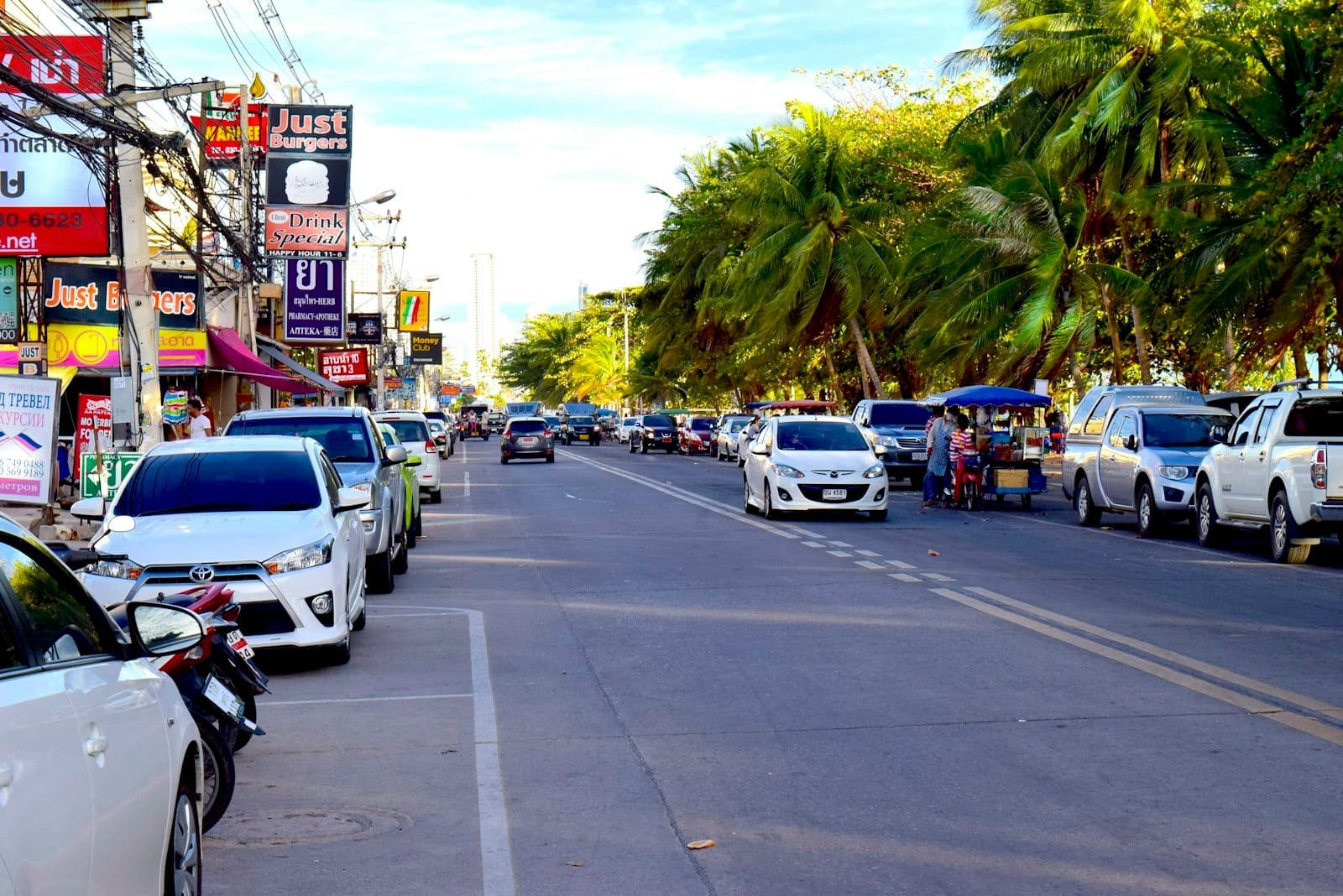
Two main roads define the neighborhood. Jomtien Beach Road (locally called Jomtien Saineung Road, or simply First Road) runs directly alongside the beach, lined with hotels, sun-lounger vendors, and open-fronted restaurants. One block inland, Jomtien Second Road carries the heavier traffic: four lanes, motorbike taxis at the soi intersections, convenience stores, and the block of shophouses around Rompho Market. Thepprasit Road cuts east across both of these, linking the beach corridor to Sukhumvit Road (Highway 3) and providing access to the area's weekend market and bus connections southward.
For travelers building a mental map of the wider city: Jomtien is about four kilometres by road from Pattaya Walking Street in South Pattaya, and roughly eight kilometres from the northern hotel strip around North Pattaya. The hill on Thappraya Road is the physical and psychological boundary that keeps Jomtien feeling distinct from the rest of the city.
ℹ️ Good to know
Jomtien's sois (side streets) are numbered and run perpendicular to the beach. Soi 1 begins near the northern Dongtan end; higher numbers progress south. Most guesthouses and restaurants quote their soi number as a locator, so it's worth noting which one your accommodation is near before you arrive.
Character and Atmosphere
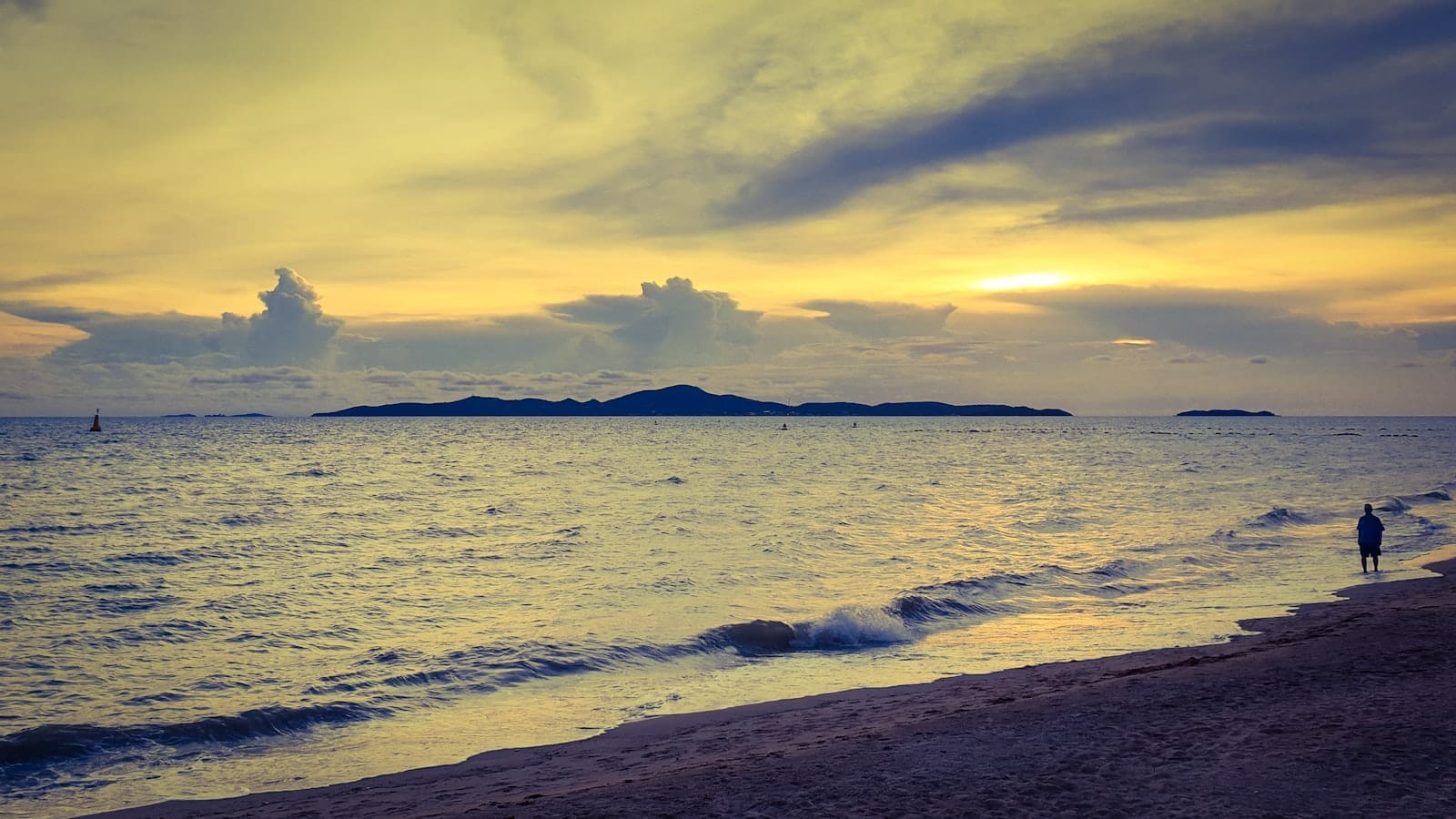
Early mornings in Jomtien have a particular quality that the main Pattaya strip almost never achieves: quiet. By six o'clock, the beach road sees joggers and cyclists before the sun-lounger operators have even arrived. The light is flat and silver over the Gulf of Thailand, the water noticeably calmer than at Pattaya Beach, and the only real noise comes from the occasional songthaew rattling up First Road. Small coffee carts appear at the soi entrances, selling Thai iced coffee and toast to workers and early-rising retirees. It feels less like a resort town in these hours and more like a large Thai seaside suburb that happens to have a lot of foreigners in it.
By mid-morning, the beach fills in at a leisurely pace. Sun loungers get staked out, parasailing boats rev up offshore, and the beachside restaurants begin setting out tables. The atmosphere through the afternoon is genuinely relaxed by Pattaya standards: the crowd here skews toward families with children, older European and Russian expats who rent by the month, and Thai weekenders who drive down from Bangkok and Chonburi. The northern section around Dongtan Beach has long been known as an LGBT-friendly stretch of sand, with a consistent and welcoming regular crowd.
After dark, Jomtien shifts but doesn't transform. The beach road restaurants light up, there's a low hum of bar music from Jomtien Complex and the Rompho Market area, and the street-food carts along Second Road do their best business of the day. This is not a nightlife district: there are no go-go bars lining the main roads, no tuk-tuks blasting music at 2am. For travelers who want to be in bed by midnight without earplugs, Jomtien is the practical choice. For those expecting the same energy as South Pattaya, it will feel underwhelming.
What to See and Do
The beach itself is the primary attraction. At roughly six kilometres, it gives you room to find a stretch that isn't crowded, something that's genuinely difficult on Pattaya's main beach. The water is generally calmer and cleaner here, and the sand, while not white-powder tropical, is serviceable for swimming from November through April. Water sports concessions operate along the northern and central sections, offering jet skis, banana boats, parasailing, and windsurfing equipment rental. The windsurfing is particularly suited to this beach given the consistent afternoon breeze that moves in from the southeast.
Day trips are easy to arrange from Jomtien. The Jomtien Beach strip has boat operators who run transfers to the outer islands, and it's a short ride to Bali Hai Pier in South Pattaya for ferries to Koh Larn, where the beaches are genuinely excellent. Most of Pattaya's major land-based attractions sit within 20-30 minutes by road from Jomtien.
Nong Nooch Tropical Garden: about 15 minutes south along Sukhumvit Road, one of the largest botanical gardens in Asia with daily cultural shows
Underwater World Pattaya: an aquarium on Sukhumvit Road, accessible within 10 minutes
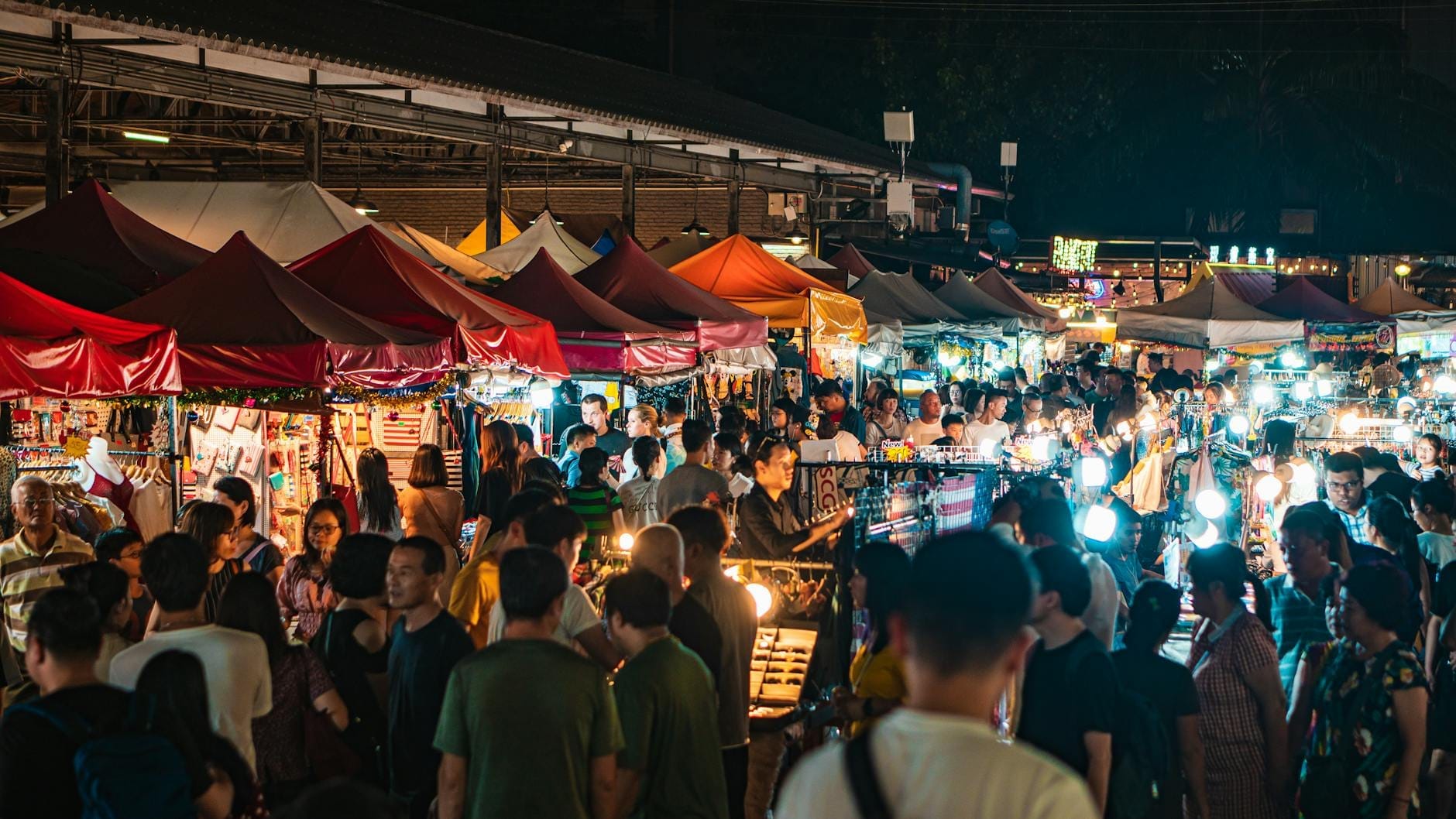
Thepprasit Weekend Market: Saturdays and Sundays on Thepprasit Road, a large and genuinely local market with cheap food, clothes, and household goods
Water sports along the beach: parasailing, jet skis, banana boats, windsurfing rentals all available from concessions on the sand
Koh Larn island day trip via Bali Hai Pier or direct from local boat operators
For larger-scale attractions, Nong Nooch Tropical Garden is the most significant draw in the immediate area. North of Jomtien, further into Pattaya proper, attractions like the Sanctuary of Truth and Terminal 21 Pattaya are reachable by songthaew or Grab within 30-40 minutes.
⚠️ What to skip
Jet ski rental on any Pattaya area beach carries well-documented risks of damage scams. Photograph the machine thoroughly before riding, and consider whether the activity is worth the hassle. If you do rent, use a vendor at the more organized northern section of the beach where there's more foot traffic and visibility.
Eating and Drinking
The food scene in Jomtien is built around convenience and value rather than destination dining. Along Jomtien Beach Road, a long line of open-fronted restaurants faces the sea, most of them serving both Thai and international menus aimed at the mixed local and expat crowd. Seafood is the default strength: grilled fish, green curry with prawns, steamed clams with lemongrass and chili. Prices at these beachfront spots are moderate by Pattaya standards, noticeably cheaper than similar spots on the main Pattaya strip, though still above what you'd pay at an inland Thai restaurant.
Jomtien Second Road, one block back, is where the real daily eating happens. Streetside noodle stalls, small Thai canteens, grilled pork skewer carts, and takeaway papaya salad vendors line this road through lunch and into the evening. A bowl of boat noodles or a plate of khao man gai (poached chicken on rice) runs well under 100 baht at most of these spots. Early risers will find congee (jok) carts and fried dough vendors active from around 6am near the Rompho Market area.
The Jomtien Complex, a cluster of shophouses about a block from the beach on the northern end, carries a concentration of bars and smaller restaurants with a mixed crowd. It is the closest thing Jomtien has to a nightlife zone, but it is low-key: outdoor seating, cold Singha, pool tables, and occasional live music rather than club-scale venues. The Rompho Market area on Second Road adds a similar relaxed beer-bar cluster with a local-expat atmosphere that runs through the evening.
For a broader overview of where to eat across Pattaya, the where to eat in Pattaya guide covers the full range from night markets to rooftop restaurants. Jomtien's Thepprasit Weekend Market deserves a specific mention: the food section of this Saturday-Sunday market is extensive, local-priced, and covers everything from grilled corn to freshly pressed sugarcane juice to full Thai barbecue sets.
Getting There and Around
From central Pattaya, the most straightforward route into Jomtien is via songthaew (the red shared pickup trucks that circulate on fixed routes). These run from the Pattaya Beach Road and Second Road area, heading south over the Thappraya Road hill and down into Jomtien. The fare is typically a flat rate per person, paid on arrival; confirm the price before boarding if you are unfamiliar with the current rate. The journey takes around 15 to 20 minutes depending on traffic on Thappraya Road.
Motorbike taxis are stationed at most soi intersections along Jomtien Beach Road and Second Road, useful for short hops between sois or to the Thepprasit Road junction. Grab, the regional ride-hailing app, works well in Jomtien and is particularly useful for reaching attractions in other parts of Pattaya without negotiating a fare upfront. Private taxis are available from most hotels and can be booked for half-day or full-day hire if you plan to visit multiple attractions.
For travelers arriving from Bangkok, the Eastern Bus Terminal (Ekkamai) and Mo Chit serve Pattaya, with buses dropping at the Pattaya bus terminal near North Pattaya. From there, a songthaew or Grab to Jomtien takes about 30 minutes. Those flying into U-Tapao International Airport, which sits roughly 30 kilometres south of Pattaya, will find Jomtien the closest major neighborhood in the greater Pattaya area, with taxis available at the airport.
💡 Local tip
Renting a bicycle or scooter is the most practical way to explore the full length of Jomtien Beach. The road alongside the beach is flat and manageable, and several rental shops operate on both Beach Road and Second Road. Daily rates are low. A bicycle covers the full six-kilometre stretch comfortably in under 30 minutes, and you can park at the Thepprasit Market end to browse on weekends.
For a full breakdown of transport options across the city, see the getting around Pattaya guide, which covers songthaew routes, Grab pricing, and rental considerations in more detail.
Where to Stay
Jomtien is one of the better value places to stay in the greater Pattaya area, partly because it sits slightly outside the central tourist corridor and partly because the high volume of long-stay guests keeps the mid-range hotel market competitive. The full length of Jomtien Beach Road is lined with hotels and condominiums of varying age and quality, ranging from basic guesthouses in the 500-900 baht per night range to four-star beachfront properties with pools and sea-view rooms.
The northern section of Jomtien, closest to Dongtan Beach and the Thappraya Road junction, is the most convenient for reaching central Pattaya and has the highest concentration of restaurants and bars within walking distance. This makes it the natural choice for travelers who want a calmer base but still plan to go into Pattaya regularly. The mid-section of the beach, between roughly Soi 5 and Soi 10, is quieter and suits longer stays or families. The far southern end near Na Jomtien feels increasingly residential and is best suited to travelers renting serviced apartments for a week or more.
Jomtien is a solid base for families in particular. The beach is calmer than Pattaya's main strip, the roads are less chaotic, and several of the area's family-oriented attractions are nearby. The Pattaya family guide has more on which parts of the city suit different types of family travel. For a broader accommodation comparison across neighborhoods, the where to stay in Pattaya guide is the most practical starting point.
ℹ️ Good to know
Many properties in Jomtien offer weekly and monthly rates significantly lower than their nightly price would suggest. If you are staying five or more nights, ask directly about extended-stay pricing, especially at smaller guesthouses and apartment-style condominiums. This is standard practice here and prices are generally negotiable outside peak season.
Honest Assessment: Who Jomtien Is For
Jomtien works well as a base if your priority is a reasonable beach, value accommodation, and a lower noise level. It does not work well if you want to be in the center of Pattaya's nightlife or if you want the beach to be the main event, given that Jomtien's sand and water, while better than Pattaya Beach, is not a destination beach by regional standards. For genuinely spectacular Thai beaches, you need to go further: Koh Larn by ferry, or further south toward Rayong and Koh Samet.
The neighborhood's relationship to the wider city is its main asset. From Jomtien, you can reach Underwater World Pattaya, the Thepprasit Market, Nong Nooch, and central Pattaya all within practical day-trip or evening-trip distance. The Pattaya itinerary guide can help you structure days from a Jomtien base without feeling like you are constantly commuting.
One thing worth stating plainly: Jomtien has its own bar and adult entertainment scene, particularly around the Jomtien Complex area. It is lower-key than Walking Street and largely confined to specific blocks, but travelers who want to completely avoid that environment should research their specific accommodation location before booking. The area between Soi 5 and Soi 10, mid-beach, is the most family-neutral stretch.
TL;DR
Jomtien Beach is Pattaya's quieter, more liveable coastal alternative: better for long stays, families, and travelers who want beach access without the full-volume party atmosphere of the main strip.
The beach runs six kilometres and is generally cleaner and calmer than Pattaya Beach, with water sports available in the northern and central sections.
Food and accommodation both offer strong value, with the mid-range hotel market particularly competitive due to high volumes of long-stay expat guests.
Getting into central Pattaya takes 15-20 minutes by songthaew or Grab, making Jomtien a workable base for exploring the full range of Pattaya's attractions.
Not ideal for travelers whose priority is nightlife, prestige dining, or a truly spectacular beach. For those, Walking Street or an island day trip are better answers.
Pattaya's weather divides into three distinct seasons, each with genuine trade-offs. This guide breaks down what to expect month by month, which festivals are worth planning around, and when to avoid peak-season prices without sacrificing your trip.
From 10-baht songthaew rides to Grab cars and scooter rentals, navigating Pattaya is easier than most first-timers expect. This guide covers every transport option, with honest fare breakdowns, route logic, and warnings about common tourist traps.
Pattaya sits at the center of one of Thailand's most varied regions. Within a short drive or boat ride, you can reach jungle islands, open-air zoos, ornate wooden temples, and vast botanical gardens. This guide covers the top day trips from Pattaya with real logistics, honest assessments, and everything you need to plan a great excursion.
Pattaya's reputation as a party city undersells it dramatically for families. From Southeast Asia's largest water park to an open zoo with 8,000 animals, the city offers a serious lineup of kid-friendly experiences. This guide covers where to go, what to skip, and how to make it work with children in tow.
Three days is enough time to see the best of Pattaya — from laser-etched Buddhas and ethical elephant sanctuaries to island-hopping off Koh Larn and the electric chaos of Walking Street. This day-by-day itinerary cuts the filler and tells you exactly where to go, when, and why.
Pattaya's nightlife runs far deeper than its reputation suggests. This guide covers every major scene, from the neon-lit clubs of Walking Street to the laid-back beer bars of Soi Buakhao and the city's best rooftop spots, with practical pricing, timing tips, and honest warnings about what to skip.
Pattaya packs more variety into one coastal city than most destinations manage across an entire country. This guide covers the top 25 things to do, from architectural wonders and ethical wildlife encounters to island escapes and world-class cabaret shows.
Pattaya's dining scene is far broader than most visitors expect. This guide cuts through the noise to show you exactly where to eat in Pattaya, whether you're after a 60-baht bowl of noodles from a songthaew stop or a candlelit beachfront table with grilled tiger prawns. Organized by neighborhood, budget, and cuisine type, with honest assessments of what's worth your time.
Choosing where to stay in Pattaya shapes your entire trip. This guide covers every major area, from the lively central beachfront to the quieter family-friendly streets of Jomtien, with honest assessments of who each neighborhood suits, realistic price ranges, and the hotels worth booking.