Jomtien Beach: Pattaya's Calmer, More Livable Shoreline
Stretching approximately 5 to 6 kilometers along the Gulf of Thailand just south of central Pattaya, Jomtien Beach trades the noise and density of the main strip for a more relaxed pace. Free to access, easy to reach by baht bus, and noticeably less crowded, it suits families, long-stay visitors, and anyone who wants actual sand time rather than a spectator sport.
Quick Facts
- Location
- Jomtien Beach Road, Nong Prue, Bang Lamung, Chonburi — approximately 2-3 km south of central Pattaya
- Getting There
- Baht bus (songthaew) from Pattaya Beach Road, approx. 10 THB; motorbike taxi via Thappraya Road, approx. 10 minutes
- Time Needed
- 2-4 hours for a relaxed beach day; a full day if you add watersports, lunch, and an evening walk
- Cost
- Free entry; sunbed rental and watersports cost extra (prices vary by vendor)
- Best for
- Families, long-stay travelers, watersports, morning walks, avoiding the Pattaya Beach crowds
- Official website
- www.tourismthailand.org/Attraction/jomtien-beach
What Jomtien Beach Actually Is
Jomtien Beach is a broad, roughly 6-kilometer stretch of sand running south from Pratamnak Cape along Jomtien Beach Road in Nong Prue Subdistrict, Bang Lamung District, Chonburi Province. It sits about 3 to 4 kilometers south of the main Pattaya Beach strip, separated from it by the headland road of Thappraya. That short distance makes an outsized difference in character.
Where Pattaya Beach packs sunbeds almost edge to edge and vendors approach every few minutes, Jomtien spreads its activity more loosely. The sand is wider in places, the road-side promenade is lined with mature trees that provide actual shade, and the mix of people skews toward families, retirees, and longer-stay expats rather than weekend party crowds. That is not to say it is deserted or untouched: there are plenty of beach chairs, food stalls, seafood restaurants, and watersport operators along the strip. But the pressure to spend money or move on is lower.
💡 Local tip
The baht bus route connecting Pattaya Beach Road to Jomtien Beach Road is one of the most useful in the city. Flag one down on Beach Road heading south, confirm Jomtien, and pay 10 THB. The ride takes around 15-20 minutes depending on traffic and stops.
How the Beach Changes Through the Day
Early mornings at Jomtien are genuinely pleasant in a way that midday beach visits in Thailand rarely are. Between roughly 6:30 and 8:30 am, the light is soft and low, the air temperature is manageable, and the beach belongs mainly to Thai locals doing exercise walks along the promenade, the occasional solo swimmer, and a few expat joggers. The water is calm at this hour and the horizon is usually clear. If you are staying nearby and want one good swim of the day, this is when to take it.
By mid-morning the sunbed operators have set up, the jet ski and banana boat crews are in position, and the beach fills steadily until early afternoon. The peak heat between noon and 3 pm makes extended beach time uncomfortable without shade, and the promenade trees become more relevant than the sand itself. Most of the beachside restaurants do brisk lunch business during this window.
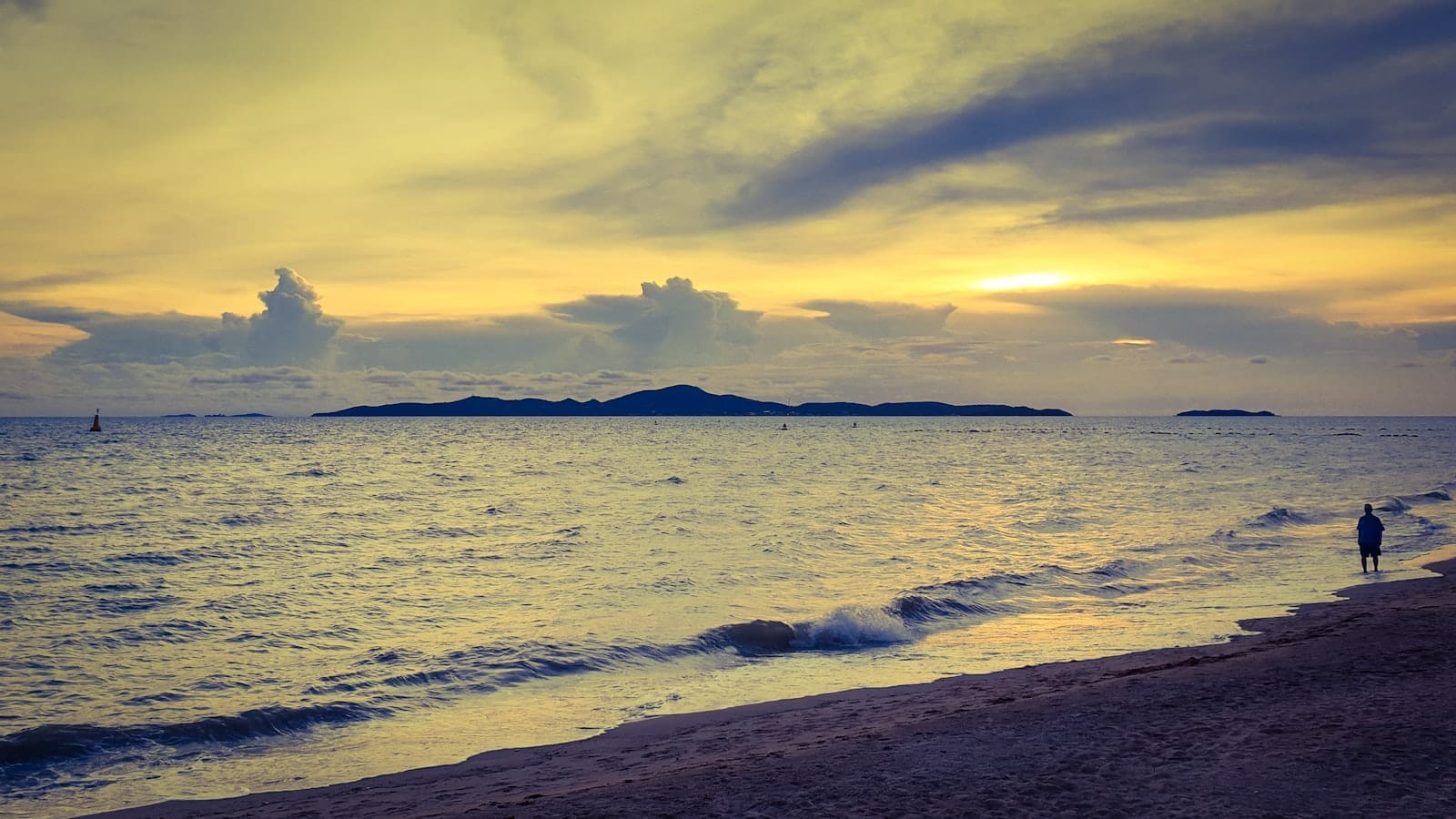
Late afternoon from around 4 pm onward brings a second comfortable window. The light turns golden, the temperature drops enough to make walking pleasant, and the beach takes on a more social character: families with children, couples, and groups gathering near the northern section where the restaurants and drink vendors are densest. Sunset over the Gulf of Thailand from Jomtien is a reliable event, with the sky often turning deep orange and pink above the water. This stretch of coast faces the Gulf of Thailand to the west, so the sun drops toward the water rather than behind buildings.
⚠️ What to skip
During the rainy season (roughly May to October), afternoon storms can develop quickly. The sky can go from clear to stormy in under an hour. If you see dark clouds building to the west or south, leave the water immediately. Swimming during or after heavy rain is inadvisable due to runoff.
Tickets & tours
Hand-picked options from our booking partner. Prices are indicative; availability and final rates are confirmed when you complete your booking.
Electric tuk tuk tour through Bangkok Thonburi and Wang Lang districts
From 53 €Instant confirmationFree cancellationBangkok's Bang Rak district walking tour with brunch
From 37 €Instant confirmationFree cancellationTuktuk Tour in Koh Sichang Island from Pattaya
From 106 €Instant confirmationFree cancellationIntroductory Group Muay Thai Boxing Lesson for Beginners in Pattaya
From 26 €Instant confirmationFree cancellation
The Water and Watersports
Jomtien's water quality is generally considered cleaner than Pattaya Beach, though neither meets the standard of a remote island beach. The Gulf here is shallow for a considerable distance from shore, which makes it suitable for children and casual swimmers but less interesting for snorkelers. Visibility varies significantly with weather and season: it is best in the dry months from November to April and can become murky after strong rain or during peak wind periods.
Watersports are well established along the beach. Jet skiing, banana boats, parasailing, and pedal boats are available from multiple operators. Prices are negotiated directly with operators and vary, so it is worth comparing before committing. Jomtien has been associated with windsurfing and kiteboarding, particularly when seasonal winds pick up between November and February. If those sports interest you, check locally for current rental and lesson availability.
For a different kind of water experience entirely, the island of Koh Larn sits offshore and offers snorkeling in considerably clearer water. Day trips from Bali Hai Pier in south Pattaya are easy to arrange and worth combining with a Jomtien beach day.
The Beach Road Strip: Food, Shade, and Practical Navigation
Jomtien Beach Road runs parallel to the sand for most of the beach's length. The inland side of this road holds the main concentration of restaurants, convenience stores, massage parlors, and small hotels. The tree-lined promenade between the road and the sand is one of the beach's more functional features: wide enough for comfortable walking, with benches at intervals and enough canopy to make a midday stroll possible.
Seafood is the obvious eating choice here. Several open-air restaurants along the strip serve grilled fish, prawns, and shellfish at prices that are noticeably lower than comparable places on Pattaya Beach. Ordering by weight is common practice: fish is displayed on ice at the entrance, you point to what you want, and it comes back grilled with rice and dipping sauces. The quality is generally reliable, though as with any beach restaurant, checking that fish smells and looks fresh before ordering is sensible.
The broader Jomtien neighborhood extends inland and is worth some exploration if you are spending more than a day here. For a wider picture of what the area offers beyond the beach, the Jomtien neighborhood guide covers accommodation options, local markets, and the streets behind the beachfront.
Seasonal Considerations and When to Visit
Jomtien follows the same weather pattern as the rest of Pattaya. The dry season from November through April brings the most reliable beach weather, with lower humidity, clear skies, and calmer seas. December and January are peak tourist months in Thailand. February and March offer a good balance of good weather and slightly thinner crowds. For a fuller breakdown of how seasons affect the region, the best time to visit Pattaya covers the trade-offs in detail.
The rainy season from May to October does not make Jomtien unusable, but it changes the rhythm significantly. Mornings are often clear and swimmable, with storms typically building in the afternoon. Many long-stay residents and expats who live near Jomtien continue using the beach through the rainy season by adapting their schedule rather than abandoning it. Beach chairs are cheaper, the vendors are less pushy, and the overall atmosphere is more local. If avoiding rain matters to you, book for the dry season. If you are flexible on weather and want lower prices and fewer tourists, the shoulder months of May and October can work well.
Getting There and Getting Around
The baht bus (songthaew) is the standard local transport option and works well for Jomtien. From Pattaya Beach Road, flag down a southbound baht bus, confirm it is heading to Jomtien, and pay 10 THB per person when you disembark. The route takes you down Beach Road, through South Pattaya, and along Jomtien Beach Road. Journey time varies with traffic but is typically 15 to 20 minutes depending on stops.
Motorbike taxis via Thappraya Road offer a faster alternative at around 10 minutes, useful if you are coming from the Pratumnak area or South Pattaya directly. Ride-hailing apps including Grab operate in Pattaya and can be used for a metered, price-confirmed trip to Jomtien if you prefer that predictability.
If you are renting a motorbike or car during your stay, the coastal road from central Pattaya through Pratumnak Hill to Jomtien is a pleasant drive with good views along the headland section. It adds time compared to going via Sukhumvit Road but the scenery justifies it on the right day.
Honest Limitations: Who Should Think Twice
Jomtien Beach is not a pristine tropical escape. The water is brown-green rather than turquoise, the sand has plastic and debris washed up after storms, and the vendor presence, while less aggressive than Pattaya Beach, is still present and persistent in the busier sections. Travelers arriving with expectations of a Krabi or Koh Lanta-style beach will find it does not compare.
For that kind of experience, Koh Larn is a better answer and is reachable by ferry. Equally, travelers visiting Pattaya primarily for nightlife or city activities may find Jomtien too far south to be worth the trip unless they are staying in the area.
Visitors with limited time in Pattaya who want to see the major sights efficiently should check the Pattaya itinerary guide to see how Jomtien fits into a wider schedule without becoming a time-consuming detour.
Insider Tips
- The northern tip of Jomtien Beach, where it meets Pratamnak Cape, is the cleanest and most photogenic section. Walk north from the central beach area for noticeably better sand quality and fewer jet ski operators.
- Massage prices along Jomtien Beach Road are lower than on Pattaya Beach Road for equivalent services. A 1-hour Thai massage at a reputable shop here will typically cost less than the tourist-facing prices you see near Walking Street.
- If you want a sunbed without paying sunbed rental fees, walk south toward the quieter mid-section of the beach. Away from the restaurant clusters, sections of open sand are genuinely free to use and less crowded.
- Plastic bags and foam debris wash up on the southern sections after heavy overnight rain. After a rainy night, stick to the northern third of the beach for a cleaner experience.
- The concrete promenade along Jomtien Beach Road is well-lit at night and used by locals for evening walks well past sunset. It is one of the more pleasant pedestrian stretches in the Pattaya area if you want a low-key evening without nightlife.
Who Is Jomtien Beach For?
- Families with children who want calmer, less chaotic beach time than central Pattaya offers
- Long-stay visitors and expats who live in or near Jomtien and use the beach as part of daily life
- Watersports enthusiasts, particularly those interested in parasailing, jet skiing, or seasonal windsurfing
- Travelers wanting seafood lunch by the water at reasonable prices in a relaxed setting
- Morning walkers and swimmers who want to beat the heat before the main tourist activity begins
Nearby Attractions
Other things to see while in Jomtien Beach:
- Pattaya Park Night Market
Pattaya Park Night Market sits in the Pratumnak neighborhood between Pattaya Beach and Jomtien, drawing a mixed crowd of expats, locals, and curious visitors. Free to enter, unhurried in pace, and heavy on Thai street food, it offers a grounded alternative to the more commercialized night markets closer to the city center.
- Underwater World Pattaya
Underwater World Pattaya is a full-scale indoor aquarium in Jomtien featuring a 105-metre acrylic glass tunnel, Thailand's largest jellyfish collection, and over 5,000 marine animals. It offers a solid rainy-day option for families and anyone curious about the Gulf of Thailand's ecosystems without getting wet.