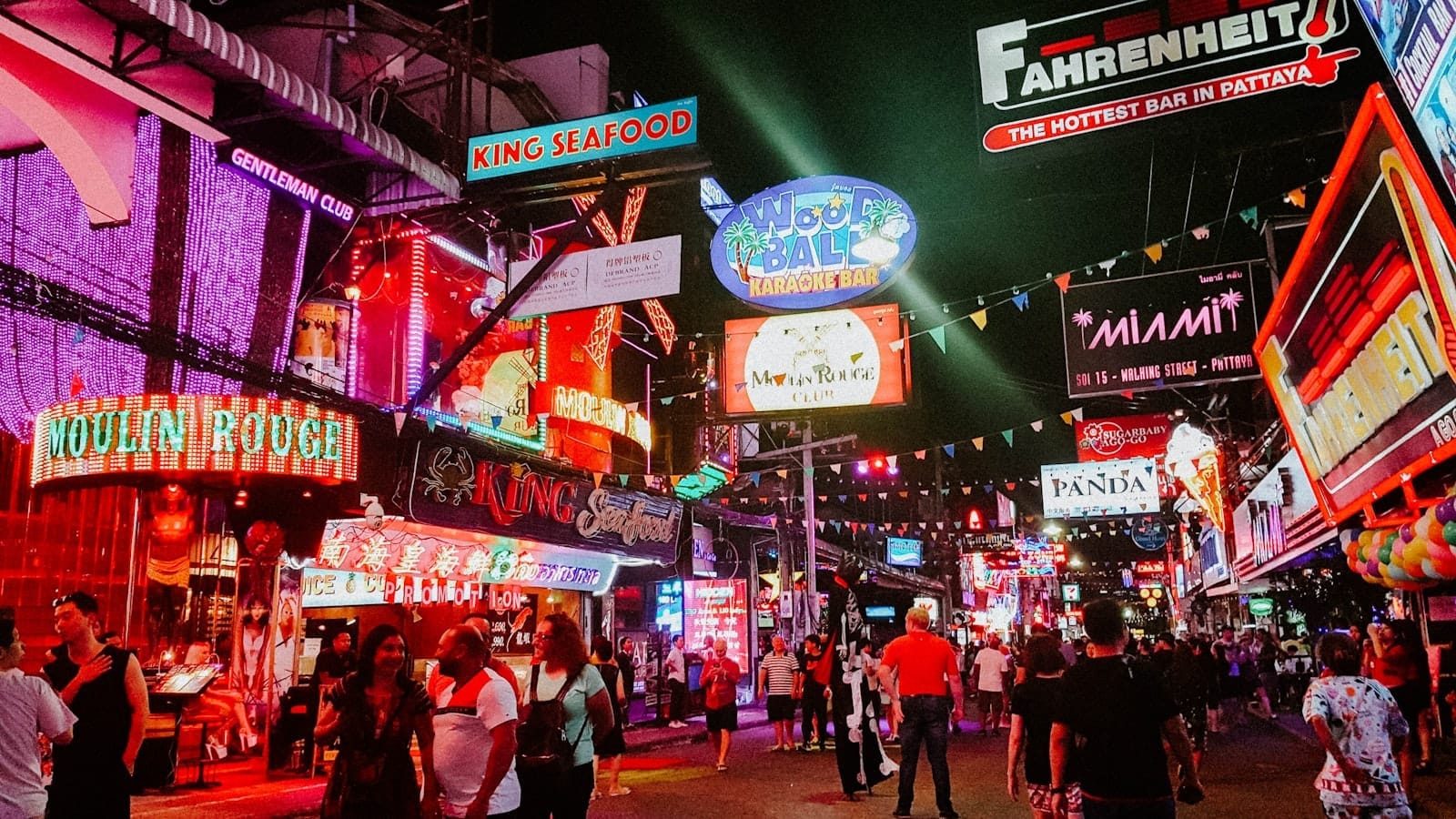
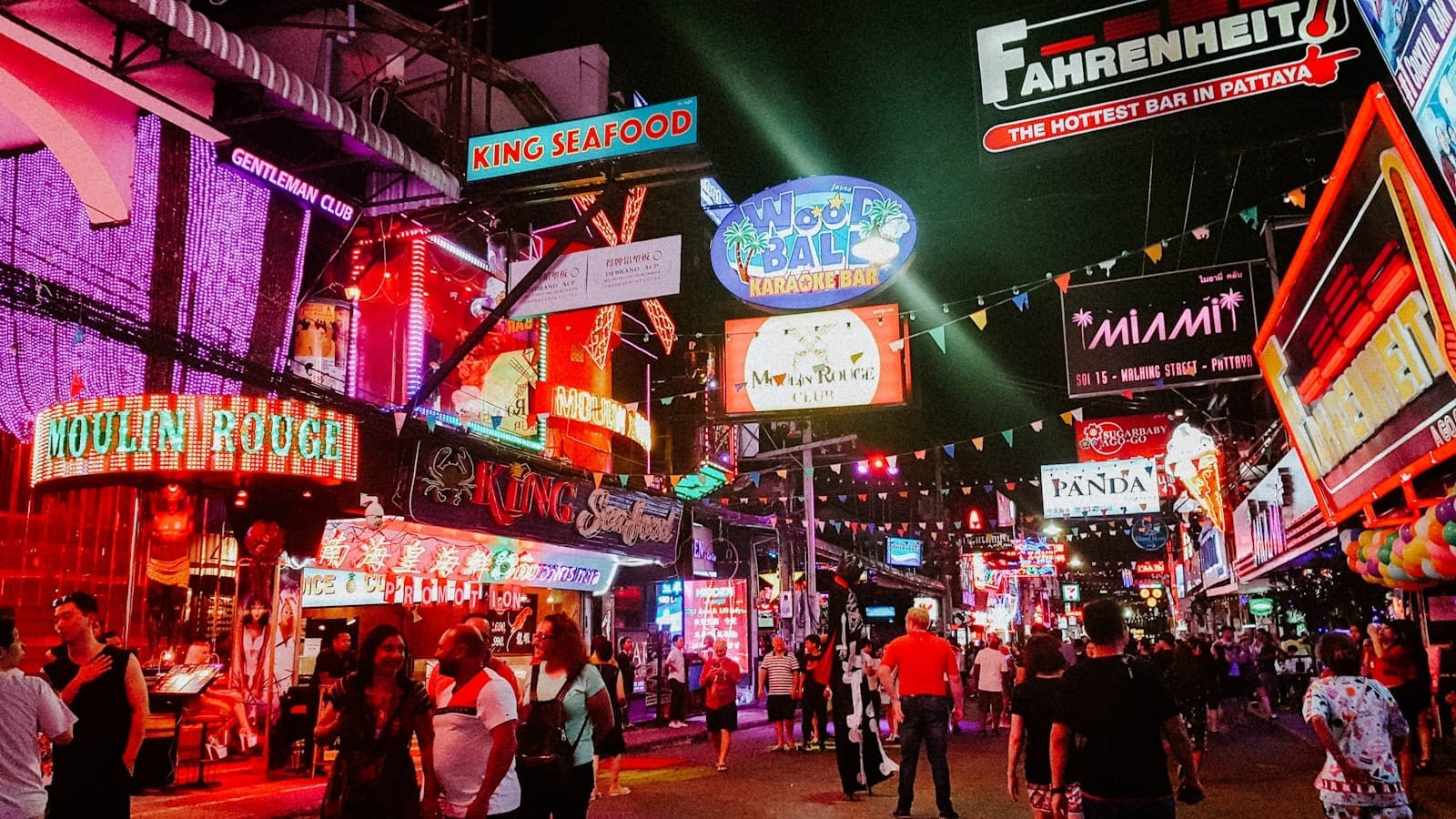
Walking Street is the southern anchor of Pattaya Beach Road, a 500-meter strip that transforms from a quiet seaside road into the city's loudest entertainment zone after dark. South Pattaya surrounds it with seafood restaurants, ferry connections to Koh Larn, and a concentration of nightlife that draws visitors from across Thailand and beyond.
Walking Street is the place Pattaya is most famous for and most misunderstood because of. A pedestrian-only strip from 7 PM onward, it runs from the base of Beach Road south to Bali Hai Pier, packing clubs, go-go bars, live music, and seafood restaurants into roughly 500 meters. South Pattaya as a whole is louder, rawer, and more chaotic than anywhere else in the city, but it also contains the pier for Koh Larn ferries, some of the best open-air seafood dining in the region, and a street energy that is genuinely unlike anywhere else in Southeast Asia.
Orientation
South Pattaya occupies the southern tip of the city's main coastal strip. Walking Street itself is a single road running roughly north to south, beginning at the intersection where Beach Road curves away from the waterfront and ending at Bali Hai Pier, the main departure point for boats to Koh Larn island. The street is approximately 500 meters long, flanked on both sides by multi-story entertainment venues, with narrower sois (side alleys) branching off into clusters of beer bars and smaller clubs.
To the north, South Pattaya bleeds into central Pattaya along Beach Road and Second Road (Pattaya 2 Road), which runs parallel one block inland. Central Pattaya and its commercial core are a 10-15 minute walk or a short songthaew ride away. To the south and east, the road system connects toward Pratumnak Hill, the quieter residential headland that separates South Pattaya from Jomtien. Jomtien Beach is roughly 3-4 kilometers south, accessible via Thappraya Road, which climbs over Pratumnak Hill before descending to Jomtien's more family-oriented shoreline.
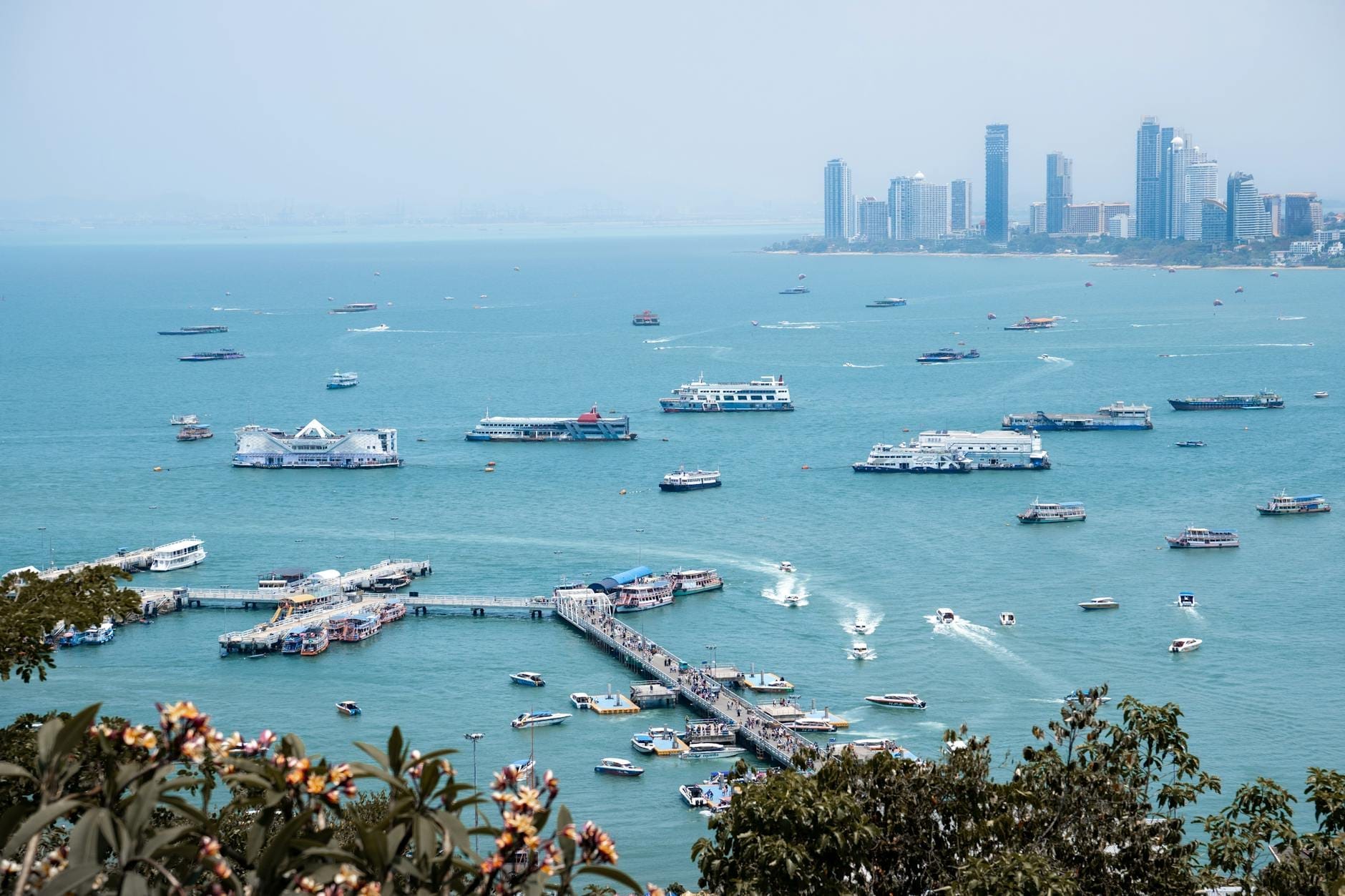
Bali Hai Pier at the southern end of Walking Street is one of the most important transport nodes in Pattaya. It is the main jumping-off point for ferries to Koh Larn island, speedboat charters, and various sea excursions. The pier has a large parking area, making it a natural landmark for orienting yourself in this part of the city.
ℹ️ Good to know
Walking Street becomes pedestrian-only from 19:00 to 03:00. During daylight hours, vehicles can pass through, and the street has an almost ordinary commercial character. The transformation after sunset is dramatic and rapid.
Character & Atmosphere
During the day, South Pattaya operates at a lower frequency than you might expect. The morning hours are genuinely quiet. Walking Street sees delivery trucks resupplying bars, cleaning crews hosing down the pavement, and a handful of tourists walking to Bali Hai Pier for the early Koh Larn ferry. The light is flat and a little harsh off the concrete, and you can actually see the architecture clearly: a mix of converted shophouses, purpose-built entertainment venues, and corrugated-roof beer bar complexes that sit dark and shuttered. Seafood restaurants along the road and on the side streets do good lunch business, mostly with Thai day-trippers and workers from the area.
By late afternoon, the energy starts to shift. Neon signs flicker on before they need to, security staff appear at doorways, and the smell of cooking oil and grilling seafood intensifies along the restaurant stretches. The street fills with a particular kind of anticipatory energy, the way any entertainment district does in the hour before it fully wakes up. Families and couples out for early dinner share the space with groups warming up for a long night, and for an hour or two around sunset the mix of people is more varied than it will be at midnight.
After 19:00, when the barriers go up and Walking Street goes pedestrian-only, the transformation is complete. The bass from multiple clubs competes across the street. Touts stand outside go-go bars calling to passersby. Live music pours out of open-fronted venues. Neon and LED signage turns the road into a corridor of artificial light that makes it feel much later than it is. The crowd is predominantly male and international, with tourists from Europe, the Middle East, Russia, China, and South Korea all mixing in a way that feels genuinely cosmopolitan, if not exactly refined. Peak hours run from around 22:00 to 02:00, and the street stays busy well past the official 03:00 closing time that venues are supposed to observe.
⚠️ What to skip
Walking Street after 20:00 is not appropriate for children. The adult entertainment content is explicit and unavoidable. Some venues operate past their licensed hours. Keep track of your belongings in crowded areas, particularly around peak hours when the street is densest.
What to See & Do
The most straightforward thing to do on Pattaya Walking Street is simply walk it. From end to end takes less than 10 minutes without stopping, so most people do multiple passes, ducking into bars or venues that catch their interest. The street's character changes as you move from north to south: the northern section near Beach Road tends toward live music bars and open-fronted venues; the middle stretch is where the largest clubs and go-go bars concentrate; the southern end near Bali Hai Pier is quieter, with seafood restaurants and the pier entrance itself.
The clubs on Walking Street range from mid-size live music venues to large-format nightclubs. Insomnia and Lucifer Disco are among the longest-established names, both operating as multi-floor venues with DJ sets, live acts, and significant sound systems. Mixx Discotheque is another established venue in the area. These are proper nightclubs with cover charges or drink minimums, not bar-format spaces, and they attract a mixed crowd of tourists and expats looking for a full night out rather than a quick drink.
During the day, the main attraction in this part of Pattaya is Bali Hai Pier, which connects South Pattaya to Koh Larn. The regular passenger ferry takes 30-45 minutes and costs a fraction of what speedboat charters charge. If you are planning a day trip to the island's beaches or Koh Larn snorkeling spots, catching the morning ferry from Bali Hai is the standard approach. The pier area also has boat charter offices for private speedboats, parasailing, and fishing trips.
Walk the full length of Walking Street after dark, even if nightlife is not your primary interest — the spectacle is worth one pass
Take the morning ferry from Bali Hai Pier to Koh Larn for a full day at the beach
Check the schedule for cabaret shows if you want entertainment with more structure — Alcazar and Tiffany's are in other parts of Pattaya but easy to reach
Explore the side sois off Walking Street for a denser, less touristed version of the bar scene
Watch the pier activity in the early morning when fishing boats return and the Koh Larn ferry loads up
If you want to contrast the Walking Street experience with something more theatrical and curated, the Tiffany's Show and Alcazar Show are both located in North and Central Pattaya respectively, a short songthaew ride away. These cabaret shows offer a polished alternative for those who want evening entertainment without the rawness of Walking Street.
Eating & Drinking
The food scene in South Pattaya is better than the neighborhood's reputation might suggest. The restaurants closest to Walking Street and along the streets running parallel to it lean heavily on seafood, and for good reason: the proximity to the pier means fresh fish and shellfish are a genuine draw. Large open-air seafood restaurants operate along the strip, where you can pick your fish, crab, or prawns from ice beds at the entrance and have them cooked to order. Prices are mid-range by Thai standards, and quality is generally consistent. These restaurants do solid business well into the early hours because the nightlife crowd needs to eat.
Street food vendors set up along the edges of Walking Street from late afternoon onward, selling grilled skewers, pad thai, papaya salad, and fruit. These are the cheapest eating options in the area and are perfectly reliable for a quick meal before or between venues. The quality follows the usual Thai street food logic: simple dishes cooked fast, with fresh ingredients, at prices that make eating well very accessible.
The bar scene ranges from large nightclubs with cocktail menus to simple open-air beer bars where a cold Chang or Singha is the primary offering. Beer bars are the most affordable drinking option: plastic stools, a bar counter, and a small staff, usually selling beer, spirits, and simple mixed drinks at prices well below what the nightclubs charge. These bars line the side sois off Walking Street and are where many regulars spend the first part of their evening before the clubs hit their stride.
💡 Local tip
If you want seafood without the Walking Street crowds, look for restaurants on the streets running parallel to the strip or slightly inland. They serve similar food at similar prices but with less ambient noise and fewer touts. Lunch at these spots, particularly on weekdays, is significantly cheaper than dinner.
Getting There & Around
The most common way to reach Walking Street from central or north Pattaya is by baht bus, the blue songthaews (modified pickup trucks) that circulate along Beach Road and Second Road. These run a loop route and charge a flat fare of around 20-30 baht per person for travel within the city. From Beach Road heading south, the baht bus will bring you to the northern entrance of Walking Street in minutes. For a full overview of how to navigate the city's transport network, the getting around Pattaya guide covers songthaew routes, taxis, and Grab in detail.
Taxis and Grab are available throughout South Pattaya and are the easiest option for door-to-door travel, particularly late at night when baht buses may be less frequent or when you are leaving the clubs and want a direct ride. Negotiate the fare with taxis before getting in if they do not use the meter, which is common practice in Pattaya. Grab tends to be more transparent on pricing and is worth having on your phone.
From Jomtien, South Pattaya is reachable by baht bus via Thappraya Road over Pratumnak Hill, or by taxi in around 10-15 minutes depending on traffic. From North Pattaya, the ride along Beach Road or Second Road takes around 15-20 minutes by baht bus. There is no metro, BTS, or rail link in Pattaya; all surface travel is by road.
Walking Street itself is pedestrian-only from 19:00 to 03:00, so once you are on the strip, everything is on foot. The street is flat and compact, and moving between venues is a matter of walking 50-200 meters in either direction. The side sois branching off the main strip are passable on foot but can be narrow and crowded at peak hours. Bali Hai Pier at the southern end has a large parking area, useful if you are arriving by motorbike or rented vehicle from another part of the city.
Where to Stay
Staying in South Pattaya puts you within walking distance of Walking Street and Bali Hai Pier, which is a genuine advantage if nightlife is your main reason for being in Pattaya. Hotels in the immediate area range from budget guesthouses and short-stay properties to mid-range hotels with pools and sea views. Be aware that being close to Walking Street means noise: even several blocks away, the bass from the clubs carries through the night, and the street itself does not quiet down until the early hours of the morning. Light sleepers should either choose a hotel with good soundproofing and air conditioning or reconsider this location. For a broader look at accommodation options across the city, the where to stay in Pattaya guide gives context on all the main areas.
Travelers who want proximity to the ferry for Koh Larn but prefer quieter surroundings in the evenings will find that the streets immediately around Pratumnak Hill offer a reasonable compromise: close enough to South Pattaya to walk or take a short ride, but removed enough from the strip to sleep at a normal hour. Pratumnak also has the advantage of some of Pattaya's better mid-range and boutique hotels, with slightly more residential surroundings.
The South Pattaya accommodation market caters heavily to solo male travelers and short-stay visitors. Families, couples seeking a romantic atmosphere, or travelers primarily interested in daytime sightseeing will generally find better-suited accommodation in central Pattaya or Jomtien. That is not a criticism of the area, just an accurate read of what the local hotel market is optimized for.
Honest Assessment: Who This Neighborhood Is For
Walking Street and South Pattaya do exactly what they are designed to do, and they do it at a scale that is hard to find elsewhere in Thailand. If you are curious about Pattaya's nightlife reputation, want to experience one of Southeast Asia's most concentrated entertainment districts, or are planning a full night out in a city that does not sleep early, this is the right part of the city. The energy is real, the variety is extensive, and there is a certain organized chaos to Walking Street at midnight that is, at minimum, worth seeing once.
What this neighborhood is not: a relaxing base, a family-friendly area in the evenings, or a place that reveals much about Thai culture and daily life. The daytime hours are better for that, particularly around the pier and the seafood market activity. For cultural depth, you will need to travel to other parts of the city or take one of the Pattaya day trips that reach beyond the beach strip entirely.
TL;DR
Walking Street is Pattaya's most concentrated nightlife zone: a 500-meter pedestrian strip from Beach Road to Bali Hai Pier, pedestrian-only from 19:00 to 03:00, with clubs, go-go bars, live music venues, and seafood restaurants packed into a single road.
The area transforms completely between day and night — quiet and manageable in the morning, full-volume entertainment district after dark, with peak crowds between 22:00 and 02:00.
Not appropriate for children after early evening; noise levels make it a poor choice for light sleepers or travelers primarily interested in daytime sightseeing.
Best suited to solo travelers or groups whose primary interest is nightlife, and to anyone using Bali Hai Pier as a base for day trips to Koh Larn.
Daytime South Pattaya offers good seafood dining, easy ferry access to Koh Larn, and a more relaxed character that is worth experiencing before the evening crowds arrive.
Pattaya's weather divides into three distinct seasons, each with genuine trade-offs. This guide breaks down what to expect month by month, which festivals are worth planning around, and when to avoid peak-season prices without sacrificing your trip.
From 10-baht songthaew rides to Grab cars and scooter rentals, navigating Pattaya is easier than most first-timers expect. This guide covers every transport option, with honest fare breakdowns, route logic, and warnings about common tourist traps.
Pattaya sits at the center of one of Thailand's most varied regions. Within a short drive or boat ride, you can reach jungle islands, open-air zoos, ornate wooden temples, and vast botanical gardens. This guide covers the top day trips from Pattaya with real logistics, honest assessments, and everything you need to plan a great excursion.
Pattaya's reputation as a party city undersells it dramatically for families. From Southeast Asia's largest water park to an open zoo with 8,000 animals, the city offers a serious lineup of kid-friendly experiences. This guide covers where to go, what to skip, and how to make it work with children in tow.
Three days is enough time to see the best of Pattaya — from laser-etched Buddhas and ethical elephant sanctuaries to island-hopping off Koh Larn and the electric chaos of Walking Street. This day-by-day itinerary cuts the filler and tells you exactly where to go, when, and why.
Pattaya's nightlife runs far deeper than its reputation suggests. This guide covers every major scene, from the neon-lit clubs of Walking Street to the laid-back beer bars of Soi Buakhao and the city's best rooftop spots, with practical pricing, timing tips, and honest warnings about what to skip.
Pattaya packs more variety into one coastal city than most destinations manage across an entire country. This guide covers the top 25 things to do, from architectural wonders and ethical wildlife encounters to island escapes and world-class cabaret shows.
Pattaya's dining scene is far broader than most visitors expect. This guide cuts through the noise to show you exactly where to eat in Pattaya, whether you're after a 60-baht bowl of noodles from a songthaew stop or a candlelit beachfront table with grilled tiger prawns. Organized by neighborhood, budget, and cuisine type, with honest assessments of what's worth your time.
Choosing where to stay in Pattaya shapes your entire trip. This guide covers every major area, from the lively central beachfront to the quieter family-friendly streets of Jomtien, with honest assessments of who each neighborhood suits, realistic price ranges, and the hotels worth booking.