Ximen Red House: A Century-Old Market That Became Taipei's Creative Heart
The Ximen Red House is a striking octagonal red-brick building from 1908 that has reinvented itself as one of Taipei's most culturally layered venues. Originally Taiwan's first government-built public market, it now houses indie designer boutiques, live performances, and one of the city's most welcoming LGBTQ+ social scenes. Entry to the building is free, and it sits less than a minute from Ximen MRT station.
Quick Facts
- Location
- No. 10, Chengdu Rd., Wanhua District, Taipei
- Getting There
- Ximen Station (Blue Line and Green Line), Exit 1 — approx. 1-minute walk
- Time Needed
- 45 minutes to 2 hours, depending on events
- Cost
- Free general admission; theater performances NT$150–600
- Best for
- Architecture lovers, design shoppers, LGBTQ+ travelers, evening socializing
- Official website
- www.redhouse.taipei
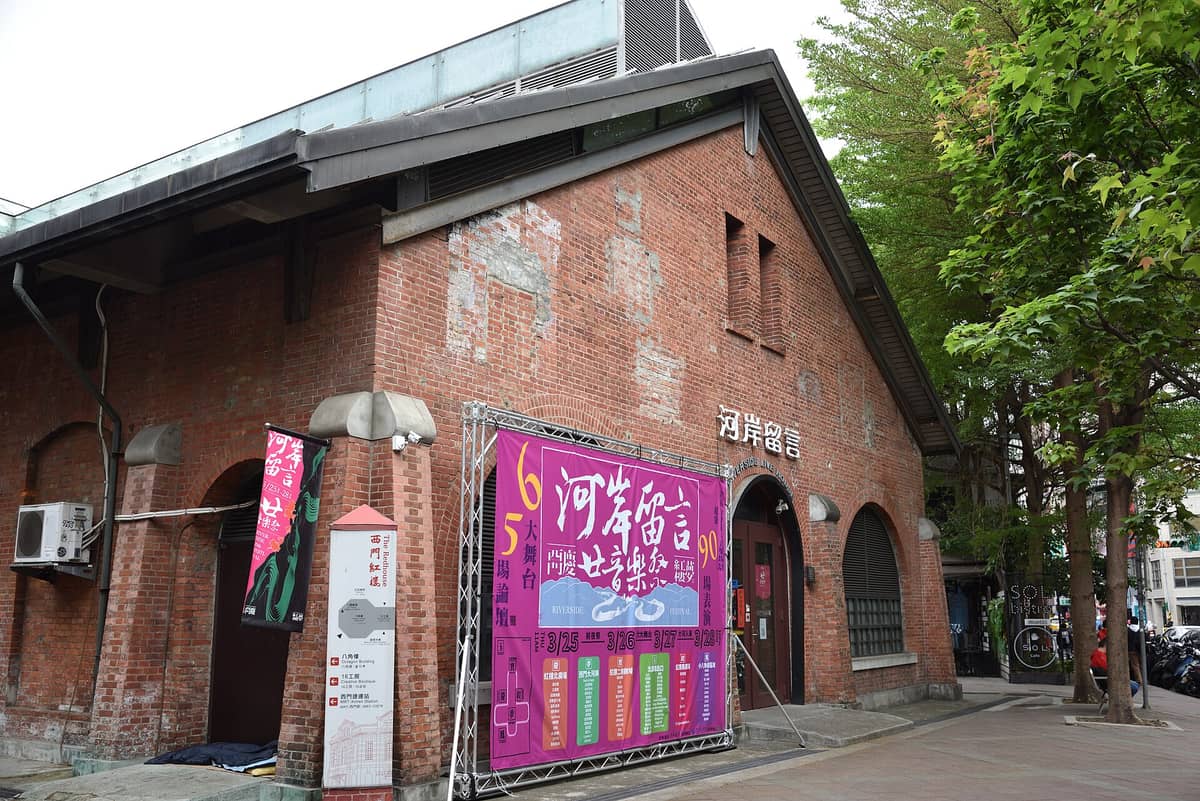
What Is the Ximen Red House?
The Ximen Red House (西門紅樓) is a heritage-listed red-brick structure at the edge of Ximending's pedestrian zone, and one of the few buildings in Taipei that has genuinely earned its place in the city's history without being overrestored into a theme park. Built in 1908 under Japanese colonial administration, it holds the distinction of being Taiwan's first government-constructed public market. Over a century later, it still draws crowds every week — not for nostalgia, but because the programming is actually good.
The building's distinctive form — an octagonal main hall connected to a cross-shaped rear annex — was unusual for its time and remains immediately recognizable. The deep-red brick exterior, arched windows, and Western-influenced detailing reflect the architectural ambitions of the colonial period, when Japanese planners were actively reshaping Taipei's urban fabric. Today the building is managed by the Taipei City Department of Cultural Affairs and functions as a performing arts venue, creative market space, and community gathering point.
ℹ️ Good to know
Opening hours: Tuesday to Thursday 11:00–21:30; Friday and Saturday 11:00–22:00; Sunday 11:00–21:30; closed Monday. Hours for specific areas may vary by event. Confirm details at redhouse.taipei before visiting.
The Architecture: More Than a Pretty Facade
The main octagonal hall is the most photogenic element — its geometry stands in sharp contrast to the mostly rectangular streetscape of Ximending around it. Each of the eight sides features tall arched windows that flood the interior with diffused natural light during the day. The brickwork itself repays close attention: the laying pattern and the slightly weathered surface texture give the building a weight and warmth that newer constructions rarely achieve.
The rear cross-shaped annex, which was originally a covered market arcade, is where most of the indoor commercial activity now takes place. The spatial flow between the octagonal hub and the extended wings gives the venue an unusual sense of depth for a building of its age. Walking from the entrance through to the rear courtyard, the scale changes gradually — tight corridors open into broader market halls, and then out onto an open plaza that feels genuinely separate from the street noise outside.
For context on how this building fits into Taipei's broader stock of preserved colonial architecture, the North Gate (Beimen) and the National Taiwan Museum Railway Department offer compelling comparisons from the same era.
What to Expect Inside: Markets, Performances, and a Courtyard Scene
The ground floor of the main hall is used for rotating exhibitions and cultural events, while the rear annex houses a permanent creative market known as the 16 Workshop Clusters (十六工房). This section operates year-round and features roughly 16 small independent booths selling handmade jewelry, illustration prints, leather goods, ceramics, and apparel. The quality varies considerably from stall to stall, but it is genuinely a place to find independent Taiwanese designers rather than mass-produced souvenirs. Prices are reasonable by Taipei standards.
Upstairs in the octagonal tower, a small theater space hosts spoken word, fringe theater, and live music performances. Tickets for events here typically range from NT$150 to NT$600 depending on the production. The schedule changes monthly, and some performances are in Mandarin only, so non-Mandarin speakers should check the program before planning their visit around an event.
The outdoor plaza to the rear of the building is where the atmosphere becomes most informal. A row of small bars lines the edge of the space, and on weekend evenings the seating spills outward, filling the courtyard with a relaxed crowd. This area has become one of Taipei's most prominent LGBTQ+ social spaces, with a concentrated cluster of gay-friendly bars and an atmosphere that is openly welcoming. Rainbow flags are a fixture, and the crowd on Friday and Saturday nights is noticeably diverse and international.
💡 Local tip
If you want to experience the courtyard bar scene, Friday and Saturday evenings from around 20:00 onward are when it is most active. Weekday evenings are quieter and better suited to browsing the market stalls without congestion.
How the Experience Changes by Time of Day
Arriving in the late morning on a weekday is a completely different experience from a Saturday evening. The morning light catches the brick at a low angle, bringing out the reddish-orange tones of the facade. At this hour, the building is quiet enough to walk around the exterior uninterrupted and appreciate the details — the carved keystones above the arched windows, the decorative brick banding, the worn steps at the entrance. A handful of visitors take photographs. The market inside may not yet be fully open.
By mid-afternoon, the interior market is active and the ground-floor exhibition space sees a steady flow of visitors. Street noise filters in from Ximending's main strip nearby. The smell of the vendor area is a mix of fabric, wood shavings from the craft stalls, and occasionally incense from a nearby temple — a sensory combination that feels distinctly Taiwanese.
After dark, the Red House takes on a different energy entirely. The exterior is lit in warm amber tones, making the brick glow against the surrounding neon signage of the district. The courtyard fills up, voices rise, and music drifts from the bar fronts. If you are passing through Ximending for dinner or nightlife, the Red House plaza is a natural stopping point even if you do not go inside.
Getting There and Getting Around
Access is straightforward. Take the Taipei Metro Blue Line (Banqiao–Nangang Line) to Ximen Station and use Exit 1. The Red House is visible almost immediately as you surface — the red-brick octagon sits directly at the entrance to the pedestrian zone. Total walking time from the exit barriers is under two minutes. There is no need to navigate through Ximending's busier commercial alleys to find it.
Several bus routes (including 3, 18, 221, 232, 235, 257, and others) stop in the Ximen area, though the MRT is the most reliable option. For a broader overview of getting around the city, Taipei's public transport guide covers MRT, bus, and bike options in detail.
Accessibility to the building is partial rather than fully barrier-free. The exterior ground level and the rear courtyard are broadly accessible, but the upper floors and some interior areas have limitations. Visitors with mobility requirements should contact the venue directly before visiting to confirm current access arrangements.
Cultural Significance: From Market to Community Landmark
When the Red House opened in 1908, it was a novel piece of civic infrastructure: a covered, government-managed market designed to consolidate street trading and improve sanitation in what was then a rapidly developing colonial city. The octagonal form was not purely aesthetic — it allowed for multiple entrances and efficient circulation for market traffic. Over the following decades, the building changed hands and functions several times, serving variously as a cinema, a theater, and a storage space.
The building's current identity took shape in the early 2000s, when it was restored and reprogrammed as a cultural venue under city management. The decision to allow the rear courtyard to evolve organically into an LGBTQ+ social hub was not a top-down policy directive but rather a reflection of what the community itself chose to build there. Over time, the Red House became closely associated with Taipei Pride and the broader culture of openness that the city has developed around LGBTQ+ rights in Taiwan.
Ximending itself has a long history as Taipei's counterculture district, a reputation that predates the Red House's renovation. The neighborhood's mix of youth fashion, street food, independent cinema, and alternative subcultures makes it one of the more genuinely layered parts of the city. For more context on the district, the Ximending neighborhood guide covers the full area.
Practical Notes and Who Should Consider Skipping It
The Red House is free to enter and easy to combine with a broader Ximending visit, so the threshold for stopping in is low. For architecture enthusiasts, the building alone justifies a 20-minute detour. For shoppers interested in independent Taiwanese design, the weekend market is worth 30 to 45 minutes. For anyone interested in Taipei's LGBTQ+ scene, the courtyard bars on a Friday or Saturday evening are a reliable first stop.
However, travelers who are not drawn to the cultural programming, the market scene, or the nightlife may find the Red House underwhelming as a standalone attraction. The interior exhibition spaces are modest in scale, and the market stalls, while charming, are not extensive. If your primary interest is Taiwanese history or architecture and you are working through a packed itinerary, the Red House works better as a complement to a longer Ximending walk than as a destination on its own.
Families with young children will find the daytime market and exterior pleasant enough, but the venue's energy skews toward evening visitors and an adult audience, especially on weekends. The street scene around Ximending itself — with its street food stalls and open plazas — may hold more immediate appeal for children than the building's interior.
⚠️ What to skip
Monday closures apply across the board. If your Taipei itinerary places you in Ximending on a Monday, plan around this — the building will be shut and the courtyard will be quiet.
If you are planning a full day in the area, the Longshan Temple is a 10-minute walk south and makes a natural pairing with the Red House for a morning of contrasting historical layers. For evening plans beyond the courtyard, the broader Taipei nightlife guide covers options across the city.
Insider Tips
- The rear courtyard bars get crowded after 21:00 on weekends. Arriving at 19:30–20:00 gives you time to claim a seat before the peak crowd arrives, and you will find staff more attentive in the first hour.
- The building's exterior is at its most photogenic in the 30 minutes before sunset, when the low-angled light turns the brick a deep amber. Position yourself on the Chengdu Road side with the facade filling the frame and the street narrowing behind you.
- The 16 Workshop Clusters market is more active on weekend afternoons when more vendors are present. Some stalls operate on reduced hours or skip weekday shifts entirely, so if you are there to browse specific designers, aim for Saturday between 14:00 and 18:00.
- If you want to attend a theater performance, check the official schedule at redhouse.taipei several days in advance. Popular shows sell out, and the booking interface is easier to navigate on a desktop browser than on mobile.
- The alley immediately behind the courtyard connects to a quieter section of Ximending that most short-stay visitors miss entirely — smaller restaurants, local convenience stores, and a noticeably less commercial atmosphere than the main pedestrian strip.
Who Is Ximen Red House (Red House Theater) For?
- Architecture and heritage travelers who want context beyond a photograph
- LGBTQ+ travelers looking for a relaxed, central social venue with a genuine community feel
- Design-conscious shoppers interested in independent Taiwanese makers rather than chain retail
- Evening visitors combining the Red House with a wider Ximending food and nightlife circuit
- Travelers on a tight budget who want cultural depth without admission costs