Wekiwa Springs State Park: Orlando's Best Natural Swimming Hole
Wekiwa Springs State Park in Apopka offers year-round swimming in crystal-clear 72°F spring water, canoe and kayak rentals on the Wekiva River, miles of hiking trails through Florida scrub and floodplain forest, and developed campgrounds. It is one of the closest genuine natural escapes to the Orlando theme park corridor.
Quick Facts
- Location
- 1800 Wekiwa Circle, Apopka, FL 32712 — approx. 30 min northwest of downtown Orlando
- Getting There
- Car is essential; no direct public transit. Use GPS or mapping apps for directions from I-4 or SR-436.
- Time Needed
- Half day minimum; full day recommended if paddling or camping
- Cost
- $6 per vehicle (up to 8 people); $4 single-occupant; $2 pedestrians/cyclists. Primitive camping is $5 per person per night plus tax; developed campsites are $24 per night plus tax when the campground is open.
- Best for
- Families, paddlers, nature hikers, campers, anyone needing a break from theme park crowds
What Wekiwa Springs Actually Is
Wekiwa Springs State Park is a Florida state park protecting a second-magnitude freshwater spring system at the headwaters of the Wekiva River, located in Apopka, roughly 30 minutes northwest of downtown Orlando. It is managed by the Florida Department of Environmental Protection and open for day use from 8:00 a.m. until sundown, 365 days a year. The spring itself feeds a swimming area with water that holds a constant temperature near 72°F (22°C) regardless of season, which makes it refreshing in summer and surprisingly brisk in December.
Beyond the swimming hole, the park protects a diverse mosaic of Florida habitats: sandhill, scrub, floodplain forest, and wetlands. That ecological range is why the wildlife list here is unusually long, including white-tailed deer, river otters, Florida black bears (yes, genuinely possible), gopher tortoises, wading birds, and the occasional manatee in the Wekiva River during cooler months.
ℹ️ Good to know
Practical note: The spring swimming area can reach capacity on warm weekends, triggering temporary parking closures at the entrance. Arriving before 9:30 a.m. on Saturdays and Sundays dramatically improves your chances of getting in without a wait.
The Spring and Swimming Area
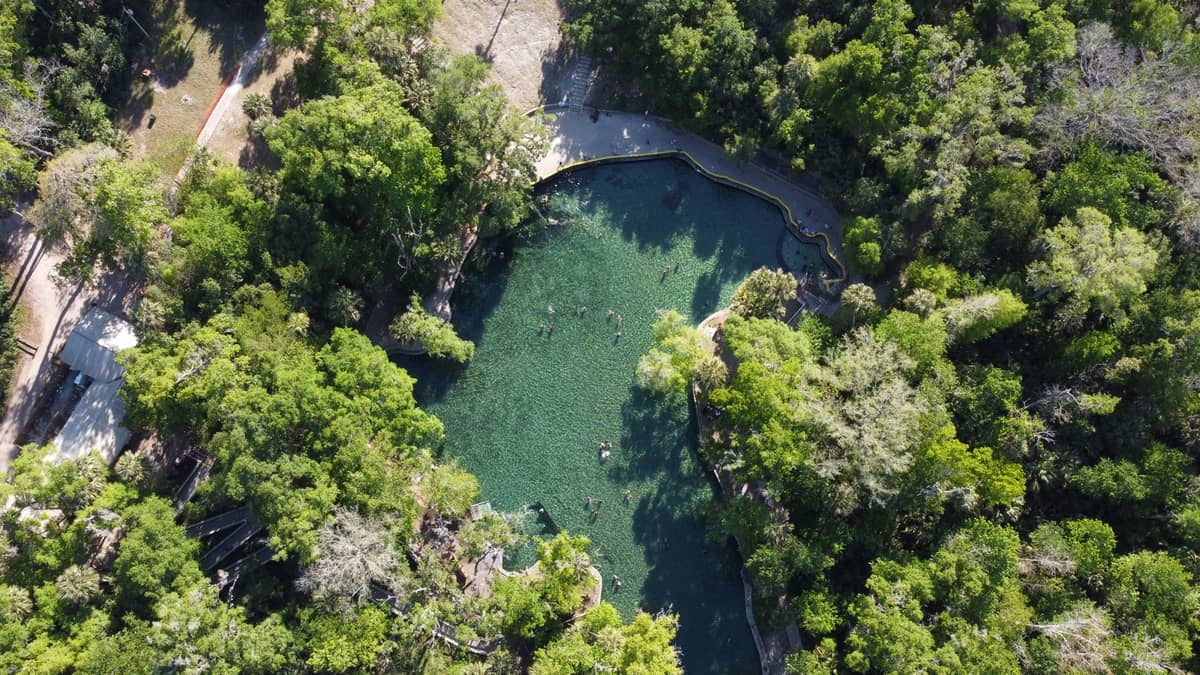
The spring boil itself sits at the center of the park's main day-use area, enclosed in a sandy-bottomed swimming area cordoned by ropes. The water is clear enough to see your feet at chest depth, with a blue-green tint that looks almost tropical against the surrounding live oaks and cypress. On a hot Florida summer morning, the steam fog that sometimes rises off the spring at opening time is one of the more quietly spectacular things you can see in the Orlando area.
Lifeguards are on duty during posted hours (verify current schedules at the park entrance or official site, as hours vary seasonally). The sandy bank around the swimming area fills up fast on summer weekends, with families staking out spots under the trees. Weekday mornings, particularly Tuesday through Thursday, offer a noticeably calmer experience. There are restrooms, changing areas, and a concession stand near the swim area, which reduces the need to haul gear.
The water temperature being constant year-round is a double-edged fact worth knowing before you visit. In July, 72°F feels refreshing after a humid Florida morning. In January, it feels cold stepping in, though many visitors adjust quickly and find it pleasant. Children tend to not notice at all.
Tickets & tours
Hand-picked options from our booking partner. Prices are indicative; availability and final rates are confirmed when you complete your booking.
Rock Springs river tubing and Apopka Wildlife Trail with hotel pickup
From 93 €Instant confirmationFree cancellationPirates Cove Adventure Mini Golf
From 18 €Instant confirmationFree cancellationWild Florida 1-hour airbot adventure with transportation
From 107 €Instant confirmationFree cancellationKids Eat Free Card Orlando
From 28 €Instant confirmationFree cancellation
Paddling the Wekiva River
The Wekiva River begins at the spring run just beyond the swimming area, and paddling it is the most immersive way to experience the park. Canoe and kayak rentals are available through the park concession (Wekiwa Springs Adventures), so you do not need to bring your own equipment. The spring run itself is narrow, shaded by a canopy of cypress and oaks, and moves at a gentle pace that beginners handle comfortably. On a quiet weekday morning, the only sounds are paddling strokes, birdsong, and the occasional splash of a turtle sliding off a log.
The river connects downstream to the broader Wekiva River system, which runs through protected state lands for miles. Paddlers who want a longer route can explore toward Rock Springs Run State Reserve, which borders Wekiwa Springs and extends the paddling corridor significantly. If you are planning a multi-day paddling trip or want to combine outdoor destinations, check the Orlando natural springs guide for context on the wider spring system across Central Florida.
💡 Local tip
Photography tip: The spring run is most photogenic in the first two hours after opening, when low-angle morning light filters through the tree canopy and catches the water's clarity at its best. A polarizing filter removes surface glare and reveals the riverbed detail below.
Hiking and Wildlife Trails
Wekiwa Springs has approximately 13 miles of multi-use trails covering different terrain types. The trails split between sandhill and scrub uplands, where the vegetation is dry and open with longleaf pine and saw palmetto, and lowland floodplain areas that run closer to the river, where it is wetter, shadier, and noticeably cooler. The contrast between these two environments within a single hike is part of what makes the trail system here more interesting than it might look on a map.
The trails are open to hikers, mountain bikers, and equestrians on designated sections. Footing varies: sandhill sections have soft, deep sand that slows walkers and is genuinely challenging on a bicycle. Floodplain sections can be muddy after rain. Sturdy closed-toe shoes are strongly recommended over sandals. Bug spray is not optional from April through October.
Wildlife sightings are common in the early morning and around dusk. Gopher tortoises are often seen crossing the sandhill trails. Wading birds including great blue herons and little blue herons work the river edges throughout the day. The Florida black bear population in the Wekiva Basin is real; while encounters are rare, the park posts guidance about bear-aware camping practices.
Camping at Wekiwa Springs
The park has developed campsites at $24 per night plus tax (add a $6.70 nonrefundable reservation fee, and note that a $7 nightly utility fee applies only to RV or other electric hookup units, not to tent camping). Primitive camping is available for $5 per person per night plus tax, requiring a hike-in along the trail system. Organized youth group camping is offered at separate rates. Florida residents aged 65 and older, or those with qualifying disability documentation, receive a 50% discount on the base campsite fee.
Reservations for both camping and, during peak periods, day-use entry are made through the official Florida State Parks reservations system or call center. Peak season weekends book out well in advance, particularly spring break weeks and summer holidays. If you are planning an overnight trip, booking two to four weeks ahead for developed sites is reasonable, and more for major holiday weekends.
⚠️ What to skip
Day-use entry reservations are required during designated high-demand periods to manage swimming area capacity. Check the official Florida State Parks site before your visit to confirm whether advance booking is needed on the dates you plan to go.
Getting There and Practical Logistics
The park address is 1800 Wekiwa Circle, Apopka, FL 32712. There is no practical public transit option to the park, making a car essential. From downtown Orlando and the main tourist corridors, expect a drive of around 30 minutes depending on traffic.
The park is open daily from 8:00 a.m. until sundown, 365 days a year, for day-use visitors. The park office operates Monday through Friday, 8:00 a.m. to 5:00 p.m., for questions and administrative matters. If you are building an itinerary around Central Florida outdoor spaces, Wekiwa Springs pairs naturally with other spring-fed destinations covered in the Orlando natural springs guide, including Kelly Park at Rock Springs, which is a short drive away.
Accessibility: The main day-use areas, including the swimming area, Nature Center, concession area, and picnic zones, have ADA-accessible restrooms and parking. A ramped path with railings leads to the boating area. Some trail sections are accessible. However, trail conditions can change after storm damage, and at least one ADA trail has been noted as affected by hurricane damage in past seasons. Call the park directly before visiting if accessibility on trails is a specific requirement.
How the Experience Changes by Season
Summer (June through September) is the most crowded period, particularly the swimming area, but also when the park's subtropical character is at its fullest. Afternoon thunderstorms are near-daily events from June onward and can clear the swimming area quickly. Morning visits are strongly preferable in summer, both for crowd management and for getting the best weather window before afternoon storms develop.
Winter (November through February) is genuinely pleasant for hiking and paddling. The trails are quieter, the insects are reduced (though not eliminated), and the lower sun angle produces beautiful light on the river. Swimming is less common among casual visitors in winter, which paradoxically makes the spring area more accessible. For context on how Orlando's seasons affect outdoor planning more broadly, the best time to visit Orlando guide covers the full seasonal picture.
Spring (March through May) is arguably the best balance point: temperatures are comfortable, water is still its constant 72°F, wildlife is active, wildflowers appear on the sandhill trails, and the summer humidity has not yet fully set in. Spring break weeks in March are an exception, when the park fills earlier and faster than most summer weekends.
Insider Tips
- Arrive at the park entrance no later than 9:00 a.m. on any Saturday or Sunday between Memorial Day and Labor Day. Parking fills to capacity and the entrance closes temporarily; there is no meaningful way to queue outside the gate.
- The spring run just beyond the swimming area, where the water flows into the Wekiva River, is often less crowded than the main swim basin and gives a better sense of what the natural spring environment looks like. Walk the short distance past the swim area ropes to find it.
- If you plan to paddle, booking canoe or kayak rentals directly with Wekiwa Springs Adventures before arrival is worth doing on busy weekends, as equipment does rent out on peak days.
- The sandhill trails dry out quickly after rain and are generally hikeable the same afternoon. The floodplain trails near the river take longer to drain and can be muddy for a day or two after heavy rain, so check conditions if trail quality matters to your visit.
- When the developed campground is open, staying in the campsites puts you close enough to the spring to walk over at 8:00 a.m. opening, before day visitors arrive, which is the single best window to experience the swimming area nearly alone.
Who Is Wekiwa Springs State Park For?
- Families with children who want a genuine outdoor swimming experience away from theme parks
- Paddlers and kayakers looking for a scenic, manageable spring-fed river route
- Hikers interested in Florida scrub and floodplain ecosystems with real wildlife visibility
- Campers wanting a developed but natural overnight option within easy reach of Orlando
- Visitors on a tight budget seeking a full-day outdoor activity for $6 or less per vehicle
Nearby Attractions
Combine your visit with:
- Blue Spring State Park
Blue Spring State Park in Orange City, Florida, is one of the state's most ecologically significant natural areas, drawing visitors year-round for manatee watching, swimming, tubing, and hiking. Located about 45 minutes from Orlando, it offers a genuine encounter with Florida's natural heritage that no theme park can replicate.
- Bok Tower Gardens
Bok Tower Gardens is a National Historic Landmark near Lake Wales, Florida, where a 205-foot Gothic and Art Deco carillon tower rises above one of the highest points on the Florida peninsula. Open since 1929, the sanctuary offers 250 acres of landscaped gardens, ancient oaks, and twice-daily bell concerts that carry across the surrounding pine scrub. It is one of the most genuinely peaceful places within day-trip distance of Orlando.
- Busch Gardens Tampa Bay
Busch Gardens Tampa Bay combines some of Florida's most intense roller coasters with one of North America's largest zoological collections. Located in north Tampa, it sits about 84 miles southwest of Orlando, making it a serious but rewarding day trip from the theme park capital of the world.
- Cocoa Beach
Cocoa Beach is Orlando's most accessible Atlantic beach, roughly an hour east on the Space Coast. It combines classic Florida surf culture with genuine rocket-launch proximity, free beach access, and a relaxed pace that stands apart from theme park crowds.