Blue Spring State Park: Florida's Premier Manatee Refuge and Natural Spring
Blue Spring State Park in Orange City, Florida, is one of the state's most ecologically significant natural areas, drawing visitors year-round for manatee watching, swimming, tubing, and hiking. Located about 45 minutes from Orlando, it offers a genuine encounter with Florida's natural heritage that no theme park can replicate.
Quick Facts
- Location
- 2100 W. French Ave, Orange City, FL 32763 (approx. 45 min from Orlando via I-4, Exit 114)
- Getting There
- Car is essential — no direct public transit. Drive I-4 to Exit 114 (SR 472 / US-17/92), then follow signs toward Orange City and West French Avenue.
- Time Needed
- 3 to 5 hours; a full day if you plan to swim, hike, and watch manatees
- Cost
- $6 per vehicle (2–8 people); $4 single-occupant vehicle; $2 per pedestrian or cyclist. Day-use reservations required as of July 15, 2026 — book online in advance.
- Best for
- Manatee watching (Nov–Mar), swimming in crystal-clear spring water, family nature days, wildlife photography
What Blue Spring State Park Actually Is
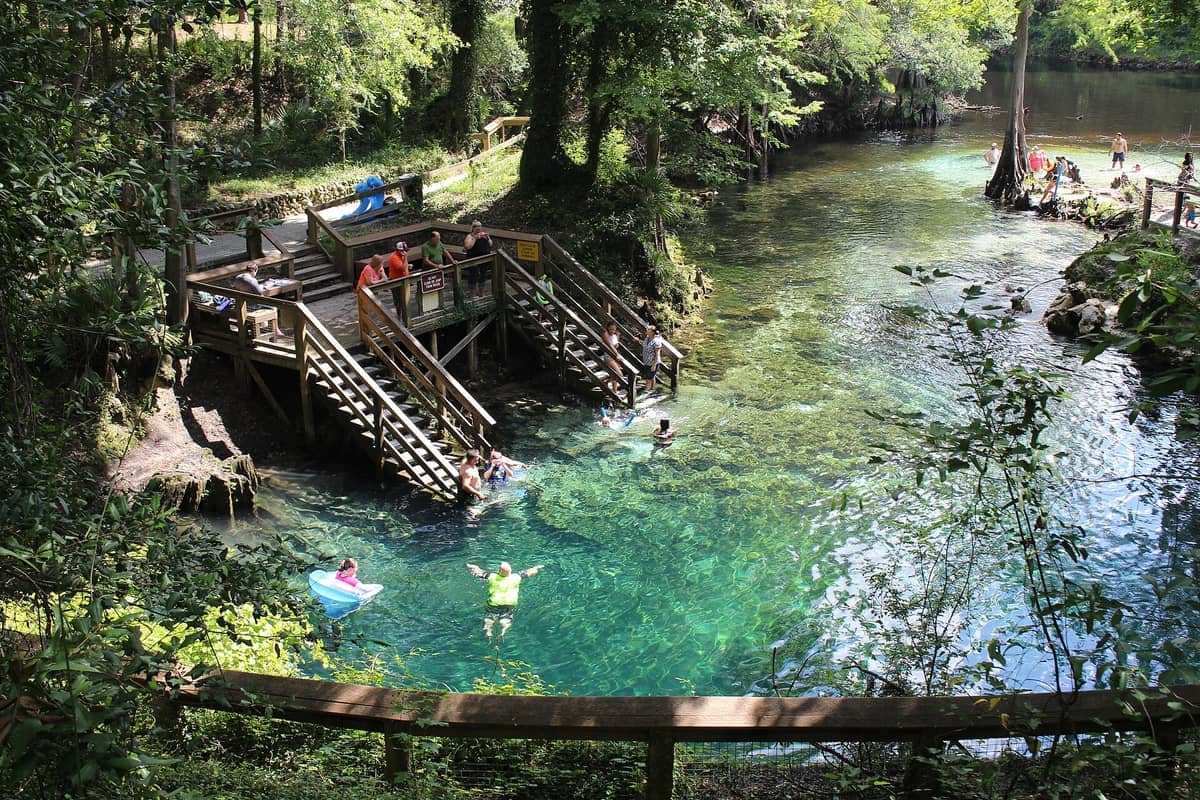
Blue Spring State Park sits along the St. Johns River in Orange City, about 45 minutes north of Orlando, and it operates on an entirely different rhythm from the attractions that most visitors associate with Central Florida. The spring itself is a first-magnitude spring, meaning it discharges more than 100 cubic feet of water per second. That output maintains a constant water temperature of approximately 72 degrees Fahrenheit year-round, which is what makes it one of the most important warm-water refuges for West Indian manatees along the entire East Coast of the United States.
The park covers roughly 2,600 acres and includes the spring run, a stretch of the St. Johns River, upland trails through Florida scrub and flatwoods, a historic 19th-century homestead, and a campground. It is managed by Florida State Parks and has been on the U.S. National Register of Historic Places since 1975. Most day visitors focus on the quarter-mile spring run between the boil (the source point) and the river, but the park rewards those who explore beyond the main swimming area.
ℹ️ Good to know
As of July 15, 2026, day-use reservations are required for entry. Book online through the Florida State Parks reservation system before you arrive. Walk-ups may be turned away on busy days, particularly on winter weekends during manatee season.
Manatee Season: The Real Reason to Come in Winter
Between roughly mid-November and mid-March, the spring run is closed to swimmers and tubers so that West Indian manatees can use it as a thermal refuge. When outside water temperatures in the St. Johns River drop below about 68 degrees, manatees migrate to the spring, where the constant water temperature keeps them from suffering cold stress syndrome. On peak winter mornings, it is not unusual to see dozens of manatees resting in the crystal-clear water directly below the observation boardwalk.
The boardwalk runs the length of the spring run and puts you directly above the water. Visibility in the spring can exceed 100 feet on calm, clear mornings, so you can watch individual manatees breathing at the surface, mothers nursing calves, and the slow, unhurried movement of animals that can exceed 10 feet in length and weigh over 1,000 pounds. Arrive before 10 a.m. if possible. As the morning progresses, sunlight reflecting off the water makes viewing more difficult, tour groups arrive, and the boardwalk becomes crowded.
The manatee-watching experience here is different from anything you will encounter at a marine park or aquarium. These animals are wild and unconfined. They arrive and leave on their own schedule. Some days bring 200 manatees; other days the numbers are lower depending on river temperatures. The park staff keep an unofficial manatee count during the season, and rangers at the boardwalk are generally happy to share current numbers and point out individuals they recognize.
💡 Local tip
The best manatee viewing typically occurs from late December through February. Come on a weekday if you can. Weekend mornings in January can feel chaotic, with parking lots filling by 9 a.m. and the boardwalk standing-room only by mid-morning.
Tickets & tours
Hand-picked options from our booking partner. Prices are indicative; availability and final rates are confirmed when you complete your booking.
Rock Springs river tubing and Apopka Wildlife Trail with hotel pickup
From 93 €Instant confirmationFree cancellationPirates Cove Adventure Mini Golf
From 18 €Instant confirmationFree cancellationWild Florida 1-hour airbot adventure with transportation
From 107 €Instant confirmationFree cancellationKids Eat Free Card Orlando
From 28 €Instant confirmationFree cancellation
Swimming Season: When the Spring Run Opens Up
Once manatees have moved back to the river, typically by mid-March depending on conditions, the spring run reopens for swimming, snorkeling, and tubing. The water is clear enough to see every grain of sand on the bottom, and at around 72 degrees it is refreshing rather than cold, though first-timers often gasp at the initial entry. The spring run is not a large body of water. It is about a quarter mile long and roughly 35 feet wide in most places, flanked by cypress trees with exposed roots dipping into the current.
Swimming is permitted in the designated swim area only. Life jackets are required for children under a certain height, and the rules are enforced. Snorkeling gear is allowed, and the visibility rewards it. Freshwater fish including largemouth bass, gar, and various sunfish species are visible throughout the run. You will also see turtles moving slowly along the bottom and occasional gar lurking near the surface.
Tubing is available for rent at the park during the swim season, and the mild current carries you gently from the spring boil toward the river. The experience is quiet and unhurried, with overhanging trees shading parts of the run and the sound of water and birds replacing the noise of a theme park. Weekday afternoons in April and May offer the combination of open water and relatively thin crowds.
History Layered Into the Landscape
Blue Spring has a documented human history stretching back approximately 7,000 years. Shell middens and pottery remains on the property indicate sustained use by Indigenous peoples over millennia. British botanist John Bartram visited in 1774 and described it as an admirable fountain in his written records, one of the earliest European accounts of the spring.
The Thursby House, which still stands in the park, was built in 1872 by Louis Thursby on an Indigenous midden near the spring run. Thursby operated a trading post and docking point for steamboats that traveled the St. Johns River during the late 19th century. The house is constructed of heart pine and occupies a promontory above the river with views that have changed relatively little in 150 years. It is open for tours on a limited schedule, and rangers lead interpretive programs about the homestead.
The modern chapter of the park's conservation history began in 1971 when filmmaker Jacques Cousteau's team visited and produced a documentary episode titled "The Forgotten Mermaids," which drew national attention to the manatees wintering at Blue Spring and the threats they faced from boat traffic and habitat loss. The state purchased the land and opened it as a state park the following year, in 1972. The combination of historical significance and ecological value led to its listing on the National Register of Historic Places in 1975.
Beyond the Boardwalk: Trails and the St. Johns River
Most visitors spend their time along the spring run and miss the rest of the park entirely. Two hiking trails lead through the upland areas: the Pine Island Trail and a connector trail that runs through Florida scrub habitat. Scrub is one of the rarest and most ecologically distinct ecosystems in Florida, and if you walk the trail mid-morning in any season, you will likely see Florida scrub-jays, gopher tortoises, and various species of lizard adapted to this environment. The trails are not long or strenuous, but they require attention because the scrub looks uniform until you start noticing the details.
The St. Johns River is accessible at the park via canoe and kayak launch. Paddling upstream from the park toward the spring run gives you a different perspective on the manatees during winter, as animals occasionally rest at the confluence of the spring run and the river. During warmer months, the river is a productive birding corridor, with herons, anhingas, ospreys, and bald eagles hunting along the banks. Canoes and kayaks can be rented at the park concession during operating hours.
The area surrounding the park fits naturally into a broader day-trip framework from Orlando. For context on planning, the day trips from Orlando guide covers Blue Spring alongside other natural and cultural destinations within a two-hour radius.
Practical Details: Getting There, What to Bring, Accessibility
The park is located at 2100 West French Avenue, Orange City, FL 32763, and is accessible only by car from Orlando. Take I-4 north to Exit 114 (SR 472 / US-17/92) and follow local signage toward Orange City and West French Avenue. The drive from downtown Orlando takes approximately 45 minutes in normal traffic. GPS navigation is reliable, but note that the final stretch on West French Avenue has no commercial services nearby, so fill up on gas before leaving the main highway corridor.
The park opens daily at 8:00 a.m. and closes at sundown, 365 days a year. Arriving at or shortly after opening gives you the best light for photography, the calmest water for swimming, and the highest manatee counts in winter before the midday heat changes animal behavior. The parking lot is large but fills quickly on peak winter weekends.
For swimming and tubing, bring water shoes because the entry points and spring bottom include rough limestone and submerged roots in places. Sunscreen is essential, particularly in spring and summer when UV exposure is intense even in the shade. The park has picnic areas and a snack concession, but food options are limited, so bringing a cooler with food and plenty of water is advisable for a full-day visit.
Accessibility at the park includes accessible parking spaces, restrooms, and most of the boardwalk. The Thursby House area involves uneven terrain. Visitors with specific accessibility needs are encouraged to contact the park office directly at +1 386-775-3663 or use the Florida Relay Service at 711 to get current information about trail surfaces and facility availability before arriving.
⚠️ What to skip
During manatee season (roughly mid-November through mid-March), swimming and tubing are prohibited in the spring run. If your primary goal is swimming, plan your visit between April and October. Check the park's official website for current seasonal closure dates, as they vary by year based on water temperatures.
Photography and Wildlife Viewing Tips
The spring run's exceptional water clarity makes it one of the best locations in Florida for underwater photography during swim season. A basic waterproof camera or a phone in a waterproof housing is enough to capture clear shots of fish and turtles at close range. For manatee photography from the boardwalk, a lens in the 70–200mm range is useful for isolating individual animals without disturbing them. Polarizing filters significantly reduce glare from the spring's surface.
Early morning light on winter days hits the spring run at a low angle that illuminates the water column beautifully, showing manatees suspended in blue-lit water with shafts of light cutting through. That window lasts roughly from opening time until about 10 a.m. After that, high sun flattens the image and increases surface glare. Photographers serious about capturing the manatees at their best should plan to be at the boardwalk at 8:00 a.m. sharp.
If Blue Spring represents the kind of natural Florida experience you are looking for, the Orlando natural springs guide covers comparable destinations including Wekiwa Springs and Kelly Park, both within reasonable driving distance.
Who This Park Is Not For
Blue Spring State Park delivers a slow, observational, nature-oriented experience. There are no rides, no food courts, no air conditioning, and no guaranteed spectacle. Visitors expecting the density of activity found at Central Florida's major theme parks will find the park underwhelming. During manatee season, swimming is prohibited, and if you visit on a day when manatee counts are low or the water is murky from recent rain, there may not be much to see from the boardwalk. The park's value is in its authenticity and ecological significance, not its production quality.
The trails are flat and short, so dedicated hikers looking for a challenging workout will exhaust the trail system in under two hours. Summer visits involve significant heat and humidity, and afternoon thunderstorms are frequent between June and September, which can shorten swim sessions unexpectedly. Anyone visiting purely to swim should have a backup plan for inclement weather.
For travelers who want to combine natural Florida with other types of day-trip content from Orlando, the Silver Springs State Park and Wekiwa Springs State Park offer comparable spring environments with different surrounding landscapes and amenities.
Insider Tips
- Book your day-use reservation online as soon as your travel dates are confirmed. Weekend slots during manatee season (December through February) fill weeks in advance, and the reservation system does not allow same-day booking once capacity is reached.
- The park's manatee webcam is available online during winter months. Checking it the morning before you drive out gives you a real-time sense of how many animals are present and whether conditions are worth the trip.
- The Thursby House sits on a slight rise overlooking the river and is often overlooked by visitors focused on the spring run. Walk up after your boardwalk visit. The view from the porch at mid-morning, with the river visible through Spanish moss-draped trees, is one of the more atmospheric spots in Central Florida.
- Bring a snorkel and mask during swim season. The rental shop at the park sells basic gear, but bringing your own saves money and guarantees a proper fit. The spring run is shallow enough in many places that you can stand and adjust without effort.
- The parking lot fills fast on busy days. If you arrive and find the main lot full, do not wait in line assuming it will clear. The park has been known to reach capacity and stop entry entirely. Weekday mornings are significantly more manageable.
Who Is Blue Spring State Park For?
- Families with children looking for a genuine wildlife encounter beyond zoo or aquarium settings
- Nature photographers chasing underwater clarity and winter manatee documentation
- Travelers on a day trip from Orlando wanting Florida's natural landscape rather than built attractions
- History-minded visitors interested in 19th-century Florida settlement and Indigenous heritage
- Snorkelers and casual swimmers seeking spring water without the crowds of more commercial swimming holes
Nearby Attractions
Combine your visit with:
- Bok Tower Gardens
Bok Tower Gardens is a National Historic Landmark near Lake Wales, Florida, where a 205-foot Gothic and Art Deco carillon tower rises above one of the highest points on the Florida peninsula. Open since 1929, the sanctuary offers 250 acres of landscaped gardens, ancient oaks, and twice-daily bell concerts that carry across the surrounding pine scrub. It is one of the most genuinely peaceful places within day-trip distance of Orlando.
- Busch Gardens Tampa Bay
Busch Gardens Tampa Bay combines some of Florida's most intense roller coasters with one of North America's largest zoological collections. Located in north Tampa, it sits about 84 miles southwest of Orlando, making it a serious but rewarding day trip from the theme park capital of the world.
- Cocoa Beach
Cocoa Beach is Orlando's most accessible Atlantic beach, roughly an hour east on the Space Coast. It combines classic Florida surf culture with genuine rocket-launch proximity, free beach access, and a relaxed pace that stands apart from theme park crowds.
- Crayola Experience Orlando
Crayola Experience Orlando is a hands-on art and color attraction for young children, located on the upper level of The Florida Mall on S Orange Blossom Trail. With dozens of activities built around Crayola products, it works best for families with kids under 10 who want something interactive and indoor on a hot Florida afternoon.