Wat Benchamabophit (The Marble Temple): A Complete Visitor's Guide
Wat Benchamabophit, known as the Marble Temple, is one of Bangkok's most architecturally refined royal temples. Built in the late 19th century from Italian Carrara marble, it offers a quieter, more contemplative experience than the city's more heavily trafficked temple sites.
Quick Facts
- Location
- Dusit district, central Bangkok, near the Dusit Palace complex
- Getting There
- No BTS/MRT direct access; bus routes 72, 108, 503, 9, 10, 18, 70, or 109, or a taxi/tuk-tuk
- Time Needed
- 45 to 90 minutes
- Cost
- Entrance fee 20 THB for Thai nationals; foreigners pay 50 THB (verify at gate, as prices may be updated)
- Best for
- Architecture enthusiasts, photographers, temple-goers seeking calm, and travelers interested in royal Thai history
What Makes Wat Benchamabophit Different
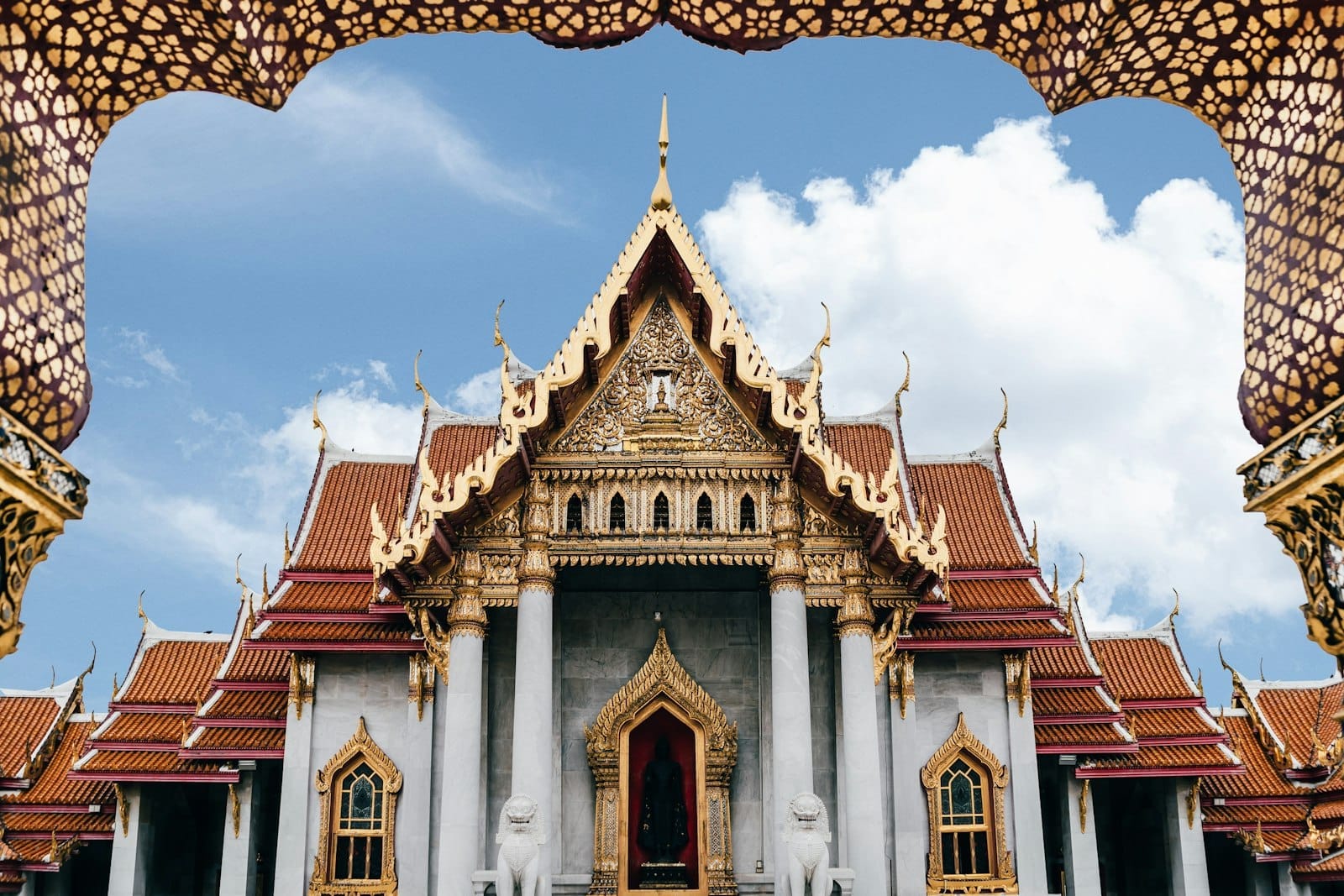
Most visitors to Bangkok's temple circuit come away overwhelmed by gold, crowds, and heat. Wat Benchamabophit offers something genuinely different. The temple is built almost entirely from white Carrara marble imported from Italy, giving it a pale luminosity that makes it look almost cool even in the midday heat. The grounds are compact and well-maintained, the crowds are noticeably thinner than at Wat Pho or the Grand Palace, and the overall atmosphere leans toward quiet reverence rather than tourist spectacle.
This is a working royal temple, commissioned by King Chulalongkorn (Rama V) in 1899 and completed in the early 1900s. The chief architect was Prince Naris, the king's half-brother, who blended European structural techniques with traditional Thai design. The result is unlike anything else in the city: pointed gilded gables and serpentine nagas meet symmetrical colonnaded wings, all in that unmistakable cool white stone.
💡 Local tip
Arrive between 7:00 and 8:30 AM on any morning to watch monks chanting in the ordination hall. The sound carries through the marble corridors in a way that makes the visit feel genuinely meditative, not just scenic.
The Architecture Up Close
The ordination hall (ubosot) is the centerpiece and the reason most people come. Stand outside it for a moment before entering: the roofline layers three steep tiers of orange-glazed ceramic tiles, each ridge capped with gilded finials, all set against white marble walls inlaid with mother-of-pearl. The contrast between the warm roof colors and the cool stone below is deliberate and precisely calibrated.
Inside the hall, the principal Buddha image is a replica of the famous Phra Phuttha Chinnarat image from Phitsanulok, one of Thailand's most revered statues. The interior is dim and fragrant with incense, and the stained-glass windows, an unusual feature for a Thai temple, cast small colored patterns across the marble floor in the late afternoon. The windows draw on European ecclesiastical design, another trace of Rama V's well-documented interest in European architecture.
The covered gallery surrounding the central courtyard contains 52 Buddha images, representing different styles and periods from across Asia, including Burmese, Chinese, Japanese, and Sri Lankan examples. This collection was assembled by Rama V himself and functions as a kind of comparative sculpture museum within a devotional space. Each image is labeled, and even a slow walk through the gallery takes only 15 to 20 minutes.
Tickets & tours
Hand-picked options from our booking partner. Prices are indicative; availability and final rates are confirmed when you complete your booking.
Temples of Bangkok and Grand Palace half-day guided tour
From 18 €Instant confirmationFree cancellationDamnoen Saduak floating market and Maeklong railway guided tour
From 36 €Instant confirmationFree cancellationBangkok tuk-tuk night tour with Chinatown street food meal
From 28 €Instant confirmationFree cancellationAfternoon Tea at Hyatt Regency Hotel Bangkok
From 900 €Instant confirmationFree cancellation
How the Experience Changes Through the Day
Early morning is the most rewarding time to visit. The marble reflects the soft light before 9:00 AM in a way that photographs can barely capture, and the temperature is genuinely manageable. A small canal runs along the eastern side of the grounds, lined with bodhi trees whose roots grip the stone walls, and in the early hours it is quiet enough to hear water and birds alongside the monks' chanting.
By 10:00 AM, tour groups begin arriving and the atmosphere shifts. Midday is the least comfortable time for both heat and crowding. If you can only visit in the afternoon, aim for 3:30 to 5:00 PM, when the light turns golden, the tour buses thin out, and the stained-glass windows inside the ubosot are at their most effective. The temple closes to visitors at 6:00 PM, though this should be confirmed before visiting as hours can change during religious festivals.
⚠️ What to skip
Modest dress is strictly required. Shoulders and knees must be covered for all visitors. Sarongs are available to borrow at the entrance, but they are in short supply during busy periods. Bring your own lightweight cover-up to avoid the queue.
Getting There and the Surrounding Area
Wat Benchamabophit sits in the Dusit district, Bangkok's administrative and royal quarter. The neighborhood has a noticeably different pace from Silom or Sukhumvit: wider roads, older government buildings, and relatively few commercial storefronts. There is no BTS Skytrain or MRT station within comfortable walking distance, which is part of why the temple remains less trafficked than its quality warrants.
Several city buses serve the area, including routes that pass through the Democracy Monument zone. The easiest approach for most visitors is a short taxi or ride-share ride from the Democracy Monument area or from the Dusit Palace complex, both of which are within a few kilometers. Budget around 60 to 100 THB by taxi from the Khao San Road vicinity.
The Dusit district itself rewards a longer half-day visit. Combine Wat Benchamabophit with a walk through the surrounding streets to appreciate the Dusit neighborhood's unusual mix of royal grounds, tree-lined avenues, and early 20th-century European-influenced architecture. The area feels like a different city from the commercial districts to the south.
Photography and Practical Notes
The temple is highly photogenic, but the marble creates challenging lighting conditions. On bright days, the white surfaces blow out easily, and midday shooting requires significant exposure compensation. Early morning and late afternoon produce far more balanced light. The reflection canal on the eastern side is particularly effective at golden hour, doubling the temple facade in still water when conditions cooperate.
Photography is permitted in the grounds and the gallery, but check for any restrictions inside the ordination hall before raising a camera. Some visitors are surprised to find that this is a quieter space for photography than temples like Wat Arun or Wat Pho, largely because the lower visitor numbers mean you can frame shots without waiting for crowds to clear.
If you are building a longer temple itinerary, Bangkok's best temples span multiple neighborhoods and architectural styles. Wat Benchamabophit pairs well with a visit to Wat Suthat on the same day, as both reward visitors who slow down and pay attention to detail rather than ticking boxes.
Accessibility and Facilities
The main grounds and gallery are largely flat and navigable for visitors with limited mobility, though the ordination hall requires ascending a short flight of marble steps. Restrooms are available near the entrance. There is no significant food or drink concession within the temple grounds, so bring water, particularly if you are visiting in warmer months.
The temple is not the right fit for visitors primarily chasing dramatic scale or sensory overload. Those expecting the grandeur of the Grand Palace or the height of Wat Saket will find Wat Benchamabophit understated by comparison. Its appeal is architectural precision and a calmer atmosphere, which suits some travelers far better than others.
ℹ️ Good to know
Wat Benchamabophit is an active place of worship. On Buddhist holidays and during almsgiving ceremonies, sections of the temple may be closed to visitors or access may be limited. Check the Thai calendar before planning your visit around a specific date.
Insider Tips
- The northern side of the grounds, near the canal, is almost always uncrowded even when tour groups are present at the main entrance. Walk around the perimeter rather than straight to the ordination hall for a better sense of the full complex.
- The gallery of 52 Buddha images is frequently overlooked by visitors focused on the main hall. Allow 15 extra minutes here. The variety of Buddhist artistic traditions represented is genuinely educational and the space is cool and quiet.
- If you visit during the cool season (November to February), the marble grounds are particularly pleasant in the late morning. The temperature difference between the cool season and hot season in an open marble courtyard is dramatic.
- Tuk-tuks from nearby areas sometimes propose detours to gem shops or tailors en route. Insist on a direct drop-off at Wat Benchamabophit and agree on the price in advance.
- The small canal alongside the temple is a good spot to observe local life: residents use the path for morning exercise, and the bodhi trees along the bank are old enough to have developed dramatic root systems worth photographing in their own right.
Who Is Wat Benchamabophit (The Marble Temple) For?
- Architecture and design enthusiasts who want to study a precise example of Thai-European hybrid temple construction
- Photographers looking for reflective surfaces, layered rooflines, and morning light without fighting crowds
- Travelers who have already visited the major temple sites and want a more considered, less crowded experience
- Anyone interested in the reign of Rama V and Bangkok's early modernization period
- Visitors seeking a quiet mid-morning stop that requires less than 90 minutes and rewards genuine attention