Stockholm Public Library: The Rotunda That Changed Swedish Architecture
Stockholms stadsbibliotek is one of the most significant buildings in 20th-century Scandinavian architecture. Designed by Gunnar Asplund and opened in 1928, the library's iconic cube-and-cylinder form sits in Vasastan, a short walk from Odenplan. Currently closed for renovation until early 2028, it remains a landmark worth building a visit around.
Quick Facts
- Location
- Sveavägen 73, Vasastan, Stockholm
- Getting There
- Odenplan metro station (approx. 5-min walk); multiple bus lines on Sveavägen
- Time Needed
- 30–60 minutes for the exterior and surroundings; longer when interior reopens
- Cost
- Free admission (when open); currently closed for renovation until early 2028
- Best for
- Architecture enthusiasts, design lovers, cultural explorers
- Official website
- biblioteket.stockholm.se
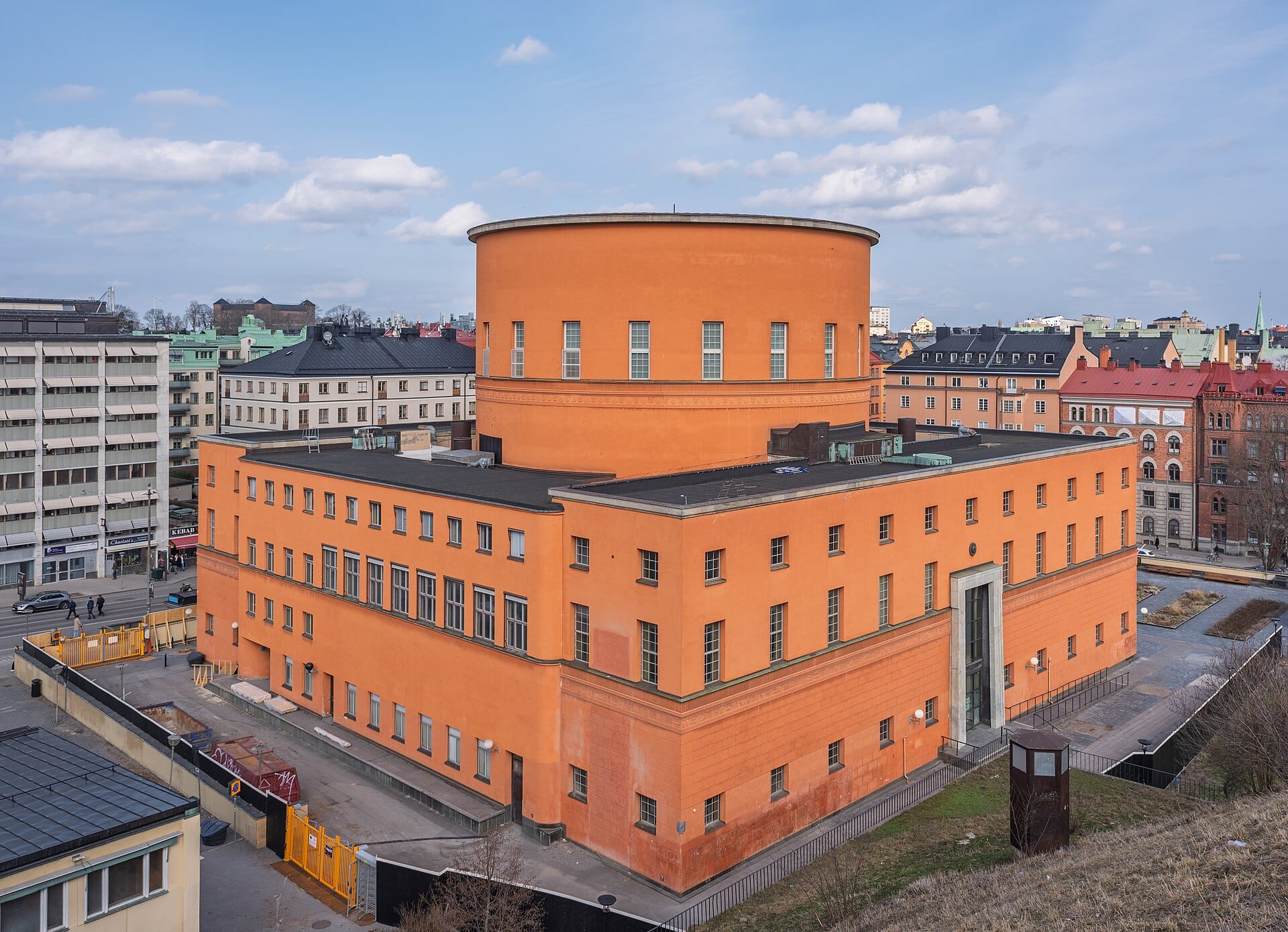
What Stockholms Stadsbibliotek Actually Is
Stockholm Public Library, known in Swedish as Stockholms stadsbibliotek, is not simply a library. It is one of the defining works of Nordic Classicism and a building that has shaped how generations of architects think about public space, light, and the relationship between geometry and civic purpose. Designed by Gunnar Asplund and opened in spring 1928, the building stands at Sveavägen 73 in the Vasastan neighborhood, a few minutes' walk north of Odenplan.
At its core, the design is formally simple: a large cubic base with a cylindrical drum rising from its centre. But the experience of approaching it, entering through its compressed staircase, and then stepping into the soaring rotunda is anything but simple. The contrast between the low, dimly lit entrance hall and the sudden vertical openness of the circular reading room is an architectural moment that visitors frequently describe as genuinely surprising, even by today's standards.
⚠️ What to skip
Important: The library is currently closed for a major renovation and is not expected to reopen until early 2028. The exterior remains visible and worth visiting, but interior access is not available until then.
The Architecture: Why It Matters
Gunnar Asplund spent years refining the design of Stockholms stadsbibliotek, and the final building reflects a moment of transition in his career, moving from the ornamental tendencies of Swedish Grace toward a cleaner, proto-modernist language. The exterior reads as restrained and monumental: ochre-rendered walls, shallow pilasters, and minimal ornamentation. The cube base is solid and grounded; the cylinder drum above it rises with a geometric clarity that makes the building immediately recognizable from across the street.
The interior rotunda is the architectural centrepiece. Shelves of books line the curved walls from floor to ceiling, accessible via walkway galleries at upper levels. Natural light enters from windows set just below the drum's rim, casting a diffuse, even illumination across the reading room floor. There is no single point-source of drama here: the light is democratic, spreading equally across readers at any position in the circle. This was intentional. Asplund conceived of the rotunda as a space where knowledge was accessible without hierarchy, a reading room in the round where no seat was better positioned than another.
The building is considered one of the finest examples of Nordic Classicism in Sweden and is frequently referenced alongside Asplund's later masterwork, the Woodland Cemetery (Skogskyrkogården), a UNESCO World Heritage Site he co-designed with Sigurd Lewerentz. Taken together, the two projects define the scope of his architectural ambition.
The exterior staircase is worth studying carefully before you leave. Asplund designed the approach as a deliberate compression of space: the steps are wide but the entrance portal is low, creating a sense of contained anticipation before the interior opens upward. Even from the outside, standing on Sveavägen and looking up at the drum, the building communicates something unusual for a civic institution: it feels considered rather than merely official.
Tickets & tours
Live prices and dates from our booking partner. If you book, we may earn a commission at no extra cost to you.
2-hour archipelago tour on a RIB speedboat
From 122 €Instant confirmationFree cancellationHaunted Stockholm exploration game and tour
From 12 €Instant confirmationFree cancellationFotografiska Stockholm entrance tickets
From 0 €Instant confirmationFree cancellationStockholm: Nature Reserve Hiking Tour with Campfire Lunch
From 102 €Instant confirmationFree cancellation
Visiting the Exterior Now (Renovation Period)
While the library is closed until early 2028, the building's exterior is fully accessible and worth a deliberate stop, particularly for anyone interested in 20th-century Scandinavian architecture. Sveavägen is a wide boulevard, which means you can step back and take in the full composition of cube and cylinder without obstruction. Morning light from the east catches the ochre render well, making the geometry especially clear before midday.
The surrounding area on Observatorielunden, the small park hill just behind the library, offers an elevated perspective on the drum from above. It takes less than five minutes to walk up, and the view looking down at the cylinder from the observatory grounds gives a sense of the building's proportions that you cannot get from street level.
💡 Local tip
Walk up Observatorielunden, the park directly behind the library, for a rarely photographed aerial perspective on the rotunda drum. Early morning on weekdays the park is quiet, with good light and almost no other visitors.
Photography from street level is straightforward. The building sits on a slight rise, and shooting from the pavement on Sveavägen with a moderate focal length captures the full elevation without distortion. The ochre walls photograph warmly in afternoon light from the west, though direct afternoon sun in summer can flatten the surface texture. Overcast days, common in Stockholm from September through April, actually render the building's geometry more crisply than bright sunshine.
The Vasastan Neighborhood Context
The library sits in Vasastan, one of Stockholm's most livable inner-city neighborhoods. The streets around the library are lined with early 20th-century apartment buildings in a similar Nordic Classical register, which means the library reads as part of a coherent urban fabric rather than an isolated monument. Sveavägen itself is one of the city's main north-south arteries, wide enough to feel open but lined with cafes, bakeries, and bookshops that make the walk pleasant rather than merely functional.
Odenplan, the square at the southern end of the neighborhood, is a natural base for anyone exploring this part of the city. The metro station there connects to the green and red lines, making Vasastan easy to reach from Gamla Stan, Central Station, or Östermalm in under ten minutes. Several bus routes on Sveavägen also stop within a short walk of the library.
If you are combining the library visit with other architecture or culture in the area, the route north along Sveavägen toward Hagaparken passes several notable buildings and takes around 25 minutes on foot. Alternatively, heading south brings you quickly to Norrmalm and the city centre.
What to Expect When It Reopens in 2028
The ongoing renovation is significant in scope, addressing both structural and environmental systems in a building nearly a century old. When the library reopens, visitors can expect the rotunda reading room to be the central draw: the circular shelving, the gallery walkways, and the quality of natural light from the high drum windows are the experiences most consistently described by people who have spent time inside. Admission has historically been free, reflecting the library's status as a public institution rather than a tourist attraction.
The best time to visit the interior, once it reopens, will likely be weekday mornings when the building functions as a working library rather than a destination. Weekday afternoons and weekend mornings tend to bring more visitors specifically interested in the architecture. The rotunda's acoustics are notable: the curved walls carry whispered sounds across the room in ways that are interesting but also mean the space is rarely silent. It functions as a library, not a museum, and the ambient noise of readers, turning pages, and quiet conversations is part of the atmosphere.
ℹ️ Good to know
Admission to Stockholm Public Library has historically been free. Check the official website at biblioteket.stockholm.se closer to the 2028 reopening for confirmed hours and any updated entry conditions.
Who This Attraction Is and Is Not For
Stockholms stadsbibliotek is most rewarding for travelers who care about architecture, design history, or the relationship between civic space and everyday life. If you are working through a serious interest in Scandinavian modernism, this building is essential: it represents a pivotal moment in that tradition and stands comparison with any public building in Northern Europe from the same period.
Travelers focused primarily on conventional sightseeing or who have limited time in Stockholm may find the exterior visit, particularly during the renovation, less immediately rewarding than other sites nearby. For a fuller picture of Stockholm's architectural and cultural range, pairing the library with the Stockholm metro art and a walk through Vasastan gives a more complete sense of how the city has thought about public space across different eras.
Families with young children who are not architecture-focused may find the exterior stop brief and the surrounding area, pleasant as it is, without strong child-specific draws. The library itself, when open, is a functioning public space that welcomes children, but the interior experience is relatively quiet and text-heavy in ways that do not hold attention the way dedicated family attractions do.
Insider Tips
- Walk around the full perimeter of the building before stopping to photograph. The rear elevation facing Observatorielunden reads differently from the front, and the relationship between the cylinder drum and the park hill behind it is part of Asplund's original site thinking.
- Observatorielunden park behind the library has one of the better elevated views in Vasastan, looking south toward the city center. It is rarely crowded on weekday mornings and takes less than five minutes to reach from the library's rear entrance.
- The neighborhood around Odenplan has some of Stockholm's best independent cafes and bakeries. Combining an architectural visit with a slow fika stop on Upplandsgatan or the side streets off Sveavägen makes the trip feel complete rather than cursory.
- Check the official library website at biblioteket.stockholm.se in late 2027 for confirmed reopening dates. Renovations of this scale often adjust timelines, and arriving with current information will save a wasted journey.
- If you are seriously interested in Asplund's work, the Woodland Cemetery (Skogskyrkogården) is a half-hour metro and tram ride from the city center and represents the other pole of his career. The two sites together give a complete picture of one of Sweden's most important architects.
Who Is Stockholm Public Library For?
- Architecture and design enthusiasts, particularly those with an interest in Nordic Classicism and early modernism
- Travelers building an itinerary around Stockholm's cultural and civic landmarks
- Photographers looking for geometric, well-proportioned subjects with interesting light
- Visitors who want to explore Vasastan as a neighborhood rather than just pass through it
- Anyone returning to Stockholm in 2028 or later who wants to experience the reopened interior rotunda
Planning a trip? Discover personalized activities with the Nomado app.