Şile: Istanbul's Black Sea Coast Town
Perched on Istanbul's Black Sea edge about 70 km from the city center, Şile is a coastal town with wide sandy beaches, a medieval Genoese castle on a rocky islet, and a textile tradition dating back centuries. It draws Istanbulites for weekend escapes and rewards travelers who want coastline without a flight.
Quick Facts
- Location
- Şile District, Istanbul Province — Black Sea coast, approx. 70–80 km northeast of central Istanbul
- Getting There
- Bus 139/139A from Üsküdar; by car via TEM highway (~45 min in light traffic)
- Time Needed
- Full day minimum; overnight recommended in summer
- Cost
- Town, seafront, and lighthouse exterior free; some beach areas and parking charge local seasonal fees
- Best for
- Beach days, weekend escapes from Istanbul, coastal walks, textile shopping, seafood
- Official website
- www.sile.bel.tr
What Şile Actually Is
Şile is not a single attraction with a ticket booth and closing time. It is a town and administrative district occupying the northeastern corner of Istanbul Province, where the city's sprawl finally gives way to pine forest and Black Sea cliffs. The town center sits on the coast, with a sandy bay to the west, forested hills to the south, and the Black Sea stretching north to the horizon. The air smells of salt and resin in a way that surprises first-time visitors who associate Istanbul only with the Bosphorus.
Evidence of settlement here dates to ancient times, and a recognizable fishing village has occupied the site for centuries. That long continuity explains why the town feels layered rather than manufactured for tourism: a working fishing harbor, a medieval castle, a functioning lighthouse, and a main street selling the hand-woven cotton cloth that has been produced on this coast for generations.
ℹ️ Good to know
Şile functions as a destination, not a single site. Plan to walk between the harbor, castle islet, lighthouse, beach, and market rather than heading to one fixed address.
The Castle, the Lighthouse, and the Cliffs
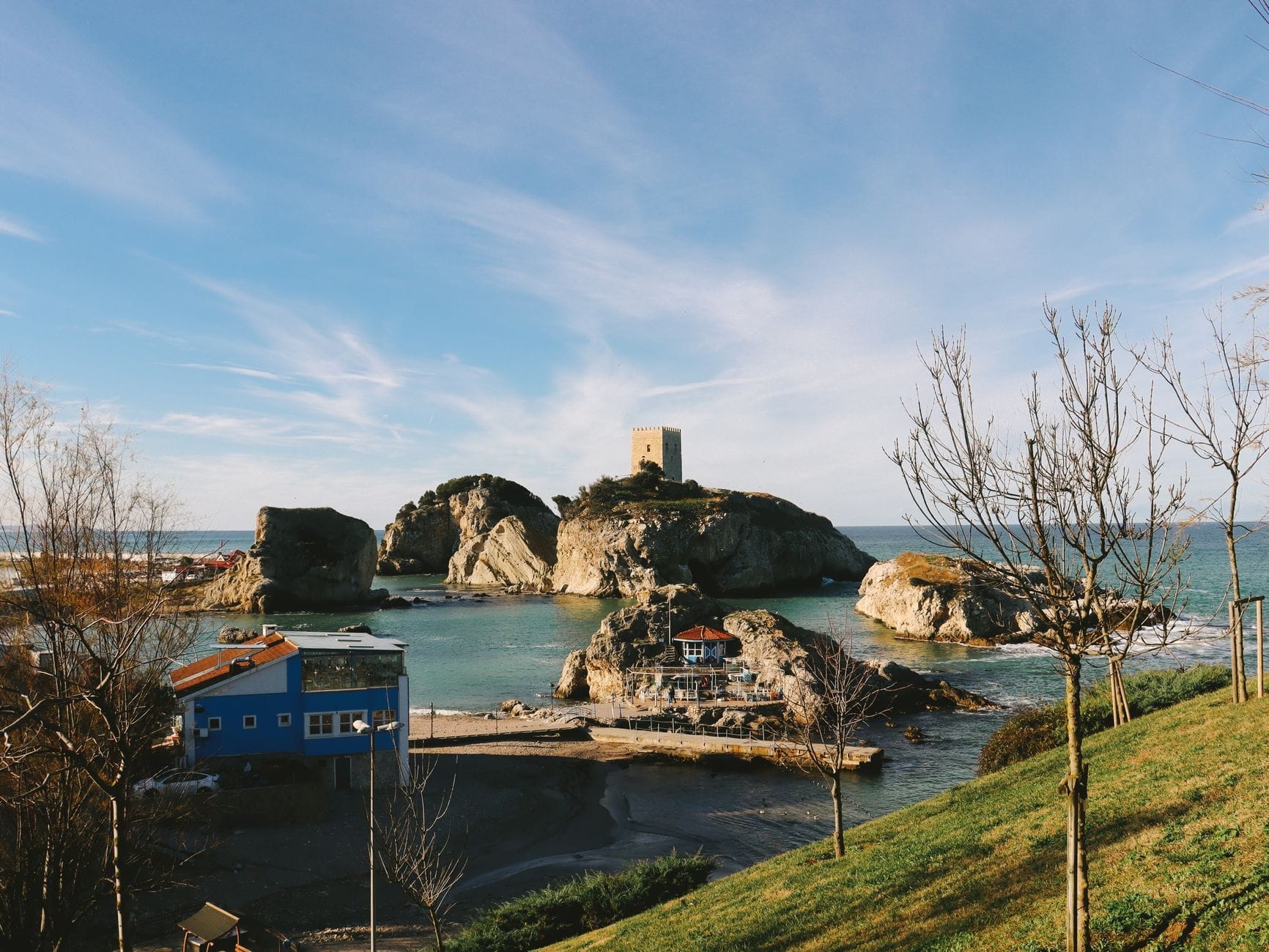
Şile Castle (Şile Kalesi) is the town's most photographed landmark: a Genoese fortification built on a small rocky islet just off the coast. At low tide and in calm weather, you can see its foundations clearly from the seafront promenade. The Genoese were active traders along the Black Sea during this period, and Şile sits at the mouth of an ancient maritime route, which explains why a defensive structure was worth building here at all. The castle is compact and partially ruined, but its silhouette against the sea is striking, particularly in the late afternoon when the stone catches direct western light.
The lighthouse stands on the headland above the town and is one of the more distinctive on the Turkish Black Sea coast. It has been operational for well over a century and remains a working navigational aid. From this elevated point, the geometry of the town below — the harbor, the islet castle, the arc of the main beach — becomes legible in a single view. This is the best photography position in Şile, and the hour before sunset is when the light on the water is most useful.
💡 Local tip
Walk up to the lighthouse area in the late afternoon, then descend to the seafront promenade for dinner as the fishing boats return to harbor. This sequence gives you the best of both the elevated and the waterfront perspectives.
Tickets & tours
Hand-picked options from our booking partner. Prices are indicative; availability and final rates are confirmed when you complete your booking.
Bosphorus sunset cruise on luxury yacht with guide
From 55 €Free cancellationIstanbul and Bosphorus cruise on private boat - half day afternoon tour
From 40 €Instant confirmationFree cancellationWhirling Dervishes live show and exhibition
From 29 €Instant confirmationBasilica Cistern fast-track entry ticket and optional audio guide
From 34 €Instant confirmation
The Beach: What It Delivers and What It Does Not
Şile's main beach is a long stretch of coarse-to-medium sand backed by the town's commercial strip. In July and August it fills with Istanbul families who arrive by the carload, and sunbeds, umbrellas, and changing facilities are available through private operators at seasonal rates — though those rates are set locally and change year to year. The water is noticeably colder and cleaner than the Bosphorus or the Princes' Islands, which many swimmers prefer. On a clear summer morning before 10 a.m., the beach has a different quality entirely: the light is soft, the sand is still cool underfoot, and the crowd has not yet arrived.
The Black Sea coast around Şile is known for strong undercurrents, and this is not a minor footnote. Drownings are reported regularly. Warning flags and safety markers are present, but visitors unfamiliar with Black Sea sea conditions should treat the water with more caution than they would a Mediterranean beach. Children should not swim unsupervised, and swimmers should stay within the flagged zones.
⚠️ What to skip
Black Sea undercurrents at Şile can be powerful even on calm-looking days. Always observe flag warnings and avoid swimming outside marked zones. This applies year-round, not just in stormy weather.
If the main beach is too crowded in peak summer, the coastline on either side of town has smaller coves accessible by road or on foot. For context on comparing Istanbul's coastal options, the Istanbul beaches guide covers the full range from the Marmara shore to the Black Sea.
Şile Cloth: A Textile Tradition Worth Understanding
Şile bezi, the light crimped cotton fabric produced on this coast, is one of the town's most distinctive exports and has been for a long time. The fabric is woven in a loose open weave that makes it exceptionally breathable in summer heat. Traditionally undyed or lightly colored, it is sold by the meter and also made into shirts, scarves, and lightweight garments. The main commercial street in Şile has numerous shops selling Şile bezi products, with quality and authenticity varying considerably between them.
This is not mass-produced souvenir merchandise in the conventional sense. The fabric has genuine functional value — many Istanbulites buy it specifically for summer clothing rather than as a gift item. If you are buying by the meter, look for the characteristic crimped texture and ask the shop whether it is locally produced or imported and then labeled. Prices for authentic Şile bezi are higher than for imitations, and the difference is usually visible in the regularity of the weave.
How Şile Changes Through the Day and the Year
Early morning in Şile — before 8 a.m. in summer — belongs to fishermen and local residents. The harbor is active, with the smell of diesel and coffee mixing near the tea houses that open at dawn. The day's catch arrives, and if you are there early enough you can watch the sorting and sale process at the harbor edge. This is when the town feels most like itself rather than a weekend destination.
By midday in July and August, the beach is at capacity, parking is difficult, and the main street is slow with pedestrian traffic. Restaurant wait times stretch. For day-trippers from Istanbul who want to avoid this, arriving before 9 a.m. or after 5 p.m. makes a significant practical difference. The alternative is to stay overnight: Şile has small hotels and guesthouses, and the town on a weekday evening — after the day-trippers have left — is genuinely quieter and more comfortable.
Outside summer, Şile takes on a different character entirely. Autumn brings cooler temperatures, fewer crowds, and a coastal light that is harder and cleaner than the hazy summer atmosphere. Spring is green and mild, with the hills behind town covered in wildflowers. Winter visits are possible but the town is quiet and some seasonal businesses close. For general guidance on timing a trip to the city, the best time to visit Istanbul covers seasonal patterns across the whole metropolitan area.
Getting to Şile from Istanbul
Şile sits approximately 70 to 80 km from central Istanbul. By private car, the route via the TEM motorway toward Sakarya and then north on the Şile road takes around 45 minutes in light traffic, though weekend summer mornings can add significantly to that. Parking in the town center is limited and fills early on busy days.
By public transport, city buses 139 and 139A run from Üsküdar on the Asian side directly to Şile. The public bus option is cheap and reliable, though the journey is long enough that you should plan to make it a full day rather than a half-day excursion. There is no rail connection to Şile.
Şile is often combined with Ağva, a smaller coastal village further east along the Black Sea, making a two-day loop from Istanbul practical with a car. Both are covered in the day trips from Istanbul guide itinerary.
Eating and Drinking in Şile
Seafood is the obvious choice. The harbor-adjacent restaurants serve fresh Black Sea fish, including hamsi (Black Sea anchovy, most prized from autumn onward), levrek (sea bass), and palamut (Atlantic bonito) depending on the season. Fish is typically priced by weight, and the restaurants closest to the harbor tend to have faster turnover and fresher supply than those further along the main commercial strip.
Tea houses near the harbor are functional and cheap, useful for an early morning start or a break from walking. In summer, the ice cream and cold drink trade on the promenade is constant, and the quality is what you would expect from a beach town: perfectly adequate, not particularly distinguished. For a more considered meal, booking a table at a fish restaurant for the evening rather than the midday rush produces a better experience and a more relaxed atmosphere.
Insider Tips
- Arrive before 9 a.m. on summer weekends to get parking, a spot on the beach, and the town before it becomes a traffic jam. The harbor is most active at dawn and worth seeing regardless of season.
- When buying Şile bezi cloth, feel for the distinctive crimped texture that comes from the traditional weaving process. Smooth cotton labeled as Şile cloth is usually a cheaper imitation. Buying directly from shops that show looms or have working weavers on the premises gives the most reliable provenance.
- The headland path between the lighthouse and the castle islet viewpoint is short but gives the only elevated perspective over the full bay. Walk it before you go to the beach rather than after, when you will be tired and the light will be wrong.
- If you are sensitive to strong undercurrents, stick to the central flagged sections of the main beach. The smaller coves outside town look calmer but can be more exposed to currents with no lifeguard presence.
- Autumn — September through November — is arguably the best time to visit: the summer crowd is gone, the Black Sea anchovy season begins (hamsi in every form on every menu), the water is still swimmable into September, and the hills behind town are a deep green before the winter rains.
Who Is Şile For?
- Istanbul residents and visitors wanting a genuine Black Sea coast day within driving or bus distance of the city
- Seafood enthusiasts, particularly during anchovy and bonito season from September onward
- Textile shoppers looking for authentic Şile bezi cotton fabric with practical summer clothing in mind
- Photographers interested in coastal architecture, the castle islet, and lighthouse perspectives
- Travelers building a Black Sea loop combining Şile with Ağva over two days
Nearby Attractions
Combine your visit with:
- Ağva
Ağva is a small resort town in Istanbul's Şile district where the Göksu and Yeşilçay rivers converge at the Black Sea coast. About 115 km from the city center, it draws Istanbulites seeking calm water, forested riverbanks, and a pace of life that the megacity simply cannot offer. This guide covers how to get there, what to expect, and whether it suits your trip.
- Belgrad Forest
Belgrad Forest (Belgrad Ormanı) is a 5,442-hectare forested reserve on Istanbul's European side, about 20 km north of the city center. Once an Ottoman hunting ground and water source, it now serves as the city's primary green lung, offering walking trails, picnic areas, and centuries-old dams.
- Büyükada (Princes' Islands)
Büyükada is the biggest of Istanbul's Princes' Islands, sitting in the Sea of Marmara about 20 km from the city center. No private cars, no exhaust fumes, no urban noise. Just Victorian-era wooden mansions, pine-scented hills, Byzantine monastery ruins, and a ferry pier busy with Istanbulites escaping the city for the day.
- Heybeliada
Heybeliada, the second largest of the Princes' Islands in the Sea of Marmara, offers a rare counterpoint to Istanbul's intensity. With motor vehicles banned, the island moves at the pace of bicycle wheels and electric shuttles, framed by 19th-century wooden mansions and the scent of pine.