Ryogoku Kokugikan: Inside Tokyo's Home of Sumo
Ryogoku Kokugikan is the spiritual and sporting home of sumo wrestling in Japan, hosting three of the six annual Grand Sumo Tournaments in Tokyo's Sumida ward. Whether you're attending a live bout or visiting the free Sumo Museum on a quiet weekday, this is one of Tokyo's most distinctive and culturally specific experiences.
Quick Facts
- Location
- 1-3-28 Yokoami, Sumida-ku, Tokyo 130-0015
- Getting There
- JR Sobu Line Ryogoku Station (West Exit, 1-2 min walk); Toei Oedo Line Ryogoku Station (Exits A3/A4, 5 min walk)
- Time Needed
- 30-45 min for museum visit; full day for a tournament
- Cost
- Sumo Museum free on regular weekdays; tournament tickets vary by seat type (check Japan Sumo Association for current prices)
- Best for
- Culture seekers, sports fans, first-time Japan visitors, history enthusiasts
- Official website
- kokugikan.sumo.or.jp
What Is Ryogoku Kokugikan?
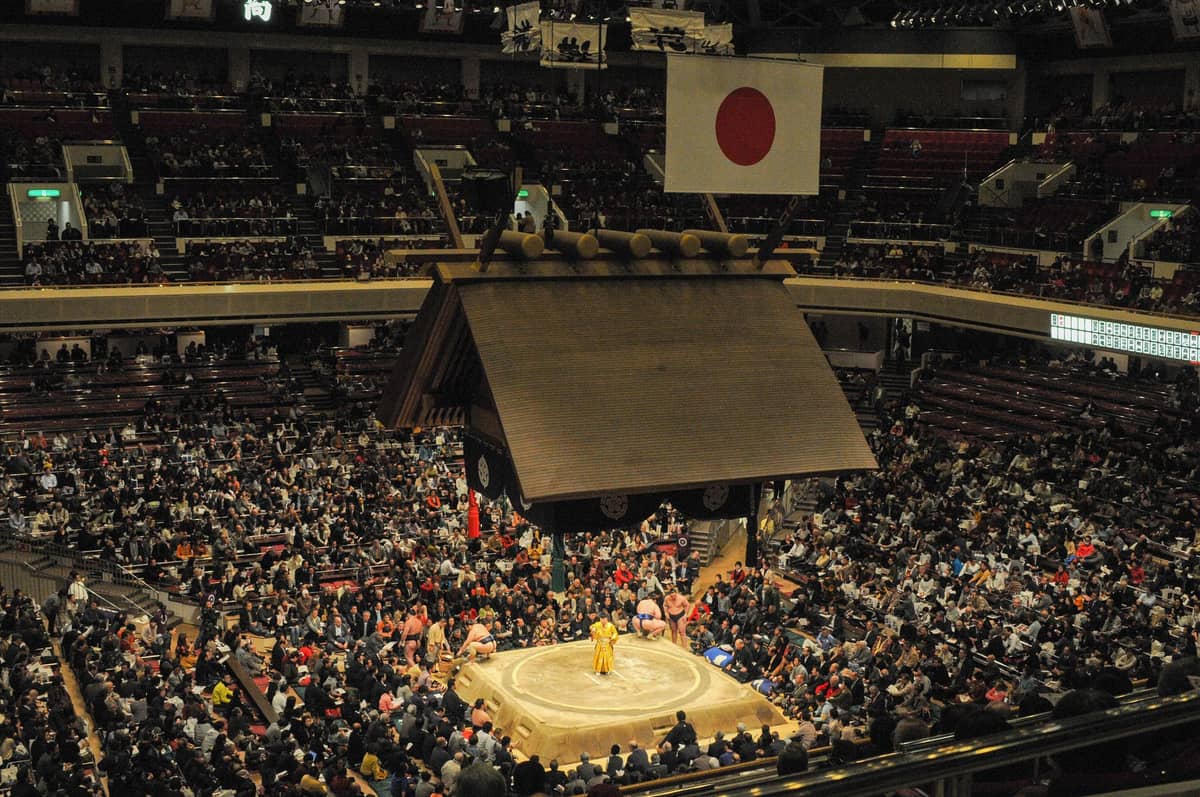
Ryogoku Kokugikan is Japan's premier sumo arena, a large indoor sporting complex in Sumida ward that has served as the fixed Tokyo home of professional sumo since it opened at its current Yokoami site in 1985. Three of the six annual Grand Sumo Tournaments (basho) held nationwide take place here: the January, May, and September tournaments, each running for 15 days. Outside of tournament season, the arena hosts other sporting events and concerts, but its identity is inseparable from sumo.
The building is hard to miss. Its curved roof, modeled loosely on traditional Japanese architectural forms, rises above the low rooftops of Ryogoku with a presence that signals you've arrived somewhere significant. Inside, the arena seats around 11,000 spectators around a central clay dohyo (ring), with the highest-status ringside box seats (masu-seki) arranged in neat squares close to the action and tiered seating climbing steeply toward the upper levels.
ℹ️ Good to know
The Sumo Museum (Sumo Hakubutsukan) is located inside the Kokugikan's main entrance and is free to enter on regular weekdays (10:00-16:30, last entry 16:00). No tournament ticket needed on non-tournament weekdays. It closes on weekends, national holidays, and around the year-end period, and hours and entry rules shift during tournaments.
The Sumo Museum: Worth the Detour Even Without a Ticket
Most travelers who visit Ryogoku Kokugikan outside of tournament season come specifically for the Sumo Museum, and it rewards the trip, particularly given the free admission. The collection centers on woodblock prints (ukiyo-e) depicting legendary wrestlers from the Edo period, painted wooden plaques (banzuke), elaborate silk ceremonial aprons (kesho-mawashi) worn by top-ranked rikishi during ring-entering ceremonies, and trophy objects tied to the sport's long institutional history.
Exhibits rotate every two months, so the specific items on display shift over the year. The space itself is compact, a single well-lit hall rather than a labyrinthine museum, which means you can absorb everything in 30 to 45 minutes. The educational value is genuine: the printed labels are bilingual, and the objects tell a clear story of sumo's transition from a Shinto ritual practice into a professionalized sport governed by the Japan Sumo Association.
If you're planning a broader exploration of Tokyo's cultural institutions, the best museums in Tokyo guide puts the Sumo Museum in useful context alongside the city's larger collections.
Tickets & tours
Hand-picked options from our booking partner. Prices are indicative; availability and final rates are confirmed when you complete your booking.
Tsukiji Fish Market Walking Food Tour
From 40 €Instant confirmationFree cancellationMt.Fuji,Owakudani, Hakone Cruise & Ropeway, Oshino Hakkai 1-Day Trip
From 54 €Instant confirmationFree cancellationTour to Mt. Fuji Area, Oshino Hakkai and Kawaguchi Lake from Tokyo
From 57 €Instant confirmationFree cancellationNikko UNESCO Shrine and Nature View 1-Day Tour from Tokyo
From 78 €Instant confirmationFree cancellation
Attending a Grand Sumo Tournament: What to Expect
A tournament day at Ryogoku Kokugikan is a full sensory event, and experiencing it live is categorically different from visiting the museum on a quiet Tuesday. Bouts begin in the morning with lower-division wrestlers and build through the afternoon toward the top-division matches, which start around 3:30 PM and reach a peak of atmosphere in the final hour before the day's last bout at approximately 6 PM.
Arriving early (before noon) lets you watch junior wrestlers compete in near-silence, with only a handful of dedicated fans in the seats, the wooden seating still cool, and vendors just setting up their stalls around the concourse. The smell at this hour is cedar wood and faintly of clay from the dohyo. By mid-afternoon the arena fills steadily, the air gets warmer, and the crowd noise builds with each senior bout. The roar when a yokozuna (grand champion) enters the ring and performs the stomping shiko ceremony carries a force that no broadcast conveys.
Food is part of the experience. The concourse sells chanko-nabe (the hearty stew wrestlers eat during training), bento boxes, beer, and sumo-themed merchandise. Box seats come with the option to order food service directly to your seat, a tradition that adds a distinctly social, almost theatrical quality to watching the matches.
💡 Local tip
Tournament tickets for Ryogoku Kokugikan sell out quickly, especially for weekend sessions and the final days when championship outcomes are decided. Book through official Japan Sumo Association channels or a reputable ticket service as soon as the schedule is released, typically several months in advance.
For a thorough breakdown of tournament schedules, seat types, and what to wear, the Tokyo sumo guide covers everything first-timers need before buying a ticket.
Seating, Access, and Getting Around the Venue
The arena has several seating categories. Masu-seki (box seats) closest to the ring are arranged in groups of four and designed for sitting on cushions on the floor in the traditional style. These are the most atmospheric but the least comfortable over a long day if you're not used to floor seating. Chair seats on the upper tiers offer conventional stadium seating and often the best sightlines for watching the overall pattern of a bout.
Accessibility at Ryogoku Kokugikan has real limitations. There is a wheelchair storage area on the first floor, but standard spectator seating for most sections requires climbing steep stairs, and some operators confirm there are no elevators serving the upper levels. If mobility is a concern, confirm the specific access arrangements for your ticket type directly with the venue or your ticket provider before purchase.
Getting here is straightforward. The West Exit of JR Ryogoku Station (Sobu Line) places you in front of the arena within about two minutes of walking, making it one of Tokyo's more direct transit connections to a major venue. The Toei Oedo Line station is a slightly longer walk (around five minutes from exits A3 or A4) but adds a useful second option if you're coming from Shinjuku or Ueno.
The Ryogoku Neighborhood: What Surrounds the Arena
Ryogoku is a neighborhood shaped almost entirely by sumo culture. Within a short walk of the Kokugikan you'll find numerous sumo training stables (heya), and on tournament mornings it's common to see wrestlers in yukata and wooden sandals walking between the arena and nearby stables. The streets around the station have a lived-in, old-Tokyo quality quite different from the retail intensity of Shibuya or Shinjuku.
The area also contains the Edo-Tokyo Museum, one of the city's major history museums, a short walk from the Kokugikan. Pairing both in a single day is the obvious move if you're making the trip to Sumida ward.
Chanko-nabe restaurants cluster near the station, many run by retired wrestlers. These are not tourist traps but working neighborhood restaurants, and the stew, loaded with protein and vegetables in a clear or miso-based broth, is genuinely worth eating. Lunch at one of these spots before or after a museum visit makes for a coherent and satisfying half-day in the area.
Photography, Timing, and Honest Caveats
Photography inside the arena during tournaments is generally permitted for personal use from your seat, though policies around professional equipment and specific restricted areas can vary. The lighting in the arena is strong and centered on the dohyo, which means the ring photographs well even from middle tiers. The museum collection is more restricted on photography depending on the current exhibit, so check the posted notices on arrival.
Be honest with yourself about what kind of visitor you are. If you have no prior interest in sumo and are coming purely to tick a box, the museum alone will feel thin in under 30 minutes. The real draw is the tournament experience, and that requires either planning in advance to coincide with a January, May, or September visit, or accepting that you'll see the exterior and museum and leave.
⚠️ What to skip
The Sumo Museum is closed on Saturdays, Sundays, and national holidays during non-tournament periods. During Tokyo tournaments it opens every day but only to people with valid tournament tickets, so don't plan a weekend visit expecting to see the museum without a tournament ticket.
If your trip doesn't coincide with a tournament, the surrounding Ryogoku neighborhood still warrants a few hours, and the area pairs naturally with a walk along the Sumida River or a visit to Sumida Park.
Insider Tips
- Arrive at the arena early on tournament days, ideally before noon. The lower-division bouts are underattended, the atmosphere is relaxed, and you can walk freely around the concourse, inspect the dohyo up close from your seat, and buy food without any queue.
- The wooden seat cushions (zabuton) distributed for masu-seki box seats are traditionally thrown into the ring by the crowd when an upset occurs, toppling a yokozuna. This is technically against rules but a deep-rooted custom. Watch the upper tiers for cues from veteran fans.
- The gift shop near the entrance sells official sumo merchandise including wrestler-specific items. Stock varies by what's in season, and items tied to the current tournament sell out. Buy early on your first day if you're attending multiple sessions.
- If you're visiting the museum on a weekday, check the Japan Sumo Association website for exhibit change dates. The museum closes briefly between exhibitions, and that closure isn't always widely publicized.
- For chanko-nabe near the arena, restaurants on the side streets between the station and Kokugikan tend to have shorter waits and lower prices than the ones directly on the main street. Look for handwritten menus in the windows as a signal of a working local restaurant.
Who Is Ryogoku Kokugikan For?
- First-time visitors to Japan who want to understand a defining piece of Japanese sporting culture
- Sports fans regardless of prior sumo knowledge, since a live tournament is compelling even without detailed understanding of the rules
- History and culture travelers interested in how Edo-period traditions have been institutionalized into modern spectator sport
- Families with older children who can handle a full day of sitting and stadium-style attendance
- Travelers visiting in January, May, or September who can plan around the 15-day tournament schedule
Nearby Attractions
Other things to see while in Ryogoku:
- Edo-Tokyo Museum
The Edo-Tokyo Museum in Ryogoku traces four centuries of Tokyo's transformation, from a feudal shogunate capital to a modern megalopolis. Spread across full-scale reconstructions, original artifacts, and immersive dioramas, it delivers more depth than almost any other museum in the city.