Rangitoto Lava Caves: Walking Into the Heart of Auckland's Youngest Volcano
The Lava Caves Track on Rangitoto Island leads you through naturally formed volcanic tunnels beneath the island's ancient lava fields. Free to enter and relatively short, the caves add a genuinely different dimension to a Rangitoto day trip — one that most visitors overlook entirely.
Quick Facts
- Location
- Rangitoto Island, Hauraki Gulf, Auckland
- Getting There
- Fullers360 ferry from Auckland City (approx. 25 min). Return fares: NZD $63 adult, $28.50 child (5–15), free under 5. Check current timetables at fullers.co.nz
- Time Needed
- Allow 3–5 hours for the full island visit including caves and summit
- Cost
- Free (no admission fee). Ferry fare applies.
- Best for
- Geology enthusiasts, curious hikers, families with older children, photographers
What the Lava Caves Actually Are
The Rangitoto Lava Caves are natural volcanic tunnels formed when Rangitoto erupted from the sea more than 600 years ago, making the island one of the youngest land masses in the Hauraki Gulf. As lava flowed down the slopes, the outer layers cooled and hardened while molten rock continued moving through the interior. When the flow eventually drained, it left behind hollow tubes beneath the surface — what we now walk through as the Lava Caves Track.
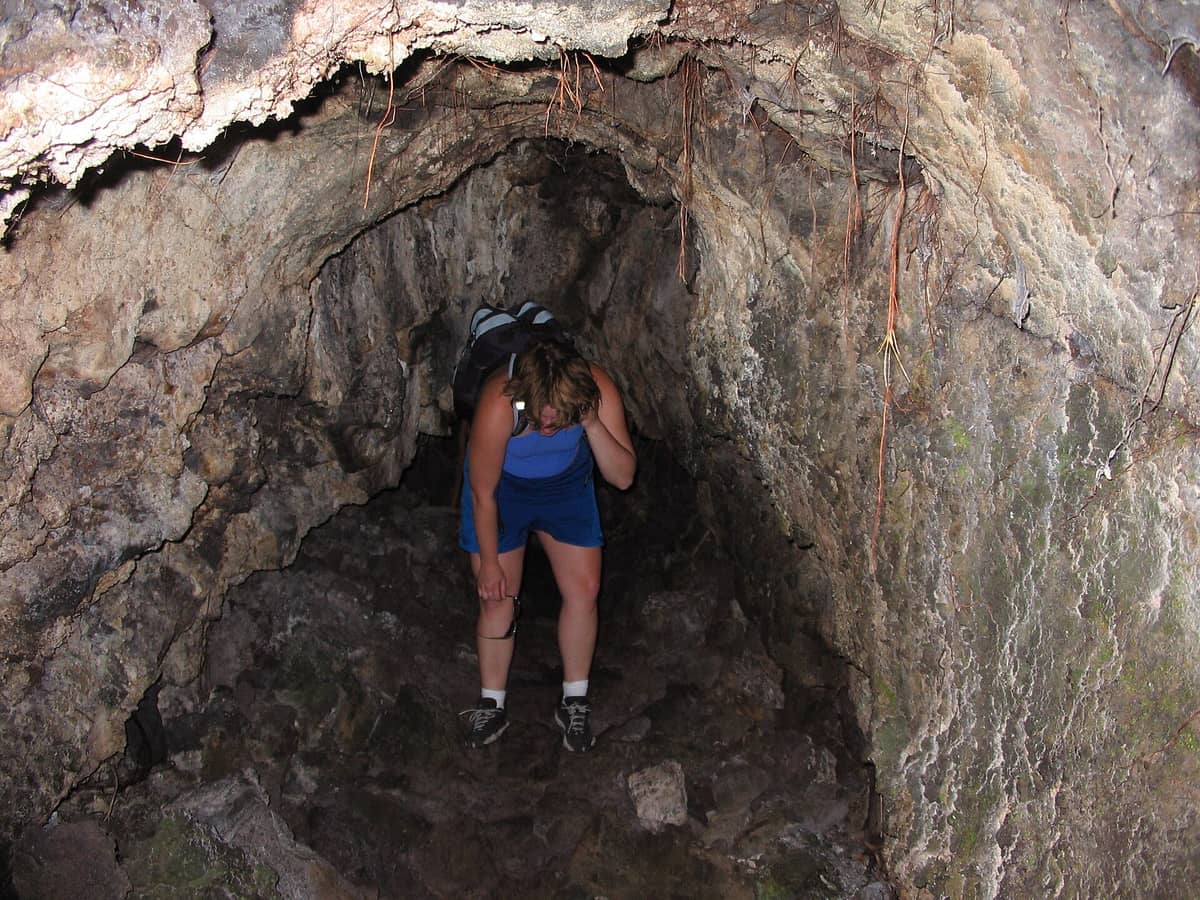
These are not decorated caverns with stalactites or interpretive lighting. They are raw, dark, low-ceilinged tunnels carved by geology rather than human hands. The walls are rough and jagged. The floor is uneven basalt. The air is cool and still. For visitors expecting a polished attraction, that is worth knowing in advance. For visitors who find raw geological features more compelling than curated ones, this place delivers.
ℹ️ Good to know
The Lava Caves Track is managed by the Department of Conservation (DOC) and is signposted from the main Summit Track. There is no admission fee for the caves themselves — your main cost is the Fullers360 ferry fare to the island.
Getting There: The Walk-In Matters
The ferry crossing from Auckland's downtown terminal takes around 25 minutes. Rangitoto Wharf is a simple timber structure with no facilities beyond basic toilets. From the wharf, a well-formed path leads inland and upward through open lava fields. The landscape here is immediately unlike anything on the Auckland mainland: black rock pushing through thin soil, pohutukawa trees gripping the lava at improbable angles, and almost no shade for the first section of the walk.
The turnoff for the Lava Caves Track branches from the main Summit Track roughly 45 minutes from the wharf. The branch track itself is rated by DOC as easy to intermediate and runs for 500 metres. Keep an eye on the signage — it is clear, but the surrounding lava field is disorienting if you wander off the path. If you plan to combine the caves with the summit, check out the Rangitoto Summit Track details separately, as the full loop takes considerably longer.
Most visitors spread across the island mid-morning after the first ferry. If you take a later departure, you will find the cave area noticeably quieter. The caves themselves can only hold a small group comfortably, so timing helps.
Tickets & tours
Live prices and dates from our booking partner. If you book, we may earn a commission at no extra cost to you.
Auckland Waitomo Caves and Hobbiton movie set private tour
From 465 €Instant confirmationFree cancellationWaitomo Glowworm Cave Tour with Boat Ride
From 141 €Instant confirmationFree cancellationMiddle earth experience - Hobbiton movie set and Glowworm cave tour
From 504 €Instant confirmationLuggage Storage in Auckland
From 5 €Instant confirmationFree cancellation
Inside the Caves: What to Expect
⚠️ What to skip
Bring a torch (flashlight) — this is not optional. The caves are completely dark inside. Low ceilings mean you will need to crouch or duck repeatedly. Wear closed, sturdy shoes with grip. The rock underfoot is sharp and wet in places.
Stepping into the main entrance, the temperature drops noticeably. On a warm Auckland summer day, the cool air inside is immediately apparent — not dramatically cold, but enough to feel like stepping into a cellar. The darkness is total once you move away from the entrance. Without a torch, you cannot proceed safely.
The ceiling height varies considerably through the tunnel system. In some sections you can stand upright; in others you need to bend low, feeling your way across irregular lava formations with your free hand. The walls have a rough, sometimes glassy texture where the molten rock cooled quickly. In places, you can see the layered structure of the tunnel ceiling, where successive flows built up the rock above you.
DOC describes the difficulty as easy to intermediate, which is broadly accurate for fit adults. For children, the low ceilings and dark interiors make it genuinely exciting — in a good way — but parents should assess whether their children are comfortable in tight, dark spaces before committing. The caves are not suitable for anyone with severe claustrophobia.
The cave network is relatively compact. Most visitors spend 20 to 40 minutes exploring before emerging back into the lava field. There is no looping route through the caves — you enter, explore as far as you are comfortable, and return the same way.
Combining the Caves with a Full Island Day
Rangitoto Island rewards visitors who treat it as a full day out rather than a rushed stop. The caves sit conveniently between the wharf and the summit, making them a natural waypoint on an ascent. The summit track The summit tops out at 260 metres and offers panoramic views across the Hauraki Gulf, with the Auckland skyline visible to the west. On clear days the view is extraordinary; on overcast days it is still worth the walk, though the horizon disappears into grey.
Rangitoto is one of the Hauraki Gulf islands that can genuinely fill a day without effort. Bring your own food and water — there are no cafes or shops on the island, and the ferry schedule means you need to plan your return time carefully. DOC also notes there are no accessible toilets on the island, so factor that in when planning.
The ferry does not operate on Christmas Day, and timetables change seasonally. Always check the current Fullers360 schedule before you go, and note the last ferry departure time so you are not stranded.
Photography and Sensory Notes
The contrast between the black lava landscape above ground and the shadowed tunnel interiors creates genuinely interesting photographic opportunities. Above the caves, the alien texture of the lava field with pohutukawa trees forcing their roots through rock cracks photographs well in morning light, when shadows are long and the rock surfaces are defined.
Inside the caves, photography requires either a phone with a strong low-light mode or a torch you can angle for fill lighting. The glassy surfaces on some walls catch light in interesting ways. If you want usable images inside, bring a second light source or a headlamp that frees both hands.
Soundwise, the caves are unusually quiet. Outside, the lava fields carry wind and birdsong from the native bush that has slowly colonised the island. Inside, both disappear almost completely. It is an abrupt shift that many visitors remark on.
Who This Is Not For
If you are looking for a comfortable, accessible day out, Rangitoto's lava caves are not the right choice. DOC has no accessible toilets on the island, the terrain throughout is rough, and the caves themselves involve crouching and navigating uneven dark surfaces. Visitors with mobility limitations should research the island's accessibility carefully before making the ferry crossing.
Visitors looking for a lighter, more accessible island experience from Auckland might find Waiheke Island a better fit, with its beaches, cafes, and gentler terrain. For families with very young children, the physical demands of the lava caves — combined with the absence of facilities on Rangitoto — make a full island day more challenging than it might look on a map.
It is also worth setting expectations about the caves themselves. They are not large-scale caverns. If you have visited famous cave systems elsewhere, these tunnels will feel modest. Their appeal is geological and contextual: being inside a volcanic tube on New Zealand's youngest volcano, in a landscape still clearly shaped by fire, is the experience. The caves are a component of that story, not a spectacle in isolation.
Insider Tips
- Bring two light sources — a headlamp plus a handheld torch. Headlamps are better for navigating the low sections because they keep both hands free for balance.
- The ferry schedule is the hard constraint on your day. Check the last return departure before you leave Auckland, and build in buffer time. Missing the last ferry has real consequences.
- Wear long trousers or at least be prepared for scratched shins. The lava rock edges are sharp, and crouching through the lower sections of the caves often brings your legs into contact with the walls.
- The caves are coolest and quietest in the early afternoon, after the main morning ferry crowds have either moved on to the summit or returned to the wharf.
- There is no food or water on the island. A minimum of 1.5 litres of water per person is sensible for a summer visit, more if you are doing the full summit loop as well.
Who Is Rangitoto Lava Caves For?
- Geology and volcanology enthusiasts who want to see a lava tube from the inside
- Hikers looking to add an unusual detour to the Rangitoto Summit Track
- Older children and teenagers who are comfortable in dark, confined spaces
- Photographers seeking dramatic contrasts between volcanic landscape and tunnel interiors
- Travellers doing a multi-attraction Rangitoto day trip and wanting more than just the summit
Nearby Attractions
Other things to see while in Rangitoto Island:
- Rangitoto Summit Track
The Rangitoto Summit Track is a 7 km return walk across New Zealand's largest lava field to the rim of a 260-metre shield volcano that last erupted around 600 years ago. Reached by ferry from central Auckland, it rewards hikers with some of the most expansive views in the Hauraki Gulf region. The terrain is raw, uneven, and utterly unlike anything else in the Auckland day-trip circuit.
Planning a trip? Discover personalized activities with the Nomado app.