Nusa Dua Beach: Bali's Calmest, Cleanest Coastline
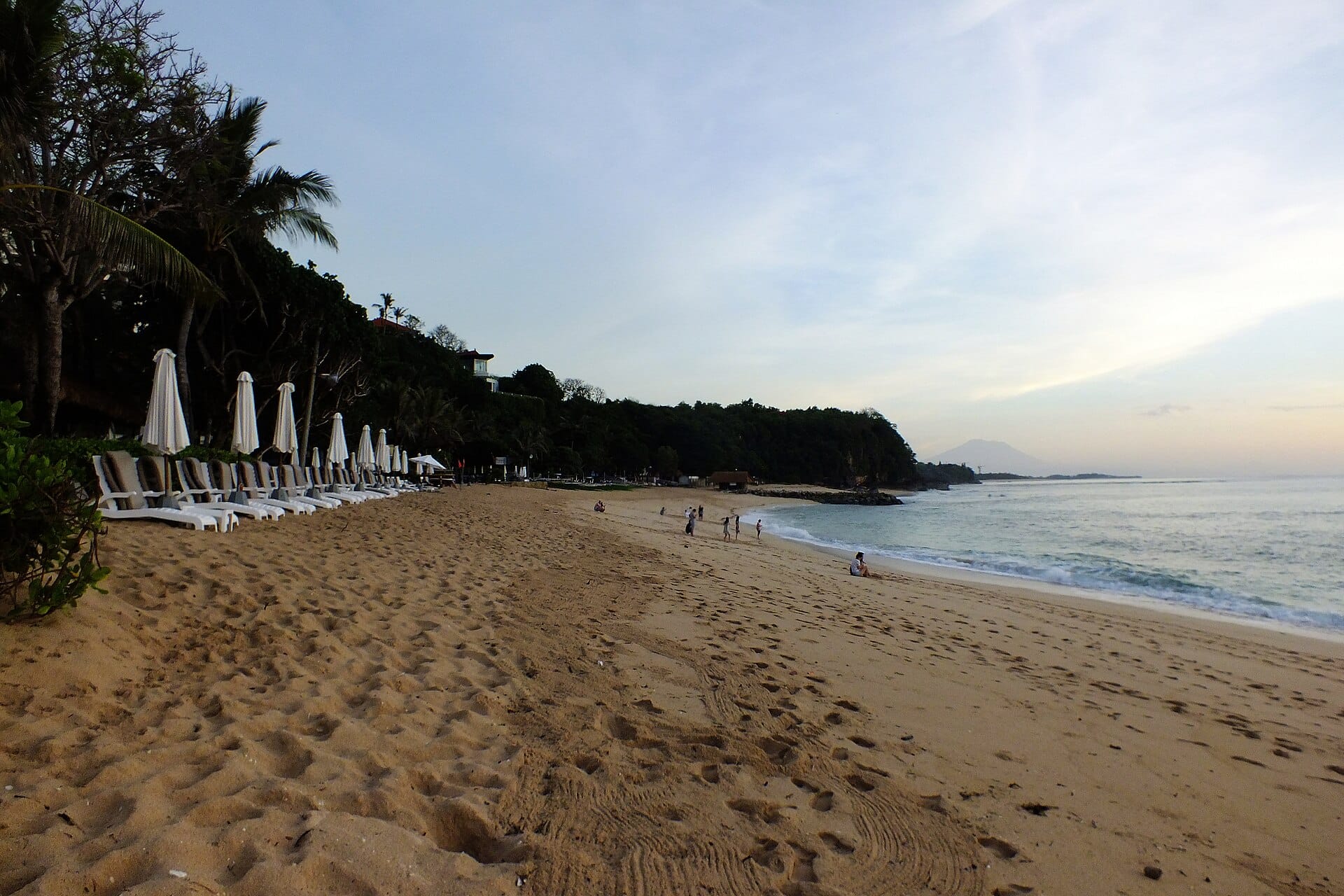
Nusa Dua Beach is a manicured stretch of white sand on Bali's southeastern tip, protected by an offshore reef that keeps the water calm and swimmable year-round. It sits within a gated resort complex that trades Bali's usual chaos for polished walkways, clean sand, and a level of order you will not find anywhere else on the island.
Quick Facts
- Location
- Nusa Dua resort complex, southeastern Bali, about 30-40 minutes from Ngurah Rai Airport via toll road
- Getting There
- Taxi or ride-hailing app via Bali Mandara Toll Road. Parking IDR 5,000-10,000.
- Time Needed
- 3 to 6 hours. A full beach day is easy here.
- Cost
- Free entry to the beach. Water sports, sunbed rental, and food available at resort-level pricing.
- Best for
- Safe swimming for families, calm snorkeling, sunrise walks, resort beach days
What Makes Nusa Dua Beach Different
Nusa Dua Beach sits inside the Bali Tourism Development Corporation (BTDC) complex on Bali's southeast coast, a gated area that was purpose-built for resort tourism in the 1970s. What this means in practice is that the beach operates at a fundamentally different standard from the beaches on Bali's west and south coasts. The sand is groomed. The walkways are paved and landscaped. The vendors are regulated. The water is protected by an offshore coral reef that keeps waves small and currents manageable.
The beach runs in two connected sections: Mengiat Beach in the north and Geger Beach in the south. Major five-star resorts, including the St. Regis, Sofitel, Hilton, and Meliá, line the shore and maintain their frontage to a high standard. Non-guests can access the beach freely. You do not need to be staying at a resort to walk the sand, swim, or use the public areas. This is a common misconception that keeps many travelers from visiting.
ℹ️ Good to know
Nusa Dua Beach faces east, not west. That means sunrises here are spectacular and sunsets are not visible from the beach. Plan your visit accordingly if golden-hour light is important to your experience.
Swimming and Water Conditions
The offshore reef breaks incoming swell before it reaches the beach, which means the water at Nusa Dua is calm enough for children to swim without significant wave action for most of the year. The bottom is sandy and slopes gradually, so you can wade out a considerable distance before the water deepens. Visibility is good on calm days, and basic snorkeling along the reef edge is possible with rented gear.
This is the beach to recommend to anyone who finds Bali's west-coast surf beaches intimidating. If you have young children, if you are not a strong swimmer, or if you simply want to float in warm, clear water without worrying about rip currents, Nusa Dua delivers that. The trade-off is energy: this beach feels tranquil rather than vibrant. If you want waves, head to Kuta or Canggu.
Tickets & tours
Live prices and dates from our booking partner. If you book, we may earn a commission at no extra cost to you.
Walking the Beachfront Promenade
A paved promenade runs along the back of the beach for several kilometers, connecting the resort properties and public access points. It is well-maintained, shaded in sections by mature trees, and flat enough for strollers and wheelchairs. Walking the full length gives you access to different sections of sand, each with a slightly different character depending on which resort sits behind it.
The promenade is also a pleasant morning exercise route. Joggers and walkers use it from around 6:00 AM onward, when the air is cool and the eastern light catches the water. Compared to running on the sand at Kuta or Seminyak, the paved surface and lack of vendors make for an uninterrupted experience.
Things to Do Beyond Swimming
Water sports operators work the beach and offer jet skiing, parasailing, banana boat rides, and stand-up paddleboarding. Prices are negotiable and typically higher than at non-resort beaches, but the operators are generally licensed and equipped with safety gear. Snorkeling trips to the reef can be arranged from the beach.
The Bali Collection shopping and dining complex sits within the BTDC area and is walkable from the beach. It offers restaurants, cafes, and shops at prices that are lower than the resort restaurants. For a different kind of coastal experience nearby, the Waterblow is a short drive or walk from the beach area.
When to Visit
Nusa Dua's east-facing position means it gets morning sun and afternoon shade. The best beach time is typically 8:00 AM to 1:00 PM, when the water is warmest and the light is direct on the sand. Afternoon visits are cooler and more shaded, which some visitors prefer. The dry season (April through October) offers the most consistently good conditions, though the reef protection means Nusa Dua's water stays calmer than west-coast beaches even during the wet season.
Who Should Visit and Who Should Look Elsewhere
Nusa Dua Beach is ideal for families with young children, older travelers, honeymooners seeking peace, and anyone who wants a clean, calm, well-serviced beach day without the sensory overload of Bali's busier areas. It is not the right choice for surfers, travelers seeking local Balinese culture and atmosphere, budget backpackers, or anyone who finds resort environments sterile. The polish is the feature and the limitation.
Insider Tips
- The southern section near Geger Beach is less resort-dominated and more frequented by local Balinese families. It feels more relaxed and the warung food is cheaper.
- Sunrise at Nusa Dua Beach is worth setting an alarm for. The eastern orientation and flat horizon over the Bali Sea produce colors that rival any sunset on the west coast.
- You can walk the beachfront promenade from end to end without being a resort guest. The public access points are clearly marked near parking areas.
- Bring cash for water sports and beach vendors. Card payment is unreliable outside the resort restaurants.
Who Is Nusa Dua Beach For?
- Families with young children who need calm, safe swimming water
- Honeymooners and couples seeking a peaceful, manicured beach setting
- Older travelers who want accessible walkways and gentle water conditions
- Swimmers and snorkelers who prefer reef-protected, wave-free water
- Travelers who value cleanliness and order over atmosphere and energy
Nearby Attractions
Other things to see while in Nusa Dua:
- Waterblow Nusa Dua
The Waterblow at Nusa Dua is a natural blowhole where Indian Ocean swells compress through gaps in volcanic limestone and erupt vertically, sending plumes of seawater four to eight meters into the air. On high-swell days, the spray can reach 30 meters. It is brief, free, and worth the short detour.
- Geger Beach
Geger Beach sits at the southern end of Nusa Dua's coastline, offering the same calm, reef-protected water as the resort beaches to the north but with a more local atmosphere, simpler warung food, and fewer umbrellas between you and the sand. A Hindu temple sits on the headland above.
Planning a trip? Discover personalized activities with the Nomado app.