Waterblow Nusa Dua: Bali's Natural Ocean Geyser
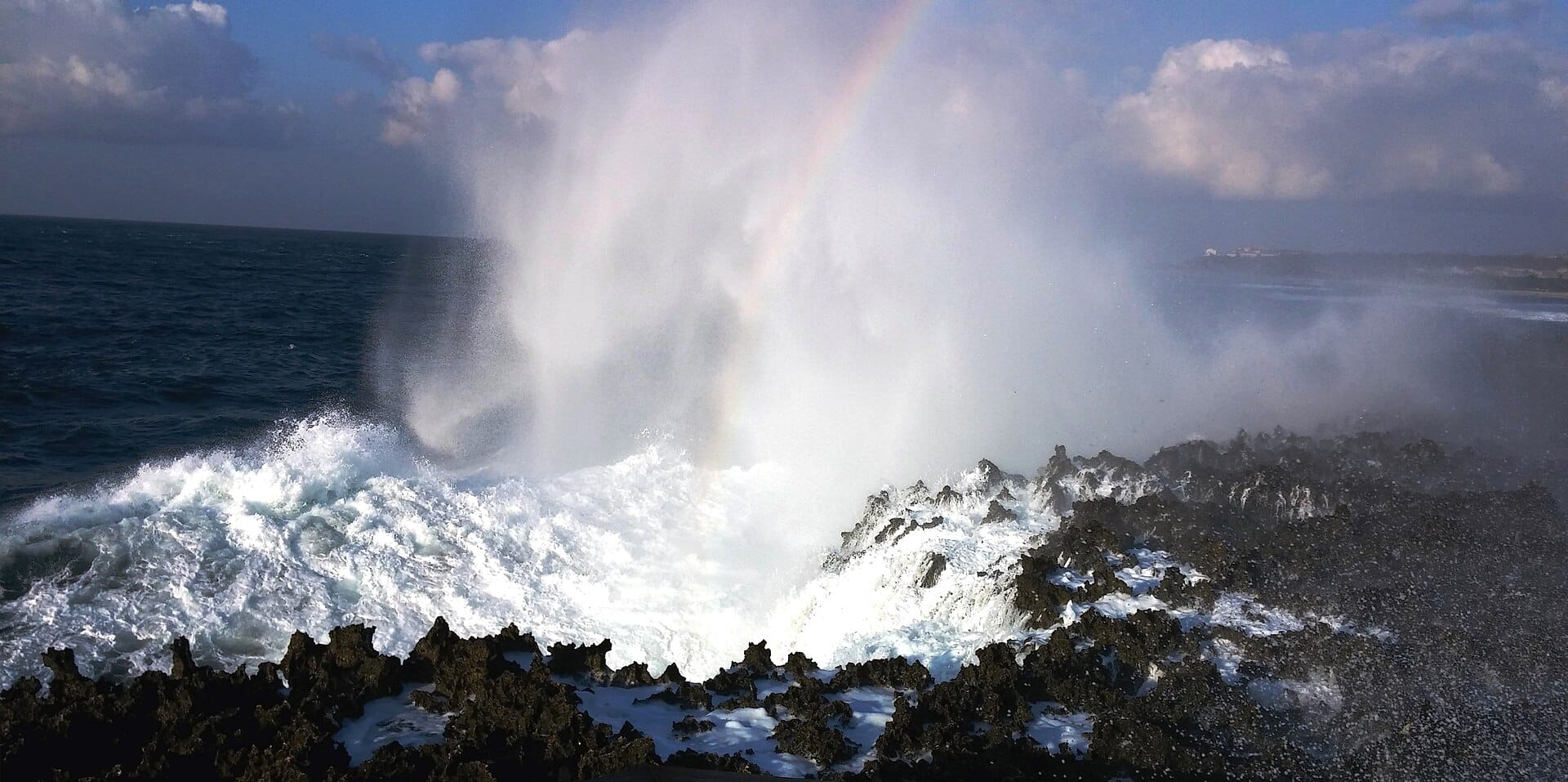
The Waterblow at Nusa Dua is a natural blowhole where Indian Ocean swells compress through gaps in volcanic limestone and erupt vertically, sending plumes of seawater four to eight meters into the air. On high-swell days, the spray can reach 30 meters. It is brief, free, and worth the short detour.
Quick Facts
- Location
- Peninsula Island (Nusa Gede), Nusa Dua, behind the Grand Hyatt Bali, southeastern Bali
- Getting There
- Taxi, ride-hailing app, or scooter. About 20 minutes from Ngurah Rai Airport via toll road. Short walk from BTDC parking.
- Time Needed
- 30 minutes to 1 hour. The experience is brief but the coastal walk adds time.
- Cost
- Admission IDR 25,000 for international visitors. Domestic IDR 15,000. (Cash only)
- Best for
- Nature photography, coastal drama, a quick side trip from Nusa Dua resorts
What the Waterblow Is
The Waterblow sits on the southeastern cliff edge of Peninsula Island (Nusa Gede) in Nusa Dua, behind the Grand Hyatt Bali hotel. It is a natural geological formation where the Indian Ocean pushes into sub-surface caves carved into volcanic limestone and coral rock. When a wave of sufficient size enters the narrow channel, the compressed water has only one exit: straight up. The result is a vertical eruption of seawater that shoots four to eight meters on moderate swell days and considerably higher when conditions peak.
This is not a subtle phenomenon. The sound of the water detonating through the rock is percussive and loud. The spray, when the wind carries it toward the viewing area, hits with real force. On high-swell days in August, September, and October, the eruptions can reach heights that make even the viewing platform feel too close. The whole experience lasts seconds per eruption, with waves cycling in sets, so you stand and wait and then it happens.
⚠️ What to skip
The rocks near the blowhole are slippery and the ocean spray is powerful. Stay behind the safety barriers and do not climb onto the lower rocks for a closer look. Injuries from being swept off exposed rocks occur here.
When the Waterblow Is Most Impressive
The blowhole's intensity depends entirely on ocean swell. During Bali's dry season, from roughly June through October, southerly swells from the Indian Ocean are at their strongest, and the Waterblow puts on its best performance. August and September are typically the peak months. During the wet season and calmer swell periods, the eruptions are smaller and less frequent, and on very calm days the feature may barely activate.
Timing within the day matters less than swell size. The phenomenon is tide-dependent to some degree, with mid-tide often producing the best compression and release cycle. Morning visits offer better light for photography, with the eastern sun illuminating the spray against the blue ocean and sky.
Tickets & tours
Live prices and dates from our booking partner. If you book, we may earn a commission at no extra cost to you.
Nusa Penida East private day trip from Ubud and South Bali
From 97 €Instant confirmationFree cancellationBest of Nusa Penida tour with snorkeling with Manta
From 103 €Instant confirmationFree cancellationNusa Penida West private day trip from Ubud and South Bali
From 91 €Instant confirmationFree cancellationNusa Penida full-day tour with transport and lunch
From 103 €Instant confirmationFree cancellation
The Walk and the Setting
From the parking area, a paved pathway leads through a short stretch of landscaped grounds to the cliff edge. The walk takes about five to ten minutes and is flat and accessible. Souvenir vendors and a small food stall line the path. The viewing platform at the end is a concrete structure with railings positioned above the blowhole, giving a direct downward view into the channel where the eruptions occur.
The surrounding coastline is rugged limestone with sharp coral formations and crashing surf. The contrast with the manicured resort beaches a few hundred meters away is stark. This is the raw, unprotected side of the peninsula, where the ocean hits the rock without the reef barrier that calms Nusa Dua's swimming beaches.
Practical Information
The Waterblow is open daily from 9:00 AM to 6:00 PM. Entry is IDR 25,000 for international visitors and IDR 15,000 for domestic visitors. The site is a short drive or walk from the BTDC resort complex. If you are staying in Nusa Dua, it is easily combined with a morning at Nusa Dua Beach or an afternoon at Geger Beach.
Wear shoes with grip. The path is paved, but the area near the viewing platform can be wet from spray. Bring a waterproof cover or bag for your phone and camera if you plan to stand close to the action. The spray is saltwater and can reach the viewing platform on high-swell days.
💡 Local tip
Check a surf forecast before visiting. The bigger the swell, the more dramatic the eruptions. If the forecast shows flat conditions, the Waterblow may be underwhelming.
Who Should Visit
The Waterblow is a quick, inexpensive side attraction that works best as an add-on to a Nusa Dua beach day rather than a standalone destination. It is impressive in high-swell conditions and underwhelming in calm weather. Children are typically fascinated by the eruptions. Photographers with an interest in wave and coastal dynamics will find good material here. Travelers who need every stop to fill hours should know that 30 to 45 minutes is the realistic duration, and on calm days it may feel like less.
Insider Tips
- Visit during the dry season (June through October) when south swells are strongest. The difference between a high-swell day and a calm day is the difference between spectacular and forgettable.
- Stand to the side of the main viewing platform rather than directly in front. The angle gives you a better compositional line for photos with the cliff and ocean in frame.
- Combine the Waterblow with a walk along the adjacent clifftop. The unprotected coastline here is dramatically different from the resort beaches and worth exploring for a few minutes.
- Morning light is best for photography. The sun illuminates the spray from behind and to the side, creating backlit plumes against the dark rock.
Who Is Waterblow Nusa Dua For?
- Nature and geology enthusiasts who appreciate raw coastal dynamics
- Photographers looking for dramatic wave-and-rock compositions
- Families with children who enjoy watching powerful natural phenomena
- Travelers staying in Nusa Dua who want a quick break from the resort beach
- Anyone visiting during high-swell season who wants a short, impactful stop
Nearby Attractions
Other things to see while in Nusa Dua:
- Nusa Dua Beach
Nusa Dua Beach is a manicured stretch of white sand on Bali's southeastern tip, protected by an offshore reef that keeps the water calm and swimmable year-round. It sits within a gated resort complex that trades Bali's usual chaos for polished walkways, clean sand, and a level of order you will not find anywhere else on the island.
- Geger Beach
Geger Beach sits at the southern end of Nusa Dua's coastline, offering the same calm, reef-protected water as the resort beaches to the north but with a more local atmosphere, simpler warung food, and fewer umbrellas between you and the sand. A Hindu temple sits on the headland above.
Planning a trip? Discover personalized activities with the Nomado app.