Nui Than Tai Hot Springs Park: Da Nang's Mountain Thermal Escape
Set inside the Ba Na–Nui Chua Nature Reserve roughly 30 km southwest of Da Nang, Nui Than Tai Hot Springs Park combines natural mineral hot springs, jungle waterfalls, and a landscaped resort complex across 60 hectares of forested mountain terrain. It is a full-day commitment, best suited to families and couples who want something beyond the beach.
Quick Facts
- Location
- Highway 14G, Hoa Phu Commune, Hoa Vang District, Da Nang
- Getting There
- Private car, taxi, or motorbike from Da Nang city center; approx. 40–50 min (30 km southwest). No direct public bus.
- Time Needed
- 4–6 hours minimum; most visitors treat it as a full-day trip
- Cost
- Approx. 300,000–400,000 VND for adults; approx. 150,000 VND for children (verify current prices before visiting)
- Best for
- Families, couples, spa seekers, and anyone wanting a day away from the coast
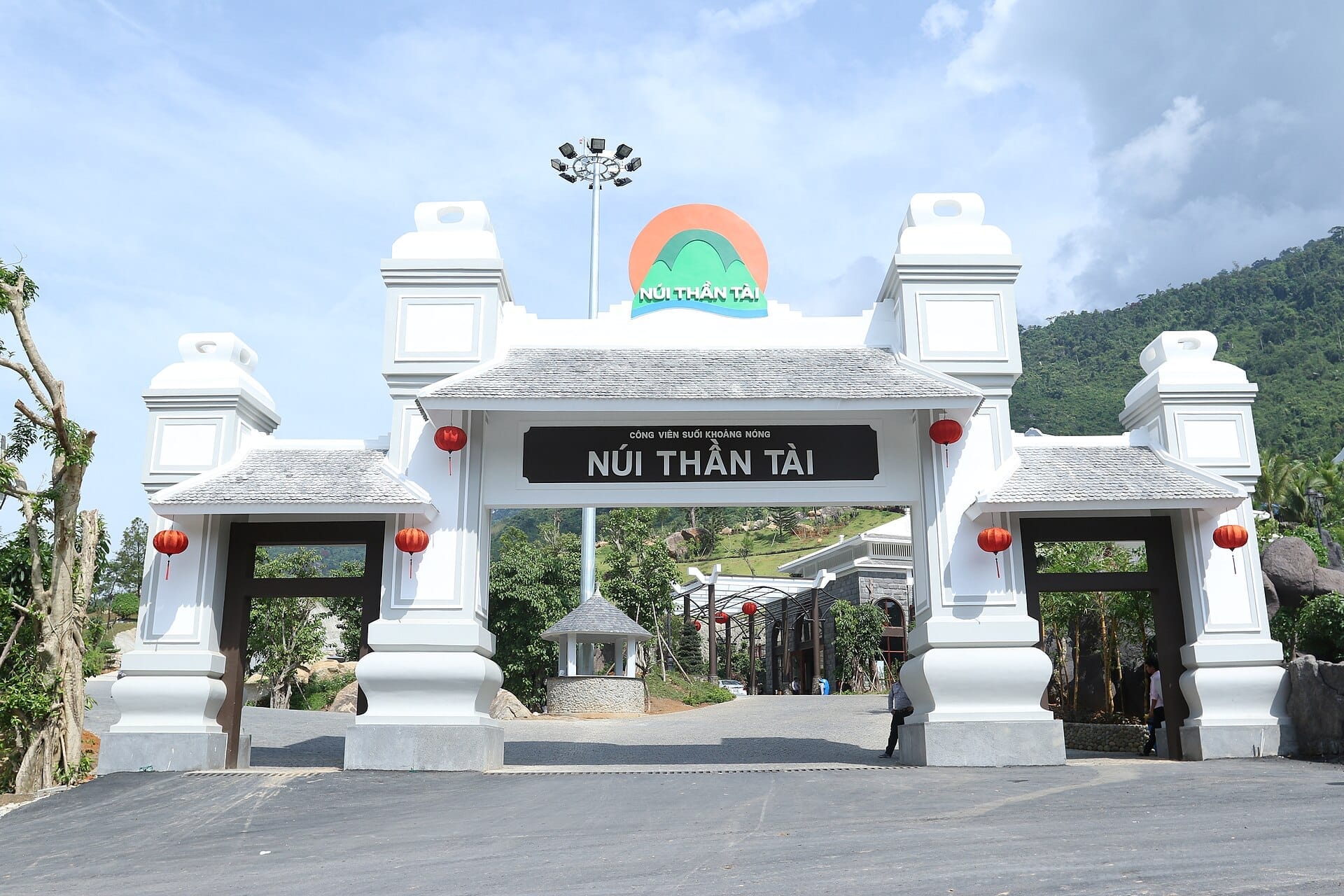
What Is Nui Than Tai Hot Springs Park?
Nui Than Tai Hot Springs Park (Núi Thần Tài) is a large-scale thermal resort and nature park inside the Ba Na–Nui Chua Nature Reserve, a protected forest zone in Da Nang's rural Hoa Vang District.
Nui Than Tai positions itself closer to nature: the forest canopy is real, the water is genuinely thermal, and the terrain is legitimately hilly. That said, it is a ticketed commercial attraction, not a wild hot spring, and visitors should arrive with those expectations calibrated.
ℹ️ Good to know
Opening hours are reported as 08:30–17:30 daily, though hours may vary by season. Confirm directly with the park before making the drive, especially during public holidays or Vietnamese school breaks when the site can operate on modified schedules.
Getting There: The Drive Is Part of the Experience
The park sits on Highway 14G in Hoa Phu Commune, about 30 km southwest of central Da Nang. The drive takes between 40 and 50 minutes depending on traffic and takes you through the city's outer suburbs, past farming villages, and eventually into forested mountain terrain. The road narrows and steepens as you approach, and the shift in air temperature and vegetation is noticeable by the time you reach the gate.
There is no direct public bus service to the park. Most visitors arrive by taxi, Grab car, or rented motorbike. If you take a motorbike, the final stretch of road involves some moderate gradients — manageable for experienced riders, but worth knowing in advance. Arrange a return ride or confirm your driver will wait, since flagging a taxi from the park entrance is not straightforward.
The park is often paired with a stop at the Marble Mountains on the way back toward the city, which adds another two to three hours but makes for a fuller day. If you are planning a wider mountain-focused itinerary, the Da Nang mountains guide covers the key options across the region.
Tickets & tours
Live prices and dates from our booking partner. If you book, we may earn a commission at no extra cost to you.
Private Transfer from Hoi An to Ba Na or Than Tai or Ba Na Golf
From 55 €Instant confirmationFree cancellationMarble Mountains and My Son sanctuary full-day tour with lunch
From 86 €Instant confirmationFree cancellationMarble Mountain, Lady Buddha and Han River Night Cruise with Dinner
From 65 €Instant confirmationFree cancellationBa Na Hills and Marble Mountain Robinson Club Exclusive Tour
From 180 €Instant confirmationFree cancellation
The Springs Themselves: Warmth, Minerals, and Jungle Air
The thermal pools are the core draw, and they do deliver. The water carries a mild sulfuric mineral scent — subtle enough not to be unpleasant, noticeable enough to signal that this is genuinely geothermal rather than heated tap water. Pool temperatures vary across the complex; some are calibrated to a gentle soak temperature, others are cooler for swimming. The sensation of sitting in warm mineral water while surrounded by forest, with mountain sounds replacing the usual beach soundtrack, is genuinely refreshing.
Mornings offer the most atmospheric experience. Mist from the heated water drifts over the pool surfaces in cooler months, and the forest around the complex is loudest with birdsong in the first two hours after opening. By midday, school groups and weekend families fill the main pool areas, and the experience shifts toward a crowded water park. Arriving at 08:30 on a weekday gives you roughly 90 minutes of relative calm before the volume picks up.
💡 Local tip
Bring a waterproof bag or rent a locker at the facility. Valuables left unattended at poolside are a consistent complaint among visitors. Most rental lockers accept coins or small notes — keep some VND change handy.
Waterfalls and Forest Trails
Beyond the thermal pools, the park includes a series of walking trails through the nature reserve leading to natural waterfalls. The paths are relatively short and well-maintained near the park infrastructure, but become rougher and steeper further in. Sturdy sandals or light hiking shoes are genuinely useful here — flip-flops work for the pools but become problematic on wet forest steps.
The waterfalls vary in flow significantly by season. During and just after the wet season, roughly September through November in this part of central Vietnam, they are dramatic and loud. In the dry months of June and July, some smaller cascades reduce to a trickle. If the waterfall scenery is a key part of why you are visiting, plan accordingly.
The forest itself is the quiet highlight for visitors who take the trails seriously. The Ba Na–Nui Chua Nature Reserve supports subtropical montane vegetation, and the canopy here is older and denser than much of what you will find on the more developed slopes of the region. Bird activity is high in the early morning, and the air has a cool, resinous quality on overcast days that is quite distinct from the coastal heat of Da Nang proper.
How the Experience Changes Through the Day
Early morning, before 10:00, the park has a peaceful, slightly misty quality. The pools steam gently in cooler weather, the trails are largely empty, and staff are still setting up food and rental stations. This is the best window for photography and for those who want the springs without the crowd noise.
From 11:00 onward, particularly on weekends and public holidays, the main pool complex fills steadily with Vietnamese families, many of whom bring full picnic setups and stay for hours. The atmosphere becomes genuinely lively and social — if you enjoy that energy, it is entertaining. If you came for quiet relaxation, the inner trails and secondary pools offer some escape. Afternoon heat, particularly from May through August, makes the thermal pools less appealing but the shaded trails more comfortable.
The park closes at 17:30, and the drive back to Da Nang in the late afternoon catches the tail end of rush hour traffic entering the city. Budget slightly more time than the morning drive took.
Practical Details: What to Bring and What to Expect
Swimwear is essential — rental options exist at the park but selection is limited and sizing inconsistent. A change of dry clothes for the drive back is worth packing. Towels can be rented on-site. The park's food and drink offerings are serviceable rather than impressive: standard Vietnamese lunch fare, cold drinks, and snacks. Bringing your own water and some snacks reduces costs and keeps you independent of the sometimes slow poolside service.
Internal electric shuttles connect the main gate to different sections of the park, which is helpful for getting around the complex. For visitors with limited mobility, the shuttle reduces the walking load significantly, though the trail sections and some pool areas involve uneven ground and steps without formal accessibility infrastructure.
Admission fees are reported at approximately 300,000–400,000 VND for adults and around 150,000 VND for children, though these figures should be verified directly since pricing is subject to change. For context on planning your full day out, the Da Nang things to do guide covers how this park compares to other full-day options from the city.
⚠️ What to skip
Weather matters significantly here. Heavy rain makes the forest trails slippery and can close waterfall paths for safety. Check the forecast before making the 50-minute drive.
Who Should Reconsider
Nui Than Tai is not the right choice for every traveler. If your time in Da Nang is limited to two or three days, the round-trip journey of nearly two hours eats into a day significantly, and city-based attractions offer more concentrated value for short visits. The park is also not a wilderness experience — it is a resort complex within a nature reserve, and the infrastructure, while useful, gives it a managed feel that may disappoint those seeking raw, undeveloped thermal springs.
Solo travelers without a rented vehicle may also find the logistics frustrating, as organizing transport back at the end of the day requires either pre-arranged pick-up or walking to the gate and hoping to find a Grab signal. If you are traveling solo and mainly interested in hot springs as relaxation, a spa day in the city is considerably more straightforward. The Da Nang spa and wellness guide covers urban alternatives.
Insider Tips
- Book a Grab car in advance and confirm the driver will wait or return to pick you up — mobile signal at the park entrance can be unreliable, making on-demand booking from inside the park unpredictable.
- The secondary pools further from the main entrance tend to be less crowded even at peak hours. Once you have the lay of the land from the shuttle ride in, double back on foot to explore these quieter areas.
- Visiting in the dry season (April–August) gives you more reliable weather and cooler forest air in the early morning, but waterfall flow will be lower. November to January offers the most dramatic waterfalls but brings a higher chance of rain — go early in the day and watch the afternoon sky.
- Some package tickets sold by Da Nang tour operators bundle transport, entry, and lunch. These are often marginally more expensive than arranging separately but remove the logistics headache entirely — worthwhile for first-time visitors.
- Wear a swimsuit under your clothes for the drive in. Changing facilities exist but queues build up quickly after 10:00, and arriving pool-ready saves 20–30 minutes of frustration.
Who Is Nui Than Tai Hot Springs Park For?
- Families with children who want structured outdoor time with water activities and forest walks
- Couples looking for a relaxed, nature-based day away from Da Nang's beach strip
- Visitors with three or more days in Da Nang who have already covered the main city sights
- Spa and wellness travelers interested in genuine geothermal mineral pools rather than hotel facilities
- Photographers targeting misty forest and waterfall shots, especially in the cooler months
Nearby Attractions
Combine your visit with:
- An Thuong Tourist Street
An Thuong Tourist Street (Khu Phố Du Lịch An Thượng) is a compact urban nightlife area in Ngu Hanh Son District, a short walk inland from My Khe Beach. Officially opened in late April 2022, it brings together seafood restaurants, beach bars, massage parlors, and rooftop venues in a compact, walkable grid. Entry is free.
- Ba Na Hills Sun World Resort
Perched at around 1,487 metres in the Truong Son Mountains, Sun World Ba Na Hills is Da Nang's most ambitious theme resort. This guide covers everything from cable car logistics and ticket prices to the best time to visit and who should skip it entirely.
- Golden Bridge
Perched at about 1,414 metres above Da Nang inside Sun World Ba Na Hills, the Golden Bridge is a 150-metre pedestrian walkway gripped by two enormous stone hands. Built in 2018, it has become one of the most photographed structures in Vietnam — but the experience depends heavily on the weather, the crowds, and how you manage your visit.
- Hoa Phu Thanh Eco Park
Set in the forested hills of Hoa Vang District, Hoa Phu Thanh Eco Park is Da Nang's most popular outdoor adventure destination. Expect waterfall slides, bamboo rafting, ziplines, and cold mountain streams — all within a 45–60 minute drive from the city center.
Planning a trip? Discover personalized activities with the Nomado app.