Istanbul Military Museum (Harbiye): History, Highlights, and What to Expect
The Istanbul Military Museum, officially known as the Askerî Müze ve Kültür Sitesi, holds one of the most extensive military collections in the world, spanning six centuries of Ottoman and Turkish military history. Located in Harbiye, Şişli, it is home to roughly 55,000 objects and the legendary Mehter, the Ottoman military band that once led armies into battle.
Quick Facts
- Location
- Halaskargazi Caddesi (Ergenekon Mahallesi), Harbiye, Şişli, Istanbul — between Taksim and Şişli
- Getting There
- Taksim (M2 metro) or Osmanbey (M2 metro); the museum is walkable from both stations
- Time Needed
- 2–3 hours for a thorough visit; allow extra time if catching the Mehter band performance
- Cost
- Verify current ticket prices before visiting; no confirmed official rate is published during restoration
- Best for
- History enthusiasts, Ottoman culture lovers, families with older children, military history researchers
⚠️ What to skip
Important: The Istanbul Military Museum is closed to visitors from 1 June 2026 due to restoration works. Check official sources or contact the museum directly before planning your visit.
What Is the Istanbul Military Museum?
The Istanbul Military Museum, or Harbiye Askerî Müze, is Turkey's principal military history institution and one of the largest of its kind globally. It occupies the historic Mekteb-i Harbiye building just off Halaskargazi Caddesi in the Harbiye quarter of Şişli, a location that already carries its own weight in Ottoman military education and administrative history. The building itself has the solid, symmetrical authority of late Ottoman institutional architecture: wide corridors, high ceilings, and exhibition halls that transition from hushed and dim to dramatically lit depending on the section.
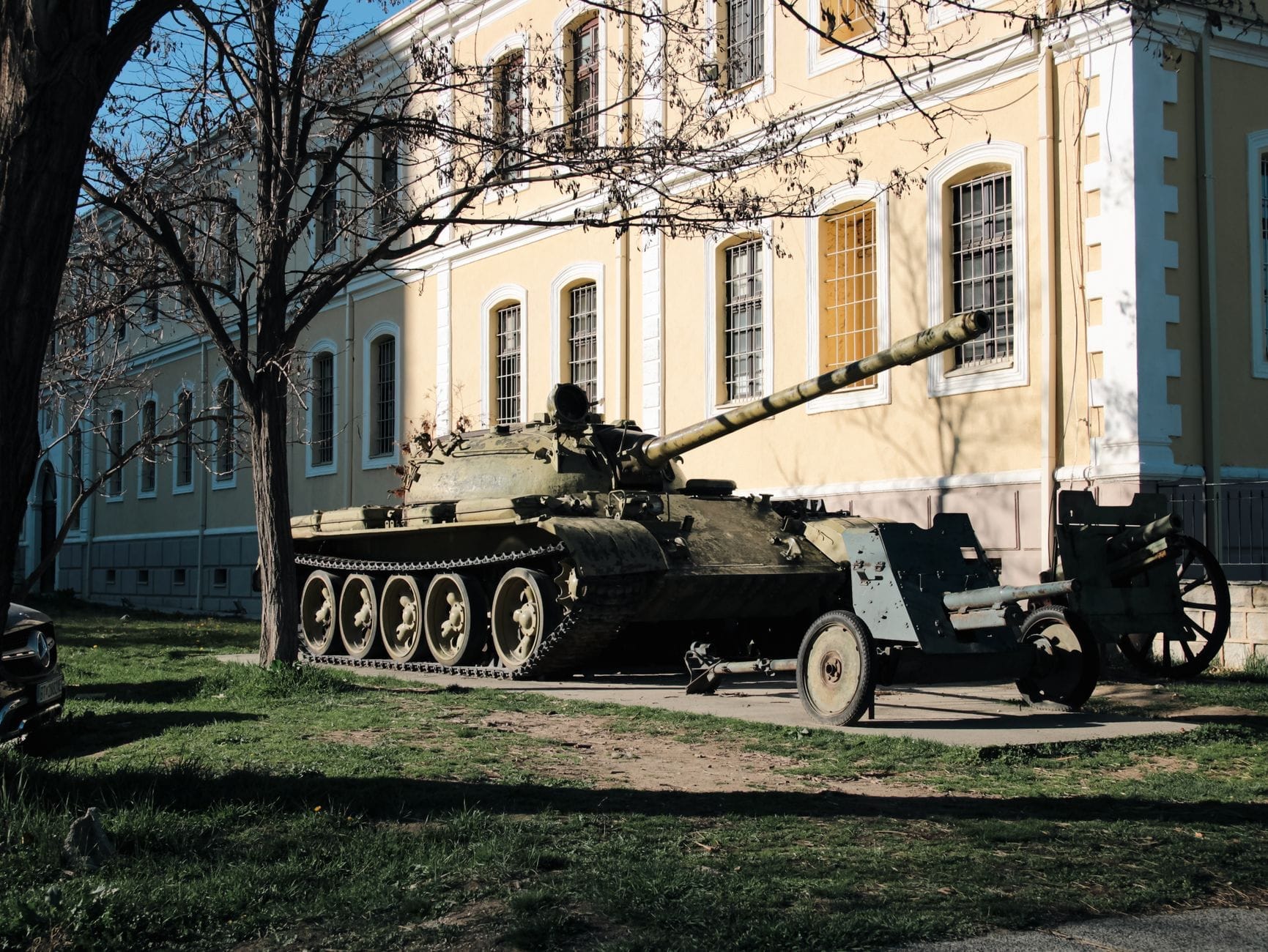
The collection runs to approximately 55,000 objects, with around 5,000 on display at any given time. The scope is extraordinary: chain mail coats from the 15th century, European-style military uniforms from the Tanzimat reform era, weapons recovered from Ottoman campaigns across three continents, and personal effects of commanders whose names appear throughout Turkish military lore. For anyone serious about Ottoman history or the military transformation of the late empire, this museum offers material that is hard to find elsewhere.
A History That Begins in the 15th Century
The roots of the military collection stretch back to the 15th century, when the Ottomans began preserving captured arms and trophies of conquest as symbols of imperial power. The modern institutional history, however, began formally on 10 October 1846, when the collection was organized under the name Mekteb-i Fünûn-u Harbiye-i Şahane, the Imperial Academy of the Science of War. This was part of a broader Ottoman effort during the Tanzimat period to modernize the military and institutionalize its legacy.
The collection was relocated in 1950 to the First Army Headquarters building near Taksim Square, and on 10 February 1993 it opened to the public in its current home, the historic Mekteb-i Harbiye building, which was built in 1841 to educate Ottoman military officers and functioned as a military school until 1936. That layered history, from imperial treasury to modern museum institution, is part of what gives the place its unusual atmosphere: it feels less like a purpose-built museum and more like a building that has simply accumulated significance over centuries.
For travelers already exploring the Ottoman past across the city, the Military Museum sits alongside institutions like Topkapi Palace and the Istanbul Archaeology Museums as a major repository of imperial-era material culture. Where those collections skew toward art and administration, this one focuses squarely on warfare, conquest, and military organization.
Tickets & tours
Hand-picked options from our booking partner. Prices are indicative; availability and final rates are confirmed when you complete your booking.
Bosphorus sunset cruise on luxury yacht with guide
From 55 €Free cancellationIstanbul and Bosphorus cruise on private boat - half day afternoon tour
From 40 €Instant confirmationFree cancellationWhirling Dervishes live show and exhibition
From 29 €Instant confirmationBasilica Cistern fast-track entry ticket and optional audio guide
From 34 €Instant confirmation
The Collection: What You Actually See
The exhibition halls are organized roughly chronologically and thematically, moving from medieval Ottoman arms through the long period of European-influenced military modernization and into the Turkish War of Independence and the early Republican era. The early galleries contain some of the most arresting objects: intricately worked armor, decorated swords and daggers, bows and quivers, and chain mail with the kind of craftsmanship that makes you stop and look closely despite knowing it was designed to kill.
Later sections document the Ottoman military's uncomfortable 19th-century transition, when sultans like Mahmud II systematically dismantled the Janissary corps and replaced it with European-style armies. Uniforms, drill manuals, and military maps from this period tell a story of an empire trying to adapt fast enough to survive. The World War I section is particularly significant for international visitors: Turkey fought on multiple fronts, and the collection includes material from Gallipoli, the Caucasus campaign, and the Mesopotamian theater.
Photography inside is generally permitted in most sections, though rules can vary by hall. The lighting in some of the older artifact rooms is subdued, which is good for preservation but challenging for cameras. A dedicated wide-angle lens or simply adjusting to your phone's night mode will help considerably in the chain mail and armor rooms.
The Mehter: Watching the Ottoman Military Band Perform
The single experience that distinguishes this museum from any other in Istanbul is the Mehter band performance. The Mehter is one of the oldest continuously maintained musical traditions in the world, predating the modern military band concept by centuries. Ottoman armies marched to this sound: large kettle drums called davul, paired with shrill zurna oboes, cymbals, and brass instruments, played in a distinctive stepwise rhythm that was designed to be heard across a battlefield.
Performances are scheduled on specific days during operating hours, and the sound inside the dedicated performance hall is physically loud in a way that recording cannot replicate. The musicians wear reproduction period uniforms and move through a choreographed sequence that mirrors how the band would have performed during military ceremonies. Whether or not you have any prior interest in Ottoman music, this is one of the more genuinely unusual experiences Istanbul offers. Check the museum's current schedule when it reopens, as performance days may vary seasonally.
💡 Local tip
Arrive early on a performance day and ask at the entrance about the Mehter schedule. The hall fills up quickly, and standing at the back significantly reduces the acoustic impact of the experience.
Getting There and the Surrounding Neighborhood
The museum sits in Harbiye, a quiet sub-district between Taksim and Şişli proper. The M2 metro is the most reliable approach: Taksim station puts you about a 10–15 minute walk southeast along Cumhuriyet Caddesi, which is a wide, tree-lined boulevard with cafes and bookshops. Osmanbey station on the same line is slightly closer from the Şişli direction. Taxis and ride-hailing apps cover the area easily, and there is no congestion issue on the side streets near the museum even during peak hours.
Harbiye is not a heavily touristed neighborhood, which gives the area around the museum a noticeably different texture from Sultanahmet or Beyoğlu. The streets are primarily residential and commercial, with office buildings and apartment blocks from several different eras. It is useful to combine a museum visit with a walk along Cumhuriyet Caddesi toward Taksim, passing through one of Istanbul's more understated central quarters. For a broader sense of how to orient yourself across the city, the getting around Istanbul guide covers metro lines, tram connections, and Istanbulkart basics in detail.
Best Time to Visit and Practical Considerations
When the museum is open, weekday mornings tend to see the lightest crowds. Turkish school groups visit regularly, particularly in spring and autumn, so if a quiet, self-paced visit matters to you, Tuesday or Wednesday mornings outside of term-time exam periods are preferable to weekends. The building is large enough that even on busier days, the galleries rarely feel overwhelmed.
The museum is indoors throughout, which makes it a practical choice on rainy days, common in Istanbul between November and February. The main corridors and larger halls can feel cold in winter, as large institutional buildings often do, so an extra layer is worth carrying in the colder months. In summer, the thick walls and high ceilings keep the interior comfortably cool relative to the heat outside.
If you are building a broader itinerary around Istanbul's military and Ottoman history, the Ottoman history guide maps out the most significant sites across the city, including the trajectory from early imperial monuments to late-period institutions like this museum.
Who Will Get the Most From This Museum (and Who Might Not)
Visitors with a genuine interest in Ottoman history, military technology, or the political history of the late empire will find this one of Istanbul's most rewarding institutions. The depth of the collection rewards slow looking, and the interpretive material, where available in English, is generally informative rather than purely propagandistic, though the framing is naturally nationalistic in places.
Travelers on a tight schedule with limited interest in military history may find the scale of the collection overwhelming relative to its payoff. The museum is large, and without a guiding interest, the repetition of arms and uniforms across dozens of rooms can become numbing after the first hour. Young children are likely to lose patience in the artifact-heavy halls, though the Mehter performance itself tends to hold their attention effectively.
For travelers prioritizing Istanbul's broader cultural museum landscape, the best museums in Istanbul guide offers a comparative overview of what each major institution does particularly well, which helps with prioritization when time is limited.
Accessibility
Official sources do not provide detailed accessibility information for the Military Museum. The building dates from the Ottoman period and has been adapted over decades, so the degree of step-free access across all galleries is not confirmed in publicly available documentation. Travelers with mobility requirements are strongly advised to contact the museum directly before visiting to confirm which sections are accessible and whether elevator access is available between floors.
Insider Tips
- The Mehter band performance is the single most distinctive experience the museum offers. Check the schedule when you arrive and plan your route through the galleries so you end at the performance hall rather than having to backtrack.
- The World War I section is one of the most internationally relevant parts of the collection, with material from Gallipoli that is rarely exhibited elsewhere. Allow dedicated time here if that period interests you.
- The museum's location on Cumhuriyet Caddesi means you can easily combine the visit with a walk toward Taksim Square, passing the old Atatürk Cultural Center and several good cafes along the way.
- Labels and interpretive panels are not uniformly available in English throughout the museum. If Ottoman military history is new to you, spending 20 minutes reading an overview online before your visit will make the artifact rooms significantly more legible.
- The building's exterior is worth photographing in itself. The late Ottoman institutional facade, with its symmetrical windows and imposing scale, is representative of a building type that largely disappeared from Istanbul's skyline during 20th-century redevelopment.
Who Is Military Museum (Harbiye) For?
- Ottoman and Turkish history enthusiasts who want depth beyond the standard palace-and-mosque circuit
- Travelers interested in military technology, arms, and armor from the medieval period through the early 20th century
- Visitors wanting to experience a live Mehter Ottoman military band performance
- Rainy-day itinerary planners looking for a serious, full-morning indoor museum
- Researchers and students of late Ottoman modernization and the Turkish War of Independence
Nearby Attractions
Other things to see while in Nişantaşı & Şişli:
- Istanbul Sapphire Observation Deck
Perched at 236 meters inside a 55-floor tower in the Levent business district, the Istanbul Sapphire Observation Deck offers one of the highest vantage points on the European side of the city. It is not the most famous viewpoint in Istanbul, but it delivers a perspective that few others can match: a sweeping, unobstructed panorama stretching from the Bosphorus to the Princes' Islands, with the historic peninsula visible on clear days.