Lane Motor Museum: Nashville's Best-Kept Automotive Secret
Tucked into a 132,000-square-foot former bakery on Murfreesboro Pike, Lane Motor Museum houses the largest European vehicle collection of cars and motorcycles in the United States. Expect rare micro cars, amphibious vehicles, and prototypes you won't find anywhere else in the country.
Quick Facts
- Location
- 702 Murfreesboro Pike, Nashville, TN (East Nashville / Southeast corridor)
- Getting There
- Car or rideshare recommended; WeGo bus routes serve Murfreesboro Pike, but there is no bus stop directly at the museum entrance. On-site parking, including accessible spaces, is available and free.
- Time Needed
- 2 to 3 hours for a thorough visit; allow extra time if you plan to read exhibit labels in detail
- Cost
- Paid admission; verify current ticket prices at lanemotormuseum.org before visiting
- Best for
- Automotive enthusiasts, design and history lovers, curious travelers who want something genuinely unusual
- Official website
- www.lanemotormuseum.org
What Lane Motor Museum Actually Is
Lane Motor Museum is an automotive museum founded in 2002 by collector Jeff Lane, housed in a former Sunbeam Bakery building on Murfreesboro Pike in Nashville, Tennessee. The facility covers approximately 132,000 square feet, and the collection runs to over 500 vehicles, with about 150 on display at any given time. Many additional vehicles are stored in the basement and periodically brought up for rotating exhibits and special tours.
The focus is unusual by American standards: the collection skews heavily toward European makes, micro cars, and vehicles built for specific functions, including amphibious cars, cyclecars, and government prototypes. This is not a museum of muscle cars or NASCAR legends. If you came for a Corvette or a Mustang, you will leave disappointed. If you came to see a Soviet-era Zaporozhets, a Swiss Monteverdi, or a French Citroën DS in pristine condition, this is one of the few places in the country where you can do exactly that.
ℹ️ Good to know
The museum's collection focus is European and specialty vehicles. Visitors expecting a traditional American car museum will find the curatorial angle unexpected, but that's precisely what makes it worth the trip.
The Building: From Bread to Bumpers
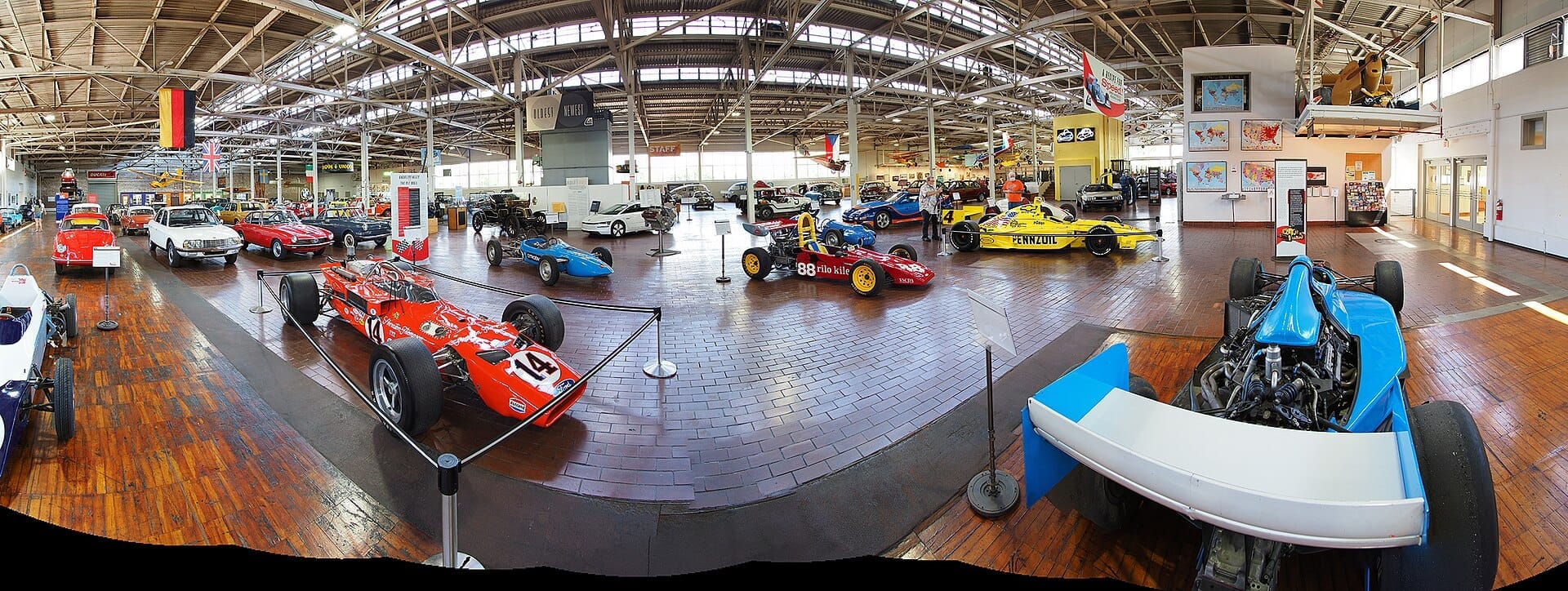
The former Sunbeam Bakery building gives the museum a character most automotive collections lack. The industrial bones of the space, wide concrete floors, high ceilings, loading dock infrastructure converted for exhibit use, create an atmosphere that feels closer to a working archive than a polished showroom. The scale of the building becomes apparent about 10 minutes into a visit, when you realize there are still corridors and display bays you haven't reached.
The lighting is functional rather than theatrical. Cars are not placed on dramatic platforms with spotlights. They sit close together, often within arm's reach, which gives the museum a density that rewards slow browsing. You can walk around most vehicles, crouch down to look at undercarriage details, and get genuinely close to bodywork that would be behind rope barriers at a larger institution.
For visitors interested in Nashville's industrial history, the Sunbeam Bakery connection is a small but real layer of local context. The building sits along Murfreesboro Pike, southeast of downtown, in a stretch of Nashville that doesn't appear in most visitor itineraries. Getting there by rideshare typically takes about 10–15 minutes from downtown, depending on traffic.
Tickets & tours
Live prices and dates from our booking partner. If you book, we may earn a commission at no extra cost to you.
Old Town trolley tour of Nashville
From 54 €Instant confirmationFree cancellationHatch Show Print guided tour
From 21 €Instant confirmationFree cancellationDowntown walking tour of Nashville
From 21 €Instant confirmationFree cancellationNashville Downtown Underground Donut Tour
From 46 €Instant confirmationFree cancellation
What You'll Actually See on the Floor
The displayed collection changes as the museum rotates vehicles from its basement storage. On any given visit, expect a cross-section of mid-20th century European engineering: bubble cars from the 1950s and 1960s, amphibious prototypes, pre-war French roadsters, Cold War-era Eastern European production cars, and a range of micro vehicles that look less like automobiles and more like enclosed motorcycles.
Some standout categories in the collection include vehicles from manufacturers most American visitors have never encountered: Goggomobil, Messerschmitt, Zundapp, and Velorex, alongside better-known European names like Alfa Romeo, BMW, and Renault represented in configurations rarely seen in the United States. The amphibious section alone, cars built to drive on both road and water, draws particular attention from younger visitors.
Labels and exhibit text are informative without being overwhelming. The museum clearly assumes that visitors have some baseline curiosity about automotive history, but it doesn't require specialist knowledge. Enough context is provided to make each vehicle legible, even if you've never heard of the manufacturer.
💡 Local tip
The basement storage area is sometimes open for special events or guided tours. Check the museum's website for current programming before your visit, as these access windows give you a look at the full scope of the collection.
How the Experience Changes by Time of Day
Weekday mornings are the quietest time to visit. The wide floor space means the museum never feels packed, but on weekend afternoons, particularly when there are families with younger children, the sound levels rise noticeably in the larger display halls. The museum's acoustic qualities, hard floors and high ceilings, amplify crowd noise.
For photography, the industrial lighting is consistent throughout the day since the space is largely windowless. There is no golden-hour effect to chase here. What you do get is even, flat light that is actually reasonably kind to vehicle bodywork if you're shooting without flash. A wide-angle lens is useful given how close together vehicles are spaced.
The museum is a genuine indoor attraction, which makes it a strong option on days when Nashville's summer heat, which commonly reaches into the upper 80s and low 90s Fahrenheit between June and August, makes outdoor activity uncomfortable. It's equally suitable on a rainy spring afternoon.
Practical Walkthrough: Getting There and Getting Around
The museum is located at 702 Murfreesboro Pike, roughly 3 miles southeast of downtown Nashville. There is no direct bus route that stops at the museum entrance, but WeGo Public Transit operates routes along Murfreesboro Pike; check current schedules at wegotransit.com. Rideshare via Uber or Lyft from downtown typically takes about 10–15 minutes, and the cost is generally low given the short distance. If you're driving, the museum has free on-site parking including accessible spaces, and official tourism listings describe the facility as ADA accessible.
The museum is a single building, so orientation is straightforward. Pick up a floor map at the entrance and note which sections interest you most. The collection is dense enough that trying to see everything at a quick pace produces diminishing returns. Budget at least two hours; automotive enthusiasts should plan for three.
There is a gift shop at the museum that sells automotive-themed merchandise. Restroom facilities are on site. The building is climate-controlled, which matters in both summer and winter. Comfortable, flat footwear is practical since you'll be on concrete floors for the duration.
⚠️ What to skip
Admission prices and opening hours are not published in this guide because they are subject to change. Verify both directly at lanemotormuseum.org before making a trip, especially if you're planning to visit on a weekday or holiday.
Who This Museum Is and Isn't For
Lane Motor Museum occupies a specific niche that makes it genuinely rewarding for the right visitor and mildly underwhelming for the wrong one. It pairs naturally with other Nashville attractions focused on craft, history, and curation, places like Hatch Show Print or the Country Music Hall of Fame, both of which share the museum's archival sensibility even across very different subject matter.
Visitors who love cars in a general sense but have no specific interest in European automotive history or specialty vehicles may find the collection less immediately engaging than expected. There are no famous race cars, no Hollywood film vehicles, and limited American content. That's a deliberate curatorial choice, not an oversight.
Children who are already interested in unusual vehicles, particularly the amphibious and micro car sections, tend to respond well. Very young children may find the museum less stimulating than a hands-on science center. Visitors with mobility considerations should note the ADA compliance and accessible parking, but should also be aware that the collection is spread across a large floor space, which means a full visit involves significant walking on hard surfaces.
For travelers building a broader Nashville itinerary, the museum fits well alongside a visit to East Nashville or as a standalone half-day excursion. It's the kind of attraction that rewards visitors who seek out unique things to do in Nashville beyond the Broadway corridor.
Insider Tips
- The basement storage area holds hundreds of vehicles not on the main floor. Ask at the entrance whether any basement access or guided tours are scheduled during your visit, as these events are not always prominently advertised.
- The museum rotates its displayed vehicles, so the floor plan changes over time. If you visited years ago and remember specific cars, verify with the museum whether they're currently on display.
- Weekday mornings offer the quietest conditions. The building's hard surfaces amplify sound when groups arrive, so arriving shortly after opening gives you the collection largely to yourself.
- Photography for personal use is generally permitted throughout the museum. A wide-angle lens or a phone camera with an ultrawide mode is useful given how closely vehicles are arranged. The lighting is consistent and artificial, so any time of day works equally well.
- The museum's location on Murfreesboro Pike is not walkable from most Nashville hotels. Factor in rideshare or driving time when planning your day, and combine it with other southeast Nashville stops rather than treating it as a quick detour from downtown.
Who Is Lane Motor Museum For?
- Automotive enthusiasts with an interest in European, specialty, or experimental vehicles
- Design and industrial history lovers who appreciate seeing rare objects up close
- Travelers building a full Nashville day that goes beyond the honky-tonk strip
- Visitors looking for an air-conditioned indoor activity during Nashville's hot summers
- Curious travelers who consistently seek out collections and museums that don't appear in mainstream travel roundups
Nearby Attractions
Other things to see while in East Nashville:
- The Basement East (The BEast)
Known to locals as The BEast, The Basement East at 917 Woodland St is East Nashville's independent music venue. From emerging indie acts to touring headliners, it delivers an intimate concert experience that Nashville's more commercial stages simply can't match.
- Five Points
Five Points is the beating heart of East Nashville, where five streets converge into an unpretentious crossroads of independent restaurants, dive bars, vintage shops, and street murals. Free to explore and genuinely local in character, it rewards slow wandering at any hour of the day.
- Shelby Bottoms Greenway & Nature Park
Shelby Bottoms Greenway and Natural Area stretches across 960 acres of Cumberland River floodplain in East Nashville, offering over 5 miles of paved trails and over 5 miles of unpaved woodland paths, and serious birdwatching without spending a dollar. It is one of the larger urban natural areas in Middle Tennessee, and it feels nothing like the Broadway corridor three miles to the west.
Planning a trip? Discover personalized activities with the Nomado app.