La Jolla Shores: San Diego's Most Complete Beach Experience
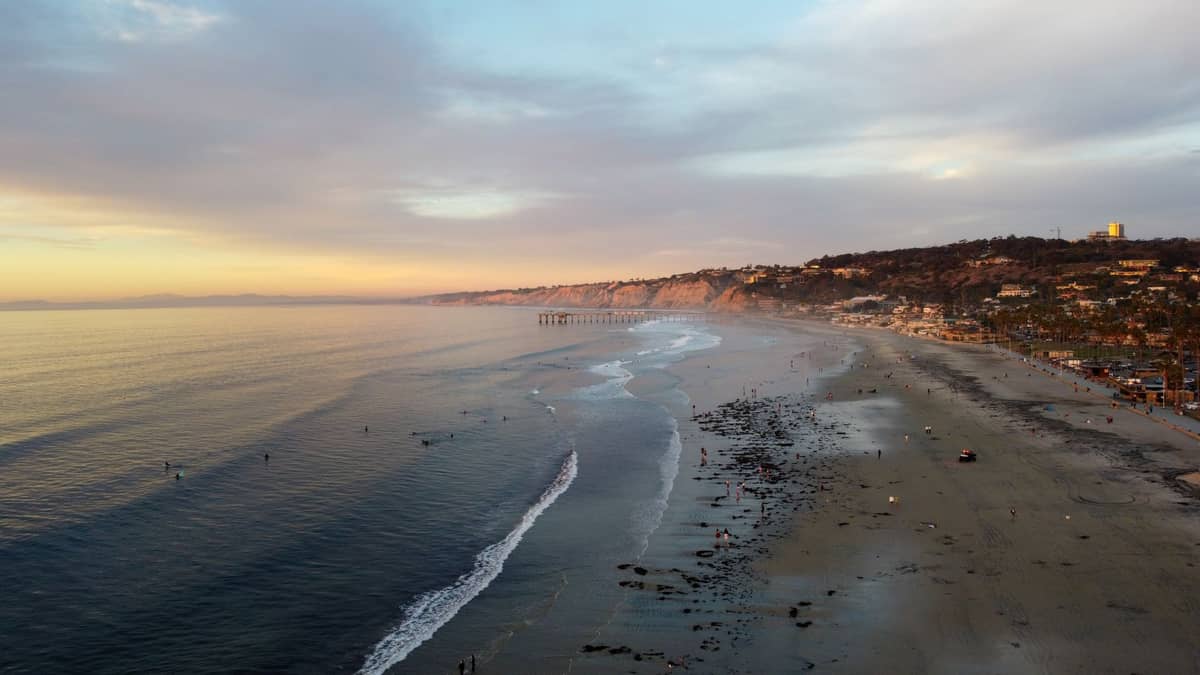
La Jolla Shores is a one-mile stretch of sandy, sheltered coastline in La Jolla, San Diego, offering calm waves for swimmers, easy water entry for scuba divers, tide pool exploration, and a grassy park for picnics. Free to access year-round, it draws everyone from families with toddlers to certified divers heading out to the La Jolla Underwater Park.
Quick Facts
- Location
- Camino del Oro / Kellogg Park, La Jolla, San Diego, CA 92037
- Getting There
- Drive via I-5 to La Jolla Parkway, then La Jolla Shores Drive to Camino del Oro. Limited street parking; arrive early on weekends. Route 30 provides the nearest direct bus service — rideshare or car is still the most practical option.
- Time Needed
- 2–4 hours for a casual visit; a full day if you plan to swim, kayak, or dive
- Cost
- Free public beach access. Gear rentals and dive charters available nearby at additional cost.
- Best for
- Families, swimmers, snorkelers, scuba divers, kayakers, and beachgoers who want calm water without heavy surf
- Official website
- www.sandiego.gov/lifeguards/beaches/shores
What Makes La Jolla Shores Different from Other San Diego Beaches
San Diego has no shortage of sandy coastline, but La Jolla Shores occupies a specific and genuinely useful niche. The beach is approximately one mile long, and the result is surf that tends to be gentler and more consistent than at some other city beaches, making it a popular spot for beginners.
That calmness has a secondary effect: La Jolla Shores is a primary shore-dive entry point for the La Jolla Underwater Park Ecological Reserve, a protected marine area that stretches offshore. On any given morning, you will see groups of scuba divers in full gear walking down to the water at the beach. It is one of the few places in Southern California where you can gear up nearby and enter a protected reef system.
Immediately behind the sand sits Kellogg Park, a maintained grassy area with picnic tables, restrooms, and outdoor showers. It functions as a natural extension of the beach and gives the whole area a relaxed, unhurried character. For context on how La Jolla Shores fits into the broader neighborhood, see our overview of La Jolla.
💡 Local tip
Arrive early on summer weekends if you want street parking within walking distance of the beach. By late morning, Camino del Oro and the surrounding blocks are typically full, and the nearest overflow options require a short walk.
The Beach Through the Day: How the Experience Shifts by Hour
Early mornings at La Jolla Shores have a distinctly local feel. Before 8:00 a.m., the crowd is mostly regulars: open-water swimmers doing long parallel swims north toward the cove, dog walkers (note that dogs are not permitted on the beach during restricted hours, so check current city rules), and the first wave of divers gearing up. The light at this hour is soft and flat, the kelp smell is stronger near the water line, and the temperature is cooler than it will be by midday, often sitting in the low-to-mid 60s Fahrenheit even in summer.
By mid-morning, the beach takes on its most photogenic quality. The sun is high enough to illuminate the water but not yet directly overhead, giving the shallow surf a greenish-blue translucence. Kayak rental operators set up near the southern end of the beach, and the first tourist families begin arriving. Lifeguards, staffed year-round from 9:00 a.m. until dusk according to the City of San Diego, are active by this point.
Midday in summer is crowded by San Diego standards. The beach is wide enough that it never feels dangerously packed, but towel space within 30 feet of the water becomes competitive on Saturdays in July and August. The sand here is fine and pale, and by noon it reflects heat noticeably. Bring water shoes if you are sensitive to hot sand, and a beach umbrella if you plan to stay through the afternoon.
Late afternoon, roughly from 4:00 p.m. onward, is when the crowd begins to thin. The sun angle drops behind the bluffs to the west, the air cools, and the water takes on a deeper blue. This is a good window for photographers: the light is directional, the crowd is smaller, and the kelp beds visible just beyond the surf line are easier to spot. Sunset itself is often obscured from the beach by the elevated terrain to the west, so dedicated sunset seekers should note that La Jolla Shores is not the best vantage point for that specific experience.
Swimming, Surfing, and Water Safety
La Jolla Shores has designated surf and swim areas, with surfing areas typically designated at the northern end. The southern portion near Kellogg Park is generally reserved for swimmers. This separation matters in practice: the surf zone is mild enough for longboarders and beginners, but the swim zone is calm enough for children and weak swimmers to wade comfortably. Verify current flagging and zone markers with on-duty lifeguards when you arrive, as conditions and boundaries can shift.
Rip currents can form at La Jolla Shores, particularly after storm events or during high surf advisories. The city's lifeguard service monitors and flags conditions daily. If you see a yellow or red flag, take it seriously. The offshore kelp canopy actually tends to dampen swell slightly, but it does not eliminate rip current risk. Strong swimmers and divers are aware of this and plan entries accordingly.
⚠️ What to skip
June in San Diego often brings 'June Gloom,' a low marine layer that keeps the beach overcast until late morning or early afternoon. The water is still swimmable, but temperatures can feel cold without direct sun. Pack a light layer if you are visiting in early summer.
Scuba Diving and Snorkeling: The Underwater Park Access Point
The La Jolla Underwater Park Ecological Reserve is the defining feature that separates La Jolla Shores from every other beach in San Diego. The reserve protects kelp forest, sandy reef, and submarine canyon habitat. Garibaldi fish (California's state marine fish, bright orange and unmistakable), leopard sharks, bat rays, and a variety of rockfish are common sightings. The kelp forest begins within easy snorkeling distance of shore for strong swimmers, and within a short dive for anyone with open-water certification.
Shore diving here follows a well-established protocol that local dive shops have refined over decades. Divers typically enter near the northern end of the beach, where a boat launch area also provides easier access for donning gear. The sandy bottom slopes gradually, so you can walk out past the small shore break before descending. Dive shops along Avenida de la Playa, the main commercial street one block from the beach, offer gear rental, air fills, and guided dives. If you do not have a certification, introductory snorkel tours are also available.
Leopard sharks are a seasonal highlight. From roughly June through October, juvenile leopard sharks congregate in the warm, shallow waters just offshore, often in large groups. They are harmless to humans and remarkably unafraid of snorkelers. This is one of the most accessible shark snorkeling experiences in California, and it draws visitors specifically for this reason. For more on what else the La Jolla coastline offers, the La Jolla Cove is a short walk north and worth combining into the same visit.
Kayaking and Other Activities on the Water
La Jolla Shores is one of the most practical kayak launch points in San Diego. The gentle shore break means that even inexperienced paddlers can get their kayak in and out of the water without a battle. Rental operators, typically set up near the southern end of the beach during warmer months, offer sit-on-top kayaks and stand-up paddleboards. No advance booking is usually required on weekdays, but weekend peak hours (10:00 a.m. to 2:00 p.m.) can mean a short wait.
Paddling north toward the sea caves along the La Jolla cliffs is the most rewarding route. The sea caves are accessible by kayak from outside (you paddle up to the entrance), while the most famous cave, Sunny Jim, is accessible from land via a staircase. The coastline from the water looks entirely different from the cliff-top perspective most visitors experience, and the cave entrances are dramatic at close range. Confirm sea conditions with the rental operator before heading north, as swell can make cave approaches dangerous.
If you are interested in the caves from the land side, the Sunny Jim Sea Cave is a short drive or walk from the beach and provides a different perspective on the same geological formation.
Kellogg Park and the Surrounding Area
Kellogg Park sits directly behind the beach and is maintained by the City of San Diego's Parks and Recreation department. It offers grassy lawn space, picnic tables, and public restrooms with outdoor showers, which are essential for rinsing off sand and saltwater before getting back in your car. The park is shaded in the late afternoon by the surrounding palms, which makes it a comfortable base for families who want to alternate between the sand and the shade.
Avenida de la Playa, one block inland, is the commercial spine of the La Jolla Shores area. It has a small concentration of casual restaurants, a taco shop, ice cream, and the dive shops mentioned earlier. Nothing on this block is particularly notable, but it is convenient for a post-beach meal or a coffee before heading to the water. The Birch Aquarium at Scripps is worth combining with a La Jolla Shores visit, especially if you have children.
The Birch Aquarium at Scripps has exhibits directly relevant to what you will see in the water below, including live kelp tanks and local marine species displays. It is operated by UC San Diego, whose Scripps Institution of Oceanography campus overlooks La Jolla Shores from the bluff to the north.
ℹ️ Good to know
Lifeguards are on duty year-round at La Jolla Shores from 9:00 a.m. until dusk. The beach is open to the public at all hours, but swimming outside lifeguard hours is at your own risk.
Practical Details: Getting There, Parking, and What to Bring
La Jolla Shores is served by public transit. San Diego MTS Route 30 provides nearby service, though driving or taking a rideshare is often the most practical approach. If you are driving, take I-5 to the La Jolla Parkway exit, follow La Jolla Parkway west to La Jolla Shores Drive, then turn west on Avenida de la Playa to reach Camino del Oro and the beach parking area.
Parking is free along Camino del Oro and the adjacent streets, but supply is limited. On a typical summer Saturday, parking within easy walking distance is full before 10:00 a.m. There is no large dedicated lot. The best strategy is to arrive before 9:00 a.m., or to visit on a weekday morning when spaces are reliably available. In winter and spring, parking is rarely a problem even midday.
In terms of what to bring: reef-safe sunscreen is strongly encouraged given the proximity to the marine reserve. A wetsuit or rash guard extends comfort for swimmers and snorkelers, as water temperatures even in summer typically range in the upper 60s Fahrenheit. Bring your own beach umbrella if you want shade. For a broader planning framework, the best beaches in San Diego guide provides useful context for how La Jolla Shores compares to other options across the city.
Who Should Temper Their Expectations
La Jolla Shores is not a dramatic, scenically imposing beach. The bluffs are behind you to the north, not framing the beach in an Instagram-ready way. Surfers who want challenging waves will find the break here too soft; they are better served by Pacific Beach or Ocean Beach. The commercial strip on Avenida de la Playa is modest, not a destination in itself. And if you are expecting a quiet, uncrowded experience on a summer weekend afternoon, that is not what this beach delivers.
Visitors seeking dramatic coastal scenery on foot should note that the clifftop walking and the famous wildlife viewing are centered at La Jolla Cove, not at La Jolla Shores. The two locations are walkable from each other along the coast, but they are meaningfully different in character. Plan to see both if your time allows.
Insider Tips
- The leopard shark aggregation peaks in summer. Arrive on a calm morning and snorkel just north of the boat launch ramp in shallow water. You may encounter dozens of sharks within minutes of entering.
- The boat launch ramp area at the northern end of the beach is an easier entry point for divers and snorkelers. The flat approach eliminates scrambling over wet rocks.
- Weekday mornings in September and October often offer some of the best conditions of the year: water temperatures are still warm from summer, the beach is significantly less crowded than peak summer, and marine layer conditions are often improved by midmorning.
- The outdoor showers at Kellogg Park are useful for rinsing off sand and saltwater before heading back to your car.
- If you are planning a dive, check the Scripps Institution of Oceanography's tide charts for the La Jolla area. Slack tide is generally the most comfortable condition for shore diving here, with less current through the kelp.
Who Is La Jolla Shores For?
- Families with young children who want calm surf and a grassy park to retreat to
- Certified scuba divers looking for a genuine kelp forest shore dive without a boat charter
- Snorkelers and swimmers wanting to see leopard sharks in the wild during summer months
- Kayakers seeking a manageable launch point for a coastal paddle toward the sea caves
- Visitors combining a beach morning with an afternoon at the Birch Aquarium or a walk to La Jolla Cove
Nearby Attractions
Other things to see while in La Jolla:
- Birch Aquarium at Scripps
Perched on a bluff above the Pacific as part of UC San Diego's Scripps Institution of Oceanography, Birch Aquarium at Scripps is where serious marine research meets public exploration. It's smaller than big-name aquariums, but the depth of scientific context — and the view from the tide pool plaza — makes it stand out.
- Children's Pool
Children's Pool is a small, sheltered cove in La Jolla where a concrete breakwater built in 1931 now hosts one of San Diego's most accessible harbor seal colonies. Free to visit year-round for shoreline viewing, the beach itself closes each winter for seal pupping season, making timing essential.
- La Jolla Cove
La Jolla Cove is a small, protected ocean inlet framed by sandstone bluffs and home to one of Southern California's most accessible marine ecosystems. Free to enter and open year-round, it draws swimmers, snorkelers, wildlife watchers, and cliff walkers in equal measure.
- Mount Soledad Veterans Memorial
Perched at one of La Jolla's highest points, Mt. Soledad National Veterans Memorial combines a striking 29-foot concrete cross, more than 5,000 granite plaques honoring American veterans, and panoramic views stretching from the Pacific Ocean to downtown San Diego. Admission is always free, and the site is open daily from early morning until 10 p.m.