La Jolla Cove: Sea Lions, Snorkeling, and Sandstone Cliffs
La Jolla Cove is a small, protected ocean inlet framed by sandstone bluffs and home to one of Southern California's most accessible marine ecosystems. Free to enter and open year-round, it draws swimmers, snorkelers, wildlife watchers, and cliff walkers in equal measure.
Quick Facts
- Location
- 1100 Coast Blvd, La Jolla, CA 92037
- Getting There
- MTS Bus Route 30 stops near La Jolla; driving via I-5 to La Jolla Parkway is the most practical option
- Time Needed
- 1 to 3 hours depending on swimming, snorkeling, or cliff walking
- Cost
- Free and open to the public year-round
- Best for
- Snorkelers, wildlife watchers, photographers, and families with older children
- Official website
- www.sandiego.gov/lifeguards/beaches/cove
What La Jolla Cove Actually Is
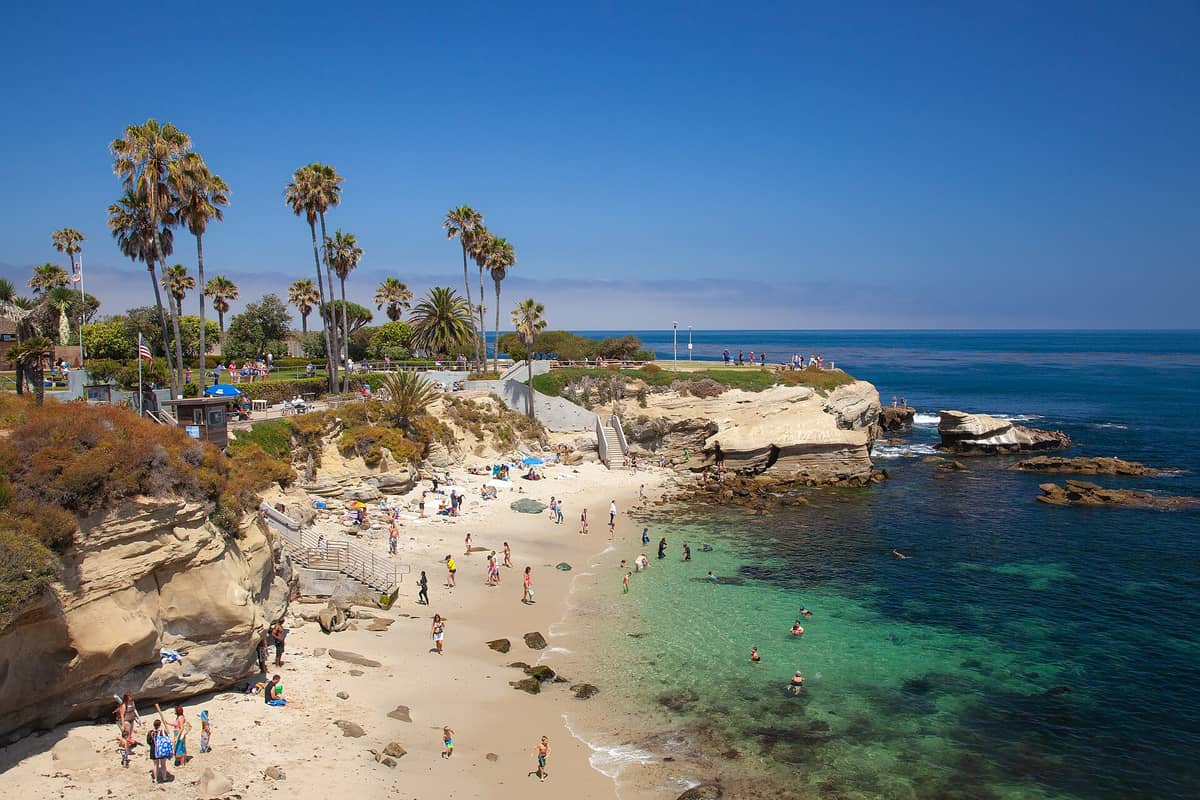
La Jolla Cove is a small, sheltered ocean inlet cut into the sandstone cliffs of La Jolla, roughly 12 miles north of downtown San Diego. The cove itself is compact — the beach strip is narrow, the water entry point confined — but what makes it remarkable is what lies beneath and around it. The cove sits within the San Diego-La Jolla Underwater Park Ecological Reserve, a protected marine zone where fishing, collecting, and disturbing wildlife are prohibited. That legal protection, in place for decades, has allowed the underwater ecosystem to flourish in ways you rarely see this close to a major city.
Above the waterline, the cove is bordered by Ellen Browning Scripps Park, a grassy coastal bluff dotted with palm trees and concrete gazebos overlooking the Pacific. Maintained stairs and walkways descend from the park to the beach. Facilities nearby include bathrooms, showers, picnic tables, and a paved pedestrian path that connects the cove area to the broader coastal trail network. Admission is free. Lifeguards are on duty from 9:00 a.m. to dusk.
💡 Local tip
Parking along Coast Blvd fills quickly on weekends and summer mornings. Arrive before 9:00 a.m. to secure street parking, or plan to walk several blocks from La Jolla Village.
The Wildlife: What You Will Actually See
California sea lions have made the rocks adjacent to the cove a regular hauling-out spot. On most mornings, a cluster of them can be seen lounging on the flat sandstone ledges to the north of the main beach, barking at each other and occasionally sliding into the water in groups. The sound carries — a low, throaty chorus that you hear before you see them. Maintain a respectful distance and do not approach or touch them; they are wild animals and federal law under the Marine Mammal Protection Act prohibits harassment.
Beneath the surface, the reserve hosts leopard sharks, bat rays, garibaldi (California's state marine fish, recognizable by their vivid orange coloring), and a range of invertebrates clinging to the reef. Snorkelers regularly report clear visibility on calm mornings, with the rocky reef structure beginning just a short swim from the shore. The protected status of the reserve means these animals are relatively accustomed to human presence, which is part of what makes the underwater experience here unusual.
Shorebirds, including Brandt's cormorants and Western gulls, nest on the cliffs above the cove in spring and early summer. Look up at the bluffs and you will often see cormorants perched with wings spread, drying out in the morning sun.
How the Experience Changes by Time of Day
Early morning, roughly 7:00 to 9:00 a.m., is the best time to visit for most purposes. The light is golden and comes from the east, illuminating the cliff faces and reflecting across the water. The cove is quiet at this hour: a few swimmers doing laps, a handful of people on the bluff with coffee, and the sea lions going about their morning. Underwater visibility tends to be clearest before afternoon swells and boat traffic disturb sediment.
By mid-morning on weekends from June through August, the scene transforms. Families claim the narrow beach strip early, the parking situation on Coast Blvd becomes genuinely difficult, and the stairs down to the cove can back up. The water still rewards swimmers and snorkelers, but the social experience is more crowded. If you are coming specifically for snorkeling and want a quieter paddle, weekday mornings from September through November are the practical ideal: summer water temperatures linger, crowds have thinned, and parking is no longer a competitive sport.
Sunset draws a different crowd: photographers, couples, joggers working the coastal trail. The cliffs turn amber, and the sea lions on the rocks become silhouettes against the fading light. It is a genuinely photogenic moment, though lifeguard-supervised swimming does not continue after sunset. Late afternoon light in winter, when the sun drops closer to the horizon, can be especially striking against the sandstone.
⚠️ What to skip
June Gloom is real in La Jolla. From roughly late May through mid-July, a marine layer of low cloud often covers the coast until late morning or early afternoon. The sky clears most days, but plan sunrise visits around the possibility of a grey, flat light that won't suit photography.
Snorkeling and Swimming: A Practical Briefing
The cove's protected position means it is generally calmer than open San Diego beaches, but it is still the Pacific Ocean. Swell direction matters: northwest swells, common in winter, can push surge through the cove entrance and make conditions rougher than the calm surface appearance suggests. Check the Surfline or NOAA buoy readings for the La Jolla area before getting in if you are not an experienced ocean swimmer.
Water temperatures at the cove average in the low-to-mid 60s Fahrenheit (roughly 17-19°C) for much of the year, warming to the upper 60s or low 70s (around 20-22°C) in late summer and early fall. A 3mm wetsuit is comfortable for most swimmers through the cooler months; many locals swim in swimsuits year-round, but first-time visitors often find the water colder than anticipated in spring. Snorkel gear can be rented from shops in La Jolla Village, a short walk from the cove.
The reef begins in relatively shallow water and extends outward. Stay aware of boat traffic if you swim beyond the cove's mouth, and watch for other swimmers near the entry point, which narrows. Children who are comfortable in open water and wearing a mask can have a genuinely memorable experience here; young children who are not strong swimmers should stay in the shallower, calmer sections close to shore.
The Cliffs, the Park, and the Surrounding Walk
Ellen Browning Scripps Park, which sits above the cove, is named for the philanthropist whose donations shaped much of La Jolla's public infrastructure in the early 20th century. The park itself is a clean, grassy strip with manicured palm trees and a low stone wall separating the lawn from the cliff edge. It is a legitimate place to spend time even without going near the water: the view north along the coast toward Torrey Pines is unobstructed, and the bluff trail connects in both directions.
Walking north from the cove park along the coastal path takes you past the sea lion rocks and eventually toward La Jolla Shores, a wider, flatter beach better suited to families with small children or beginner swimmers. The walk takes roughly 20 to 30 minutes depending on pace and how often you stop to look at the water.
South of the cove, the cliff trail leads past the Children's Pool, another protected cove now better known as a harbor seal resting site than a swimming beach. The seals are viewable from the seawall and represent a second wildlife encounter within easy walking distance.
Getting There and Getting Around
La Jolla Cove sits within the broader La Jolla neighborhood, which is not the easiest part of San Diego to reach without a car. MTS Bus Route 30 runs from downtown San Diego through Pacific Beach to La Jolla Village, stopping within walking distance of the cove. The ride from downtown takes roughly 45 to 55 minutes depending on traffic. Check the San Diego MTS website for current schedules and fares before traveling, as these change periodically.
Driving is faster and gives you more flexibility for timing your visit, but parking on Coast Blvd and the surrounding streets is metered and limited. Arrive before 9:00 a.m. on weekends, or consider parking several blocks inland in La Jolla Village and walking down. Ride-share via Uber or Lyft is a practical option for those who don't want to deal with parking logistics, with the drop-off point on Coast Blvd convenient to the park entrance.
ℹ️ Good to know
If you are combining the cove with other La Jolla stops, the Birch Aquarium at Scripps is about a mile north and worth pairing for a full day of marine-themed sightseeing, especially if you have younger children.
Photography Tips and Honest Limitations
The cove photographs best in early morning and late afternoon. The west-facing beach catches morning sun on the water, while the westward-facing bluffs above glow during the hour before sunset. A polarizing filter helps cut the glare off the water and saturate the color of the shallow reef visible through the surface. For wildlife photography, a longer lens is useful for the sea lions, which are often 30 to 50 meters away on the rocks.
It is worth being honest about one thing: images of La Jolla Cove that circulate online are often taken in ideal conditions on uncrowded mornings. In peak season, the narrow beach area below the cliffs gets genuinely crowded, and the scene looks considerably less tranquil. Manage expectations accordingly. The cove is still worth visiting in summer, but the wildlife observation, cliff walks, and snorkeling reward those who arrive early or outside peak months more than those who show up at noon on a July Saturday.
For a broader perspective on coastal viewpoints around San Diego, the best views in San Diego guide covers comparable spots across the city worth comparing before you plan your itinerary.
Insider Tips
- The kelp beds just outside the cove mouth are worth snorkeling if conditions allow — the fish density in the kelp forest exceeds what you see on the main reef inside. Ask a local diver or check with a La Jolla dive shop about current kelp conditions before heading out.
- The concrete gazebos in Scripps Park are first-come, first-served and claim-able for picnics. On summer weekends, families arrive early specifically to lock one down before the beach crowds form below.
- The smell of the sea lion colony can be noticeable on warm, still mornings when the wind is light and coming from the north. It is not unpleasant for most people, but it is distinctive — something no travel photo conveys.
- Leopard sharks are most commonly seen in the cove during summer months, when they move into warmer, shallower water. If shark encounters are your specific goal, July through September is the window, and early morning swims tend to yield more sightings than afternoon.
- The cave kayak tours that launch from La Jolla Shores include pass-bys of the cove and its sea lion rocks from the water — a completely different perspective that is worth considering if you want to see the cliffs from below rather than above.
Who Is La Jolla Cove For?
- Snorkelers and swimmers wanting a protected, wildlife-rich marine environment without a boat
- Wildlife enthusiasts hoping to observe sea lions and seabirds in a natural coastal setting
- Photographers working the early morning or late afternoon light on sandstone cliffs
- Families with older children who are comfortable swimming in open water
- Visitors building a full-day La Jolla coastal walk combining multiple coves and viewpoints
Nearby Attractions
Other things to see while in La Jolla:
- Birch Aquarium at Scripps
Perched on a bluff above the Pacific as part of UC San Diego's Scripps Institution of Oceanography, Birch Aquarium at Scripps is where serious marine research meets public exploration. It's smaller than big-name aquariums, but the depth of scientific context — and the view from the tide pool plaza — makes it stand out.
- Children's Pool
Children's Pool is a small, sheltered cove in La Jolla where a concrete breakwater built in 1931 now hosts one of San Diego's most accessible harbor seal colonies. Free to visit year-round for shoreline viewing, the beach itself closes each winter for seal pupping season, making timing essential.
- La Jolla Shores
La Jolla Shores is a one-mile stretch of sandy, sheltered coastline in La Jolla, San Diego, offering calm waves for swimmers, easy water entry for scuba divers, tide pool exploration, and a grassy park for picnics. Free to access year-round, it draws everyone from families with toddlers to certified divers heading out to the La Jolla Underwater Park.
- Mount Soledad Veterans Memorial
Perched at one of La Jolla's highest points, Mt. Soledad National Veterans Memorial combines a striking 29-foot concrete cross, more than 5,000 granite plaques honoring American veterans, and panoramic views stretching from the Pacific Ocean to downtown San Diego. Admission is always free, and the site is open daily from early morning until 10 p.m.