Idroscalo di Milano: Milan's Outdoor Escape on an Artificial Lake
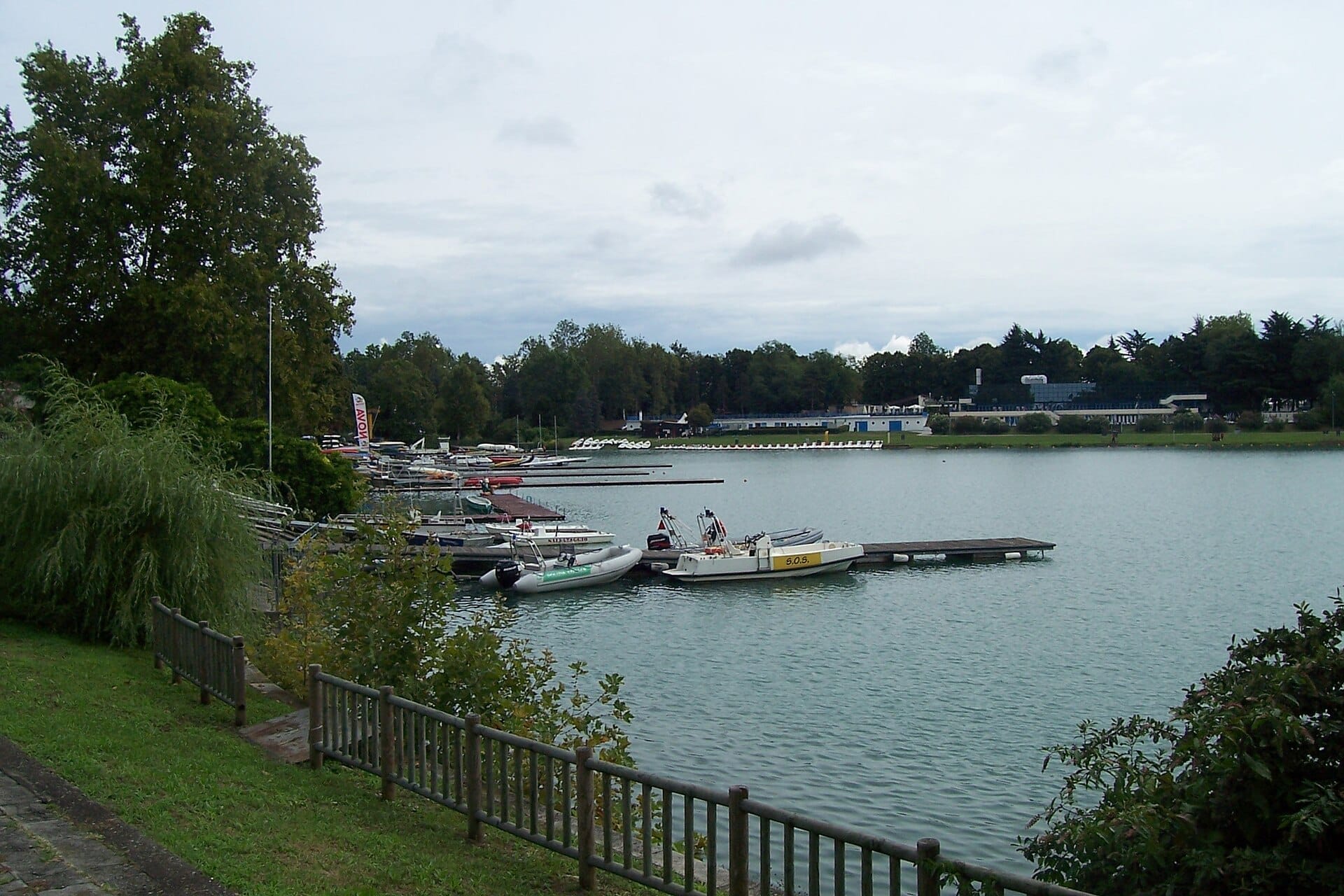
Built in the late 1920s as a seaplane runway, the Idroscalo di Milano is now a sprawling park wrapping a roughly 0.8 km² artificial lake on Milan's eastern fringe. Entry to the park is free, the perimeter path stretches over 6 km, and the facilities range from open-air swimming pools to kayaking and concert venues. It is the closest thing Milan has to a beach resort within city reach.
Quick Facts
- Location
- Between Segrate and Peschiera Borromeo, 8–12 km east of Milan city centre, adjacent to Linate Airport
- Getting There
- Bus services from Milan toward Linate/Segrate; check ATM or local transport providers for current routes
- Time Needed
- 2–3 hours for a walk; half day or full day if using water sports or pools
- Cost
- Free entry on foot; parking paid (free for disabled visitors); activities and pools charged separately
- Best for
- Outdoor exercise, family outings, water sports, summer cooling off, and easy escapes from the city centre
- Official website
- idroscalo.org
What the Idroscalo Actually Is
The Idroscalo di Milano is not a natural lake. It is an artificial basin excavated in the late 1920s and inaugurated in 1930 as a dedicated water airstrip for seaplanes, under its original name Idroscalo Provincia di Milano. The idea was to give Milan a landing surface for the flying boats that were then a serious mode of long-distance air travel. The seaplane era passed quickly, but the lake remained.
Today the basin covers approximately 0.8 km², stretches about 2,600 metres in length, ranges from 250 to 400 metres in width, and reaches depths of 3 to 5 metres. The walkable perimeter path runs for roughly 6,125 metres, making it a genuine destination for joggers and cyclists as well as strollers. The park wrapping the basin is managed by the Istituzione Idroscalo di Milano under the Metropolitan City of Milan.
ℹ️ Good to know
Park hours: daily 07:00–21:00. The park is open 365 days a year. Pedestrian access is free of charge on both the west and east banks.
How the Place Feels at Different Times of Day
Arrive on a weekday morning before 09:00 and the Idroscalo belongs almost entirely to runners and dog walkers. The water is flat and reflects the sky in a way that feels unexpectedly calm for somewhere this close to Linate's flight path. You will hear the occasional aircraft overhead, a low drone that fades quickly, and otherwise the rhythmic sound of footsteps on gravel paths and the occasional splash from ducks near the shoreline. The air carries a faint grass-and-water coolness that the rest of flat Milan rarely offers.
Midday in summer is when the character shifts. Families arrive in numbers, the pools open their gates, and the lakefront fills with sun loungers, inflatable gear, and the specific noise of a crowded Italian outdoor pool on a hot afternoon. This is not a quiet retreat in July or August between 11:00 and 16:00. It is, however, a very enjoyable Italian summer scene if that is what you are after. Bring cash for the pool entry, sunscreen, and patience at the snack bars.
Evening visits, especially on weekdays from late spring to early autumn, return the lake to something more meditative. The low light turns the water gold and amber, joggers reappear, and couples walk the perimeter in both directions. On concert evenings, the atmosphere shifts again: the outdoor stage areas fill from around 20:00, and the sound carries across the water in a way that open-air venues rarely manage so cleanly.
Tickets & tours
Hand-picked options from our booking partner. Prices are indicative; availability and final rates are confirmed when you complete your booking.
Milano highlights 2 hours private tour by vintage car
From 300 €Instant confirmationFree cancellationMilano highlights 3 hours private tour by vintage car
From 400 €Instant confirmationFree cancellationMilano highlights 30 minutes private tour by vintage car
From 80 €Instant confirmationFree cancellationMilano highlights 1 hour private tour by vintage car
From 200 €Instant confirmationFree cancellation
The History Behind the Basin
The decision to build an artificial seaplane port near Milan in the late 1920s reflected the ambitions of the Fascist regime to make Italy a leader in aviation. Seaplanes were considered prestige machines, and a dedicated hydroport would position Milan alongside Rome and Naples as a node on long-distance routes connecting Europe to Africa and South America. The Idroscalo was designed as a functional piece of aviation infrastructure: its elongated shape, its controlled depth, and its location away from the urban core were all deliberate engineering choices.
Commercial seaplane operations declined sharply after World War II as conventional runway airports took over. The basin never found a second life in aviation, but rather than fill it in, the province adapted it into a recreational park over the following decades. The transition was gradual: sports clubs established themselves on the banks, then pools, then event spaces. The infrastructure that remains today, including the long flat banks and the regular geometry of the lake itself, still tells the story of its original purpose if you know to look for it.
The Idroscalo sits adjacent to Milan Linate Airport, which itself grew up in the same eastern corridor developed during the interwar aviation boom. That proximity is not coincidental. For more on Milan's relationship with its airports, see the Milan airports guide.
What to Do Here
The perimeter walk is the core activity and requires no planning or booking. The 6.1 km loop is entirely flat, surfaced with gravel and compacted paths, and takes between 70 and 90 minutes at a comfortable pace. It is well-lit in the sections near the main facilities, though the eastern stretches are darker after sunset. Cyclists use the same path; there is no dedicated lane, so pedestrians and bikes share the space. On busy weekend afternoons, this requires some attention.
Water sports are the park's other main draw. Rowing, kayaking, canoeing, wakeboarding, and sailing are all practised on the basin, with several clubs and operators offering rentals and lessons. The long, calm stretch of water makes it a particularly good environment for rowing training, and the Idroscalo has historically hosted national and international rowing competitions. Schedules and prices for water sports operators vary by season and should be checked directly at the park or via the official website.
The open-air swimming pool complex on the western bank opens in summer and draws the largest crowds. There are also beach volleyball courts, playgrounds, a fitness area, and several bar and restaurant spaces along the banks. On summer evenings and weekends, the outdoor concert and event stages on the eastern bank host a regular programme ranging from DJ sets to live performances. These events often have a separate ticket and are announced via the official Idroscalo website and local event listings.
💡 Local tip
If you plan to swim in the pools or join any water sports, bring a padlock for the lockers and a towel. Most facilities charge small fees that are not included in any city tourist passes. Arriving before 10:00 on summer weekends makes a real difference to the pool experience.
Getting There and Getting Around
The Idroscalo is located roughly 8 to 10 kilometres east of Milan's historic centre, between the municipalities of Segrate and Peschiera Borromeo, immediately adjacent to Linate Airport. It sits outside the dense urban core, which means it is not directly on a metro line. The most practical public transport option is to use city bus services connecting central Milan with the Linate/Segrate corridor; check ATM's current route map before you go, as lines and stops do change. Journey times from the city centre by bus are typically in the 30 to 45-minute range depending on the route and traffic.
By car, the park is straightforward to reach from the tangenziale est (eastern ring road) and is well-signposted from the Segrate and Peschiera Borromeo exits. Several gated car parks are located around the perimeter. Parking fees apply; the exception is designated disabled parking, which is free. Cycling from central Milan is possible along cycle routes through the eastern suburbs, though the full distance makes this more suitable as a dedicated cycling trip than a casual detour.
Visitors staying near Linate Airport have by far the easiest access: the park is effectively walkable from the terminal area, making it a practical option for travellers with time to spare between flights.
Seasonal Considerations and Practical Limits
The Idroscalo genuinely earns its place as a summer destination. From June through August, when the rest of Milan can feel airless and the streets radiate heat from the morning onward, the lake provides a meaningful temperature contrast and the pools offer something the city itself largely lacks: a place to swim within reach of a Metro system. The peak months are busy, and the most popular stretches of the western bank on a Sunday afternoon in July feel crowded.
In autumn and winter the park is much quieter. The paths stay open and are used regularly by joggers and walkers year-round, but most water sports operators close or sharply reduce their hours, the pools shut, and the events programme winds down. A November morning walk around the perimeter, with low fog sitting on the water and the gravel damp underfoot, has a particular atmosphere that is entirely different from the summer scene. It will not suit everyone, but it is not unpleasant.
Spring is the most underrated time to visit. April and May bring mild temperatures and significantly thinner crowds before the summer season opens fully. For a broader view of what Milan looks like in these months, the guide to Milan in spring covers the city's seasonal rhythms in detail.
One practical limitation: the Idroscalo is not a natural landscape. The geometry is slightly industrial, the banks are maintained rather than wild, and the proximity to Linate means aircraft noise is a constant presence, even if it is not oppressive. Visitors expecting a wilderness park or a pristine lake will need to recalibrate their expectations. What it offers is accessible, usable, free green space with water at its centre, which in a city of 1.3 million people is immensely valuable.
⚠️ What to skip
The Idroscalo is not within easy walking distance of central Milan's main tourist sites. Factor in travel time realistically. If your itinerary is already full of museums and monuments, fitting in the Idroscalo requires dedicating a separate half-day rather than treating it as a quick addition.
Photography at the Idroscalo
The most photogenic moments are early morning and late afternoon. At sunrise on clear days, the flat water creates mirror reflections that are rare in a largely landlocked city. The long perspective down the basin from either end, with the far bank just visible in the distance, gives a sense of scale that is useful for wide-angle shots. In summer, the crowds and sun loungers on the western bank make for lively documentary photography of Milanese leisure culture. At events, the outdoor stages and lakeside lighting produce interesting conditions after dark, though variable and often challenging without a fast lens.
Insider Tips
- The eastern bank is consistently less crowded than the western bank on summer weekends, even at peak times. If you want a quieter stretch of water, cross to the eastern side after entering.
- Linate Airport's proximity makes the Idroscalo a surprisingly good option for a layover. If your connection is four or more hours, the park is a 10–15 minute trip from the terminal and far more restorative than the departure lounge.
- The rowing clubs on the basin occasionally allow spectators during training sessions and regattas at no charge. Check the Idroscalo events calendar: watching competitive rowing on still early-morning water is one of the more unusual experiences the park offers.
- Food and drink inside the park are available but priced at a premium, as is typical of any leisure park. Bring a water bottle and snacks if you plan to spend more than two hours, particularly in summer.
- The perimeter path is well-suited to running intervals: the 6.1 km flat loop with kilometre markers is used regularly by local running clubs, and the surface is forgiving compared to road running.
Who Is Idroscalo di Milano For?
- Families with children who need outdoor space and water activities without leaving the city
- Runners and cyclists looking for a flat, traffic-free loop of more than 6 km
- Travellers with a long Linate layover who want fresh air rather than the terminal
- Summer visitors who want access to an outdoor pool without travelling far from Milan
- Couples or solo travellers wanting an evening walk with a concert or event programme as backdrop
Nearby Attractions
Combine your visit with:
- Abbazia di Chiaravalle
Founded in 1135 by Saint Bernard of Clairvaux, the Abbazia di Chiaravalle is one of the earliest examples of Gothic architecture in northern Italy. Tucked into the agricultural parkland south of Milan, it remains an active Cistercian monastery and offers a rare counterpoint to the city's more trafficked landmarks.
- Pirelli HangarBicocca
Housed in a converted locomotive factory in Milan's Bicocca district, Pirelli HangarBicocca is one of Europe's largest single-storey exhibition spaces. Entry is free, shows are ambitious, and the permanent installation by Anselm Kiefer alone justifies the trip across town.
- Rotonda della Besana
Built between 1695 and 1732 as a burial ground for the Ospedale Maggiore, the Rotonda della Besana is a late-Baroque complex of striking architectural beauty. Today it functions as a free public garden and culture centre, with a children's museum inside the central church. Few places in Milan carry this much layered history so quietly.
- San Siro Stadium (Stadio Giuseppe Meazza)
Stadio Giuseppe Meazza, universally known as San Siro, is Italy's largest football stadium and one of the most recognizable sports arenas in the world. Home to both AC Milan and Inter Milan, it holds 75,817 spectators and opens its doors to visitors through a guided stadium tour and dedicated museum. Whether you attend a match or explore on a quiet weekday morning, the sheer scale of the place makes an impression that photographs cannot prepare you for.