Flamingo Wildlife Habitat: Las Vegas's Surprisingly Peaceful Strip Escape
Tucked behind the casino floor of Flamingo Las Vegas, this free 4-acre outdoor habitat is home to Chilean flamingos, pelicans, turtles, and koi. It offers a genuine moment of calm on a street that rarely offers one — and it costs nothing to enter.
Quick Facts
- Location
- 3555 S Las Vegas Blvd, inside Flamingo Las Vegas, The Strip
- Getting There
- Walk through Flamingo Las Vegas casino; follow wildlife habitat signs. Closest bus stop on Las Vegas Blvd is the Flamingo/LINQ stop on the RTC Deuce route.
- Time Needed
- 20–45 minutes
- Cost
- Free — no ticket or reservation required
- Best for
- Families, nature lovers, budget travelers, anyone needing a break from the casino floor
- Official website
- www.caesars.com/flamingo-las-vegas
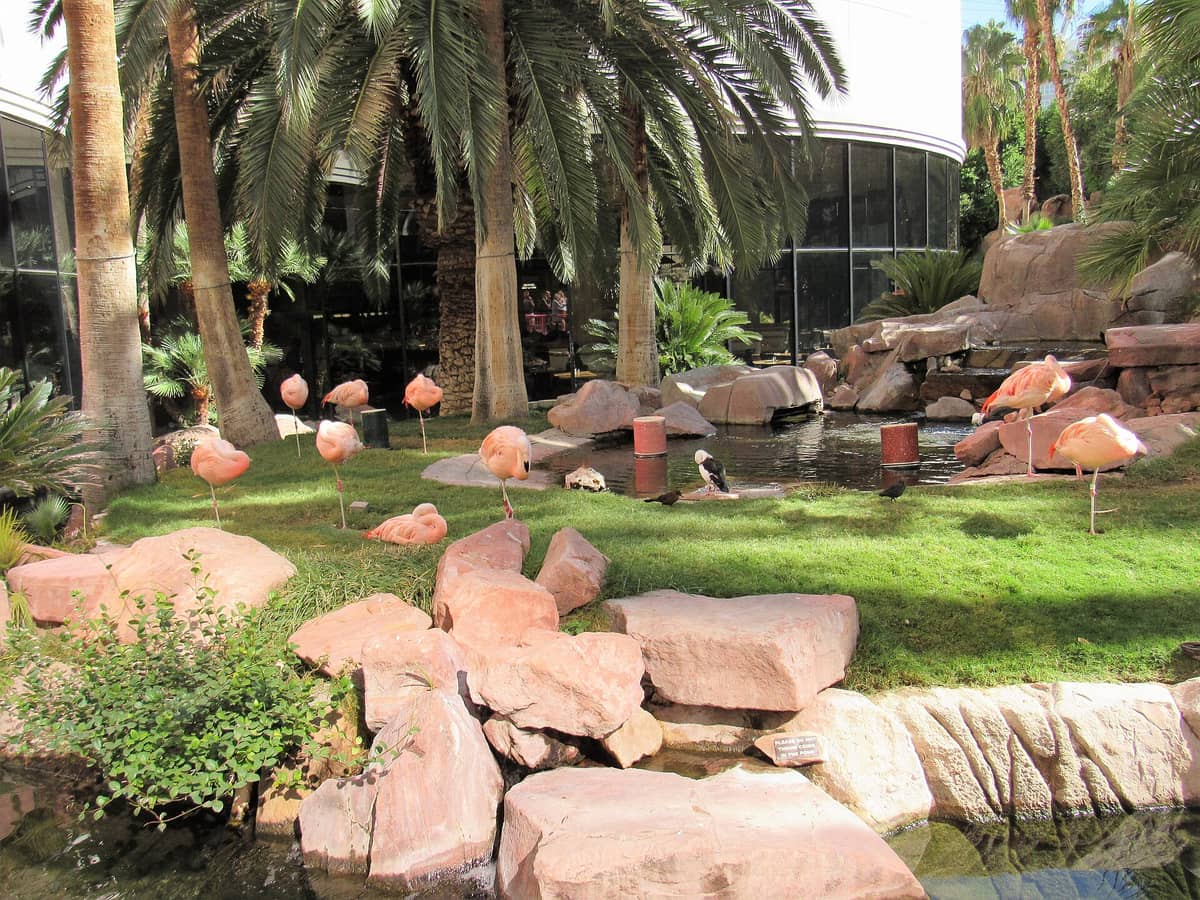
What the Flamingo Wildlife Habitat Actually Is
The Flamingo Wildlife Habitat is a free, outdoor nature exhibit set across four acres of landscaped grounds at the rear of Flamingo Las Vegas, one of the oldest resort properties on the Strip. Opened in 1995, it was designed as a nod to the hotel's founding identity — Bugsy Siegel's original Flamingo resort opened in 1946 and its pink flamingo motif became one of Las Vegas's most recognizable icons. The habitat gives that imagery a living, breathing form.
The resident animals include Chilean flamingos, pelicans, swans, ducks, turtles, and large koi fish. Lush tropical plantings, waterfalls, and a series of connected ponds give the space a density of greenery that feels almost incongruous on a street otherwise made of neon and concrete. For many visitors, it is the first genuinely quiet outdoor space they encounter on the Strip.
💡 Local tip
You do not need to be a hotel guest to enter. Walk through the main Flamingo Las Vegas casino floor and follow the wildlife habitat signs toward the back of the property. The route is clearly marked and takes about two minutes on foot.
The Experience: What You'll See and Hear
The flamingos are the undisputed centerpiece. A flock of Chilean flamingos — the most widespread flamingo species in South America — gathers around a central lagoon, and they are often close enough that you can study the gradations of pink and coral in their feathers without binoculars. Their calls are low and raspy, not musical, but the sound carries over the water in a way that cuts through the ambient resort noise.
Turtles bask on rocks near the water's edge while large koi drift in shallow ponds that line the walking path. Pelicans and various duck species move freely around the pond areas, sometimes approaching visitors who linger near the water.
The habitat is compact but not cramped. Paved paths loop through the exhibit, and there are benches at several points where visitors tend to sit longer than they expected to. The sound design of the space — running water, birds, rustling palm fronds — works against the sensory overload of everything outside its borders.
Tickets & tours
Hand-picked options from our booking partner. Prices are indicative; availability and final rates are confirmed when you complete your booking.
Go City | Las Vegas All-Inclusive Pass
From 140 €Instant confirmationFree cancellationGolden Eagle West Rim helicopter tour with Hoover Dam and Lake Mead
From 401 €Instant confirmationFree cancellationGrand Canyon 6-in-1 tour
From 417 €Instant confirmationFree cancellationHighlights Over the Grand Canyon air tour from Las Vegas
From 195 €Instant confirmationFree cancellation
Best Time to Visit and How the Experience Changes
Early morning, from 7:00 a.m. to around 9:30 a.m., is the most rewarding time to visit. The animals are most active, the light is soft and flattering for photography, and the crowds are minimal. Flamingos feed and move around the lagoon rather than standing inertly in the midday heat. The flamingos are especially active at this hour.
By midday, especially between June and September when Las Vegas temperatures regularly exceed 105°F (40°C), the outdoor setting becomes uncomfortable for visitors and the animals are less active. Summer afternoons are the weakest time to visit — hot, bright, and crowded with guests who have wandered in from the pool area. If summer is your only option, aim for the first hour after opening or the last 90 minutes before the 8:00 p.m. close.
Spring and autumn afternoons are genuinely pleasant here. October through April offers comfortable outdoor temperatures, and the low desert sun in late afternoon creates warm, golden light across the water and plumage that photographers specifically seek out. Winter mornings can be cool, but the flamingos remain active and the crowds are at their thinnest.
⚠️ What to skip
Hours are listed as 7:00 a.m.–8:00 p.m. daily, but access can be restricted for animal care, maintenance, or weather events. There is limited ability to verify short-notice closures in advance online, so treat the hours as a reliable guide rather than a guarantee.
Photography: What Works and What Doesn't
The flamingo lagoon is the primary photography target, and the early morning window delivers the most useful images: soft directional light, active birds, and no other visitors crowding the frame. The tropical plantings and waterfall backdrops give even a smartphone camera something to work with compositionally. Avoid the harsh overhead light of midday — it bleaches the flamingos' pink tones and creates flat, unflattering images.
Some viewing spots are more challenging to photograph because the enclosure design often places reflective glass or wire between the camera and the birds. Move to the sides of the viewing area for cleaner angles. The koi ponds work well for close-up shots if you crouch low to the water's surface.
For visitors building a broader photography itinerary, the habitat pairs well with other visually strong stops on the Strip. The Bellagio Fountains are a short walk south, and the High Roller Observation Wheel offers a completely different perspective on the same corridor.
Historical and Cultural Context
The Flamingo hotel was among the earliest major resorts on what became the Las Vegas Strip, after El Rancho Vegas and the Last Frontier. Opened in December 1946 by mobster Benjamin "Bugsy" Siegel, it set the template of lavish resort-casino design that would define the corridor for decades. The pink flamingo became the hotel's enduring symbol, used in signage, decor, and branding long after the original ownership and management changed hands.
The wildlife habitat, added in 1995, was a deliberate effort to give the flamingo identity a physical, resident expression. Chilean flamingos were chosen as the primary species both for their visual impact and their relative adaptability to managed habitats in warm climates. The four-acre footprint represents a meaningful land allocation for a property on the Strip, where real estate is among the most commercially valuable in the country.
The habitat sits within a broader Strip context where nature-themed attractions are more common than visitors expect. If you're interested in wildlife exhibits in Las Vegas, the Shark Reef Aquarium at Mandalay Bay is the other main option on the Strip, though it carries an admission fee and covers a very different range of species.
Practical Walkthrough: Getting In and Getting Around
Access is through the Flamingo Las Vegas casino floor. Enter from Las Vegas Boulevard and walk through the main gaming area toward the rear of the property. Signage for the wildlife habitat is posted throughout, and the route is straightforward. The casino floor walk takes roughly two minutes at a normal pace. There is no separate entrance from the street.
The habitat paths are paved and flat, making them accessible for wheelchairs and strollers. The terrain does not involve steps or significant grade changes. Benches are positioned at regular intervals. Restrooms are available inside the adjacent hotel rather than within the habitat itself.
No food or drink is sold within the habitat, but the Flamingo resort has several dining options nearby. Feeding the animals is not permitted. Dogs and other pets are not allowed inside.
If you're structuring a full day around free attractions, the habitat fits naturally into a broader walk of the Strip. The Bellagio Conservatory and Botanical Gardens is another free indoor exhibit about a five-minute walk south. Our guide to free things to do in Las Vegas covers the full list of no-cost options across the Strip and beyond.
An Honest Assessment: Is It Worth Your Time?
The Flamingo Wildlife Habitat is not a zoo, and it should not be approached as one. The animal collection is small, the exhibit loop is short, and someone expecting a comprehensive wildlife experience will leave underwhelmed. The flamingos are the main event; everything else is pleasant background texture.
What it offers that is genuinely difficult to find on the Strip is a free, calm, outdoor space that does not require spending money, making a reservation, or sitting through a pitch. For families traveling with children under ten, it is one of the most practical stops on the entire boulevard. For adults who need twenty minutes of fresh air and something other than slot machines to look at, it serves that function reliably.
Visitors with more time and interest in serious nature experiences should note that Las Vegas's real wildlife and landscape attractions are outside the city. Red Rock Canyon and the Springs Preserve both offer deeper engagement with the Mojave Desert ecosystem, though neither is free or walkable from the Strip.
Insider Tips
- Arrive within the first hour of opening (7:00–8:00 a.m.) for the most active flamingos, the best light for photography, and essentially no crowds — the casino floor is nearly empty at this hour too, making the walk through faster and quieter.
- The habitat is a useful weather shelter strategy in reverse: on days when Las Vegas heat becomes oppressive by late morning, plan the habitat visit early and move indoors to the casino or a free interior attraction like the Bellagio Conservatory by midday.
- Flamingos tend to cluster near the far edge of the lagoon, away from the main entrance path. Walk the full loop before stopping to photograph — the best angles are from the far side, looking back toward the waterfall features with the birds in the foreground.
- If you ask Flamingo staff near the habitat entrance, they can sometimes tell you if a feeding is scheduled during your visit window.
- The habitat is significantly less visited on weekday mornings compared to weekend afternoons — if your itinerary has flexibility, a Tuesday or Wednesday morning visit will give you the space to move around the lagoon at your own pace.
Who Is Flamingo Wildlife Habitat For?
- Families with young children who need a break from casinos and enclosed spaces
- Budget travelers building a free itinerary across the Strip
- Early risers who want something to do before most Strip attractions open
- Photographers looking for organic, natural-light subjects in an unexpected setting
- Anyone who needs 20–30 minutes of genuine quiet mid-Strip without spending money
Nearby Attractions
Other things to see while in The Strip:
- Adventuredome Theme Park at Circus Circus
Tucked behind the Circus Circus casino on the north end of the Strip, the Adventuredome is a full-scale indoor theme park sheltered beneath a giant pink dome. With roller coasters, family rides, and midway games all under climate control, it offers a legitimate amusement park experience without the desert heat.
- Allegiant Stadium
Home to the Las Vegas Raiders and UNLV Rebels, Allegiant Stadium is a 65,000-seat architectural statement just west of the Strip. Whether you're catching an NFL game, a major concert, or booking a guided tour, here's everything you need to know before you go.
- Bellagio Conservatory & Botanical Garden
Inside the Bellagio Hotel & Casino, the Conservatory & Botanical Garden is a sprawling indoor garden roughly 1,200 square meters in size, covered by a soaring glass ceiling and redesigned five times a year for each season and the Lunar New Year. Admission is complimentary and the garden is typically open around the clock; limited Golden Hour events may require an MGM Rewards Gold or higher card. Confirm current hours before you go.
- Fountains of Bellagio
The Fountains of Bellagio choreograph hundreds of water jets to music across a man-made lake on the Las Vegas Strip. Shows run every 15 to 30 minutes, admission is free, and the experience is genuinely different depending on whether you watch at noon or midnight.