Fiesole Roman Theatre & Archaeological Area: Hilltop Rome Above Florence
Perched on a hillside just northeast of Florence, the Fiesole Roman Theatre is one of the best-preserved ancient performance venues in Tuscany. Built between the 1st century BC and 1st century AD, the site includes the theatre's original cavea, Roman thermal baths, and a temple — all within a single archaeological park.
Quick Facts
- Location
- Via Portigiani 1, Fiesole — 5 km northeast of Florence
- Getting There
- ATAF Bus 7 from central Florence (e.g. Piazza San Marco), ~25 min to Piazza Mino
- Time Needed
- 1.5 to 2.5 hours for site + museum
- Cost
- Paid admission; verify current prices at museidifiesole.it. Firenze Card accepted here.
- Best for
- Roman history, archaeology, hilltop views, escaping city crowds
- Official website
- www.museidifiesole.it/en/allcategories-en-gb/visit
What You Are Actually Looking At
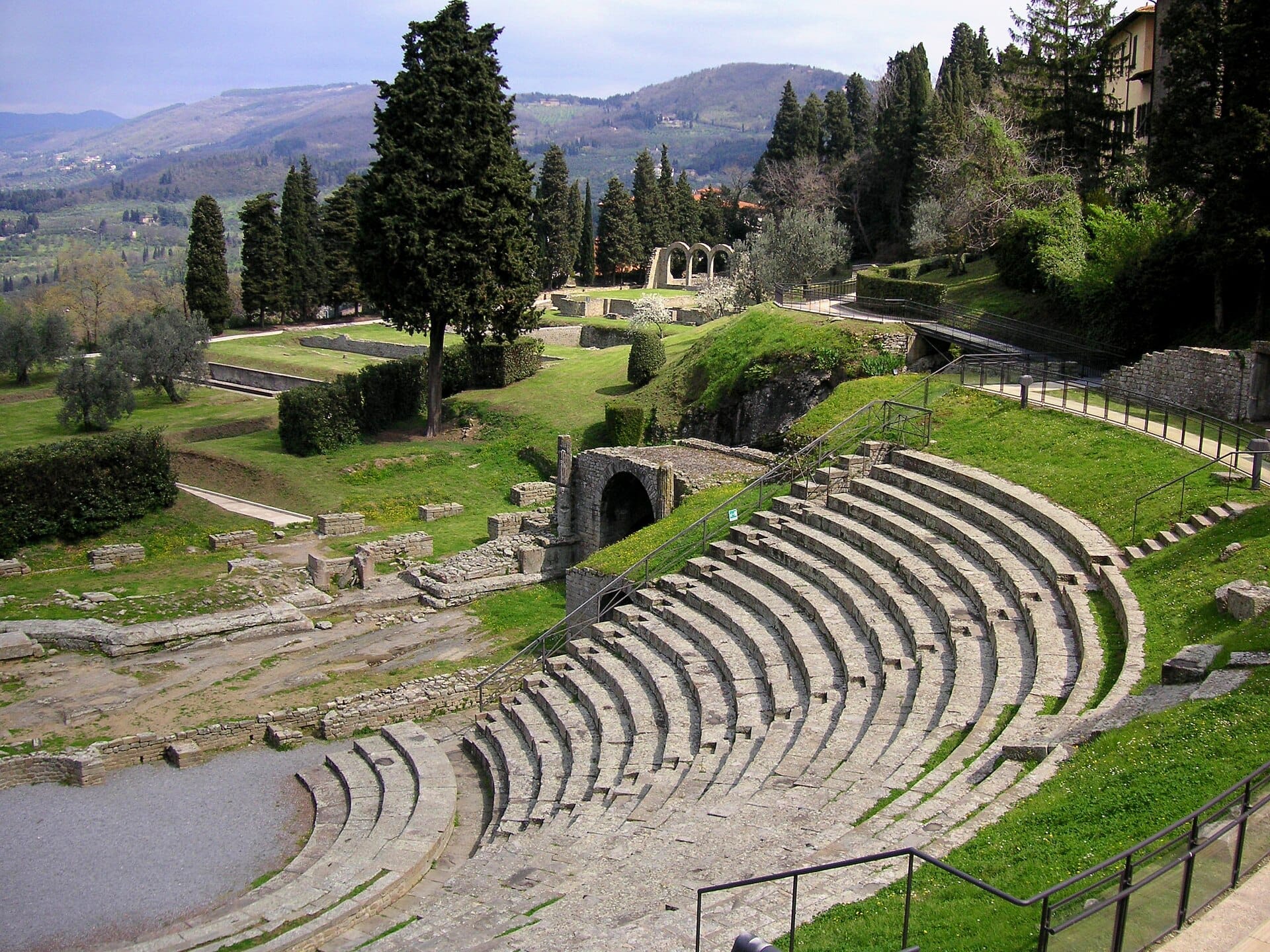
The Fiesole Roman Theatre and Archaeological Area is not a reconstruction or a replica. What you walk into is the real structure: stone seating tiers, stage foundations, and backstage walls that were already ancient when the Western Roman Empire collapsed. The cavea, the semicircular seating bank, measures approximately 30 metres in diameter and was carved into the natural hillside slope, a technique common in Roman theatre design that used the landscape to do the structural work.
The theatre dates from between the 1st century BC and the 1st century AD, placing its construction in the late Republic or early Imperial period. It remained in active use at least through the 3rd century AD. After that, centuries of neglect and medieval building activity buried much of it. Systematic excavations carried out between the 19th and early 20th centuries uncovered what visitors see today.
The theatre is only one part of the archaeological park. The same enclosed area contains the remains of Roman thermal baths and a Roman temple, which together suggest that this hilltop site functioned as a genuine civic and religious centre, not just an entertainment venue. Fiesole itself predates Rome's influence: it was an Etruscan settlement of some importance before becoming the Roman municipium of Faesulae.
💡 Local tip
Opening hours vary by season and are updated regularly by Musei di Fiesole. Check the official website or call the ticket office before you travel, especially in winter. Last admission is at least 60 minutes before closing.
The Experience at Different Times of Day
Morning visits, especially on weekdays, offer the quietest conditions. The stone tiers are largely empty, the light falls at a low angle that picks out the texture of the original masonry, and the surrounding trees are still in shadow. You can stand on the orchestra floor, the flat circular area at the base of the seating, and look up at the rows of stone seats without a single other person in frame. That is genuinely rare for a site this historically significant.
By midday in summer, tour groups from Florence arrive in waves, typically between 11am and 1pm. The site is open-air and there is limited shade within the theatre itself. Heat reflects off the pale stone, and the experience changes considerably. If you are visiting between June and August, arriving at opening time is not just a preference: it materially affects how much you enjoy the visit.
Late afternoon in spring and autumn is arguably the most rewarding time. The sun drops toward the hills behind Florence, the temperature softens, and the stone takes on a warm amber tone. The site is rarely crowded at this hour, and the walk back through Fiesole's Piazza Mino toward the bus stop passes through the kind of quiet hilltop town that most Florence visitors never see.
⚠️ What to skip
The archaeological site is outdoors and exposed. In summer, bring water, sun protection, and closed-toe shoes. Some paths across the site are uneven stone or compacted earth. In wet weather, surfaces can be slippery.
Tickets & tours
Live prices and dates from our booking partner. If you book, we may earn a commission at no extra cost to you.
Half-Day Hiking Tour in Fiesole's Hills with Wine and Lunch
From 150 €Instant confirmationFree cancellationE-bike adventure to Fiesole from Florence with olive oil tasting
From 49 €Instant confirmationFree cancellationPerfume masterclass: a sensory experience in Florence
From 70 €Instant confirmationFree cancellationFlorence cathedral complex and Brunelleschi's dome tickets
From 59 €Instant confirmation
Getting There from Florence
ATAF Bus line 7 departs from central Florence (commonly from Piazza San Marco) and runs directly to Piazza Mino in Fiesole in approximately 25 minutes. The journey climbs steadily through olive groves and hillside villas, and the view back over Florence from the upper stretches of the road is worth a window seat on the right-hand side going up. From Piazza Mino, the entrance to the Archaeological Area at Via Portigiani 1 is a short, flat walk.
Taxis and private transfers from central Florence are straightforward and take around 15 to 20 minutes depending on traffic. The road up to Fiesole is a single main route with limited passing space in places, so coaches and buses run on a fixed schedule. Driving is possible but parking in Fiesole is limited.
The bus journey makes Fiesole a genuinely practicalday trip from Florence, or easily combined with a half-day itinerary if you start early. It is one of the few ancient Roman sites reachable from the city centre without a car or organised tour.
Inside the Archaeological Park: A Practical Walkthrough
You enter through a ticket office and descend into the site rather than approaching it from below. The theatre presents itself immediately: the full curve of the seating tiers laid out in front of you, the stage platform, and the remnants of the scaena frons, the architectural backdrop that would have framed performances. The scale is human rather than monumental. Unlike the Colosseum or the theatres of Pompeii, this is not an overwhelming space. It is intimate, which is part of why it still hosts live performances during the Estate Fiesolana summer festival.
From the theatre, marked paths lead to the thermal baths. The baths are less visually dramatic than the theatre but structurally interesting: you can see the layout of the changing rooms, bathing pools, and underfloor heating channels. Interpretation panels in Italian and English explain the sequence of spaces.
The Roman temple sits on a raised terrace above the baths, and its platform and lower wall courses are preserved to a height that conveys the original proportions. The views from this terrace extend across the valley toward Florence, the Arno plain, and the hills beyond. On a clear day, the Florence Cathedral's dome is visible in the distance.
The on-site Museo Civico Archeologico, accessed through the same ticket, contains finds from the excavations: pottery, coins, votive objects, and sculptural fragments. It is a focused collection rather than an exhaustive one, and it rewards visitors who want to understand what daily life on the site looked like rather than those expecting a major gallery experience.
Fiesole in Context: Why This Place Matters
Fiesole's history runs deeper than Rome's presence in Tuscany. The settlement was an Etruscan stronghold before Roman conquest, and the town's position on the ridge above the Arno valley made it strategically and commercially significant. When Rome established Faesulae as a municipium, it built on an already functioning urban centre. The theatre, baths, and temple you see today were Roman additions to a place that had already been inhabited for centuries.
Florence, in contrast, was a lower settlement in the valley, founded later. The relationship between the two sites is worth holding in mind when you visit: Fiesole is older, and its hilltop character is inseparable from why it was chosen as a settlement in the first place. For a deeper understanding of how the ancient city connects to the Renaissance one that followed, theMuseo del Bargelloin Florence holds medieval and early Renaissance sculpture that bridges the two eras.
During the Estate Fiesolana, the summer performing arts festival, the Roman Theatre returns to something close to its original function. Concerts, theatre performances, and dance events take place in the cavea during July and August. Attending a performance here is a genuinely different experience from visiting during the day: the stone seats are warm from the afternoon sun, the sky darkens behind the hills, and the acoustic quality of the theatre becomes apparent in a way no daytime visit can replicate.
Photography, Accessibility, and What to Bring
The open-air setting means photography is unrestricted and generally straightforward. Morning light falls from the east onto the stage area, making it well-lit and contrast-rich. The seating tiers photograph well from the orchestra level looking up, or from the top of the cavea looking down across the stage toward the landscape below. Tripods are permitted in the outdoor areas but check with staff regarding the museum interior before setting up.
Accessibility arrangements are in place for visitors with reduced mobility, noted by the municipality. The ticket office is the point of entry for all visitors, and staff can advise on which areas of the site are navigable. Some sections of the archaeological park involve uneven surfaces, and not all parts of the terrain are suitable for wheelchairs. Contacting the site in advance is advisable if mobility is a concern.
There are no cafes inside the archaeological area. Piazza Mino in Fiesole, a two-minute walk from the entrance, has bars and restaurants where you can eat before or after. Fiesole also makes for a natural pairing withthe Giardino delle Roseon the hillside below, if you want to combine elevated views with garden walking on the same afternoon.
Who Should Think Twice
Visitors who have already spent several days with Roman archaeology, or who are primarily interested in Renaissance art, may find this site less rewarding than expected. The remains are genuine and well-preserved relative to most Roman sites in Tuscany, but they are not on the scale of Rome's major monuments. If Roman archaeology is not your primary interest, two hours here takes time away from Florence's extraordinary concentration of 15th and 16th century art.
Families with very young children should consider the terrain and heat exposure before committing to the visit. The site is educational but the walk through is not interactive in the way of a designed children's attraction. For family-specific planning in Florence, theFlorence with kids guidecovers sites better suited to younger visitors.
Insider Tips
- If visiting during July or August, check the Estate Fiesolana programme before you book your Florence trip. Attending a performance in the Roman Theatre at night is a category-different experience from daytime visiting, and tickets sell out weeks in advance.
- The bus 7 ride itself is worth experiencing. Sit on the right-hand side travelling uphill for views over Florence and the Arno valley that most visitors never see because they take taxis.
- Combine the archaeological area with a walk around Fiesole's Piazza Mino and the Cathedral of San Romolo, which sits directly above the excavation site and incorporates Etruscan stonework into its base. The layering of cultures in a single square is striking.
- The on-site museum may close for a short break on some days. If you arrive in the early afternoon, confirm with the ticket office whether the museum is open before paying, so you can time your visit to include it.
- The Firenze Card, if you are already using one for Florence's major museums, is accepted at this site. Factor it into your card planning if you have several museum visits scheduled.
Who Is Fiesole Roman Theatre & Archaeological Area For?
- Travellers with a specific interest in Roman or Etruscan history
- Anyone wanting a half-day break from Florence's central crowds
- Summer festival visitors attending Estate Fiesolana performances
- Photographers looking for ancient stone textures and valley panoramas
- Visitors combining the site with a walking afternoon through Fiesole's hilltop town
Planning a trip? Discover personalized activities with the Nomado app.