Exploratorium at Pier 15: What to Expect Before You Go
The Exploratorium is a hands-on museum of science, art, and human perception on San Francisco's Embarcadero waterfront. Founded in 1969, it houses hundreds of interactive exhibits across a refurbished pier building, making it one of the most engaging indoor experiences the city offers.
Quick Facts
- Location
- Pier 15, Embarcadero at Green Street, San Francisco, CA 94111
- Getting There
- Muni F-line streetcar (Embarcadero stops); Muni buses along the Embarcadero
- Time Needed
- 2.5 to 4 hours for most visitors; a full day is realistic with children
- Cost
- Adults $39.95 | Youth (4–17) $29.95 | Seniors/Students/Disabled $29.95 | Under 3 free (prices subject to change; verify at exploratorium.edu)
- Best for
- Curious adults, families with school-age children, rainy-day visits, science enthusiasts
- Official website
- www.exploratorium.edu
What the Exploratorium Actually Is
The Exploratorium is not a conventional natural history museum or a quiet gallery. Since its founding in 1969, it has operated as a public learning laboratory where the exhibits are the point of contact, not the labels beside them. Every installation is designed to be touched, adjusted, or manipulated. There are no velvet ropes. The guiding philosophy, developed by physicist and educator Frank Oppenheimer who founded the museum, is that direct sensory experience teaches more than passive observation.
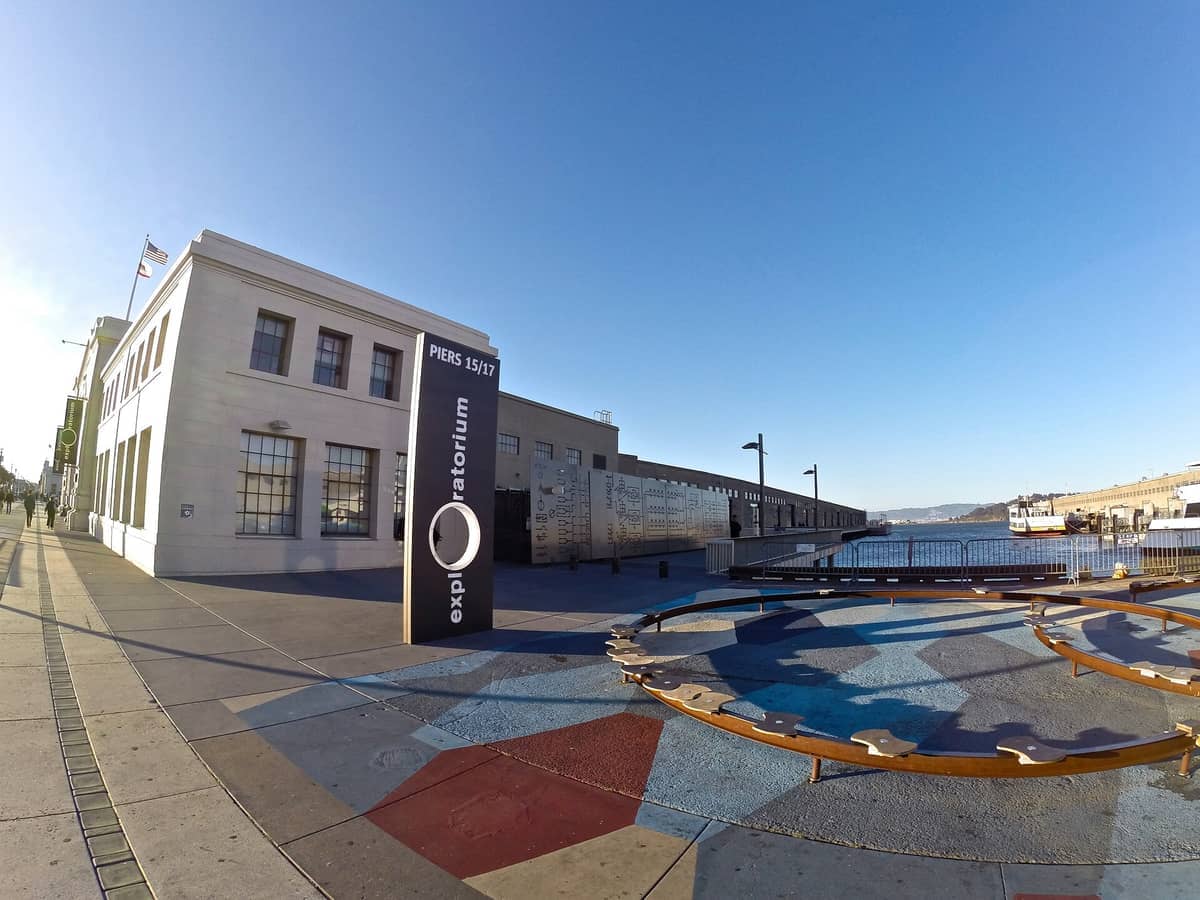
The museum moved to its current home at Pier 15 on the Embarcadero waterfront in 2013, leaving its original Palace of Fine Arts location after more than four decades. The pier building is large, open, and industrial in feel. Exposed steel trusses overhead, polished concrete underfoot, and views of the bay through the outer walls give the space a character that feels more like a working laboratory than a curated attraction.
ℹ️ Good to know
Hours vary on select days, including some Thursday evenings when adult-only programming runs. Always check exploratorium.edu/visit before your trip, as published third-party hours are not always current.
The Exhibits: What You'll Find Inside
The Exploratorium contains hundreds of hands-on exhibits organized loosely around themes of perception, light, sound, motion, living systems, and human biology. The density of content is high. You will rarely find a clear path through, and that is intentional. Exhibits cluster into what the museum calls galleries, but the transitions between them are fluid enough that visitors tend to wander based on what catches their eye.
Some of the most compelling installations deal with optical illusions and the mechanics of visual perception. One recurring category of exhibit challenges what your brain assumes about depth, color, or motion by creating controlled conditions that expose the gap between what your eyes receive and what your mind interprets. These are surprising for adults, not just children, and they hold up on repeat visits because understanding the principle intellectually does not make the illusion disappear.
The Tinkering Studio is a dedicated making space where visitors can work on projects using physical materials and simple electronics. It operates on a drop-in basis and is staffed by facilitators. This section moves at a slower pace than the main floor and tends to draw visitors who want to spend focused time on a single activity rather than cycle through exhibits.
The outdoor area extending onto the pier offers exhibits alongside bay views and a close-up look at the waterfront environment. On clear days this section gives an unobstructed sightline toward the Bay Bridge and Treasure Island. The outdoor exhibits are exposed to weather, so wind and fog do affect the experience, especially on summer mornings when the marine layer sits low over the Embarcadero.
Tickets & tours
Hand-picked options from our booking partner. Prices are indicative; availability and final rates are confirmed when you complete your booking.
Sonoma and Napa Valley wine tour from San Francisco
From 127 €Instant confirmationFree cancellationGo City | San Francisco Explorer Pass
From 76 €Instant confirmationFree cancellationMuir Woods and Sausalito guided tour with transportation
From 82 €Instant confirmationFree cancellationSan Francisco CityPASS
From 77 €Instant confirmationFree cancellation
How the Visit Changes by Time of Day
Weekday mornings, particularly during the school year, often bring organized school groups in large numbers. The noise level rises noticeably and popular exhibits can have informal queues of children. If you are visiting as an adult without children, a weekday afternoon or a weekend midday is a more comfortable experience. Crowds tend to thin in the final hour before closing on most days.
Thursday evenings see the museum reopen to adults only for what it calls After Dark events, which feature a rotating program of themes, performances, and demonstrations alongside open exhibit access. Tickets for these evenings are sold separately and typically require advance booking. The atmosphere is markedly different from daytime visits: quieter in some sections, more social in others, with a bar service operating. For adults who find the daytime environment too chaotic to focus, this is a meaningfully different experience.
💡 Local tip
Buy tickets online in advance. Walk-in availability at the door is not guaranteed on busy weekends, and online pricing can be more favorable. The museum website is the only confirmed reliable source for current admission rates.
Getting There and the Surrounding Area
Pier 15 sits on the Embarcadero, the waterfront boulevard that runs along San Francisco's northeastern edge. The Muni F-line historic streetcar runs directly along the Embarcadero and stops within easy walking distance. Several Muni bus lines also serve the corridor. The Ferry Building Marketplace is a 10-minute walk south along the waterfront and makes a natural pairing for the same day, whether for lunch before your visit or a coffee and browse afterward.
Parking is available in the area but this section of the Embarcadero is among the more congested parts of the city, particularly on weekend mornings. Public transit is the practical choice. The Embarcadero neighborhood is flat and walkable, and the pier itself is easy to identify from the water-facing side of the boulevard.
If you are arriving from further afield, BART's Embarcadero station is a short walk south along the waterfront, connecting directly to SFO and the broader Bay Area rail network.
Accessibility and Practical Details
The museum building is fully accessible. The pier floor is level throughout, and elevators connect the main gallery to the outdoor pier deck. Discounted admission is available for people with disabilities. For visitors requiring specific accommodations, the museum's Visitor Services team can be reached at visit@exploratorium.edu or +1 415-528-4407 before your visit.
The pier building is large enough to feel uncrowded even on busy days, but it is also not climate-controlled in the conventional sense. Layers are worth having, particularly in summer when San Francisco's marine fog keeps temperatures in the mid-60s Fahrenheit and the industrial pier building can feel cooler than outside. The outdoor section is exposed to bay wind regardless of season.
There is a cafe on-site, and the waterfront location means you have numerous dining options within walking distance. Strollers and bags fit easily through the space. Lockers are available near the entrance for larger items.
Who This Is For and Who Should Skip It
The Exploratorium consistently delivers for curious adults and school-age children who engage actively with exhibits. It is one of the few institutions in San Francisco where two to three hours pass without anyone checking the time. The quality of the exhibit design is high, and the concentration of interesting content per square foot is better than most comparable science centers.
That said, it does not suit every traveler. Visitors primarily interested in San Francisco's visual or cultural history will find more relevant material at the de Young Museum or the SFMOMA. Those with limited time on a first visit who are prioritizing the city's iconic outdoor experiences may find the Exploratorium better suited to a return trip or a day when weather keeps them indoors.
Very young children (under 3) enter free but many exhibits require fine motor skills or sustained attention that toddlers have not developed. The space is not dangerous for them, but parents may find themselves managing rather than exploring. Ages 5 and above is the range where the exhibit content starts to connect properly.
⚠️ What to skip
The Exploratorium is significantly louder than a typical museum. On peak weekend days and during school group hours, the noise level in the main gallery is high and sustained. Visitors who are sensitive to sound may find the experience tiring without breaks in the quieter gallery sections or outdoors.
Insider Tips
- The Tinkering Studio has a separate schedule and sometimes fills up quickly. Check at the information desk when you arrive to get a sense of session availability for that day.
- The outdoor pier section is best in the late afternoon when the angle of light on the bay is flattering and the morning fog has typically cleared. Morning visits to the outdoor area in summer often feel cold and grey.
- Thursday After Dark events require separate tickets from daytime admission. They sell out for popular theme nights, sometimes weeks in advance. Check the calendar on the official site rather than assuming availability.
- The museum's ground floor restrooms near the main entrance see the longest waits. There are additional facilities deeper in the building that most visitors walk past.
- If you plan to visit both the Exploratorium and the Ferry Building on the same day, go to the Ferry Building first. The Ferry Plaza Farmers Market operates on Tuesday, Thursday, and Saturday mornings, and the food stalls at the building itself see their longest queues around midday, which often coincides with when Exploratorium visitors take a break.
Who Is Exploratorium For?
- Families with children aged 5 and older who want an active, high-engagement experience
- Adults with an interest in science, perception, or design who want more than a passive gallery visit
- Rainy or foggy days when outdoor San Francisco attractions lose their appeal
- First-time visitors with a full day in the city who want an alternative to the standard waterfront circuit
- Adults visiting on a Thursday evening for the After Dark program, which offers a different atmosphere
Nearby Attractions
Other things to see while in The Embarcadero:
- San Francisco–Oakland Bay Bridge
The San Francisco–Oakland Bay Bridge is one of the most significant pieces of infrastructure in the American West, carrying traffic (now designated as Interstate 80) across San Francisco Bay since 1936. While it is not a walk-through attraction, the views from the Embarcadero waterfront and the eastern span's bike path make it a compelling stop for curious travelers.
- Ferry Building Marketplace
The Ferry Building Marketplace occupies one of San Francisco's most storied waterfront landmarks, a restored 1898 Beaux-Arts terminal at the foot of Market Street. Free to enter, it houses around 50 food vendors, artisan producers, and restaurants, with a farmers market three days a week year-round drawing the city's top chefs and serious home cooks alike.
- Ferry Plaza Farmers Market
The Ferry Plaza Farmers Market, operating since 1993 outside San Francisco's landmark Ferry Building, is one of the most respected farmers markets in California. With free admission, a waterfront setting, and year-round operation three days a week, it draws serious food lovers and curious visitors alike.