Brett Whiteley Studio: Inside the Mind of Australia's Most Captivating Artist
Tucked into a quiet Surry Hills street, Brett Whiteley Studio is one of Sydney's most intimate cultural spaces. The former warehouse where Whiteley lived and worked from 1987 to 1992 has been preserved as a working museum by the Art Gallery of New South Wales, The former warehouse where Whiteley lived and worked from 1987 to 1992 has been preserved as a working museum by the Art Gallery of New South Wales, free to enter when open; check the official visitor page for reopening information..
Quick Facts
- Location
- 2 Raper Street, Surry Hills, NSW
- Getting There
- Short walk from Central Station or Museum Station; several bus routes serve the surrounding streets
- Time Needed
- 1–2 hours
- Cost
- Free admission
- Best for
- Art lovers, photographers, anyone wanting a quiet escape from the tourist trail
- Official website
- www.artgallery.nsw.gov.au/visit/brett-whiteley-studio
What the Brett Whiteley Studio Actually Is
Brett Whiteley Studio is not a gallery in the conventional sense. It is a preserved working studio inside a former Surry Hills warehouse, converted into a museum managed by the Art Gallery of New South Wales. Brett Whiteley bought the building in 1985, moved in by 1987, and worked there until his death in 1992. Since 1995, the space has been open to the public as a kind of three-dimensional portrait of one of Australia's most influential postwar artists.
The atmosphere is closer to a home visit than an exhibition. Paint-stained surfaces, accumulated objects, and the scale of the unfinished works still in situ communicate something a gallery wall never quite could: the texture of a life spent making art. Whiteley's enormous canvases do not look like they were moved here from storage. They look like they were interrupted.
💡 Local tip
Admission is free, but the studio is temporarily closed to the public for building upgrades. Check the official Art Gallery of NSW visitor page for reopening information and current hours before planning a visit.
The Space Itself: What You're Walking Into
The building is a two-storey warehouse with the kind of high ceilings and industrial bones that defined the artist studio archetype. Natural light filters through upper-level windows, landing unevenly on large-scale paintings in ways that shift across the day. In the morning the space feels cooler and the colours in Whiteley's Sydney Harbour works appear more saturated. By early afternoon, the light flattens and the space takes on a different mood altogether, particularly in the main painting area.
The studio contains a significant collection of Whiteley's paintings, drawings, and objects, including works from his harbour series and his deeply personal investigations into the human figure. His obsessions are visible everywhere: the curves of Sydney Harbour, the influence of Japanese calligraphy, studies in ecstatic colour. There is also archival material that helps place his work within its biographical context, including press clippings, reference images, and artist materials left largely as they were found.
The smell of the space is faintly mineral. Old paint, timber floors, and the particular stillness of a room that has not been redesigned to feel welcoming. It is not glamorous in the way a national gallery is glamorous. That roughness is the point.
Tickets & tours
Live prices and dates from our booking partner. If you book, we may earn a commission at no extra cost to you.
The Rocks historic walking tour
From 20 €Instant confirmationFree cancellationBeginner surf lesson at Bondi Beach
From 79 €Instant confirmationFree cancellationSydney whale-watching cruise with breakfast or lunch
From 62 €Instant confirmationFree cancellationBlue Mountains Waterfalls Full-Day Tour with Lunch and Dinner
From 171 €Instant confirmationFree cancellation
Brett Whiteley: Why His Work Still Matters
Whiteley (1939–1992) was a dominant figure in Australian art during the 1970s and 1980s. He won the Archibald Prize twice and the Sulman Prize twice, and the Wynne Prize multiple times, making him the most decorated artist in the history of those awards at the time. His work was shaped by time in London, New York, and Fiji before he returned to Sydney in the 1970s and became fixated on the harbour, on the erotic energy of the Australian landscape, and on what he described as the relationship between painting and transcendence.
His life was as turbulent as his work, marked by well-documented struggles with heroin addiction that ultimately contributed to his death at 53 in a Thirroul motel room. The studio does not sanitise this. Some of the archival material acknowledges the contradictions of a life that produced some of the most energised paintings in Australian art while also being pulled apart by addiction. That honesty makes the studio more valuable than a purely celebratory retrospective would be.
For a broader perspective on Sydney's visual art landscape, the Art Gallery of New South Wales holds a significant collection of Whiteley's finished works and provides useful institutional context for understanding where he sits in Australian art history.
When to Visit and What to Expect by Time of Day
Thursday mornings tend to be the quietest. Visitor numbers are low before noon, and the space is small enough that even a handful of people changes the experience noticeably. Weekends bring more foot traffic, particularly Saturday afternoons when Surry Hills generally sees higher pedestrian activity from the surrounding cafes and markets.
Arriving within the first hour of opening gives you the best chance of having the main studio room to yourself. There is no audio guide, so the experience is self-directed and contemplative. Staff are on hand but unobtrusive. Unlike major museums, nobody is rushing you through.
ℹ️ Good to know
The studio is a relatively compact space. Most visitors spend between 60 and 90 minutes here. If you are a serious Whiteley enthusiast or want to spend time with the archival material, two hours is more comfortable.
Getting There: Practical Transport
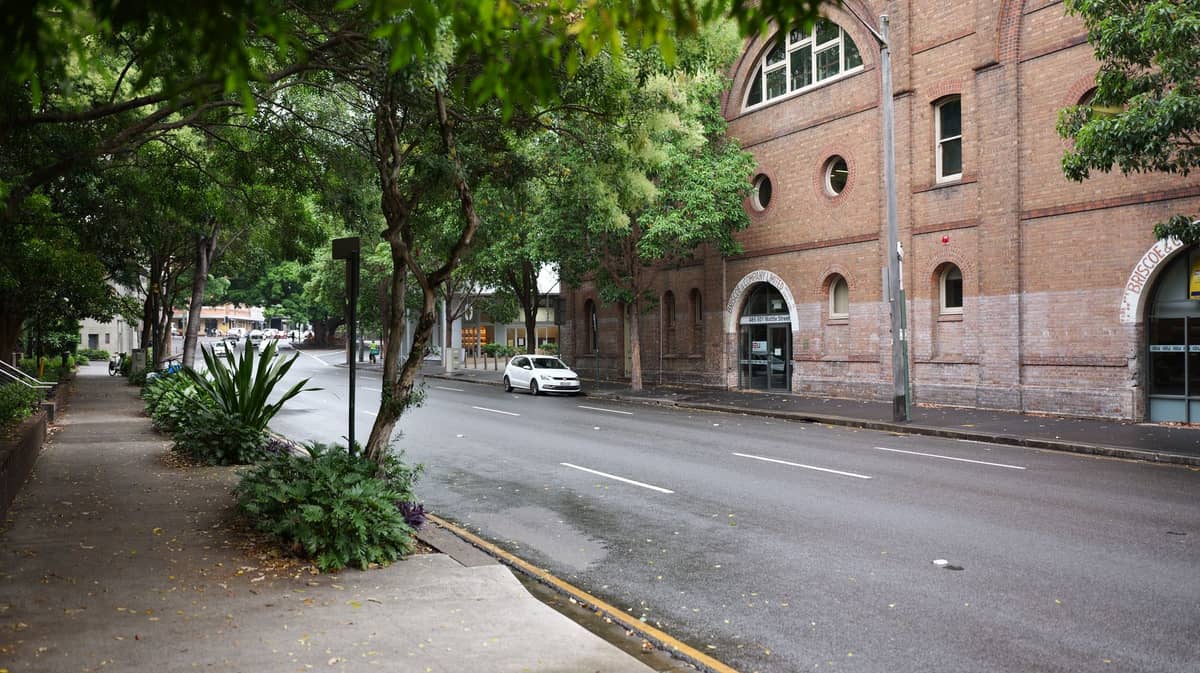
The studio is at 2 Raper Street, Surry Hills. The street is residential and quiet, with no signage visible from the main roads nearby, so first-time visitors should navigate precisely rather than looking for obvious markers.
Central Station is the closest major rail hub and is walkable in around 15 minutes through the back streets of Surry Hills. Museum Station is also accessible. Multiple bus routes run through Crown Street and Cleveland Street, both within a few minutes' walk. There is limited street parking in the immediate area, and Surry Hills is not a neighbourhood designed for driving. Public transport is the practical choice.
If you are combining this visit with a broader Surry Hills itinerary, the Surry Hills and Darlinghurst neighbourhood has some of Sydney's best independent cafes and restaurants concentrated around Crown and Bourke Streets, both within easy walking distance of the studio.
Photography, Accessibility, and Practical Notes
Photography for personal use is generally welcome inside the studio, though guidelines can change, so check on arrival. The large-format canvases present genuine compositional challenges: the rooms are not wide enough to back up significantly, which rewards wide-angle lenses or a phone camera with an ultra-wide mode. The natural light creates strong contrasts in the main painting space, so shooting earlier in the day tends to produce more balanced results.
The studio has undergone accessibility upgrades including a lift, wheelchair access, and ambulant bathrooms. For specific accessibility requirements, contacting the Art Gallery of NSW ahead of your visit is advisable.
There is no cafe or shop on site. The nearest coffee options are a short walk away on Crown Street, where independent cafes are plentiful. Plan accordingly if you are visiting with children who may need a break mid-visit.
⚠️ What to skip
The studio is temporarily closed to the public for building upgrades. Check the official AGNSW page for current status, reopening information, and hours before visiting.
Who This Experience Is Not For
Visitors expecting a polished, interactive gallery experience with digital displays, gift shops, and guided tours will find the Brett Whiteley Studio sparse by comparison. The space is small, the presentation is understated, and there is no cinematic curatorial experience. Children who are not already engaged by visual art may find the visit difficult to sustain. The studio also keeps limited hours, which rules it out for visitors with tight or unpredictable itineraries.
For families with younger children, or visitors wanting a more interactive cultural experience, the Australian Museum on College Street is nearby and offers a significantly broader range of engagement options.
If you are building an art-focused day in Sydney, the studio pairs well with a visit to White Rabbit Gallery in Chippendale, which focuses on contemporary Chinese art and is also free to enter.
Insider Tips
- Arrive within the first 30 minutes of opening on a Thursday or Friday for the quietest possible visit. Weekday mornings see the least foot traffic.
- The studio's exterior is unmarked and easy to miss. Save the address to your map before you go rather than relying on street-level signage.
- Spend time with the archival material and reference images displayed throughout the space. They provide essential context for understanding why Whiteley's harbour paintings look the way they do, particularly his borrowing from Japanese calligraphic traditions.
- If you are interested in Whiteley's work on paper, look carefully around the studio perimeter. Drawings and studies are interspersed with the larger paintings and are easy to walk past.
- Combine the visit with the surrounding neighbourhood: the streets between the studio and Crown Street are worth a short wander, with terrace houses and rear-lane architecture typical of inner Surry Hills.
Who Is Brett Whiteley Studio For?
- Art enthusiasts with a specific interest in Australian postwar painting
- Travellers wanting a free, quiet cultural experience away from major tourist sites
- Photographers looking for unusual interior light and large-format subject matter
- Anyone curious about the relationship between an artist's environment and their output
- Sydney visitors building a neighbourhood day around Surry Hills or Darlinghurst
Planning a trip? Discover personalized activities with the Nomado app.