Admirals Arch: Kangaroo Island's Most Dramatic Coastal Formation
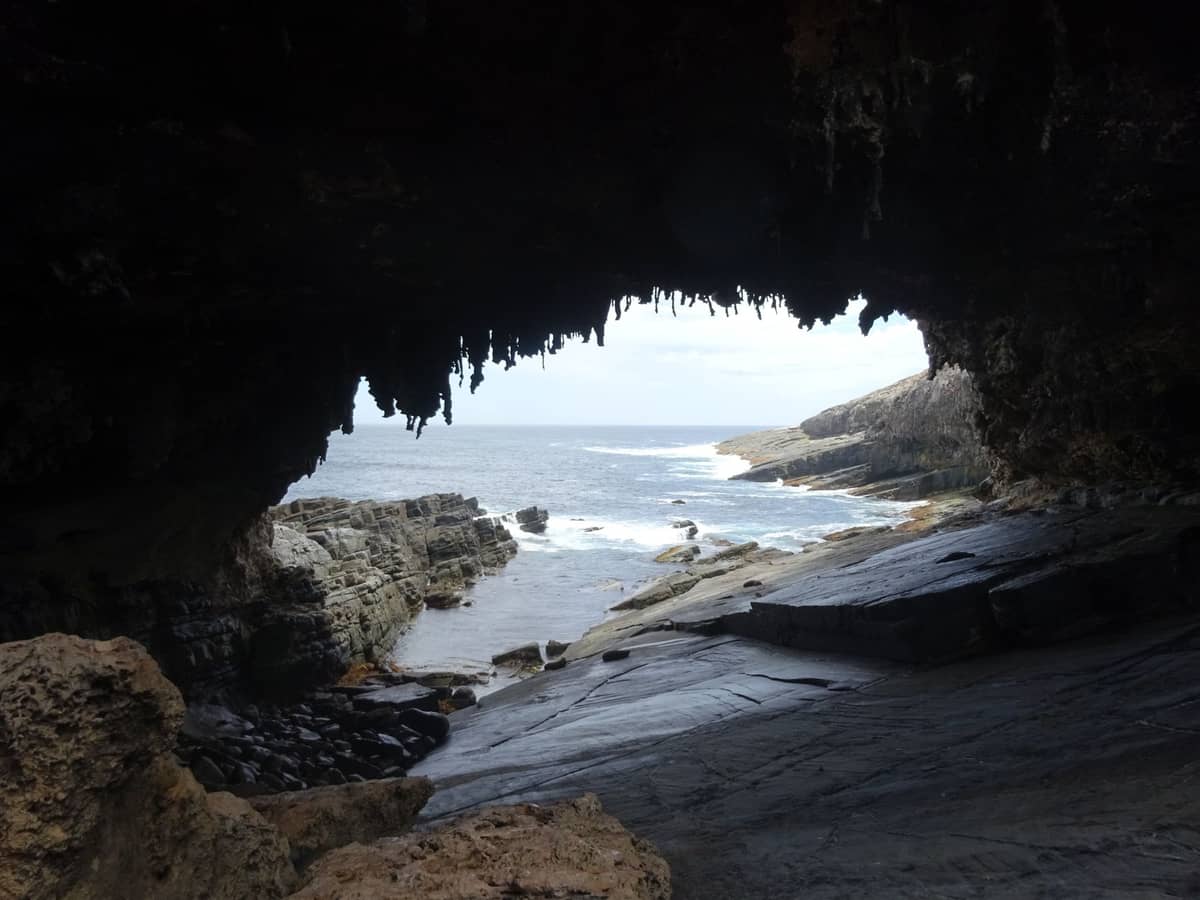
Admirals Arch is a massive natural rock arch at Cape du Couedic on Kangaroo Island's rugged southwestern tip, sculpted by millennia of Southern Ocean erosion. A steep boardwalk descends through windswept scrub to a viewing platform where New Zealand fur seals sprawl across the rocks below, framed by hanging stalactites and crashing surf.
Quick Facts
- Location
- Cape du Couedic Road, Flinders Chase, Kangaroo Island SA 5223
- Getting There
- Drive to Flinders Chase National Park; follow internal roads to the Admirals Arch car park
- Time Needed
- 45 minutes to 1.5 hours
- Cost
- National park entry applies (National park entry applies (A$22.40 per person — verify current rates before visiting) — verify current rates before visiting)
- Best for
- Wildlife lovers, photographers, geology enthusiasts, coastal walkers
What Admirals Arch Actually Is
Admirals Arch is a large natural rock arch at the southwestern extremity of Kangaroo Island, inside Flinders Chase National Park. The arch sits at the base of Cape du Couedic's exposed headland, where the Southern Ocean has spent thousands of years battering Pleistocene dune limestone and older sandstone into caves, tunnels and overhangs. The result is a cathedral-scale opening framed by rough-hewn rock and studded along its underside with icicle-like stalactites, some reaching well over a metre in length. Below the arch, a colony of long-nosed fur seals occupies the surrounding rocks and surge channels year-round, adding movement, noise and a distinctly wild atmosphere to an already striking landscape.
This is not a manicured attraction. The air carries salt and kelp. The wind off the Southern Ocean can be genuinely punishing, even in summer. The boardwalk is steep and ends in steps that require reasonable mobility. All of that is part of what makes the place worth the trip.
ℹ️ Good to know
Admirals Arch sits within Flinders Chase National Park. National park entry fees apply and must be paid before or at the park entrance. Verify current prices through the official park website, as fees are reviewed periodically.
Getting There: The Only Realistic Way In
Kangaroo Island has very limited public transport, with a twice-daily shuttle connecting Penneshaw, American River and Kingscote, so reaching Admirals Arch requires either a hire car, a guided tour, or a private vehicle brought over on the Sealink ferry from Cape Jervis. The arch is located at the far western end of the island, roughly 110 kilometres from Kingscote — the island's main town — which translates to approximately 90 minutes of driving on a mix of sealed and gravel roads. Allow more time if you plan to stop at other points within Flinders Chase National Park.
Most visitors combine the arch with nearby Remarkable Rocks, located just a few kilometres away within the same park. The two sites together form a logical half-day loop from the western end of the island, and most people who make the effort to reach this part of Kangaroo Island do both in a single outing.
The car park sits a short walk from the boardwalk trailhead. The boardwalk itself descends steeply through low coastal scrub before arriving at a fenced viewing platform. The entire return walk is short — under one kilometre — but the descent and subsequent climb back up are noticeable, particularly on a hot day or after a long drive.
⚠️ What to skip
The boardwalk includes steep sections and steps near the viewing platform. It is not fully wheelchair accessible. Visitors with limited mobility can still access partial coastal views from the upper sections of the boardwalk before the steps begin.
Tickets & tours
Live prices and dates from our booking partner. If you book, we may earn a commission at no extra cost to you.
Ultimate Adelaide and Hahndorf full-day tour
From 94 €Instant confirmationFree cancellationHalf-day Lofty Descents tour by bike
From 89 €Instant confirmationFree cancellationAdelaide kayak tour with expert instructors
From 51 €Instant confirmationFree cancellationTrue Crime Tour in Adelaide
From 21 €Instant confirmationFree cancellation
The Walk Down: What You Experience
From the car park, the boardwalk moves through low mallee scrub that has been shaped by decades of coastal wind into dense, low canopy. On calmer days the scrub smells of eucalyptus and dry earth. As you descend, the sound shifts: first a distant rumble, then a full surround-sound of breaking waves and, distinctly, the barking and grunting of fur seals.
The first clear view of the arch appears from the upper platform section and it reframes your sense of scale. The arch is far larger than photographs suggest. The underside is dark with moisture, and the stalactites catch light differently depending on the time of day and cloud cover. In the morning, when light angles in from the east, the interior of the arch can be surprisingly bright, with the surf surging below it in pale green and white. Later in the afternoon, the arch interior goes dark and moody, and the contrast with the surrounding ocean becomes more dramatic.
At the base of the steps, the platform sits directly above the seal colony. On any given day, dozens of long-nosed fur seals are visible: sleeping on rocks, surfing through surge channels, jostling at the water's edge. The smell is immediate and organic — not unpleasant, but absolutely present. Young seals are particularly active, clambering over rocks and tumbling into pools. During the breeding season in late spring and early summer, bulls can be heard asserting territory from some distance.
The Seals: What You Need to Know
The long-nosed fur seal was hunted almost to local extinction in the 19th century. The colony at Cape du Couedic has recovered steadily, and it now represents one of the more reliable and accessible seal viewing sites in South Australia. The animals are wild and should not be approached. The boardwalk and fencing keep visitors at a respectful distance without diminishing the experience.
If wildlife is a priority on your visit to Kangaroo Island, it helps to plan the arch alongside other sites. Seal Bay Conservation Park on the island's south coast offers guided beach walks among Australian sea lions — a different species and a distinctly different encounter — so the two sites complement rather than duplicate each other.
The long-nosed fur seals at Admirals Arch are present year-round, but numbers and activity levels vary by season. Pup season typically runs from late November through January. During this period the colony is louder, more active, and larger. Outside of peak season, the colony is quieter and smaller but still reliably present.
When to Visit and How Weather Affects the Experience
Kangaroo Island sits in a Mediterranean climate zone, but Cape du Couedic is exposed to the Southern Ocean and experiences conditions that feel considerably harsher than the island's interior or east coast. Wind is almost always present, and on rougher days it channels through the arch with enough force to make standing still uncomfortable. Strong swells produce spray that reaches the viewing platform.
The most reliably pleasant visiting conditions tend to fall in autumn (March to May) and spring (September to November), when temperatures are moderate and wind is less extreme than in winter. Summer visits are possible and popular, but the western end of the island offers little shade and midday heat can be significant. Bring water regardless of season.
💡 Local tip
Arrive before 10am or after 3pm to avoid the window when coach tour groups are most likely to be present. The car park is small and the viewing platform becomes congested quickly. Early morning visits also offer softer light inside the arch.
Photography works well throughout the day, but conditions change dramatically with cloud cover and swell. Overcast days diffuse the contrast between sky and rock, which can produce cleaner detail shots of the arch and stalactites. High-swell days add drama but make the lower platform wet. A wide-angle lens captures the full scale of the arch; a longer focal length lets you isolate individual seals on the rocks below.
Fitting Admirals Arch Into Your Kangaroo Island Itinerary
Admirals Arch works best as part of a full day in the western part of the island rather than a standalone destination. Flinders Chase National Park encompasses both the arch and Remarkable Rocks, and the park's internal roads connect them efficiently. A typical western island day might begin with an early start from Kingscote, reaching Remarkable Rocks before the crowds arrive, then continuing to Admirals Arch for late morning, with time to explore the Cape du Couedic lighthouse area before the return drive.
For visitors spending more than two nights on the island, a multi-day approach reduces driving pressure significantly. The Kangaroo Island from Adelaide guide covers logistics including ferry crossings, accommodation options, and how to sequence the island's major sites. Trying to visit Admirals Arch on a single-day trip from Adelaide is technically possible but leaves very little time at either Flinders Chase or the island's other key sites.
Who might want to skip Admirals Arch? Travellers with significant mobility limitations will find the steep boardwalk and final steps genuinely challenging, and the return climb is harder than the descent suggests. Those travelling with very young children should also assess the exposed platform and steps carefully. And anyone expecting a short, flat, easy stroll should adjust expectations before setting off.
Insider Tips
- The viewing platform can feel crowded with even a modest group. If a coach has just arrived, wait 15 minutes near the upper boardwalk rather than pushing onto the platform — the groups cycle through quickly and you will have far more space.
- Bring a windproof layer even in summer. The headland at Cape du Couedic channels the Southern Ocean wind consistently, and even a warm day can feel cold on the exposed platform.
- Look up when you are under the arch overhang: the stalactites are best appreciated from directly below, and most visitors focus on the seals and miss them entirely.
- The Cape du Couedic lighthouse precinct is a short drive from the arch car park and is often overlooked. The lighthouse, constructed between 1906 and 1909, and its associated keeper's cottages are worth 20 minutes of exploration and offer elevated coastal views without any steep descents.
- If swell is running high, the surge channels below the viewing platform fill and drain dramatically. Check the Bureau of Meteorology swell forecast before visiting if you want to see the arch at its most theatrical — but expect the platform to be wet.
Who Is Admirals Arch For?
- Wildlife photographers looking to observe long-nosed fur seals in a dramatic natural setting
- Geology and coastal landscape enthusiasts drawn to large-scale erosion formations
- Travellers on multi-day Kangaroo Island itineraries building a western island day around Flinders Chase National Park
- Couples and small groups who want a scenic, moderately active outdoor experience with genuine wilderness atmosphere
- Visitors combining the arch with Remarkable Rocks for a comprehensive half-day in the park
Nearby Attractions
Other things to see while in Kangaroo Island:
- Flinders Chase National Park
Flinders Chase National Park is located at the western end of Kangaroo Island and protects some of the most dramatic coastal scenery in South Australia. From the granite boulders of Remarkable Rocks to the limestone arch of Admirals Arch, this park, first declared in 1919, rewards travellers who make the long drive with landscapes unlike anything on the Australian mainland.
- Remarkable Rocks
Perched on a granite dome that plunges 75 metres toward the Southern Ocean, Remarkable Rocks is one of Australia's most photographed geological sites. Wind, salt spray, and half a billion years of erosion have carved these boulders into shapes that look borrowed from another planet — and the light changes everything depending on when you arrive.
- Seal Bay Conservation Park
Seal Bay Conservation Park protects one of Australia's third-largest colonies of Australian sea lions, a species found nowhere else on Earth. A 900-metre return boardwalk places visitors within metres of animals resting, nursing pups, and hauling themselves up from the surf on the park's remote southern beach.
Planning a trip? Discover personalized activities with the Nomado app.