Wadjemup Lighthouse: Rottnest Island's Highest Point and Most Storied Landmark
Standing atop Wadjemup Hill, the Wadjemup Lighthouse is Rottnest Island's most recognisable structure and its highest point. The 38-metre limestone tower, completed in 1896, rewards visitors with sweeping 360-degree views across the Indian Ocean and the island's bays. It is also a place where colonial maritime history and complex Indigenous heritage meet in one striking location.
Quick Facts
- Location
- Wadjemup Hill, Rottnest Island, WA 6161
- Getting There
- Ferry from Fremantle, Perth or Hillarys, then bicycle, shuttle bus, or on foot from Thomson Bay
- Time Needed
- 1 to 2 hours including the climb and surrounding grounds
- Cost
- Island entry fee applies; tower tour pricing not confirmed — verify with Rottnest Island Authority before visiting
- Best for
- History lovers, photographers, and anyone wanting the island's best panoramic views
What Is Wadjemup Lighthouse?
Wadjemup Lighthouse — also known as the Rottnest Island Light Station — is a working colonial-era lighthouse perched on Wadjemup Hill, the highest natural point on Rottnest Island. At approximately 38 metres tall and built from local limestone in 1896, it replaced an earlier 20-metre structure completed in 1849, The lighthouse remains operational today, a fact that lends it a different atmosphere from decommissioned heritage towers: this is infrastructure that still matters.
For most visitors, the attraction combines three things in one: a genuine piece of colonial engineering to examine up close, a guided climb through the interior with historical context, and a viewpoint that puts the entire island in perspective. Few single stops on Rottnest offer that range in under two hours.
💡 Local tip
Guided tours run daily from 10 am to 3 pm, with the last tour at 2:30 pm. Confirm current timing and any booking requirements with the Rottnest Island Authority before your visit, as hours can vary seasonally.
The View from the Top: What You Actually See
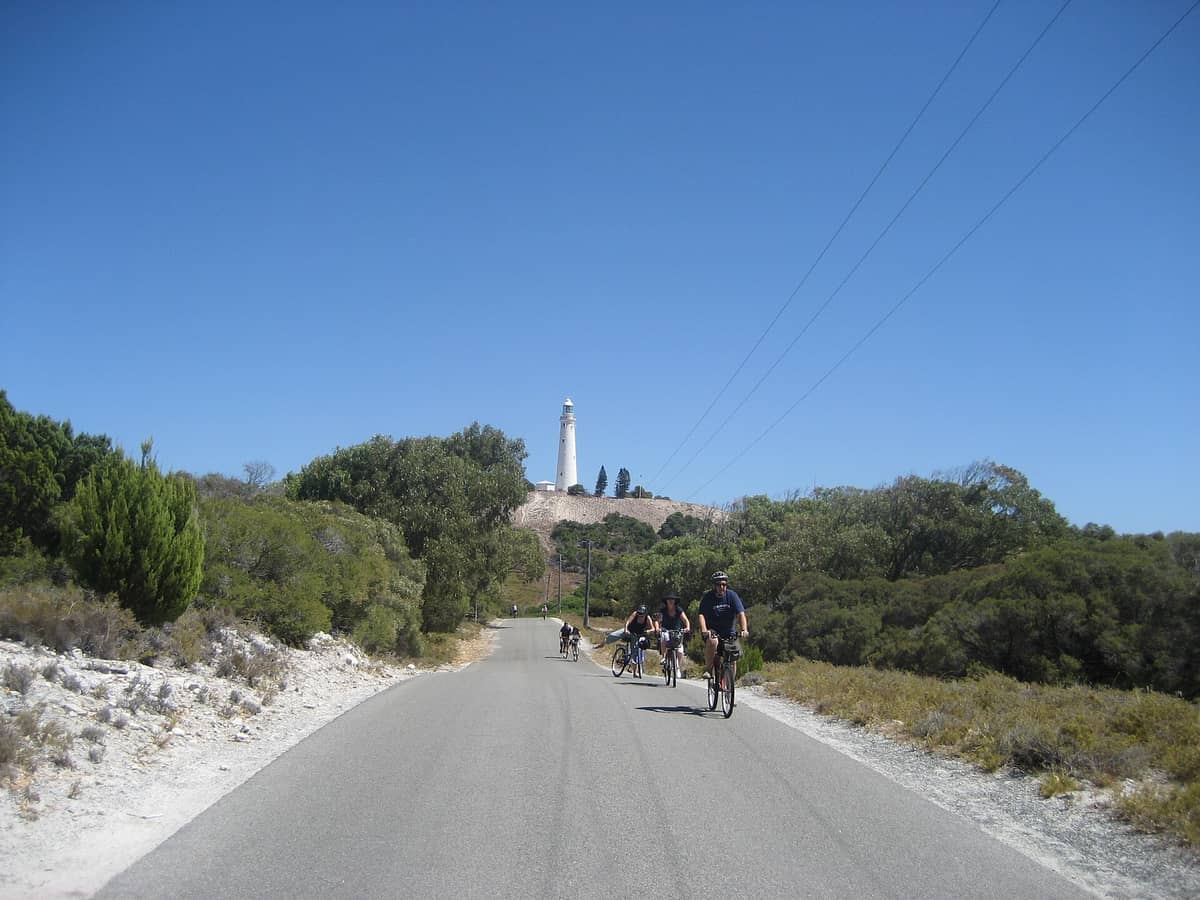
From the base of the hill, the lighthouse already looks commanding. White limestone walls, a distinctive red lantern housing, and the absence of tall vegetation around it make the tower visible from much of the island. The climb inside is a tight spiral of stairs that requires some confidence on a narrow staircase, and the lantern room at the top is not large. What greets you when you step out onto the gallery, however, is worth every step.
The 360-degree view takes in the island's northern bays, the turquoise shallows off Bathurst Point, the open Indian Ocean stretching west without interruption, and on clear days, the faint outline of the Western Australian mainland to the east. The colour contrast is striking: white sand, coral-green shallows, deep blue offshore water, and the flat scrubland of the island interior below you. Photographers shooting in the morning get the eastern bays lit from behind, while late afternoon turns the western ocean surface gold.
Wind is a constant companion at the top. Even on calm days at sea level, the gallery can be breezy. Secure any loose items before stepping outside, and keep this in mind when composing photographs.
💡 Local tip
For photography: visit between 7 am and 9 am for soft eastern light over the bays, or arrive around 4 pm when the western ocean catches warm afternoon colour. Midday in summer produces harsh overhead light and significant heat on the exposed hill.
Tickets & tours
Live prices and dates from our booking partner. If you book, we may earn a commission at no extra cost to you.
The Bell Tower chiming experience
From 11 €Instant confirmationFree cancellationPinnacles and Swan Valley Full-day Guided Tour
From 201 €Instant confirmationFree cancellationPerth and Fremantle Guided Tour and Swan River Cruise
From 110 €Instant confirmationFree cancellationPerth and Fremantle Tour in German with Hotel Pickup
From 84 €Instant confirmationFree cancellation
History and Heritage: Two Lighthouses on One Hill
The site's history begins in the 1840s, when colonial authorities recognised Rottnest Island as a critical navigational reference point for ships approaching the Swan River Colony from the west. The original lighthouse, completed in 1849, stood around 20 metres tall — adequate for the era but insufficient as shipping traffic increased and vessels grew larger. The current tower was completed in 1896, nearly doubling the original height to approximately 38 metres, and its light served the approaches to Fremantle Harbour.
The lighthouse keepers who lived and worked on the hill for generations were part of a small, isolated community that shaped the island's social fabric through the late 19th and early 20th centuries. Their quarters, outbuildings, and the general station compound remain visible around the base of the tower, giving the site a settlement-like character rather than the feel of a single monument. TheWA Maritime Museum in Fremantle holds complementary collections that put this era of coastal navigation in broader context.
It is also worth acknowledging that Rottnest Island — known as Wadjemup in the Noongar language — carries a profound and painful history as a site of Aboriginal incarceration. From 1838 to 1931, thousands of Aboriginal men and boys from across Western Australia were imprisoned on the island, many dying there. The island's Indigenous significance predates colonisation by tens of thousands of years. The lighthouse sits within this layered history, and understanding that context makes the visit more meaningful, not less.
Getting There: From Ferry to Hilltop
Reaching the lighthouse requires first getting to Rottnest Island itself. Ferries depart regularly from Fremantle, North Fremantle, Barrack Street Jetty in Perth CBD, and Hillarys Boat Harbour. The Fremantle crossing takes around 25 minutes; the Perth CBD crossing takes approximately 90 minutes. Check current timetables and fares with operators such as Rottnest Express or SeaLink before booking. For broader context on planning your trip out there, thePerth and Fremantle day trip guide covers the logistics well.
Once on the island, the lighthouse sits on Wadjemup Hill near the island's centre, roughly 2 kilometres from the main Thomson Bay settlement. The most popular way to get there is by bicycle — Rottnest is famously flat in its bay areas, though the hill approach to the lighthouse involves a genuine climb that catches some cyclists off guard. Shuttle buses are also available if you prefer not to pedal; check the current route and stops before setting out. On foot, allow about 25 to 35 minutes from Thomson Bay along well-marked paths.
⚠️ What to skip
The lighthouse hill is exposed with little shade. In summer (December to February), temperatures on the island regularly exceed 30°C. Bring water, sunscreen, and a hat regardless of how short the walk seems from the map.
The Guided Tour: What to Expect Inside
Guided tours operate daily between 10 am and 3 pm, departing from the lighthouse base. The tour takes visitors through the history of the light station, explains the mechanics of the lantern and its evolution from oil-burning to electric operation, and leads the group up the internal spiral staircase to the gallery level. Guides tend to be knowledgeable about both the technical and social history of the site.
The staircase is steep and narrow. It is not suitable for visitors with mobility limitations, those uncomfortable with confined spaces, or very young children who cannot manage stairs independently. The available sources do not confirm step-free or wheelchair-accessible alternatives to the interior climb. If this is a concern, contact the Rottnest Island Authority directly before your visit.
Outside tour hours, the grounds around the lighthouse are generally accessible, and the exterior of the tower and the surrounding keeper's quarters are worth examining even without going inside. The limestone construction, thick walls designed to withstand Indian Ocean gales, and the utilitarian outbuildings give the compound a texture that photographs don't fully capture.
Fitting the Lighthouse Into Your Rottnest Day
Most visitors to Rottnest focus their time on the island's famous bays and beaches, and rightly so — the snorkelling at locations like Little Salmon Bay and swimming at The Basinare experiences that define the island. The lighthouse works well as a mid-morning stop before the beach crowds peak, or as a late-afternoon activity when the light is warm and you want something more substantive than another swim.
If you are spending a full day on the island rather than a flying visit, the lighthouse pairs naturally with a circuit around the northern bays by bike, finishing back at Thomson Bay in the late afternoon for the ferry. Planning a trip to Rottnest as part of a broader Perth stay? The3-day Perth itinerary includes a suggested Rottnest day with an efficient routing.
One practical note: the last guided tour at 3 pm ends well before the typical late-afternoon ferry departures, so time is not as tight as it might seem. Arrive for the 10 am or 11 am tour to leave the afternoon free for beaches.
ℹ️ Good to know
The lighthouse grounds are particularly atmospheric in the early morning before tour groups arrive. If you cycle up before 10 am, you may have the hill entirely to yourself — the views are identical, the quiet is significant, and the birds are louder.
Insider Tips
- Bring binoculars if you have them. From the gallery level, you can trace the full outline of Rottnest's reef system and pick out individual bays — details that vanish on the way back down.
- The hill slope on the eastern side of the lighthouse catches the prevailing afternoon sea breeze first. If you need to cool down after the climb, find a spot on that side rather than sheltering on the western face.
- The keeper's quarters compound around the base of the tower is worth a slow walk even outside of tour hours. The thick limestone walls, external cisterns, and maintenance outbuildings tell a quieter story about what isolation meant for the families who staffed this station through the late 19th century.
- If you are visiting on a weekday rather than a weekend or school holiday, tour group sizes are noticeably smaller. The gallery at the top accommodates a limited number of people comfortably, so smaller groups mean more time to linger.
- Rottnest quokkas are common across the island, but the scrubby vegetation around the lighthouse hill base is one of the less-trafficked areas where they appear in the morning without crowds of people around them — worth factoring into your timing.
Who Is Wadjemup Lighthouse For?
- History and heritage travellers who want more than a beach day on Rottnest
- Photographers seeking the island's best elevated viewpoint for landscape shots
- Families with older children (roughly 8 and above) who can manage a steep staircase
- First-time Rottnest visitors wanting a landmark that gives the island's geography a sense of scale
- Architecture enthusiasts interested in 19th-century colonial limestone construction
Nearby Attractions
Other things to see while in Rottnest Island (Wadjemup):
- Little Salmon Bay
Little Salmon Bay sits on the quieter south side of Rottnest Island, home to a 700-metre marked snorkel trail through the Parker Point Marine Sanctuary Zone. Sheltered, clear, and genuinely rich in marine life, it rewards the extra effort to get there.
- The Basin
The Basin is a natural, reef-sheltered swimming and snorkelling area on Wadjemup / Rottnest Island, roughly a 10-minute walk north of the Thomson Bay ferry terminal. Its calm, clear water draws day-trippers and overnight visitors alike, and its proximity to the main settlement makes it one of the easiest beaches on the island to reach without a bike.
Planning a trip? Discover personalized activities with the Nomado app.