Tanah Lot Temple: Bali's Iconic Sea Temple at Sunset
Tanah Lot Temple is one of Bali's most photographed landmarks, a 16th-century Hindu sea temple perched on a black volcanic rock formation just offshore. The experience peaks at sunset, when the silhouette of the temple against a burning sky draws crowds, but early morning visits offer something quieter and equally rewarding.
Quick Facts
- Location
- Beraban, Tabanan Regency, southwest Bali — approximately 20 km northwest of Canggu
- Getting There
- No direct public transit. Hire a driver, rent a scooter, or book a guided tour. Roughly 35-45 minutes from Canggu by road.
- Time Needed
- 1.5 to 3 hours depending on tide timing and how long you stay for sunset
- Cost
- Entrance fee applies (IDR 75,000 for adult. IDR 40,000 for children). Sarong rental included or available on-site.
- Best for
- Sunset photography, Hindu temple culture, dramatic coastal scenery
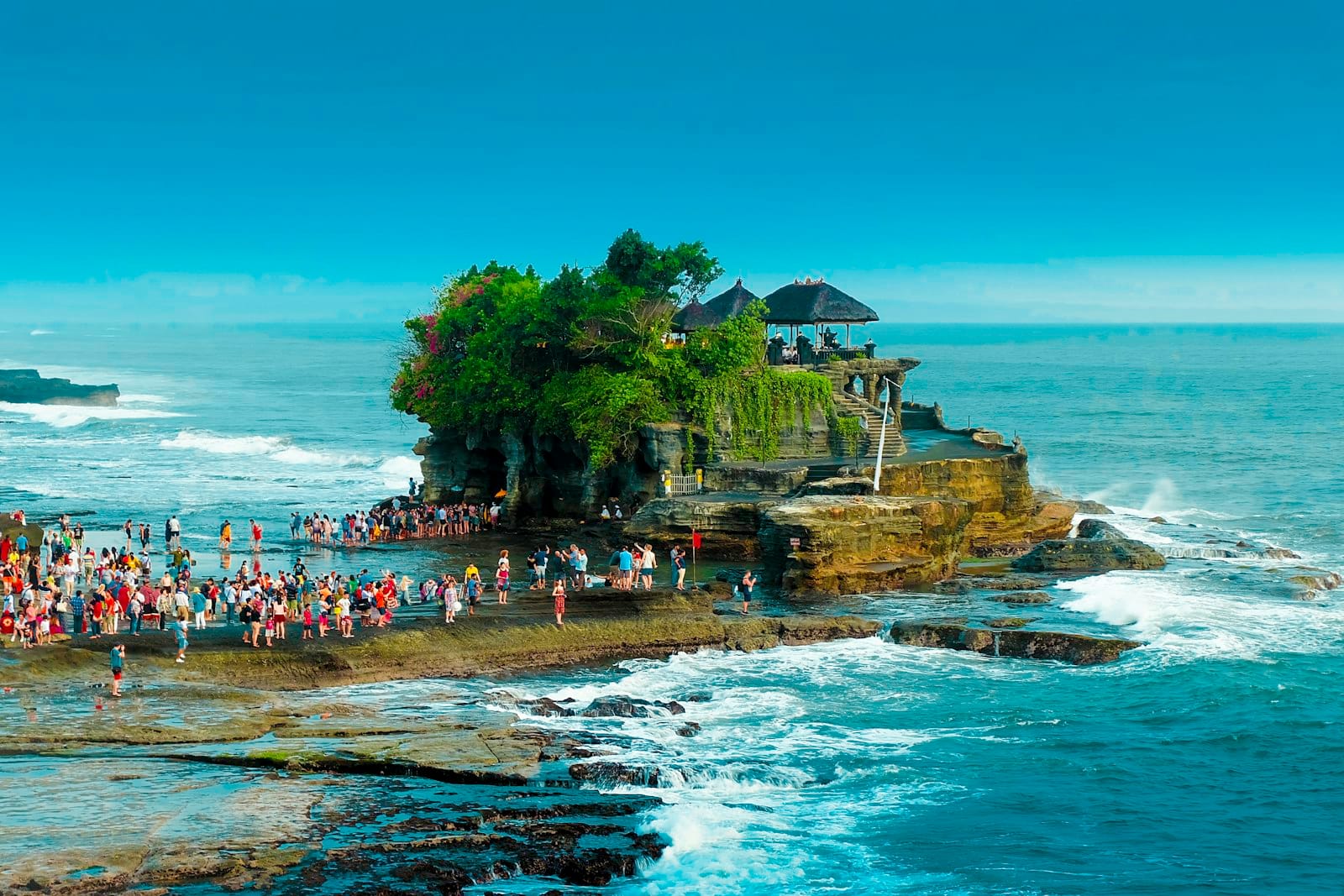
What Tanah Lot Actually Is
Tanah Lot Temple (Pura Tanah Lot) is a Hindu sea temple built on a small offshore rock that becomes fully surrounded by ocean at high tide. It is one of seven sea temples positioned along Bali's southwest coast, each within sight of the next, forming a spiritual chain that the Balinese believe protects the island from evil spirits coming in from the sea. The temple is dedicated to the sea gods and remains an active site of worship, central to Tabanan's broader cultural landscape.
The temple's origins are credited to the 16th-century Hindu priest Dang Hyang Nirartha, who is said to have rested here during a pilgrimage along the Balinese coast and recognized the rock's spiritual power. He reportedly instructed local fishermen to build a shrine. The name itself translates roughly to 'land in the middle of the sea' in Old Javanese, which describes the site's tidal character with complete accuracy.
ℹ️ Good to know
Non-Hindu visitors cannot enter the inner temple compound. You can walk across the rock causeway at low tide and explore the surrounding grounds, but the temple shrines themselves are reserved for worshippers. This is clearly marked on-site.
The Experience: What You'll Actually See and Feel
Walking the path from the main parking area toward the coast, you pass through a long corridor of souvenir stalls selling sarongs, wood carvings, and Balinese artwork. It feels commercial, and it is. But the noise and color fall away the moment the path opens onto the clifftop and the temple rock comes into view.
The visual impact of Tanah Lot depends heavily on the tide. At low tide, you can walk across the exposed rock shelf to the base of the temple, where holy spring water seeps from the cliff face and small sea snakes (considered sacred guardians) sometimes rest in crevices. The smell of salt and wet volcanic rock is sharp. At high tide, the temple sits completely isolated on its rock, surrounded by churning surf, and the silhouette effect is maximized.
Bali's tidal schedule shifts daily, so checking the tide times before you visit is genuinely useful planning. Arriving two hours before sunset at low-to-mid tide gives you access to the rock base and then keeps you positioned for the light transition.
💡 Local tip
Check a tide calendar for the Tabanan coast before you go. Tidal shifts significantly change what you can access and how the temple looks photographically.
Tickets & tours
Live prices and dates from our booking partner. If you book, we may earn a commission at no extra cost to you.
Sunrise vs. Sunset: The Real Comparison
Sunset at Tanah Lot has a well-earned reputation. On clear evenings between April and October, the sky behind the temple turns amber and rose, and the temple silhouette against that backdrop is genuinely striking. This is also when the site is at maximum capacity. Hundreds of visitors line the clifftops from about 5:00 PM onward, many with phones and cameras raised. The experience is communal rather than contemplative.
Morning visits before 9:00 AM look different in almost every way. The tour buses haven't arrived. The light comes from the east, which means the temple face is illuminated rather than silhouetted. A handful of local worshippers may be crossing to the temple at low tide. The stall vendors are setting up. The relative quiet lets you notice the texture of the place: the black rock, the moss on the lower tiers, the sound of the Indian Ocean pushing against the coast.
Getting There and Getting Around
Tanah Lot has no public bus connection. The most practical options are hiring a local driver for a half-day (common practice in Bali and negotiable through your accommodation), renting a scooter if you're comfortable riding in Bali's traffic, or joining a guided tour that bundles Tanah Lot with other west Bali sites.
From central Canggu, the drive runs about 35 to 45 minutes depending on traffic. The road passes through small villages and rice field edges before arriving at a large paid parking area. Parking fees for cars and motorbikes are collected at the entry point before you reach the ticket gate.
Practical Walkthrough: On-Site Details
Upon entering, you'll pass through a ticket checkpoint. A sarong is required to enter the grounds, and if you don't have one, they're available for rent or sometimes included in the ticket. The path from the gate to the cliff viewpoints is wide, paved, and mostly flat, which makes it reasonably accessible for visitors with mobility limitations, though the rock shelf itself involves uneven surfaces.
The grounds spread across several clifftop terraces with viewing points at different angles. The most photographed angle is from the clifftop to the northwest, where the temple sits against the open ocean. A secondary viewing platform to the south gives a different perspective looking back at the rock from a lower elevation. Both are worth visiting.
There are restaurants and cafes within the grounds. The quality is average and prices reflect the tourist location, but the views from some of the upper terrace dining areas are useful if you want to eat while waiting for sunset light.
⚠️ What to skip
Tanah Lot is one of Bali's most visited tourist sites. During peak season (July, August, and December) the clifftop areas become genuinely crowded at sunset. If crowds significantly affect your enjoyment, an early morning visit is the straightforward solution.
Photography Notes
For sunset photography, position yourself on the northwest clifftop at least 45 minutes before sunset to secure a clear sightline. The temple silhouette against the sky works best when clouds are present but not complete overcast. The sun sets to the right of the temple from this angle, so wide-angle compositions that include the foreground rock shelf and water work better than tight telephoto shots.
For morning photography, the temple face is lit directly and the rock pools show more detail and color. A polarizing filter helps cut surface glare from the water. Drone photography is subject to Indonesian aviation regulations in the Tabanan area, and local enforcement of drone rules at tourist sites has increased in recent years. Verify current rules before bringing one.
Cultural Respect and What to Know
Tanah Lot is a functioning place of worship, not just a scenic backdrop. On holy days in the Balinese Hindu calendar, the site hosts ceremonies and access to certain areas may be restricted. If you're in Bali with enough time to understand this religious calendar, the best months to visit Bali guide explains how festivals and ceremonies affect site access and atmosphere across the island.
Dress modestly: shoulders and knees covered is the standard. Wearing a sarong (provided or rented on-site) over shorts or a skirt is fully acceptable. Loud behavior near the temple itself and during any active ceremonies is inappropriate and will draw visible disapproval from local worshippers and staff.
Visitors who want to see more active Balinese Hindu temple ritual in a less crowded setting should consider Tirta Empul Temple, where the purification ceremony draws local worshippers throughout the day and the atmosphere feels less oriented toward tourism.
Insider Tips
- Tide timing matters more than arrival time. A low tide at sunset is the best-case scenario. Check the Tabanan tide schedule the day before and plan around it rather than just aiming for golden hour.
- The secondary viewing platform south of the main clifftop viewpoint is significantly less crowded and gives a useful alternate perspective, especially when the main area is packed.
- Local drivers who know the site well can drop you at the far end of the parking area, cutting the walk through the souvenir corridor significantly if you want to head straight to the grounds.
- If you visit during a Balinese ceremony, stay to observe from a respectful distance rather than leaving. Watching the procession of worshippers in ceremonial dress carrying offerings is one of the more memorable things the site offers.
- The holy spring water that seeps from the rock at low tide is blessed by the temple priest and offered to Hindu visitors for a small donation. Non-Hindu visitors are generally welcome to observe but should not participate in the blessing ritual unless specifically invited.
Who Is Tanah Lot Temple For?
- Photographers chasing dramatic coastal temple compositions at golden hour
- Travelers with an interest in Balinese Hindu culture and architecture
- Families with older children who can handle uneven terrain near the rock base
- First-time visitors to Bali who want to see its most iconic landmark in context
- Morning visitors who prefer to experience famous sites without peak-hour crowds
Nearby Attractions
Other things to see while in Canggu:
- Batu Bolong Beach
Batu Bolong Beach is the social and surfing heart of Canggu, where beginner longboarders share gentle reef breaks with seasoned locals, beachfront cafes face the Indian Ocean, and a centuries-old Hindu temple watches over the whole scene from its rocky perch above the shore.
- Echo Beach
Echo Beach is Canggu's premier sunset destination, a broad black sand coast lined with seafood warungs and surf-side bars where the unobstructed Indian Ocean horizon stretches roughly 180 degrees. The reef break here is serious and best suited to experienced surfers, but the beach rewards anyone willing to sit, watch, and eat well.
Planning a trip? Discover personalized activities with the Nomado app.