Batu Bolong Beach: Canggu's Social and Surf Hub
Batu Bolong Beach is the social and surfing heart of Canggu, where beginner longboarders share gentle reef breaks with seasoned locals, beachfront cafes face the Indian Ocean, and a centuries-old Hindu temple watches over the whole scene from its rocky perch above the shore.
Quick Facts
- Location
- Central Canggu, southwest Bali, between Echo Beach to the north and Seminyak to the south
- Getting There
- Scooter or ride-hailing app (Grab/Gojek). No public transit. Small parking lots near beach access points.
- Time Needed
- 2 to 5 hours depending on whether you surf, eat, or stay for sunset
- Cost
- Free entry. Surfboard rental around IDR 100,000–150,000 per day. Cafe meals IDR 50,000-120,000.
- Best for
- Beginner and longboard surfing, beachfront dining, sunset drinks
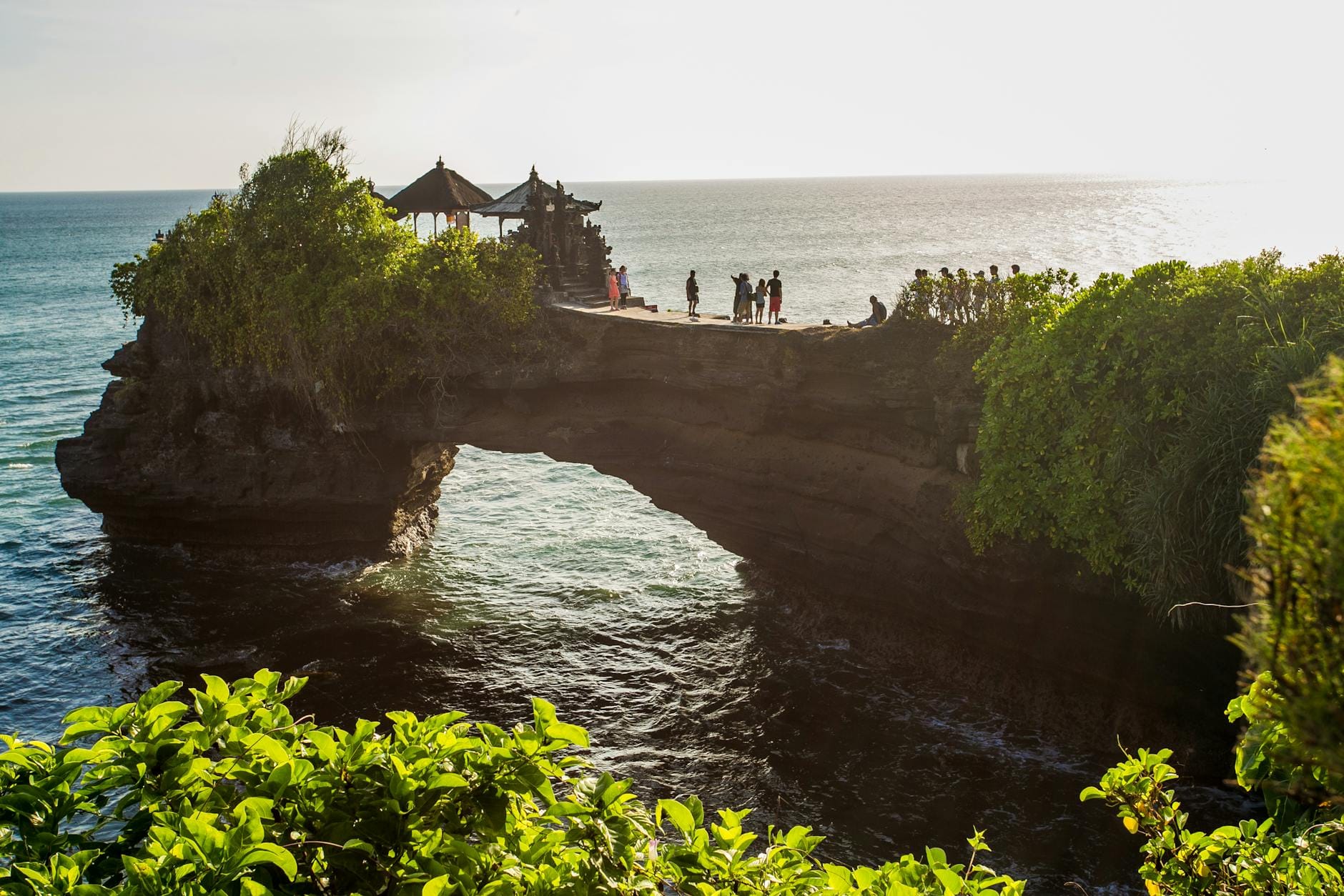
What Batu Bolong Beach Actually Is
Batu Bolong Beach sits at the center of Canggu's coastline and functions as the neighborhood's de facto town square. The beach gets its name from Pura Batu Bolong (also called Pura Batu Mejan), a small Hindu temple set on a rocky outcrop at the southern end of the sand. The temple predates Canggu's transformation into a surf and digital nomad hub by several centuries, and on ceremony days, processions of locals in full temple dress cross the same sand where tourists lie on rented loungers. That contrast defines the place.
The beach itself is a long, wide stretch of black sand facing due west. At low tide, dark reef platforms emerge and tidepools form along the base of the temple rock. At high tide, the sand narrows and the waves push closer to the cafes that line the back of the beach. The water is warm year-round, and the surf break extends across a broad section of the shoreline with multiple peaks.
ℹ️ Good to know
Pura Batu Bolong is an active place of worship. Visitors are welcome to observe from outside the temple walls, but entering the inner compound requires appropriate dress and is generally reserved for worshippers. Ceremonies happen regularly, often on days aligned with the Balinese Pawukon calendar.
The Surf Break: Why Beginners and Longboarders Come Here
The wave at Batu Bolong is a reef break that produces long, slow, rolling walls with multiple peaks spread across the beach. It is one of the gentlest surf breaks in the Canggu area, which is why it attracts beginners, surf schools, and longboarders in large numbers. The wave works best at mid to high tide, when the reef is well covered and the break is forgiving enough for first-timers. At low tide, the wave tends to close out and the exposed reef makes conditions unsuitable for inexperienced riders.
Board rental on the beach runs around IDR 100,000 to 150,000 per day for a foam or soft-top board. Surf schools operate from several of the beachfront establishments and typically offer 90-minute lessons for first-timers. The lineup gets genuinely crowded during peak hours, particularly between 7:00 and 10:00 AM and again from 3:00 PM onward. Experienced surfers who want more challenging, less congested waves generally head north to Echo Beach or the breaks around Pererenan.
💡 Local tip
If you are learning to surf, the sweet spot is mid-tide on a rising swell. Ask your surf school or board rental vendor about current tide conditions before paddling out. The break shifts significantly depending on the tide stage.
Tickets & tours
Live prices and dates from our booking partner. If you book, we may earn a commission at no extra cost to you.
Beyond the Waves: The Beachfront Scene
Batu Bolong's identity extends well beyond surfing. The row of cafes, restaurants, and bars lining the back of the beach has turned it into a full-day destination. Mornings start with smoothie bowls and coffee as early risers watch the first surfers paddle out. By midday, the cafes serve lunch menus that range from Indonesian staples like nasi goreng to Western brunch plates. In the late afternoon, the mood shifts to sunset drinks, and by early evening several spots bring in DJs or live music.
The crowd is a mix of Indonesian surfers, long-term expats, digital nomads on laptop breaks, and tourists passing through. On any given afternoon you will hear four or five languages being spoken across adjacent tables. The atmosphere is relaxed and social without the polished club energy you find further south in Seminyak.
When to Go: Time of Day and Season
The best surf conditions at Batu Bolong coincide with Bali's dry season, roughly April through October. During these months, offshore winds from the southeast groom the waves and the weather is reliably sunny. The wet season (November through March) brings onshore winds, occasional heavy rain, and rougher, less organized surf, though the beach itself remains active year-round. For a detailed breakdown of how seasons affect the entire island, the best months to visit Bali guide covers what to expect month by month.
Early morning, between 6:30 and 8:00 AM, offers the calmest water and the smallest crowds. This is when the light is warm and low, the sand is cool enough to walk on comfortably, and the lineup has space. By 10:00 AM the beach is full. Sunset draws the biggest crowds, typically from 5:00 PM until dark, and finding a seat at the more popular beachfront bars without arriving early can be difficult.
Getting There and Practical Details
Batu Bolong Beach is accessed from Jalan Pantai Batu Bolong, the main road that runs through central Canggu. Parking is available in small lots near the beach access points, with fees collected by local attendants. A scooter is the most common way to get around Canggu, though ride-hailing apps like Grab and Gojek work for pickups. Drop-offs near the beach can require a short walk since some access lanes are narrow.
There are no formal lifeguards. Rip currents occur, particularly at lower tides and near the rock formations at the southern end of the beach. Swimmers who are not strong in the water should stay in the shallower areas near mid-beach. Sunscreen is essential: the combination of equatorial sun and reflected light off the water burns fast and without warning.
⚠️ What to skip
The sand at Batu Bolong absorbs heat and becomes painfully hot by late morning. Bring sandals or flip-flops rather than planning to walk barefoot. The rocky areas near the temple are also sharp and uneven.
Who Should Visit and Who Should Skip
Batu Bolong is ideal for beginner surfers, anyone who wants to spend a full day alternating between water and food, and travelers who enjoy a social beach atmosphere without bottle-service pretension. It is the most accessible beach experience in Canggu and the easiest place to get a feel for the area's character. If you are looking for powerful waves and a more experienced lineup, Echo Beach to the north is a better fit. If you want pristine, quiet sand with few people, Batu Bolong is not that beach. The trade-off for its convenience and energy is that it is always busy, and the most popular spots fill up fast.
Insider Tips
- The best uncrowded surf window is 6:30 to 7:30 AM on a weekday. By 8:00 AM the surf schools have their students in the water and the lineup thickens considerably.
- Walk south past the temple rock at low tide for a quieter stretch of sand and small tidepools that most visitors never reach.
- Several beachfront cafes offer Wi-Fi that actually works. If you want to be semi-productive while watching the surf, this is one of the more practical spots in Canggu to do it.
- Board rental vendors near the beach will quote a starting price. If you rent for multiple days, the per-day rate drops. Ask before committing to a single-day rental.
Who Is Batu Bolong Beach For?
- Beginner surfers and longboarders looking for gentle, forgiving waves
- Travelers who want a full-day beach experience with food and drinks steps from the sand
- Digital nomads and remote workers seeking a social base with a view
- First-time Canggu visitors who want to understand the neighborhood's atmosphere quickly
- Families with older children interested in trying surfing for the first time
Nearby Attractions
Other things to see while in Canggu:
- Echo Beach
Echo Beach is Canggu's premier sunset destination, a broad black sand coast lined with seafood warungs and surf-side bars where the unobstructed Indian Ocean horizon stretches roughly 180 degrees. The reef break here is serious and best suited to experienced surfers, but the beach rewards anyone willing to sit, watch, and eat well.
- Tanah Lot Temple
Tanah Lot Temple is one of Bali's most photographed landmarks, a 16th-century Hindu sea temple perched on a black volcanic rock formation just offshore. The experience peaks at sunset, when the silhouette of the temple against a burning sky draws crowds, but early morning visits offer something quieter and equally rewarding.
Planning a trip? Discover personalized activities with the Nomado app.