Newstead House: Inside Brisbane's Oldest Surviving Home
Built in 1846, Newstead House is Brisbane's oldest surviving European residence, set within Newstead Park on the banks of the Brisbane River. With period-furnished rooms, a well-kept colonial garden, and guided tours on Fridays and Sundays, it rewards visitors who want more than a surface-level look at Queensland's early settler history.
Quick Facts
- Location
- Newstead Park, corner of Newstead Avenue and Breakfast Creek Road, Newstead QLD 4006
- Getting There
- Bus Stop 12 (closest); Bowen Hills train station approx. 30-minute walk. Limited parking in the park.
- Time Needed
- 1 to 1.5 hours for the house tour and a walk through the garden
- Cost
- Adults A$12 / Concession A$9 / Under 16s free with an adult (prices verified Feb 2026)
- Best for
- History enthusiasts, architecture lovers, heritage travelers, families with older children
- Official website
- newsteadhouse.com.au
What Newstead House Actually Is
Newstead House is Brisbane's oldest surviving European home, constructed in 1846 on a riverfront rise in what is now Newstead Park. It predates Federation, predates Queensland's separation from New South Wales, and predates most of the city you see around it. For a settlement that frequently knocked down its past to build car parks and commercial towers, the fact that this particular house survived intact is worth pausing on.
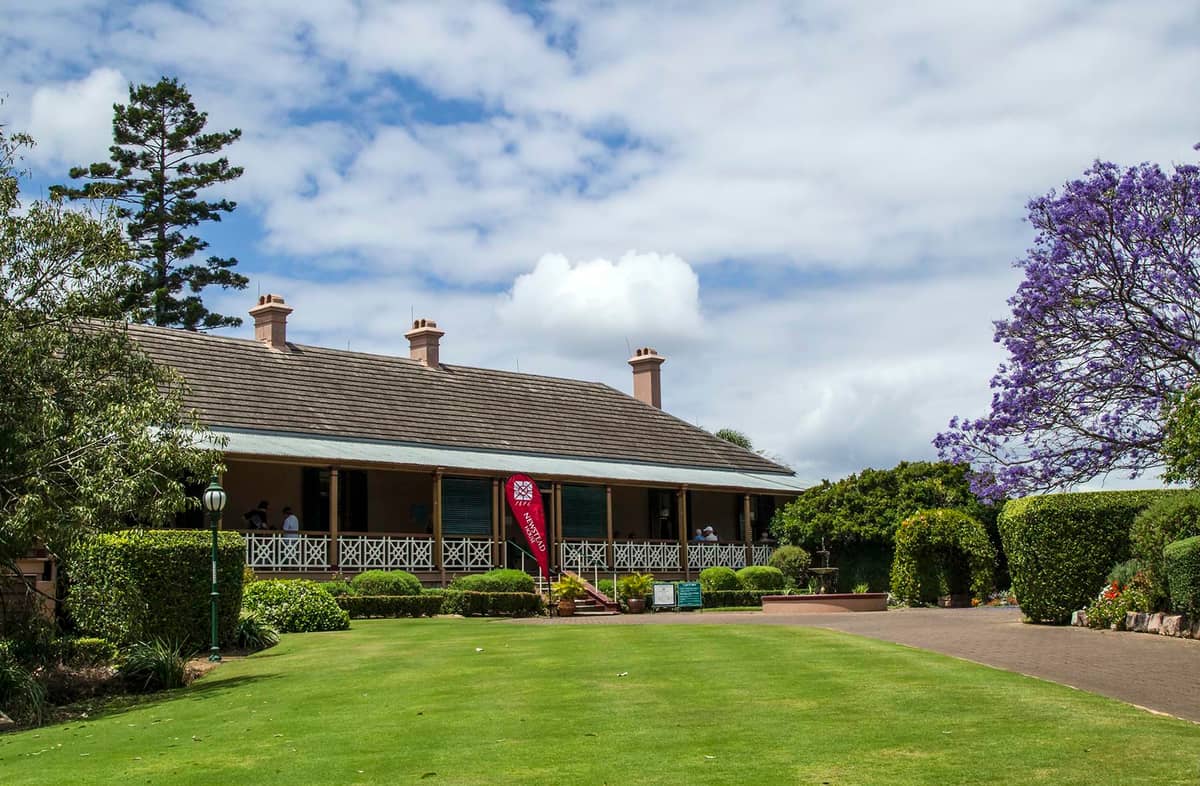
The building began life as a relatively modest colonial homestead and was substantially expanded through the latter half of the 19th century, eventually taking on the form you see today: a white timber-and-brick structure with wide verandahs on two levels, set among lawn and established trees. It was purchased by Brisbane City Council in 1918, and it became a museum in 1932.
The house sits within the Newstead-Teneriffe precinct, a stretch of the river that has been dramatically transformed over the past two decades. The contrast between the restored woolstores, riverside apartments, and Newstead House's colonial garden is striking — and gives the place a context that would be missing if it sat in isolation on a museum campus.
⚠️ What to skip
Newstead House opens only on Fridays (10am–2pm) and Sundays (10am–4pm). It is closed on Saturdays and may close without notice for private functions. Always check the official website before making a trip: newsteadhouse.com.au/plan-your-visit/
The House Interior: What You'll See Room by Room
Inside, the rooms are furnished and dressed in period style, with furniture, objects, and textiles that evoke mid-to-late Victorian colonial life. The effect is more intimate than a conventional gallery — you're moving through spaces that were once someone's dining room and bedroom, not through purpose-built display halls. Ceiling heights, floor proportions, and window placements all reflect the practical realities of building in subtropical Queensland before air conditioning existed: verandahs to catch the breeze, high ceilings to let heat rise, and shuttered windows for light control.
The furnishings include pieces that would have been expensive imports at the time, signalling the social ambitions of the families who lived here. The overall atmosphere is calm, slightly formal, and genuinely informative if you take your time rather than walking straight through. Volunteer guides are typically present and can provide context that the room labels alone don't fully convey.
Children under about 10 may find the interior less engaging than the garden outside — there is relatively little that is interactive or designed for young attention spans. Older children and teenagers with an interest in history or architecture tend to get more from the visit.
Tickets & tours
Live prices and dates from our booking partner. If you book, we may earn a commission at no extra cost to you.
Luggage Storage in Brisbane
From 5 €Instant confirmationFree cancellationBrisbane's dark stories true crime tour
From 21 €Instant confirmationFree cancellationFull-day Mount Tamborine winery tour from Brisbane with lunch
From 140 €Instant confirmationFree cancellationNorth Stradbroke Island small groups day tour
From 79 €Instant confirmationFree cancellation
The Garden and Grounds: The Underrated Part of the Visit
The garden surrounding Newstead House is one of the more peaceful spots in this part of Brisbane, and it doesn't get the attention it deserves. Mature trees provide shade across the lawn, and the verandahs offer good views down toward the river. On a Sunday morning before the Brisbane heat sets in, this is a genuinely pleasant place to slow down.
Newstead Park itself extends beyond the immediate garden and connects the house to the river's edge. It's a public park that anyone can access at any time, which means you can walk the grounds and get a sense of the house's setting without paying for a tour — though the interior is the main draw. Early mornings bring dog walkers and joggers; Sunday late mornings attract a mix of house visitors and families using the park's open lawns.
💡 Local tip
For the best light and the coolest temperatures, aim to arrive when the house opens rather than mid-afternoon. Summer afternoons in Brisbane (December through February) can push past 30°C, which makes the unshaded parts of the garden uncomfortable and interior photography flat.
Historical Context: Why 1846 Matters Here
Brisbane as a free settlement was only granted in 1842, four years before Newstead House was built. The city was still largely a penal colony outpost with an uncertain future as a colonial town. Building a substantial homestead on this site in 1846 was a statement of permanence and confidence in what was, at the time, a very new and unstable settlement.
Queensland didn't even exist as a separate colony until 1859 — meaning Newstead House predates the state of Queensland itself by over a decade. Setting this against Brisbane's broader heritage timeline helps put the building's significance into sharper focus. Most of what you'd call colonial Brisbane's original fabric has been lost; what survives is worth seeing.
The site also sits on land that is part of the traditional Country of the Turrbal and Jagera peoples, who have connections to this part of the Brisbane River that extend far beyond the 1846 construction date. Brisbane City Council acknowledges this context in its official communications, and it's worth keeping in mind when thinking about what 'oldest surviving home' actually means in a place with a much longer human history.
Getting There and Practical Logistics
Getting to Newstead House requires a little planning. The nearest train station is Bowen Hills, but the walk from there to the house takes around 30 minutes, which is manageable in cooler months but less appealing in high summer. Bus Stop 12 is closer and is the more practical public transport option — check the Translink journey planner for routes from your accommodation, as services from the CBD and Fortitude Valley are reasonably straightforward.
Limited car parking is available within Newstead Park. Rideshare is a practical option and drops you directly outside the park entrance. If you're combining the visit with nearby attractions, you can walk along the river to Howard Smith Wharves in about 20 minutes, which makes a sensible half-day itinerary.
An accessible drop-off zone and designated accessible parking are available on site. The Translink network covers most of inner Brisbane, and the Newstead area is served by several bus routes — the official Translink journey planner is the most reliable way to check current options before your visit.
Photography and What to Bring
The exterior of Newstead House photographs well from the garden level, particularly from the lawn on the river-facing side. The white timber verandahs against the green lawn and tree cover make for a clean, clearly colonial composition. Early morning on a clear day gives soft, even light before the Queensland sun flattens everything overhead. Overcast days also work well for exterior shots — the building lacks strong relief detail that requires harsh directional light.
Interior photography is worth attempting but can be tricky: rooms are relatively dark with period furnishings and limited window light. A phone camera in auto mode will struggle in the parlour and bedroom spaces. Check with staff on the day about any photography restrictions, as these can vary depending on ongoing exhibitions or events.
Bring water, particularly in warmer months. The house has limited facilities on site, and the nearest cafes are a short walk toward the Newstead riverside development. Wear comfortable shoes — the garden paths are mostly even, but some areas are grass or gravel.
Honest Assessment: Is It Worth Your Time?
Newstead House is a relatively compact attraction. The interior tour takes between 45 minutes and an hour at a relaxed pace; including the garden and grounds, budget 90 minutes. It is not a large-scale museum experience with multiple galleries or an extensive collection. What it offers is something different: an authentic colonial-era domestic interior in a city that has very little of its built past remaining.
Travelers looking for world-class museum collections or major gallery experiences will find more to engage with elsewhere in Brisbane. But for anyone interested in the physical texture of colonial Queensland life — the actual rooms, actual furniture, actual proportions of how people lived in 1870s Brisbane — Newstead House is the most direct way to access that in the city.
If you're planning a fuller day of heritage exploration, Newstead House pairs well with a visit to Brisbane City Hall and the Parliament House precinct for a broader sense of the city's architectural history across different eras. The two sites represent very different periods and ambitions in Brisbane's civic development.
Insider Tips
- Arrive at opening time on a Sunday rather than mid-afternoon. Volunteer guides are typically fresher and more engaged at the start of the day, and you'll avoid the warmest hours in the garden.
- The house occasionally closes for private functions even within its regular opening hours. The official website notes this as a possibility — a quick check of the plan-your-visit page or a phone call before making the trip from far away is worth the 30 seconds.
- The park grounds are publicly accessible outside house opening hours, so you can walk around the exterior and along the river at any time. This is a good way to assess whether the interior visit appeals to your group before buying tickets.
- If you're visiting in winter (June through August), morning light on the eastern-facing verandah is excellent for photography and the temperatures are comfortable for extended time in the garden. This is objectively the most pleasant season to visit.
- Combine the visit with a walk toward the Teneriffe woolstores and riverside precinct afterward — the contrast between 1846 pastoral homestead and converted 20th-century industrial buildings along the same river stretch is one of Brisbane's more interesting juxtapositions.
Who Is Newstead House For?
- History enthusiasts interested in colonial Queensland and early settler domestic life
- Architecture lovers drawn to Victorian-era colonial building techniques and design
- Travelers following Brisbane's heritage trail who want to understand the city's pre-Federation past
- Families with older children (approximately 10 and above) who have some interest in history
- Photographers looking for colonial-era exterior compositions with garden settings
Nearby Attractions
Other things to see while in Newstead & Teneriffe:
- Eat Street Northshore
Eat Street Northshore is a weekend food and entertainment market set inside a labyrinth of repurposed shipping containers on the Hamilton waterfront. Open Friday through Sunday evenings, it draws crowds for global street food, live music, and Brisbane River views. Here's an practical guide to what you'll actually experience.
- Teneriffe Woolstores
The Teneriffe Woolstores precinct is one of Brisbane's most striking examples of adaptive reuse. Massive brick warehouses built between 1909 and the 1920s now house apartments, cafes, and creative businesses along the river in one of the city's most walkable neighbourhoods.
Planning a trip? Discover personalized activities with the Nomado app.