Teneriffe Woolstores: Inside Brisbane's Most Impressive Industrial Heritage Precinct
The Teneriffe Woolstores precinct is one of Brisbane's most striking examples of adaptive reuse. Massive brick warehouses built between 1909 and the 1920s now house apartments, cafes, and creative businesses along the river in one of the city's most walkable neighbourhoods.
Quick Facts
- Location
- Teneriffe, Brisbane (Newstead-Teneriffe area); key example at 24 Macquarie Street, Teneriffe QLD 4005
- Getting There
- CityCat ferry to Teneriffe Ferry Terminal; buses via Brunswick Street, Fortitude Valley
- Time Needed
- 1 to 2 hours for a self-guided walk through the precinct
- Cost
- Free to walk and explore the public areas of the precinct
- Best for
- Architecture lovers, photography, heritage enthusiasts, weekend walkers
What the Teneriffe Woolstores Actually Are
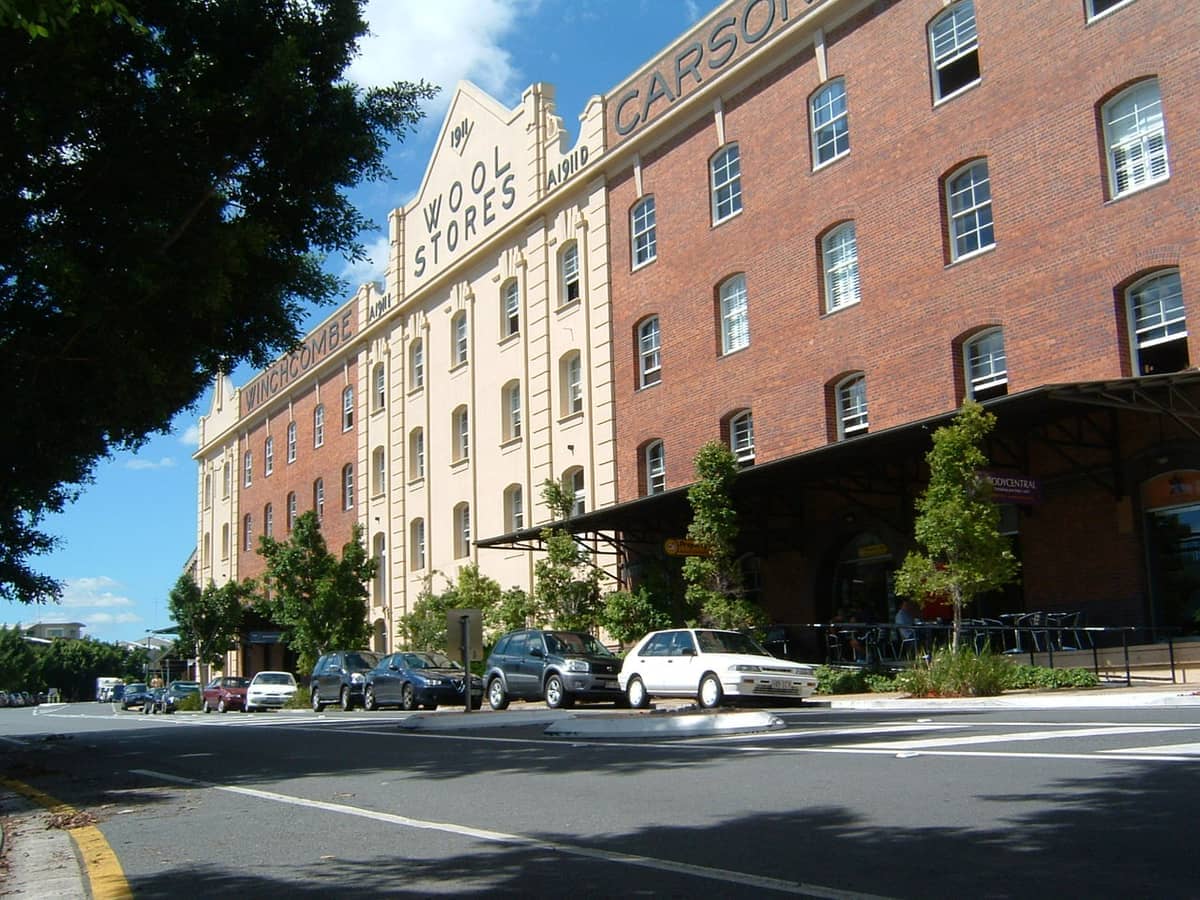
The Teneriffe Woolstores precinct is not a museum, not a ticketed attraction, and not a single building. It is a neighbourhood-scale collection of former wool warehouses, most of them built between 1909 and the 1920s during Queensland's wool industry boom, that have been progressively converted into residential apartments, cafes, offices, and studios over the past few decades. Walking through Teneriffe today, you move between what were once some of the largest wool-handling facilities in the Southern Hemisphere.
The scale surprises most visitors. These are not quaint two-storey warehouses. They are imposing multi-level brick structures with thick load-bearing walls, exposed hardwood timber beams the size of telegraph poles, and original iron fittings that now serve as design features in converted apartments. The texture of the place is genuinely unusual for Brisbane: heavy, solid, and layered with industrial history in a city that sometimes struggles to hold onto its past.
ℹ️ Good to know
The precinct is publicly accessible and free to explore on foot. Individual buildings are private residences or businesses. You are walking through a living neighbourhood, not a heritage park, so respect residents and tenants.
History: Wool, River Trade, and a Neighbourhood That Survived
Teneriffe's development as a woolstore district was directly tied to the Brisbane River. Wool arriving by rail from Queensland stations was stored in these massive facilities before being pressed, baled, and moved to the wharves for export. The main construction periods ran from 1909 to 1915 and through the 1920s, a time when the wool industry was central to the Queensland economy. The Australian Estates No. 2 Woolstore at 24 Macquarie Street, one of the most significant surviving examples, was built in the 1950s and listed on the Queensland Heritage Register on 21 October 1992.
By the mid-twentieth century, changes in freight handling and the decline of river-based trade left many of the woolstores obsolete. They sat largely empty or underused for decades. The adaptive reuse projects that followed, beginning in earnest from the 1990s onward, converted the buildings without gutting them. Developers retained the exposed brick, the original timber floors, and the raw structural bones that now give the precinct its character. Brisbane is not a city that has always made the best decisions about its heritage, which makes Teneriffe's survival as a largely intact precinct genuinely significant.
For broader context on Brisbane's built heritage, the Brisbane heritage and history guide covers key sites across the city, from colonial-era buildings to twentieth-century industrial structures.
Tickets & tours
Live prices and dates from our booking partner. If you book, we may earn a commission at no extra cost to you.
Luggage Storage in Brisbane
From 5 €Instant confirmationFree cancellationBrisbane's dark stories true crime tour
From 21 €Instant confirmationFree cancellationFull-day Mount Tamborine winery tour from Brisbane with lunch
From 140 €Instant confirmationFree cancellationNorth Stradbroke Island small groups day tour
From 79 €Instant confirmationFree cancellation
What a Walk Through the Precinct Looks and Feels Like
Start at the Teneriffe CityCat terminal and walk up from the riverbank. The transition from water to warehouse happens within a block. The streets here, particularly Macquarie Street and the lanes running off it, have a deliberate quietness that contrasts sharply with nearby Fortitude Valley. The brick is old Queensland red, darkened in patches by more than a century of subtropical humidity. In the morning, when the light comes in low from the east, the facades take on a warmth that makes the whole precinct feel amber-tinted.
At street level, the former woolstores present as residential lobbies, small cafe entrances, or simply solid walls with original roller-door openings now fitted with glass. Look up: the upper floors still show the loading apertures and crane mountings that were used to hoist wool bales. Inside the converted complexes, internal courtyards and shared spaces often retain the original floor plates, and residents walk across hardwood that once bore the weight of thousands of bales.
Midday on a weekday, the streets are quiet. On weekend mornings, the cafe culture picks up and residents with dogs populate the footpaths and the riverfront walkway. The crowd is largely local: young professionals, families, the occasional architectural student doing a sketch. It does not feel like a tourist precinct, which is precisely what makes it worth visiting.
💡 Local tip
Morning light between 7am and 9am produces the best conditions for photographing the brick facades. Later in the day, the western-facing walls get direct afternoon sun, which works well for texture shots but can cause harsh shadows in summer.
How to Walk the Precinct: A Practical Route
There is no official heritage walk map for the Teneriffe Woolstores, so the most practical approach is to arrive by CityCat at the Teneriffe Ferry Terminal and walk a loose loop through Macquarie Street, Norman Street, and the riverside path. The entire walkable area covers less than a kilometre in any direction, so you are not committing to a long route.
The riverside path connecting Teneriffe to New Farm is one of the more pleasant stretches of waterfront walking in inner Brisbane. It links naturally with New Farm Park at one end and back toward Newstead at the other. If you are doing a longer half-day, combining the woolstores with a walk to New Farm Park and coffee on Brunswick Street makes for a satisfying morning without needing to take any transport.
The Brisbane Riverwalk connects parts of this riverside stretch and is worth including if you are planning a longer walk through the inner-north.
- Arrive by CityCat: alight at Teneriffe Ferry Terminal (Translink network, Go Card accepted)
- Walk up from the terminal to Macquarie Street, the densest area of woolstore buildings
- Continue along Norman Street and into the internal laneways of the converted complexes
- Return via the riverside path, which runs along the waterfront back to the terminal
- Optional extension: continue the riverside path to New Farm Park (approximately 15-20 minutes on foot)
Architecture and Adaptive Reuse: What Makes This Precinct Unusual
The woolstores were built for function, not aesthetics, and that is why they work so well as architectural subjects. The construction logic is visible: load-bearing brick walls thick enough to regulate temperature, deep-set window openings to minimise heat gain, and structural timber chosen for strength rather than appearance. When you look at the converted buildings today, the additions are generally restrained. Balconies have been inserted into former loading bays; glass has been used to fill openings without pretending to match the original material.
Not every conversion is equally successful, and some of the newer residential developments adjacent to the heritage buildings use the aesthetic vocabulary of the woolstores without the substance. This is worth noting for visitors with a serious interest in adaptive reuse: the quality varies building by building, and the most authentic examples are the ones with Queensland Heritage Register protection. The Australian Estates No. 2 Woolstore at Macquarie Street is among the most significant.
If architectural heritage is your primary interest in Brisbane, the Newstead House is a short distance away in the adjacent suburb and offers a very different register of Brisbane's built history as the oldest surviving residence in the city.
Getting There, Timing, and Practical Considerations
The CityCat is the most atmospheric way to arrive. Services run regularly between the CBD and Teneriffe, and the approach by river gives you a useful sense of how the woolstores relate to the waterfront. A Translink Go Card is the most cost-effective option for the ferry. Bus services also connect Teneriffe with Fortitude Valley and the CBD via Brunswick Street.
There is no single entrance, no ticket booth, and no visitor centre. If you are expecting an interpretive experience with signage and guided tours, this is not that. The heritage value here is embedded in the fabric of a living neighbourhood, and reading it requires some willingness to look carefully at buildings that are also someone's home or workplace.
Weather affects the experience more than you might expect. In Brisbane's summer months (December to February), the humidity makes extended walking uncomfortable by mid-morning. The brick facades absorb and radiate heat in the afternoon. A winter or shoulder-season morning visit (May to September) is noticeably more comfortable. Bring water regardless of the season.
⚠️ What to skip
The Teneriffe Woolstores precinct has no official visitor opening hours because it is a public neighbourhood, not a managed attraction. Interior spaces are private. Do not attempt to enter residential lobbies or private courtyards without invitation.
Who This Precinct Is Right For, and Who Should Look Elsewhere
This is an attraction for people who enjoy reading cities: those who find a well-preserved industrial building as interesting as a museum exhibit, who are happy to walk without a map, and who appreciate a neighbourhood that prioritises its residents over its visitors. Architecture students, photographers, heritage enthusiasts, and anyone doing a broader walk through the inner-north will find genuine value here.
Travellers looking for a structured, interactive experience should look elsewhere. Families with young children will find little to hold attention beyond the walk itself. If you are after something with more programming and riverfront energy, Howard Smith Wharves delivers adaptive reuse with restaurants, bars, and events in a more curated package.
For those building a full itinerary around Brisbane's inner suburbs, the Newstead-Teneriffe neighbourhood guide covers dining, retail, and other points of interest in the surrounding area.
Insider Tips
- The best single viewpoint for capturing the scale of the woolstores against the river is from the CityCat terminal looking back up Macquarie Street. Arrive on a morning service and pause before walking into the precinct.
- Several of the ground-floor conversions now operate as small cafes and creative studios. A coffee stop inside one of the converted spaces is the most immersive way to experience the interior materials without needing access to a private residence.
- The Brisbane City Council heritage register listing for the Australian Estates No. 2 Woolstore (heritage.brisbane.qld.gov.au) includes historical photographs and architectural notes that are worth reading before your visit to understand what you are looking at.
- Combine a Teneriffe visit with a walk north to the Eat Street Northshore markets if they are running on your visit day. The contrast between the woolstores' quiet heritage fabric and the container-market energy is worth experiencing in a single afternoon.
- If the light is flat or the weather is overcast, the precinct is actually easier to photograph than on a bright day. The even light removes the harsh shadows that can obscure texture detail on the brick facades.
Who Is Teneriffe Woolstores For?
- Architecture and heritage enthusiasts who want to see Queensland industrial history still in active use
- Photographers looking for textured brick facades, industrial scale, and authentic urban grain
- Walkers building a longer route through the inner-north riverfront
- Travellers who prefer neighbourhoods over attractions and want somewhere that feels genuinely local
- Anyone combining a morning CityCat ride with a cafe stop in an interesting setting
Nearby Attractions
Other things to see while in Newstead & Teneriffe:
- Eat Street Northshore
Eat Street Northshore is a weekend food and entertainment market set inside a labyrinth of repurposed shipping containers on the Hamilton waterfront. Open Friday through Sunday evenings, it draws crowds for global street food, live music, and Brisbane River views. Here's an practical guide to what you'll actually experience.
- Newstead House
Built in 1846, Newstead House is Brisbane's oldest surviving European residence, set within Newstead Park on the banks of the Brisbane River. With period-furnished rooms, a well-kept colonial garden, and guided tours on Fridays and Sundays, it rewards visitors who want more than a surface-level look at Queensland's early settler history.
Planning a trip? Discover personalized activities with the Nomado app.