New Farm Park (Binkinba): Brisbane's Riverside Retreat
Covering 15 heritage-listed hectares along the Brisbane River, New Farm Park, also known by its Aboriginal dual name Binkinba, is a cherished inner-city park that rewards visitors with rose gardens, riverfront lawns, and a genuine neighbourhood atmosphere. Free to enter, accessible by CityCat ferry, and open daily from 8:30 a.m. to 11 p.m., it suits everyone from families to solo walkers looking for calm away from the CBD.
Quick Facts
- Location
- 1042 Brunswick Street, New Farm QLD 4005
- Getting There
- CityCat to New Farm Park ferry terminal; Bus 196 (Brunswick St stops); Bus 199 (near Merthyr Village)
- Time Needed
- 1 to 3 hours depending on pace
- Cost
- Free general entry. Some facilities (e.g. tennis courts) may require booking.
- Best for
- Families, picnics, morning walks, rose enthusiasts, weekend riverside relaxation
What New Farm Park Actually Is
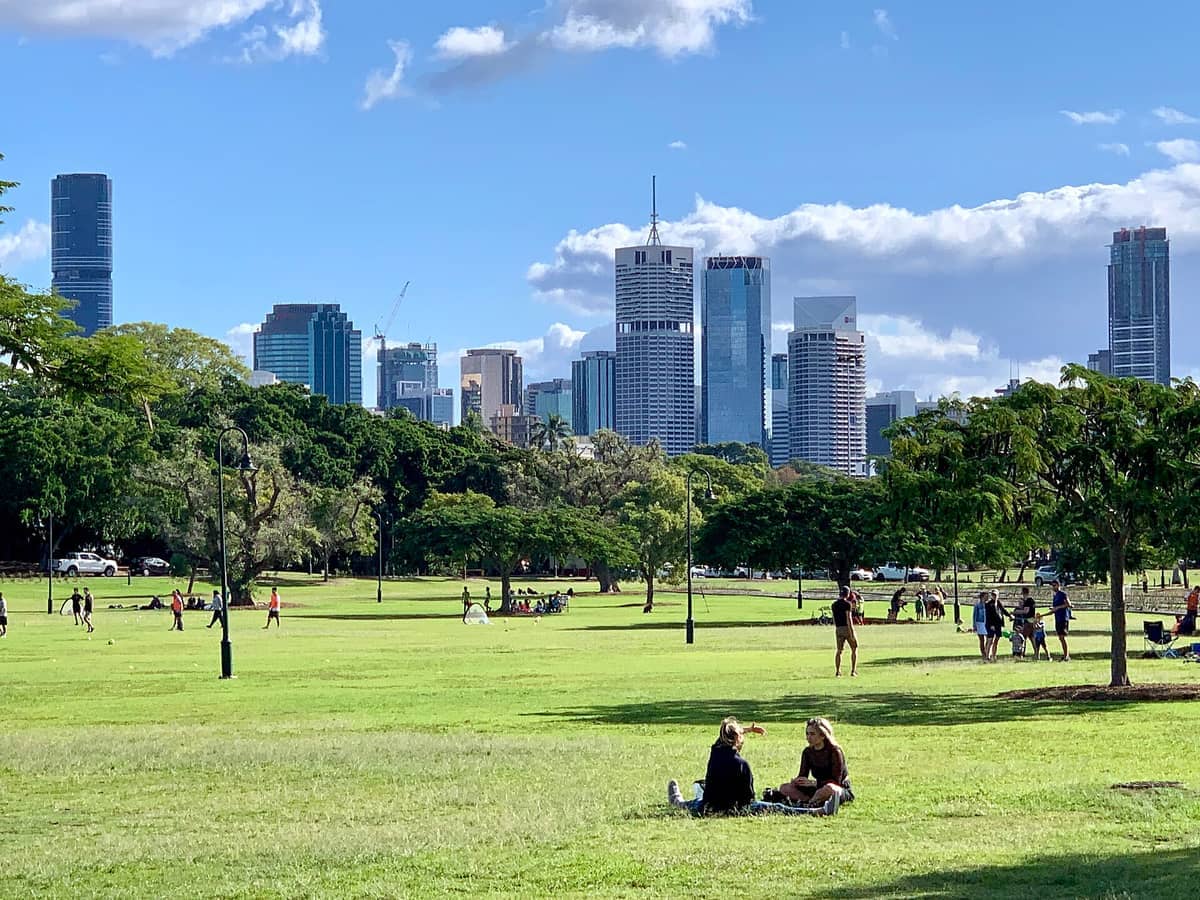
New Farm Park, officially also named Binkinba, an Aboriginal word meaning New Farm Park, officially also named Binkinba, an Aboriginal word meaning 'place of tortoises', is a 15-hectare public park that curves along a bend in the Brisbane River in the inner-city suburb of New Farm. It opened on 20 July 1919, following construction work that began in 1914, and was listed on the Queensland Heritage Register on 7 February 2005, a recognition of its cultural and landscape significance to the city., is a 15-hectare public park that curves along a bend in the Brisbane River in the inner-city suburb of New Farm. It opened on 20 July 1919, following construction work that began in 1914, and was listed on the Queensland Heritage Register on 7 February 2005, a recognition of its cultural and landscape significance to the city.
This is not a manicured showpiece designed primarily for tourism. It is the kind of park that locals genuinely use: dog walkers circling the paths at sunrise, parents with prams parked near the playground, groups of friends claiming a shady fig tree for a Sunday afternoon. That lived-in quality is part of what makes it worth visiting. The park is maintained by Brisbane City Council and remains free to enter.
ℹ️ Good to know
New Farm Park is open daily from 8:30 a.m. to 11 p.m. New Farm Park is open daily from 8:30 a.m. to 11 p.m. The car park on Oxlade Drive has slightly extended weekend hours (from 6 a.m. on weekends). Arriving by CityCat or bus avoids any parking pressure on busy weekend mornings. has slightly extended weekend hours (from 6 a.m. on weekends). Arriving by CityCat or bus avoids any parking pressure on busy weekend mornings.
The Rose Garden: The Headline Feature
The rose garden is the single most photographed element of New Farm Park, and it earns the attention. Arranged in formal beds across a substantial section of the park, the collection contains thousands of rose bushes representing dozens of varieties. In peak bloom, typically late September through November and again in autumn around March to May, the garden is fragrant from several metres away. The scent is particularly strong on still mornings before the Brisbane heat builds.
Colour ranges from pale cream and blush through deep crimson, copper, and purple-toned varieties. Labelling is present on most beds, which is useful for anyone curious about specific cultivars. The garden is open to general park visitors; there is no separate enclosure or ticket. Photographers will find the golden-hour light from the northeast particularly flattering on the blooms in late afternoon.
💡 Local tip
Visit the rose garden on a weekday morning in October or November for the best combination of blooms, fragrance, and manageable crowd levels. Weekend afternoons in spring can be congested with event bookings and wedding photography sessions.
Tickets & tours
Live prices and dates from our booking partner. If you book, we may earn a commission at no extra cost to you.
Luggage Storage in Brisbane
From 5 €Instant confirmationFree cancellationBrisbane's dark stories true crime tour
From 21 €Instant confirmationFree cancellationFull-day Mount Tamborine winery tour from Brisbane with lunch
From 140 €Instant confirmationFree cancellationNorth Stradbroke Island small groups day tour
From 79 €Instant confirmationFree cancellation
The Riverfront and Open Lawns
The eastern boundary of New Farm Park runs along the Brisbane River, and the riverfront section is where the park shifts from ornamental garden to broad, open recreation space. Wide lawns slope gently toward the water, giving clear sightlines across to the river traffic: CityCats, kayakers, and the occasional rowing crew moving in formation early on weekend mornings.
These lawns are where the park comes alive on weekends. Picnic groups gather under the large fig trees, which provide deep shade even in summer. The fig trees themselves are worth noticing: mature specimens with wide canopies and exposed root systems that children tend to climb. Brisbane's subtropical summers are genuinely hot and humid (mean December maximum around 29-30°C), so shade selection matters when planning where to sit.
The riverside path connects to the broader Brisbane Riverwalk, which extends toward Howard Smith Wharves and the CBD to the west. Walking out from the park along the Riverwalk is a natural extension of a New Farm visit and adds roughly 2 to 4 kilometres depending on how far you go.
How the Park Changes Through the Day
Early morning (before 8 a.m.) is the park's quietest and most atmospheric window. Joggers and dog walkers dominate, the light is soft across the lawns, and the river reflects whatever colour the sky is doing. Birdsong is prominent: rainbow lorikeets, ibis, and occasionally kookaburras in the larger trees. This is when the park feels most like it belongs to the neighbourhood rather than visitors.
Mid-morning on weekdays sees families with young children arrive. The playground area draws consistent use. By late morning the park begins filling on weekends, particularly if there is a weekend market or event at the nearby Brisbane Powerhouse. Afternoons in summer can feel oppressively hot in the open sections; the fig-shaded areas near the river become the preferred spots. Late afternoon light is excellent for photography but coincides with peak weekend occupancy.
The Brisbane Powerhouse, a major arts and events venue, sits immediately adjacent to the park's northern edge. On event evenings, the park retains a low-key atmosphere while the Powerhouse draws its own crowd. The combination of a show at the Powerhouse and a pre-dinner walk through the park works well as an evening itinerary.
Historical and Cultural Context
New Farm Park sits on land that belongs to the traditional Country of the Turrbal and Jagera peoples. The park's official Aboriginal dual name, Binkinba, acknowledges this ongoing connection. Brisbane City Council adopted the dual name in October 2004.
The park's late colonial and early federation origins are visible in its formal layout. The structured rose beds and the way open lawns transition to ornamental plantings reflect the civic park design philosophy of the early twentieth century, when public green spaces were understood as improvements to public health and social life. Its listing on the Queensland Heritage Register reflects that the park's design integrity and historical fabric remain substantially intact.
New Farm itself is one of Brisbane's most distinctive inner suburbs, a residential area with a strong café culture, art-house cinema, and proximity to the river. The park sits at the heart of the neighbourhood's identity. For more on the surrounding area, see the New Farm neighbourhood guide.
Getting There and Getting Around Inside
The most satisfying way to arrive is by CityCat. The New Farm Park ferry terminal sits directly at the park's river edge, depositing you at the lawn with no walking required. CityCats run frequently between the CBD and New Farm as part of the Translink network; check current timetables on the Translink website before you travel.
Bus Route 196 stops along Brunswick Street with multiple stops near the park. Bus 199 serves the Merthyr Village end, which is closer to the rose garden sections. If driving, vehicle access is via Oxlade Drive and free parking is available in the park car park, though spots fill early on weekend mornings. Cycling is practical: New Farm has good bike infrastructure and the Riverwalk provides a direct connection. stops along Brunswick Street with multiple stops near the park. Bus 199 serves the Merthyr Village end, which is closer to the rose garden sections. If driving, vehicle access is via Oxlade Drive and free parking is available in the park car park, though spots fill early on weekend mornings. Cycling is practical: New Farm has good bike infrastructure and the Riverwalk provides a direct connection.
Within the park, paths are paved or compacted gravel and manageable for prams and wheelchairs across most areas. Accessible parking is designated along Oxlade Drive. The terrain is largely flat with gentle slopes toward the riverbank. Uneven grass areas exist near the fig trees, so footwear with some grip is recommended if you plan to move off the paths.
💡 Local tip
Combine a CityCat journey with a walk through the park and then continue along the Riverwalk toward Howard Smith Wharves for lunch. It makes for a coherent half-day that covers river, park, and waterfront dining without doubling back.
Facilities and What to Bring
New Farm Park includes public toilets, a playground, rotundas available for function hire, and barbecue facilities in designated areas. Tennis courts exist within the park grounds and may require advance booking through Brisbane City Council. Drinking fountains are present; tap water in Brisbane meets Australian drinking water standards.a playground, rotundas available for function hire, and barbecue facilities in designated areas. Tennis courts exist within the park grounds and may require advance booking through Brisbane City Council. Drinking fountains are present; tap water in Brisbane meets Australian drinking water standards.
Bring sun protection regardless of season. Brisbane's UV index is high year-round and the open lawn sections offer little shade outside the fig tree clusters. A hat, sunscreen, and water are practical basics. Dogs are permitted in some areas of the park but not all; check current Brisbane City Council guidelines for specific zones.
⚠️ What to skip
Summer visits (December to February) come with high humidity and afternoon storm risk. Thunderstorms can develop quickly in Brisbane's subtropical climate. If skies darken, move to shelter and avoid the open riverside lawns.
Honest Assessment: Who Should Come and Who Should Pass
New Farm Park is genuinely worth the trip if you want a break from the intensity of South Bank or the CBD, if you are travelling with children, or if you have any interest in Brisbane's garden heritage. It pairs naturally with a stop at the Brisbane Powerhouse next door or a walk along the Riverwalk.
If your time in Brisbane is very limited and you are choosing between major experiences, it may not rank above South Bank Parklands or the city's main cultural institutions on pure sightseeing value. It is a park, not a ticketed attraction with structured programming. What it offers is quality of place and neighbourhood authenticity rather than headline experiences. Visitors expecting a botanical garden with comprehensive labelling and guided tours will find it falls short of that brief.
For travellers interested in fitting New Farm Park into a broader itinerary, the 3 days in Brisbane guide outlines how to sequence a New Farm morning within a full city visit.
Insider Tips
- The CityCat terminal at New Farm Park is one of the least-crowded stops on the network. Catch it heading west in the late afternoon for excellent views of the Story Bridge and city skyline as you return to the CBD.
- The rotunda near the rose garden is popular for weekend wedding ceremonies. If you want a quieter experience of the garden, arrive before 9 a.m. on Saturdays or opt for a weekday morning when booking activity is lower.
- The large Moreton Bay fig trees near the riverbank have significant exposed root systems that create natural seating. Locals know these as the best informal picnic spots, well shaded and cooled by river breezes.
- The park's rose garden peaks twice a year, typically spring (October to November) and autumn (March to April). A visit in mid-October usually hits the spring flush at its fullest before the summer heat shortens the blooming period.
- For coffee and breakfast, check nearby Brunswick Street options before visiting.
Who Is New Farm Park For?
- Families with young children needing open space and a playground without paying entry fees
- Couples looking for a relaxed morning walk or a pre-theatre stroll before a Powerhouse show
- Rose enthusiasts and garden photographers visiting during the October to November spring flush
- Visitors arriving by CityCat who want to explore the Riverwalk as part of a scenic transit journey
- Travellers spending more than 2 days in Brisbane who want to experience a genuine neighbourhood park rather than tourist-oriented attractions
Nearby Attractions
Other things to see while in New Farm:
- Brisbane Powerhouse
Brisbane Powerhouse is a former 1920s power station converted into one of Queensland's most distinctive arts and cultural venues. Perched on the Brisbane River in New Farm, it hosts theatre, comedy, festivals, and live performance inside a building where exposed concrete, rusted steel, and industrial bones remain deliberately intact.
Planning a trip? Discover personalized activities with the Nomado app.