Mai Khao Beach: Phuket's Longest Shore and One of Its Least Crowded
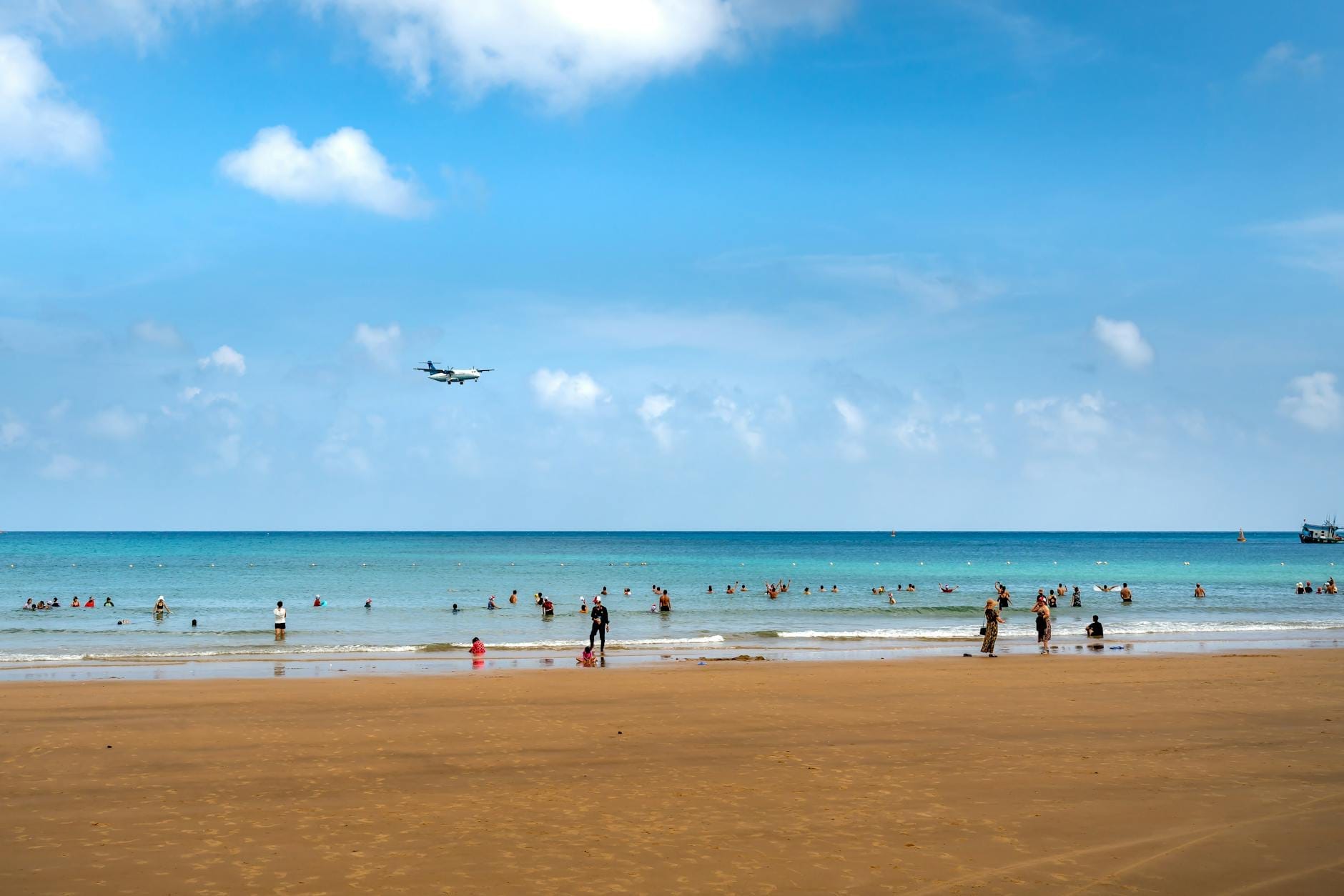
Mai Khao Beach runs 11 kilometers along Phuket's northern tip inside Sirinat National Park. Protected from commercial development, it offers coarse white sand, powerful surf, sea turtle nesting, and the rare spectacle of aircraft banking low overhead on approach to Phuket International Airport.
Quick Facts
- Location
- Sirinat National Park, northwest Phuket (Mai Khao subdistrict, Thalang)
- Getting There
- 10–15 min by taxi from Phuket International Airport via Hwy 402; no direct bus service
- Time Needed
- 2–4 hours for a beach visit; half-day if exploring the full length
- Cost
- Beach access is free; Sirinat National Park entry fee applies (200 Baht for foreigners — verify current rate before visiting)
- Best for
- Solitude seekers, nature lovers, plane spotters, families wanting calm space
- Official website
- portal.dnp.go.th
What Makes Mai Khao Different from Every Other Phuket Beach
Mai Khao Beach is Phuket's northernmost and longest beach, stretching roughly 11 kilometers from Nai Yang Beach in the south to Sai Keow Beach at the island's tip. It sits within Sirinat National Park, and that protected status is the single most important fact about it. There are no beach chair rentals lined up in rows, no vendors circling with fresh-cut mango or cold beer, no jet ski operators waving you down. The beach simply exists in a form that most of Phuket's coastline gave up decades ago.
The sand itself is coarser and whiter than at the resort beaches further south, and the shore drops away more steeply into the Andaman Sea. That gradient, combined with the open northern exposure, means the surf here has genuine power, especially from May through October. In the dry season, November through April, the sea calms considerably and swimming becomes reasonable, though you should still read the conditions carefully before entering.
⚠️ What to skip
Red flags are posted along the beach during the monsoon months (roughly May to October). Strong rip currents and unpredictable swells make swimming genuinely dangerous during this period. Come for the walk and the scenery, not the water, between June and September.
The Sensory Experience: What You Actually Notice When You Arrive
The first thing most visitors notice is the sound. Without vendors, amplified music, or motorized watercraft, the beach is surprisingly loud in the way nature intends: waves breaking hard and rhythmically, wind moving through the casuarina trees that line the upper beach, and, depending on where you stand, the distant turbine whine of a commercial jet beginning its descent into Phuket International Airport, which lies just minutes to the south.
The airport proximity is not a flaw, it is arguably one of Mai Khao's more unusual draws. Near the southern end of the beach, planes pass low and close enough that you can make out the livery on the fuselage. Aviation enthusiasts specifically target this end for photography, particularly in the late afternoon when the light angles in from the west and the aircraft are backlit against a pale sky.
Walk further north, away from the airport end, and the atmosphere changes completely. The beach widens, the casuarinas thicken into a proper tree line, and you may walk for 20 minutes without passing another person. The sand is warm underfoot by mid-morning, and the smell of salt and damp wood is constant. Early mornings, particularly just after sunrise, bring a low mist off the sea that softens the light and makes the beach feel genuinely remote.
Tickets & tours
Hand-picked options from our booking partner. Prices are indicative; availability and final rates are confirmed when you complete your booking.
Full-day luxury catamaran tour to Phi Phi Islands & Maithon from Phuket
From 146 €Instant confirmationFree cancellationPhuket to Khao Lak Private Airport Transfer
From 65 €Instant confirmationFree cancellationSimilan Islands yacht cruise with lunch from Phuket or Khao Lak
From 138 €Instant confirmationFree cancellationMuay Thai Boxing Tickets at Patong Boxing Stadium
From 56 €Instant confirmationFree cancellation
Sea Turtles and the Park's Ecological Significance
Mai Khao is one of the few remaining sea turtle nesting beaches on Phuket. The beach falls within Sirinat National Park, which was established partly to protect this nesting habitat. Leatherback turtles, the largest sea turtle species in the world, use this shoreline during nesting season, which generally runs from around November through February. The Sirinat Marine Turtle Conservation Center, located within the park, monitors nests and releases hatchlings in an annual ceremony held in April.
If you visit during nesting or hatching season, you may notice marked areas of the upper beach cordoned off with stakes and tape. These are active nests. Do not disturb them or approach them after dark, as artificial light disorients both adult turtles during nesting and hatchlings making their way to the sea. The park administration takes this seriously, and so should visitors.
ℹ️ Good to know
The annual turtle release ceremony at Sirinat National Park typically takes place around late March to early April. Dates vary by year. Contact the Sirinat National Park office directly for current schedules if this is a priority for your trip.
Best Times to Visit and How the Beach Changes Through the Day
The dry season window, November through April, is when Mai Khao is at its most usable. December through February brings occasional clouds and a light breeze that keeps temperatures bearable without making the sky overcast for long. March and April are hotter and clearer, with intense midday sun that makes the open beach uncomfortable between roughly 11am and 3pm.
Early morning visits, before 8am, are the most atmospheric. The light is golden, the sand is cool, and footprints from the previous day have been washed away or smoothed by the tide. This is also the best window to look for turtle tracks near the upper beach during nesting season: the distinctive flipper marks in damp sand, leading up from the waterline and back.
Late afternoon, from about 4pm onward, is the second-best window. The sun drops toward the Andaman Sea to the west, casting long shadows across the sand and turning the water a deep green-blue. Sunset at this latitude happens quickly, so if you want to photograph it, be in position by 5:30pm during winter months. The beach faces west and gets full unobstructed sunsets with nothing on the horizon.
Visitors who stay near the resort zone at the southern end of the beach will notice that even here, compared toPatong Beach orKaron Beach, the pace is unhurried. There are a small number of resort-operated sun loungers near certain hotel access points, but walk five minutes in either direction and they disappear entirely.
Getting There and Navigating the Beach Practically
Mai Khao Beach sits 10 to 15 minutes by road from Phuket International Airport via Highway 402, which makes it a logical stop for travelers arriving early before hotel check-in, or departing late after checking out. Taxis from the airport are plentiful. Grab is available in Phuket and may be cheaper for this short transfer.
There is no direct public songthaew (shared taxi) route from central Phuket to Mai Khao. Travelers based in Patong, Kata, or Phuket Town should budget for a private taxi or a day trip by motorbike if they are comfortable riders. Parking is available at several points along the beach access road for self-drivers.
The beach has no infrastructure in most of its length: no toilets, no food stalls, no shade structures outside the natural tree line. Pack water, sunscreen, and food before you arrive. If you are combining the visit with othernorthern Phuket sights, nearby Nai Yang village has small restaurants and convenience stores.
💡 Local tip
Wear shoes or sandals you can slip off easily. The sand closest to the tree line can conceal sharp debris from storm tide wash-up. The lower foreshore, closer to the water, is generally clean and soft underfoot.
Who This Beach Is For, and Who Should Probably Skip It
Mai Khao rewards visitors who want the beach experience without the performance of it. If your ideal beach day involves a sun lounger, cold drinks delivered by a waiter, and a gentle sea you can float in for hours, this is not your beach, at least not reliably. The lack of amenities is structural, not seasonal, and the surf is frequently too rough for casual swimming.
Travelers who actively want noise, activity, and proximity to bars and restaurants should head south toBang Tao Beach or further toward Patong. Those who want a beach that feels genuinely different from the rest of Phuket's well-marketed coastline will find Mai Khao worth the journey.
Families with young children should assess the conditions carefully on arrival. The steep drop-off and surf make the water unsuitable for toddlers and weak swimmers even on calm days. The open space of the beach itself is excellent for children to run around in, just keep them back from the waterline unless conditions are demonstrably gentle.
Wheelchair access is limited. The beach has no paved paths or matting, and the loose sand and uneven upper shore make navigation difficult without assistance. Those with mobility requirements should check whether their hotel, if staying nearby, has a private beach access point with any boardwalk infrastructure. For broader trip planning, ourPhuket beaches guide covers the full range of options across the island.
Insider Tips
- The southern end near the airport is the most accessible and most visited section. Walk 15–20 minutes north and the beach thins to almost nobody, even on public holidays.
- If you are staying near the airport for a late departure or early arrival, Mai Khao is one of the best ways to spend those in-between hours. The taxi ride is short, and you can be back at the terminal in under 20 minutes.
- Bring a long-sleeve layer even on hot days. The wind off the open water can be persistent, and after an hour on the exposed foreshore, the UV exposure adds up fast on skin that is also being cooled by the breeze.
- The best plane-spotting position is at the southern end of the beach near the runway approach path. Morning arrivals (before 9am) tend to produce the most frequent traffic as overnight long-haul flights land.
- Do not expect mobile signal to be consistent throughout the full 11 km. Download offline maps before you arrive if you plan to walk the length of the beach.
Who Is Mai Khao Beach For?
- Travelers who want solitude and open space without driving far from the airport
- Nature enthusiasts interested in sea turtle conservation and national park ecosystems
- Photographers looking for dramatic surf, wide empty shorelines, and low-angle sunset light
- Aviation enthusiasts who enjoy watching commercial aircraft on final approach
- Couples or solo travelers seeking a beach that requires no booking, no reservation, and no performance