Khor Al Adaid (Inland Sea): Qatar's Desert Meets the Sea
Khor Al Adaid, known as the Inland Sea, is one of the few places on Earth where towering sand dunes roll directly into saltwater. Located about 80 km south of Doha on Qatar's border with Saudi Arabia, this protected nature reserve is raw, remote, and unlike anything else in the country.
Quick Facts
- Location
- Southeast Qatar, ~80 km south of Doha, near Mesaieed
- Getting There
- 4WD vehicle only, no public transport; accessible via Sealine/Mesaieed route
- Time Needed
- Half-day minimum; most tours run 4–8 hours
- Cost
- Reserve entry is free; commercial desert safari tours charge per person (prices vary by operator)
- Best for
- Landscape photography, desert adventure, wildlife spotting, off-road driving
What Is Khor Al Adaid?
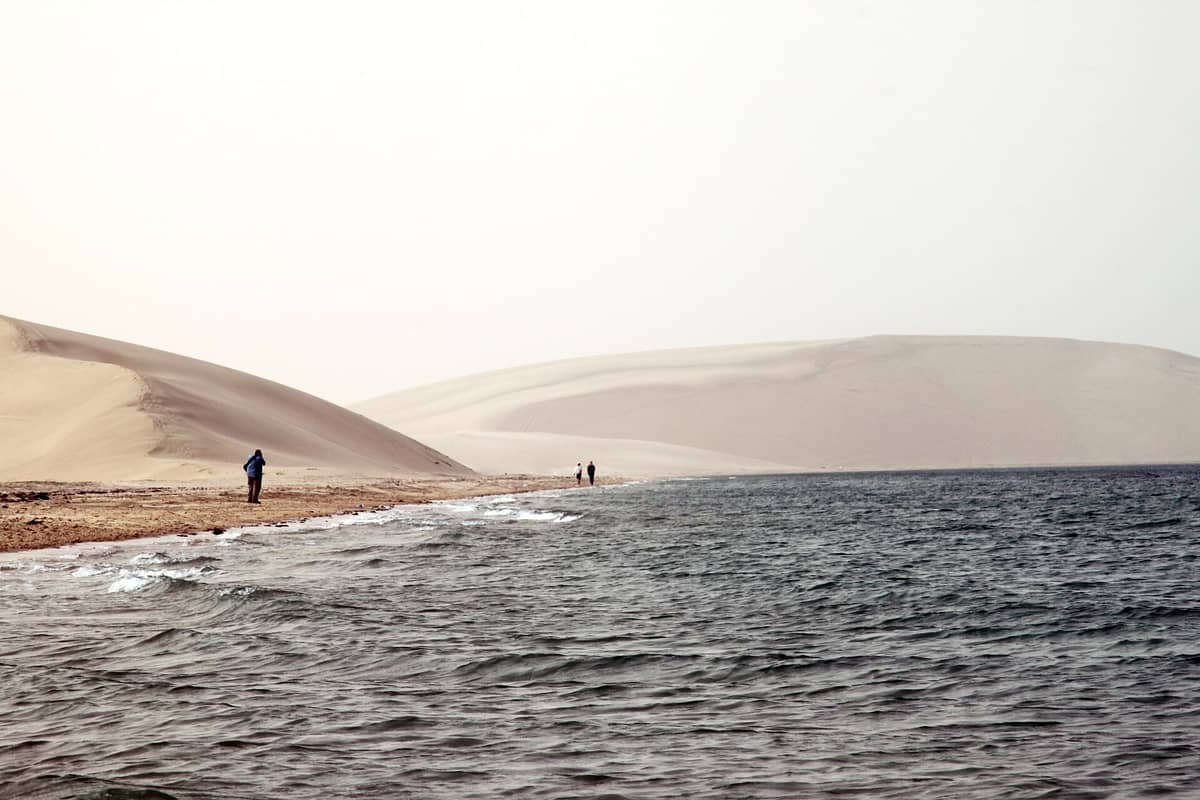
Khor Al Adaid, often referred to as the Inland Sea, is a tidal inlet on Qatar's southeastern tip where the desert and the sea collide with almost theatrical drama. Officially declared a nature reserve in 2007 and covering roughly 1,833 square kilometres, it sits on Qatar's UNESCO World Heritage tentative list, recognised for its extraordinary geography: crescent dunes reaching heights of 40 metres that curve directly into calm, shallow saltwater. The result is a landscape that looks digitally composited, but is entirely real.
Unlike the polished attractions of central Doha, Khor Al Adaid is a genuinely wild place. There are no ticket booths, no visitor centres, no paved roads leading to it. Entry to the reserve itself costs nothing. What you do need is a capable 4WD vehicle and either the confidence to navigate soft sand or a seat in an organised tour. That barrier is precisely what keeps the crowds thin and the landscape largely intact.
ℹ️ Good to know
Khor Al Adaid is not a theme park or a managed attraction. It is an active nature reserve. Treat it accordingly: take your rubbish out, do not disturb wildlife, and follow any guidance from your tour operator about restricted zones within the reserve.
The Landscape: What You'll Actually See
The approach to Khor Al Adaid sets the tone for the whole experience. From Mesaieed, paved road gives way to soft sand, and the horizon opens into a continuous dune field. The first sight of the Inland Sea itself is striking precisely because your brain does not expect it: a wide arc of blue-green water sitting at the base of orange dunes, stretching into Saudi Arabia on the far shore. The light shifts dramatically depending on the time of day.
In the early morning, the dunes hold long shadows and the water reflects a pale sky. This is the most photogenic window and also the coolest, which matters significantly from April through October. By midday, the landscape bleaches out under vertical sun and any exposed skin will feel it within minutes. Late afternoon brings the most celebrated light: the dunes turn copper and amber, and the water surface catches the low sun in shifting patterns. Most tour operators time their arrival to coincide with this golden hour window.
The water itself is calmer than open sea. The inlet is shallow in places, and during low tide stretches of firm sand appear along the shoreline. Wading in is common, though swimming out into deeper water requires caution given tidal currents and the absence of any lifeguards or safety infrastructure.
Wildlife and Ecology
Khor Al Adaid supports a range of wildlife that is easy to miss if you arrive expecting a safari. The reserve is a noted habitat for various species of wading and migratory birds, particularly along the tidal margins. Sooty falcons have been recorded nesting in the area. Patient observers watching the dunes at dusk may spot Arabian oryx at a distance, as the reserve forms part of their habitat range in Qatar. Sand gazelles also move through the area.
The underwater ecology of the inlet includes seagrass beds that support dugong populations. Dugongs are notoriously difficult to spot without dedicated time on the water, but their presence is documented and forms part of the scientific argument for formal UNESCO World Heritage designation. The combination of marine and desert ecosystems in such close proximity is what makes Khor Al Adaid genuinely unusual from an ecological standpoint, not just a scenic one.
Getting There: The Honest Logistics
There is no way around the basic logistics: you cannot reach Khor Al Adaid without a 4WD vehicle. The final stretch from Sealine requires driving over soft sand dunes. Standard saloon cars, SUVs without low-range gearing, and minibuses are not suitable. Attempting it in the wrong vehicle risks getting seriously stuck, sometimes far from mobile coverage.
For most visitors, the practical choice is booking through an organised desert safari operator based in Doha. Tours typically depart from the city, drive south to Mesaieed, deflate tyres at the edge of the dunes, and then drive across the dune field to the water. If you are planning a broader Doha trip, the Qatar desert safari guide covers operator options and what to look for when booking.
Self-drive visitors with suitable 4WD vehicles should come prepared with a GPS track, a tyre deflator, a compressor for re-inflation on return, and ideally a second vehicle. Solo off-road driving in this terrain carries real risk. Mobile signal is intermittent to absent in parts of the reserve.
⚠️ What to skip
Khor Al Adaid sits on Qatar's border with Saudi Arabia. Do not attempt to cross the border. The reserve's far shoreline is Saudi territory, and the boundary is enforced.
Best Time to Visit
November through March is the clear window for comfortable visits. Daytime temperatures in these months range from the low twenties to the high twenties Celsius, the sand is cool enough to walk on without footwear damage, and the light in early morning and late afternoon is exceptional for photography. This is when most organised tours operate at full schedule.
From May through September, temperatures in the dunes routinely exceed 40°C. The ground surface in exposed areas is hotter still. Visiting during these months is not impossible, but it requires strict discipline: arrive before 7am, be back in your vehicle or shelter by 10am, and bring far more water than you think you need. Several operators suspend or heavily modify their midday tour schedules during peak summer. The humidity along the water's edge also climbs in late summer, which adds a different layer of discomfort.
October and April sit in the transition zone: mornings are manageable, afternoons punishing. For a broader overview of how season shapes every aspect of a Doha trip, see the best time to visit Doha guide.
💡 Local tip
For landscape photography, aim to arrive at the dunes at least 90 minutes before sunset. The light between 4pm and 5pm in winter months transforms the dune colours from pale tan to deep orange. Dawn is equally rewarding and significantly less crowded.
What to Bring and Wear
Sunscreen, a hat, and sunglasses are non-negotiable regardless of season. Even in January, the reflective combination of sand and water creates significant UV exposure. Closed shoes or sandals with straps work better than flip-flops on soft dune slopes. Lightweight, loose, long-sleeved clothing is practical for sun protection and also appropriate for Qatar's conservative public dress norms.
Water is critical. Bring more than you expect to drink. The remote location means no convenience shops, no refill stations, and no cafes. Tour operators typically provide water on their vehicles, but supplementing this with your own supply is wise. A small dry bag protects cameras and phones when walking close to the water's edge, where wind-carried spray and wet sand are both factors.
Accessibility and Who Should Skip This
The sand dunes are not wheelchair accessible, and independent navigation of the terrain requires reasonable physical mobility, including getting into and out of high-clearance 4WD vehicles over uneven surfaces. Visitors with significant mobility limitations will find this destination impractical regardless of season.
Pets are not permitted inside the Khor Al Adaid nature reserve, at least on organised tour operations. Families with very young children should factor in the heat, the absence of shade in the dune field, and the duration of the journey when planning. The drive alone is over an hour each way before any time on site.
If your primary interest is comfortable sightseeing, urban culture, or air-conditioned exploration, Khor Al Adaid will feel like a lot of effort for a view. The reserve rewards patience, physical comfort outdoors, and genuine interest in landscape or wildlife. Visitors expecting an easy day trip with amenities at the end will likely be underwhelmed.
For travellers wanting natural experiences closer to the city with less logistical overhead, Al Thakira Mangroves offer a very different but accessible slice of Qatar's natural side.
Insider Tips
- Tyre deflation at the dune entry point is standard practice and essential, not optional. Running standard road pressure in soft sand leads to getting stuck quickly. If self-driving, carry a good quality compressor: re-inflating for the return road trip takes 15-20 minutes per vehicle.
- The calmest, clearest conditions for wading or swimming are typically in early morning before any wind picks up. By afternoon, surface chop on the inlet is more common and the shoreline gets busier with tour groups.
- Some operators offer overnight camping at the Inland Sea, which transforms the experience entirely. Sleeping under a desert sky with the water nearby, and waking to near-silence before other tours arrive, is a very different proposition from the daytime rush.
- If you are visiting on a weekend (Friday or Saturday in Qatar), expect significantly more tour vehicles on site. Weekday visits, particularly Sunday through Tuesday, see noticeably lighter traffic and a more isolated feel.
- The reserve boundary with Saudi Arabia is not marked by obvious fencing along the entire shoreline. Know your GPS position and do not attempt to walk or drive toward the far shore.
Who Is Khor Al Adaid (Inland Sea) For?
- Landscape and adventure photographers seeking dramatic natural light on dunes and water
- Off-road driving enthusiasts with their own 4WD vehicles
- Travellers wanting to see Qatar beyond its urban skyline
- Wildlife and nature watchers interested in birdlife, oryx, and coastal ecosystems
- Overnight camping and stargazing in a remote, low-light-pollution environment
Nearby Attractions
Combine your visit with:
- Al Hazm Mall
Al Hazm Mall is not a typical shopping centre. Built in a classical European-inspired style with colonnaded stone arcades and soaring ceilings, this northern Doha landmark houses luxury boutiques, acclaimed restaurants, and art installations in a setting that feels more like a Milanese galleria than a Gulf mall. Entry is free, the architecture alone justifies the visit, and the restaurant scene is among the strongest in the city.
- Al Safliya Island
A small, uninhabited sand island off the Doha coast, Al Safliya Island draws visitors with clear Gulf waters, a quiet beach, and easy half-day boat access from The Pearl-Qatar or the Corniche. There are no facilities on the island, so what you bring is what you have.
- Al Shahaniya Camel Racetrack
Al Shahaniya Camel Racetrack is Qatar's principal venue for camel racing, a sport central to the country's Bedouin heritage. Located about 40–60 minutes west of central Doha along the Dukhan Highway, the track draws local families, Qatari enthusiasts, and curious visitors during its October-to-April season. Entry to regular race days is free.
- Al Thakira Mangroves
About 64 km north of Doha, the Al Thakira Mangroves protect one of Qatar's largest and most ecologically significant coastal habitats. Whether you paddle through the channels at sunset or simply walk the shoreline at low tide, this protected reserve offers a rare contrast to the capital's urban skyline.