Jing'an Sculpture Park: Shanghai's Open-Air Art Space in the City Center
Jing'an Sculpture Park is a free, open urban park in central Shanghai where large-scale outdoor sculptures share space with seasonal flower displays and the architecturally striking Shanghai Natural History Museum. It rewards a slow morning stroll and offers one of the more relaxed green escapes in a district defined by commerce.
Quick Facts
- Location
- 128 Shimen 2nd Road, Jing'an District, Shanghai (also accessible from 510 Beijing West Road, south gate)
- Getting There
- Metro Line 13, Natural History Museum Station (Exit 1), about a 3–5 min walk; other nearby connections include Line 2 (West Nanjing Road) and Line 12 within walking distance
- Time Needed
- 45 minutes to 1.5 hours, longer during cherry blossom season
- Cost
- Free entry. No ticket required. Special exhibitions inside may vary — verify locally.
- Best for
- Art lovers, morning walkers, families, photography, combining with Natural History Museum
What Is Jing'an Sculpture Park?
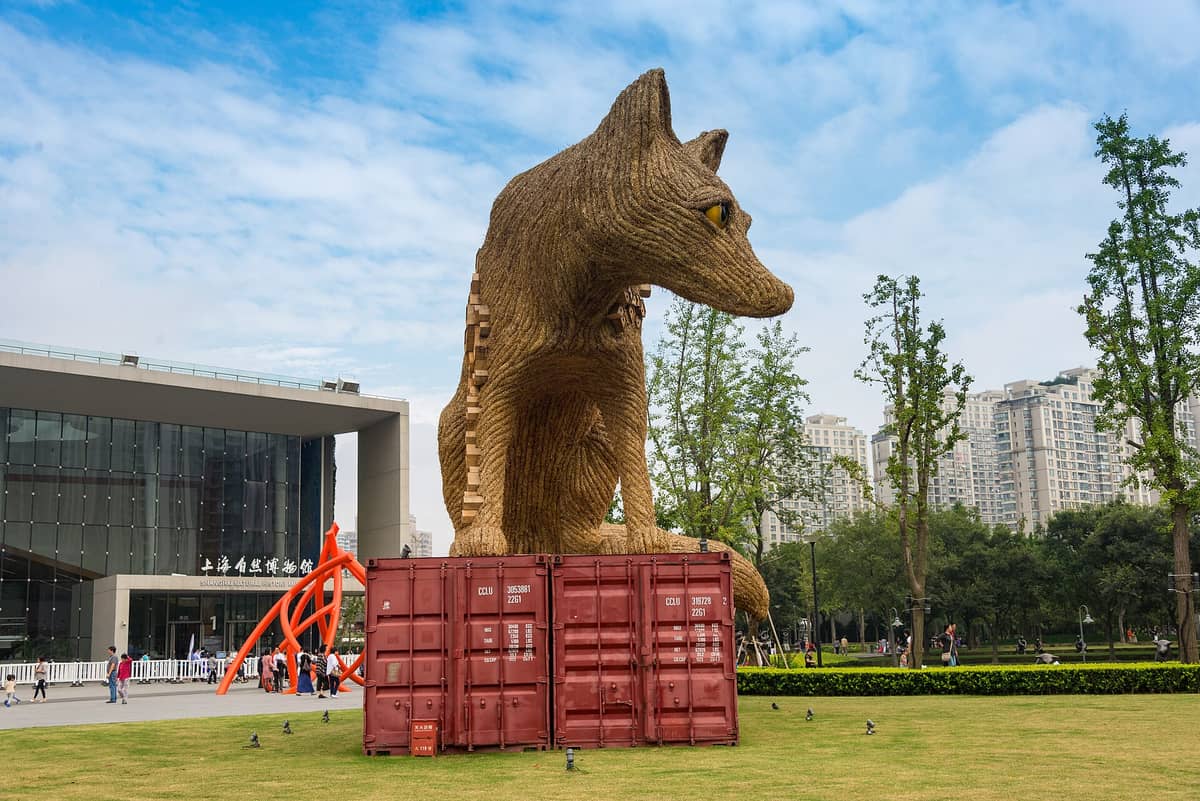
Jing'an Sculpture Park (静安雕塑公园) is a public urban park in the heart of Jing'an District, Shanghai, built around a rotating collection of large-scale outdoor sculptures and seasonal horticultural displays. It sits directly beside the Shanghai Natural History Museum, and the two attractions share an urban campus feel that makes this corner of the city worth more than a passing glance.
The park is compact but deliberately curated. Paths wind past permanent and temporary sculpture installations, open lawns, and plantings that shift with the seasons. In spring, cherry blossom and tulip displays draw significant crowds; in summer, the tree canopy makes it a genuinely shaded refuge from the heat. In the quieter months it functions as a neighborhood park first, art space second, which is part of what makes it feel authentic rather than performative.
Entry is completely free, placing it among the better free things to do in Shanghai for travelers watching their budget without wanting to sacrifice quality experiences.
ℹ️ Good to know
Hours: The park is variously described as open 24 hours year-round or with managed hours roughly 05:00–21:00 depending on the source, so access outside standard daytime hours may vary in practice. For a typical visit, arriving between 07:00 and 19:00 is reliable. Contact the park directly at +86-21-5228 9562 if you need to confirm current arrangements.
How the Park Changes Through the Day
Early mornings here belong to locals. By 07:00, older residents are practicing tai chi on the open lawns, and the ambient noise is birdsong and the soft creak of shoes on stone paths rather than traffic. The light at this hour falls cleanly across the sculpture surfaces, which makes it the most photogenic time to shoot the outdoor works without crowds in frame.
Midday on weekdays sees a steady but manageable flow of office workers on lunch breaks from the surrounding Jing'an commercial district, and families with younger children. The park never becomes uncomfortably crowded outside of cherry blossom season, when foot traffic surges significantly in late March and early April. During peak blossom weeks, paths near the flowering trees become genuinely dense by 10:00 on weekends.
Late afternoon into early evening is the second-best window. The sculpture installations pick up warm directional light, and the park fills with a different energy: students, couples, and families returning from nearby attractions. The Natural History Museum closes around 17:00, so the area around the south entrance quiets noticeably shortly after.
💡 Local tip
Best visit window: Weekday mornings between 08:00 and 10:00 give you the sculptures largely to yourself, pleasant light, and the full atmosphere of the park functioning as a neighborhood space. Avoid weekend mornings in late March and early April if crowds are a concern.
Tickets & tours
Hand-picked options from our booking partner. Prices are indicative; availability and final rates are confirmed when you complete your booking.
Shanghai city and Zhujiajiao water town private tour with lunch
From 371 €Instant confirmationFree cancellationShanghai private tour with iconic landmarks of the old and new city
From 284 €Instant confirmationFree cancellationShangai Yuyuan Garden entrance tickets
From 9 €Instant confirmationFree cancellation
The Sculptures and Art Program
The sculpture program at Jing'an Sculpture Park is a mix of permanent pieces and rotating installations, with the balance shifting depending on what exhibitions the park is hosting. The permanent works tend toward abstract and large-scale contemporary forms in steel, stone, and bronze. Some pieces are large enough that you walk around and through them rather than simply past them.
The park has been the venue for international sculpture festivals and has hosted works by both Chinese and international artists over the years, positioning it as a low-key but legitimate node in Shanghai's contemporary art landscape. It sits in good company: the broader Jing'an area contains a high concentration of galleries and cultural institutions.
For travelers interested in Shanghai's art scene more broadly, the park works well as a free complement to a day that also includes M50 Creative Park or the institutions along the West Bund. The Jing'an sculpture collection is smaller and less comprehensive than those, but the outdoor setting and free access give it a different character.
Seasonal Highlights: Blossoms and Plantings
The park is probably best known to Shanghai locals not for the sculpture but for its spring flower season. Cherry blossom viewing here is a genuine local tradition, and the park's plantings are managed to make the most of the late March to early April flowering window. Tulip displays often follow, extending the photogenic season into mid-April.
This puts the park on the calendar for spring visitors to Shanghai, who are already in one of the city's most favorable travel periods. For more on timing a trip around pleasant conditions, the guide to Shanghai in spring covers the full picture of what the city offers between March and May.
Summer brings dense green canopy that provides real shade, which matters in a city where July and August highs regularly exceed 32°C with high humidity. The park is less photogenic in summer but arguably more useful as a cooling stop. Autumn is underrated here: the tree color, mild temperatures, and reduced visitor numbers make October and November a strong season for an unhurried visit.
⚠️ What to skip
During the plum rain season (meiyu, typically June to early July), paths can be slippery and the park feels damp and grey. Pack an umbrella and wear closed, non-slip footwear if you visit during this period.
The Shanghai Natural History Museum Next Door
You cannot discuss Jing'an Sculpture Park without addressing the building immediately adjacent to it. The Shanghai Natural History Museum occupies a striking spiral structure that curves around a central sunken atrium, designed by Perkins+Will and opened in 2015. It is one of the more architecturally significant contemporary buildings in Jing'an District, and even if you do not go inside, the exterior reads as a kind of large-scale sculpture in its own right, which makes the transition from park to museum seamless in visual terms.
If you are visiting with children or have even a casual interest in natural science, the Shanghai Natural History Museum is worth combining with your park visit. Metro Line 13's Natural History Museum Station (Exit 1) serves both in a single 3–5 minute walk.
Getting There and Practical Details
Metro Line 13, Natural History Museum Station, Exit 1 is the most direct route. The walk from the exit to the park takes roughly 3–5 minutes along a straightforward path. Metro Line 2 (West Nanjing Road) and nearby Line 12 stations also serve the surrounding area, with a slightly longer walk from their respective stations toward Shimen 2nd Road.
The park is described as open without walls, meaning entry points are accessible directly from street level around the museum station. This also means the park is practical as a pass-through or shortcut between nearby streets, not just as a destination in itself. Parking is available near Bohua Plaza and the Natural History Museum for visitors arriving by car or ride-hailing.
Jing'an District is well connected to the rest of central Shanghai. West Nanjing Road, one of the city's primary commercial corridors, is within easy walking distance, and the broader Jing'an neighborhood offers a range of dining, shopping, and cultural options to build around a park visit.
💡 Local tip
Photography note: Bring a wide-angle lens or use your phone's ultra-wide mode for the larger sculpture installations. The Natural History Museum exterior also photographs well from the park side, particularly in the early morning when the building's curved green facade reflects softer light.
Accessibility and Practical Considerations
The park is described as level and street-accessible, which suggests it is broadly navigable for visitors using strollers or wheelchairs. However, detailed official information on specific accessibility facilities such as accessible toilets or designated ramp locations is not published in current sources. Visitors with specific accessibility requirements should contact the park directly at +86-21-5228 9562 before visiting.
No food stalls or cafes are confirmed inside the park itself. The surrounding streets and the Natural History Museum's adjacent commercial spaces offer options for food and drink. Bring water, particularly in summer.
Who might not find this worth their time: travelers who need a full half-day attraction to justify a detour should note that the park itself is small. It is most rewarding when combined with the Natural History Museum or when used as a quiet interlude in a broader Jing'an itinerary. If you are looking for Shanghai's most comprehensive outdoor art experience, the West Bund area along the Xuhui riverfront offers a larger concentration of art institutions and outdoor installations.
Insider Tips
- The south gate entrance at 510 Beijing West Road deposits you closest to the cherry blossom trees. Use this gate specifically during spring if flower viewing is your priority.
- Metro Line 13 is less crowded than Lines 1 and 2 at most times of day, making the Natural History Museum Station approach one of the calmer arrivals in central Shanghai.
- The park's sculpture installations change periodically, so checking local Shanghai culture accounts or the park's contact line before visiting in case a new exhibition has opened is worthwhile, especially for repeat visitors.
- On weekday mornings, the open lawns are used by local residents for exercise. This is one of the few places in this commercial district where you see Jing'an functioning as a genuine neighborhood rather than a tourist corridor.
- Combine this with a visit to Jingan Temple, reachable by a short metro ride west on Line 2 or a longer walk, for a half-day that moves between green space, contemporary art, and living religious architecture.
Who Is Jing'an Sculpture Park For?
- Art-curious travelers who want outdoor sculpture without museum admission fees
- Families combining a park walk with the adjacent Natural History Museum
- Photographers seeking well-lit sculpture subjects in early morning or late afternoon
- Spring visitors wanting cherry blossom viewing in a central, easily accessible location
- Budget travelers building a full day in Jing'an without spending on attractions
Nearby Attractions
Other things to see while in Jing'an:
- Jing'an Temple
Founded in 247 AD and rebuilt to striking effect on the corner of one of Shanghai's most commercial corridors, Jing'an Temple is a working Buddhist monastery encased in gilded roofs and deep-red walls. Here is everything you need to know before you visit.
- Shanghai Natural History Museum
The Shanghai Natural History Museum sits inside Jing'an Sculpture Park and ranks among the most architecturally impressive science museums in China. With deep fossil galleries, interactive ecology exhibits, and a building shaped by the spiral of a nautilus shell, it rewards a half-day visit from curious adults and families alike.