Disney's Animal Kingdom Theme Park: What to Expect Before You Visit
Disney's Animal Kingdom Theme Park is unlike any other park in the Walt Disney World Resort. Part zoological experience, part cinematic adventure, it spans six distinct lands and takes a full day to do properly. This guide covers what the park actually feels like, when to go, how to navigate it, and whether it deserves a spot on your itinerary.
Quick Facts
- Location
- 2901 Osceola Pkwy, Bay Lake, FL 34747 (Walt Disney World Resort area)
- Getting There
- By car via I-4 and Osceola Pkwy; complimentary Disney Resort hotel shuttle buses available
- Time Needed
- Full day (8–10 hours); arriving at rope drop makes a significant difference
- Cost
- Date-based tickets from US$119 per adult; standard parking ~US$35/day separately
- Best for
- Families with kids, nature lovers, Avatar fans, Disney enthusiasts wanting something beyond rides
- Official website
- disneyworld.disney.go.com/destinations/animal-kingdom
What Kind of Park Is This, Really?
Disney's Animal Kingdom Theme Park occupies a category of its own at Walt Disney World. It is not a traditional theme park that runs on rides alone. It is not a zoo, though real animals are woven throughout the experience. It sits somewhere between a wildlife conservation destination and a full-scale cinematic world, and that dual identity is both its greatest strength and, for some visitors, a source of mild confusion.
The park's most famous land, Pandora: The World of Avatar, recreates the bioluminescent landscape of James Cameron's film with a level of environmental detail that is genuinely impressive up close. Harambe, the fictional East African port village at the heart of Africa, has building facades aged over decades to look like real plaster and weathered wood. The park's 14-story Tree of Life, carved with 325 animal figures, functions as both a landmark and a living art installation. These are not props. They are environments built to be inhabited slowly.
ℹ️ Good to know
Animal Kingdom opened on April 22, 1998, and is one of the four main Walt Disney World theme parks. At roughly 580 acres, it is the largest Disney theme park in the world by land area, though much of that space is reserved for animal habitats rather than guest pathways.
The Six Lands and How They Flow
The park is organized into six themed lands radiating from The Oasis, a lush entryway planted with tropical greenery and populated with animals. Most guests walk through it quickly on arrival, but it rewards a slower pace, particularly in the morning when the foliage is cool and animals are active. From there, Discovery Island serves as the hub, anchored by the Tree of Life and connecting pathways to every other land.
Africa is the largest land by footprint and houses Kilimanjaro Safaris, the park's signature experience: a 18-minute open-vehicle ride through a terrain of lions, elephants, giraffes, white rhinos, and dozens of other species. The animals are not on a scripted route. What you see depends on where the animals choose to be that day, which means early morning rides, when animals are feeding and most mobile, consistently produce better sightings than afternoon runs in the heat.
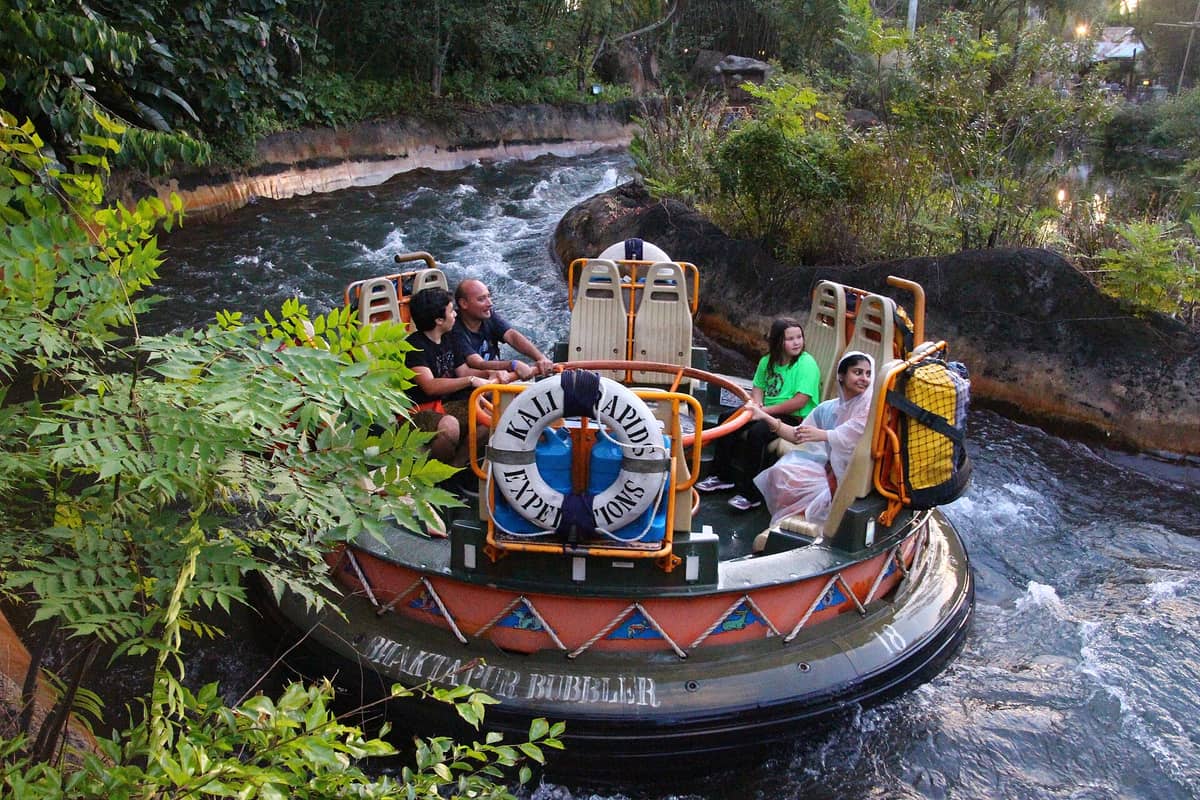
Asia brings the park's two major thrill rides: Expedition Everest, a high-speed roller coaster with a backward section through a supposedly Yeti-occupied mountain, and Kali River Rapids, a round-raft whitewater ride that will soak at least one person in your group more than anyone else. DinoLand U.S.A. and the DINOSAUR dark ride closed on February 2, 2026, to make way for Tropical Americas, expected in 2027. Pandora: The World of Avatar rounds out the major zones, with Avatar Flight of Passage, a flying-banshee simulator, generating some of the longest waits in the park.
Tickets & tours
Hand-picked options from our booking partner. Prices are indicative; availability and final rates are confirmed when you complete your booking.
Disney After Hours at Disney's Magic Kingdom Tickets May-July
From 0 €Instant confirmationDisney After Hours at Disney's Magic Kingdom Tickets May-July
From 0 €Instant confirmationDisney After Hours at Disney's Magic Kingdom Tickets May-July
From 0 €Instant confirmationDisney After Hours at Disney's Magic Kingdom Tickets May-July
From 0 €Instant confirmation
How the Park Changes by Time of Day
Arriving at or before rope drop, currently 8:00 AM on most dates (with Disney Resort hotel guests eligible for Early Entry starting at 7:30 AM), is the single most impactful planning decision you can make. The first 90 minutes of the day at Animal Kingdom move faster and feel entirely different from the mid-afternoon experience. Kilimanjaro Safaris plays well at this hour: the light is golden and angled, the temperature is tolerable, and the animals are engaged rather than sheltering from the heat.
By midday, wait times for Avatar Flight of Passage regularly reach 90 to 120 minutes or more without Lightning Lane access. The park's footpaths between Africa and Pandora compress with stroller traffic. Food service lines at Satuli Canteen and Flame Tree Barbecue lengthen noticeably between noon and 2 PM. If you are visiting in summer, the Florida afternoon heat settles over Pandora and the rest of the park with full force, and Kali River Rapids transitions from a mild curiosity to an active necessity.
Late afternoon through closing changes the equation again. Pandora at dusk is the park's visual highpoint. The bioluminescent plants on the ground and across the floating mountain structures begin to glow softly as the light fades, and the nighttime version of the land has an atmosphere that the daytime version cannot fully match. If you have the chance to be in Pandora between 7 PM and park close, take it.
💡 Local tip
Hours at Animal Kingdom are more variable than the other Walt Disney World parks. The park has historically closed earlier than Magic Kingdom or EPCOT, sometimes by 6 or 7 PM on lower-demand dates. Always confirm your specific date's hours through the official Disney app or website, and plan accordingly.
The Animals: What Visitors Often Overlook
A portion of Animal Kingdom's footprint is dedicated to genuine animal habitats that most guests walk past without realizing. The Gorilla Falls Exploration Trail in Africa winds through an immersive path where western lowland gorillas, Colobus monkeys, hippos, and African birds are visible at close range through glass or open enclosures. Early morning is the strongest time to do this trail: animals are engaged, the crowds are sparse, and the air is still cool enough to linger.
The park participates in real conservation programs, and Rafiki's Planet Watch, accessible via the Wildlife Express Train from Harambe Station, gives visitors a look at animal care facilities and veterinary operations. It is not a high-energy experience, and families expecting another ride will be underwhelmed. But for visitors who want to understand the zoological side of the park, it offers substance that the themed lands do not.
Animal Kingdom is worth pairing with other nature-focused experiences in the Orlando area. If your interest runs toward genuinely wild Florida ecosystems, the Silver Springs State Park and Blue Spring State Park offer a different but equally rewarding lens on Florida wildlife, without the theme park infrastructure.
Getting There and Getting Around
Guests driving to the park use Interstate 4 and exit onto Osceola Parkway, following clearly marked Walt Disney World signage to Animal Kingdom's dedicated parking areas. Standard parking is typically charged at around US$30 per day, paid separately from park admission. The parking lot is substantial and trams run from the lot to the entrance, though the tram situation has varied over time and walking from the nearer sections is often faster.
Guests staying at Walt Disney World Resort hotels have access to complimentary bus transportation that runs between each hotel and the park throughout the day. The service is reliable but not frequent enough for tight scheduling. Allow at least 45 to 60 minutes for the bus process from most resorts during peak times. Rideshare drop-off is available at designated spots near the main entrance, which is a practical option for visitors not on a Disney hotel package.
For broader context on navigating the Walt Disney World Resort area and connecting to other parks, the getting around Orlando guide covers transportation options across the region, including how to move between parks and the surrounding area.
Tickets, Costs, and What to Know Before Buying
Disney's Animal Kingdom uses Walt Disney World's date-based ticket pricing. A one-day, one-park ticket to Animal Kingdom typically ranges from approximately US$119 on the lowest-demand weekdays to US$184 or higher on peak dates, based on pricing valid through October 2026. These prices are subject to change, and Disney has raised prices in fall 2025. Always purchase directly through the official Disney website or a verified authorized ticket seller to confirm current pricing for your specific date.
Lightning Lane passes for individual attractions like Avatar Flight of Passage and Expedition Everest are sold separately as an add-on, and the cost varies by date. For visitors with limited park time, Lightning Lane access for Flight of Passage in particular is worth considering, as standby waits for that ride rarely drop below 60 minutes during normal park hours.
If you are buying tickets for multiple parks or trying to assess value across a full Disney World trip, the Disney World tickets guide breaks down the date-based pricing structure in detail and helps clarify when park-hopper options make financial sense.
⚠️ What to skip
Ticket prices are not fixed. The same date can vary in cost depending on how far in advance you purchase. Disney's pricing algorithm adjusts dynamically. Book early if traveling during spring break, summer, or the December holiday period.
Practical Notes: What to Wear, Bring, and Expect
Comfortable, closed-toe shoes are non-negotiable. The park involves several miles of walking on uneven terrain, gravel paths, and wooden bridges, particularly in the Africa and Asia sections. In summer, lightweight breathable clothing is essential. Florida's afternoon thunderstorms are a near-daily occurrence from June through September, and a compact rain poncho takes up minimal space and proves useful. The park sells ponchos inside, but at a significant markup.
Photography works best in the early morning for animal encounters on Kilimanjaro Safaris, where the natural light is favorable and animals are active. Pandora after dark offers unusual long-exposure opportunities if you have the right equipment, though tripods are generally not permitted in crowded walkways. A zoom lens adds real value on the safari, where animals are sometimes at a distance.
Accessibility at Animal Kingdom is managed through Disney's Disability Access Service (DAS), which can be arranged through the official Disney app or at Guest Relations inside the park. Electric Convenience Vehicles (ECVs) are available to rent near the park entrance on a first-come, first-served basis, and the park's main pathways are paved and accessible, though some animal trails have narrower or less even surfaces.
Families planning a broader Walt Disney World itinerary may find the Orlando with kids guide useful for sequencing Animal Kingdom alongside other Disney parks and appropriate age-based planning.
Who Should Skip This Park
Animal Kingdom is not a strong choice for visitors whose primary interest is high-volume thrill rides. With only two major coasters and a raft ride, the ride-per-hour ratio is lower than at Magic Kingdom or Islands of Adventure. Visitors who have no interest in animal exhibits and are lukewarm on the Avatar franchise may find themselves with gaps in their day that are harder to fill here than at other parks.
If thrill rides and dense entertainment are the priority, Universal's Islands of Adventure and Disney's Hollywood Studios both deliver faster pacing and more ride density across a comparable amount of time.
Insider Tips
- Book Avatar Flight of Passage as your very first Lightning Lane reservation of the day, before you even enter the park if possible. It consistently sells out of Lightning Lane inventory faster than almost any other Walt Disney World attraction.
- The Kilimanjaro Safaris ride runs continuously throughout the day, but the animal sightings genuinely differ by time. Early morning (first two hours of park opening) and the final hour before closing both produce more active animals than the midday run.
- Pandora looks fundamentally different after dark. The bioluminescent lighting across the land activates at dusk and the atmosphere changes completely. Even guests who visited in the morning should walk back through before leaving.
- The Nomad Lounge, tucked along the river between Pandora and Africa, serves some of the better cocktails and snacks in the park and is frequently missed by first-timers. The seating area overlooking the water is a genuine midday respite.
- If you are visiting on a summer afternoon and need to cool off, Kali River Rapids achieves that efficiently, but you will get wet. Plan to ride it when you are heading toward a slower part of your day, not right before a sit-down meal.
Who Is Disney's Animal Kingdom Theme Park For?
- Families with children ages 4 and up who want a mix of rides, live animals, and immersive environments
- Avatar fans seeking a full-scale recreation of Pandora with serious production quality
- Nature and wildlife enthusiasts who want more than a traditional zoo format
- Disney devotees adding a day to a multi-park itinerary
- Visitors who prefer a slower, more atmospheric park experience over constant ride-to-ride scheduling
Nearby Attractions
Other things to see while in Walt Disney World Resort Area:
- Disney Springs
Disney Springs is Walt Disney World's sprawling outdoor shopping, dining, and entertainment district in Lake Buena Vista, Florida. Admission is free, parking is free, and no park ticket is required — making it one of the most accessible parts of the entire resort. With more than 100 shops and restaurants spread across four distinct neighborhoods, it rewards both a quick two-hour browse and a full evening out.
- Disney's Blizzard Beach Water Park
Disney's Blizzard Beach is Walt Disney World's ski-resort-themed water park, home to one of the world's tallest free-fall waterslides and a wide range of rides for every thrill level. Here's exactly what to expect, when to go, and how to make the most of your day.
- Disney's Hollywood Studios
Disney's Hollywood Studios is Walt Disney World's most thrill-forward park, anchored by two of the most immersive themed lands ever built. From the galaxy-spanning scale of Star Wars: Galaxy's Edge to the kinetic energy of Toy Story Land, this park rewards strategic visitors and overwhelms the unprepared.
- Disney's Typhoon Lagoon Water Park
Disney's Typhoon Lagoon Water Park is one of Walt Disney World's two water parks, set on East Buena Vista Drive near Disney Springs. It combines a massive wave pool, a 2,000-foot lazy river, and a lineup of slides suited to everything from toddlers to thrill-seekers. Knowing when to go and how to plan makes a real difference to your day.