Daytona Beach: The Complete Day Trip Guide from Orlando
Daytona Beach sits on Florida's Atlantic coast, roughly 55 miles east of Orlando. With 23 miles of white-sand shoreline, free pedestrian access around the clock, and a boardwalk anchored by the historic Main Street Pier, it offers a genuine change of pace from Orlando's theme parks. This guide covers exactly what to expect, when to go, and how to make the most of your time there.
Quick Facts
- Location
- Daytona Beach, Volusia County, Florida (approx. 55 miles east of Orlando via I-4)
- Getting There
- Drive east on I-4 toward Daytona Beach, then connect to I-95 North or local beachside roads; no direct public transit from Orlando
- Time Needed
- Half day minimum; full day recommended for beach time, boardwalk, and a meal
- Cost
- Free for pedestrians (24/7); vehicle access to the beach carries a Volusia County daily fee (verify current rates before visiting)
- Best for
- Families, beach lovers, anyone needing a break from theme parks
- Official website
- www.daytonabeach.com
What Daytona Beach Actually Is
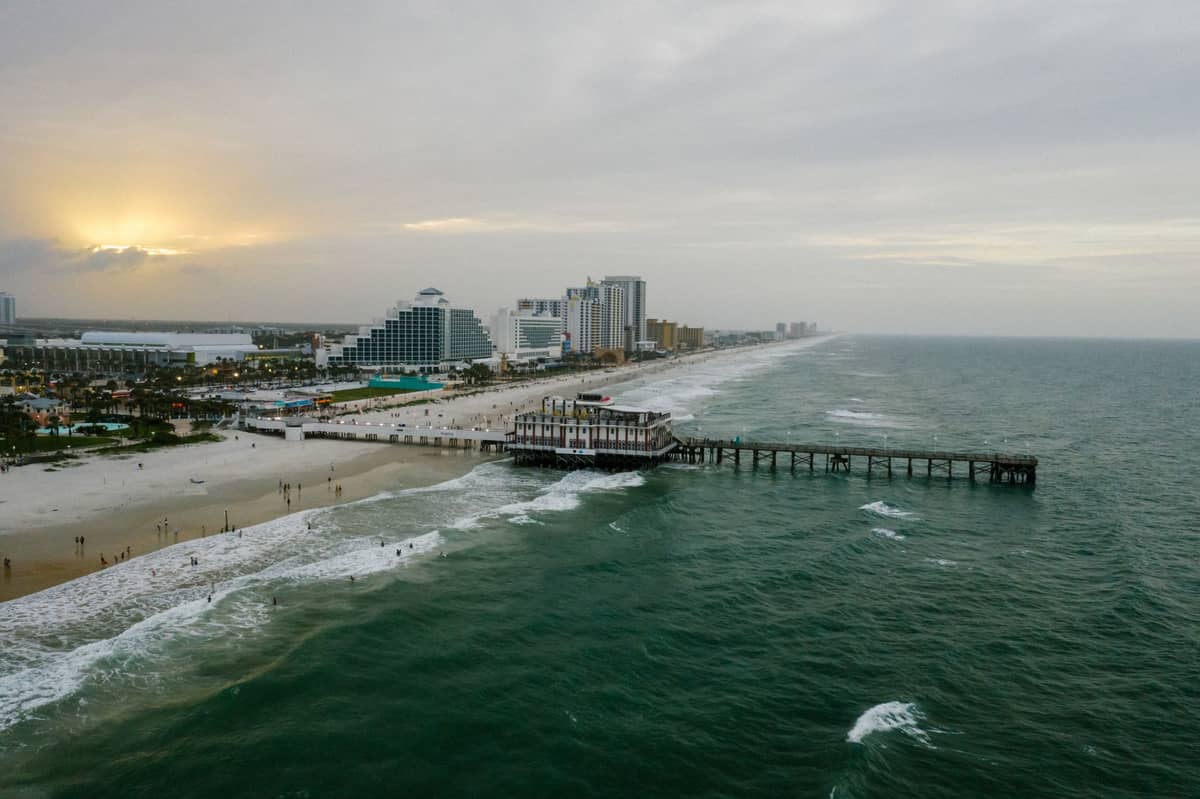
Daytona Beach is not a single attraction with a ticket booth. It is a stretch of Atlantic coastline administered by Volusia County and the City of Daytona Beach, spanning 23 miles of white-sand shoreline accessible to pedestrians at no charge, any hour of the day or night. The beach is wide enough in most places to feel uncrowded even on a busy weekend, and the hard-packed sand near the water's edge is firm enough to walk comfortably without shoes sinking at every step.
The area around Main Street Pier is the cultural and commercial heart of the beach. This is where the boardwalk atmosphere concentrates: arcades, amusement rides, food stands, and the weathered pier extending into the Atlantic. The further south or north you walk from this central node, the quieter and more residential the beach becomes. If your goal is solitude, a 15-minute walk in either direction will get you there.
ℹ️ Good to know
Daytona Beach is one of the few beaches in the eastern United States where vehicles are legally permitted to drive and park directly on the sand in designated zones. This is either a novelty or an annoyance, depending on your perspective. Pedestrians and beachgoers occupy the same wide beach, so awareness of vehicle lanes matters near the access ramps.
The Drive from Orlando and What to Expect on Arrival
From central Orlando, Daytona Beach is roughly a 55-mile drive east on I-4, which typically takes between 60 minutes and 90 minutes depending on traffic and the time of day. Friday afternoons heading east and Sunday evenings heading west are the most congested windows. If you can leave Orlando before 8:00 a.m. on a weekend, the drive is straightforward and the beach will be noticeably less crowded when you arrive.
There is no practical public transit connection between Orlando and Daytona Beach. LYNX bus service and SunRail operate within the greater Orlando metro, but neither extends to the coast. A rental car or rideshare is required. For context on getting around the broader Orlando area before or after your beach day, the LYNX bus network covers downtown Orlando and International Drive corridor stops at approximately $2.00 per ride.
Parking near the beachfront can fill up quickly on summer weekends. Street and lot parking exists along Ocean Avenue, and vehicle access directly onto the beach is available at designated ramps. From May 1 through October 31, vehicle beach access runs from 8:00 a.m. to 7:00 p.m. From November 1 through April 30, vehicles may enter from sunrise to sunset. Pedestrians and cyclists, by contrast, may access the beach at any hour, free of charge. For more on planning around Orlando's calendar, see our guide to the best time to visit Orlando, which includes seasonal notes relevant to day trips.
Tickets & tours
Hand-picked options from our booking partner. Prices are indicative; availability and final rates are confirmed when you complete your booking.
Daytona Beach Small Group Day Tour with Pickup
From 81 €Instant confirmationFree cancellationDaytona Beach day tour with scenic nature boat ride and pick-up
From 110 €Instant confirmationFree cancellationPirates Cove Adventure Mini Golf
From 18 €Instant confirmationFree cancellationWild Florida 1-hour airbot adventure with transportation
From 107 €Instant confirmationFree cancellation
The Beach Experience by Time of Day
Early morning at Daytona Beach, before 9:00 a.m., has a noticeably different quality. The light is low and oblique, the temperature is comfortable even in summer, and the only people out tend to be joggers, metal detectorists working the tideline, and the occasional surfer checking the break. The smell of salt air is strongest at this hour, before food vendors open and wind picks up from the south. This is the best window for photography: the sand is unmarked, the pier is unobstructed by crowds, and the Atlantic goes from dark gray-blue to copper as the sun climbs.
By mid-morning on a summer weekend, umbrellas and chairs begin filling in around the Main Street area. Vendors set up, the boardwalk sounds like a boardwalk, and the water grows noticeably warmer in the shallows. Atlantic surf at Daytona is rougher than Florida's west coast Gulf beaches: waves are typically more pronounced than the calmer Gulf, though still often approachable for kids and casual swimmers on milder days. Rip currents are a real hazard year-round. Lifeguards are stationed at regular intervals during operating hours; always swim near a staffed tower.
Late afternoon, after 4:00 p.m., is when the beach softens. Vehicle traffic thins, families begin packing up, and the golden-hour light turns the sand a pale amber. Sunset is not visible from the Atlantic side (the sun sets over land to the west), but the eastern sky turns colors worth watching from the water's edge. If you time your visit to arrive at noon and leave at 6:00 p.m., you get the full arc of a beach afternoon without the early-morning drive or the Sunday highway rush.
Historical and Cultural Context
Daytona Beach's identity has been shaped by speed and motorsport more than almost any other beach in America. The hard, flat packed sand that allows vehicles on the beach was the reason early automobile and motorcycle racing pioneers came here in the early 1900s. Before Daytona International Speedway was built in 1959, land speed records were set directly on this sand. That history explains why the beach tolerates car traffic today: it is not a tourist gimmick but a continuation of a century-old relationship between the place and the automobile.
That motorsport legacy also shapes when the town is at its most crowded and its most expensive. Daytona 500 weekend in February, Bike Week in early March, and Biketoberfest in October bring hundreds of thousands of visitors to a city that numbers fewer than 85,000 residents. If you are planning a beach day during any of these windows, expect hotel rates to spike, traffic to back up on I-4, and a very different atmosphere on the streets. For most families or casual visitors, these are the windows to avoid.
Practical Walkthrough of the Main Beach Area
The Main Street Pier, which extends several hundred feet into the ocean, is the most recognizable landmark. There is a restaurant at the end of the pier and fishing access along its length. The surrounding boardwalk area has the density of a fairground on busy days: carnival games, food vendors selling funnel cake and shrimp, and the sounds of pop music coming from multiple directions at once. Children find this section exciting. Anyone looking for quiet will not.
For a more relaxed experience, park near one of the northern or southern access ramps and walk toward less-developed stretches. The sand quality and water access are identical; what changes is the ambient noise and the density of umbrellas. Flagler Avenue is a popular access point with a more low-key strip of small shops and restaurants. Dunlawton Boulevard to the south leads to quieter residential beachfront. Both are worth considering if the Main Street area feels overwhelming.
💡 Local tip
Beach wheelchairs are available free of charge at several lifeguard stations including Flagler Avenue, Dunlawton Blvd, Cardinal Drive, and Beach Headquarters. These are first-come, first-served and loaned for a few hours at a time. Vehicles with verified disabled parking documentation registered with the county’s program receive no-cost access to the beach vehicle zone. Accessible ramps and parking are provided at all major lifeguard stations.
Weather, Seasons, and When Not to Go
Daytona Beach follows Florida's humid subtropical climate pattern: hot and humid from roughly June through September, with afternoon thunderstorms appearing with near-daily regularity. These storms typically build inland and move toward the coast through the afternoon, which means a beach morning followed by a storm-forced retreat by 3:00 p.m. is common in summer. The storms themselves are fast and dramatic; most last 30 to 45 minutes, but lightning clears the beach immediately and lifeguards enforce exits from the water.
October through April is the more comfortable and reliable window for a beach visit, with lower humidity, cooler water temperatures, and far fewer storms. The Atlantic can feel brisk to swimmers in December and January, though air temperatures in the mid-60s Fahrenheit are pleasant for walking. Spring, particularly March and early April, offers good balance: warm enough to swim comfortably, dry enough to avoid storm disruptions, and shoulder-season prices if you book accommodation.
Hurricane season runs June through November, with peak risk in August and September. Coastal destinations require monitoring in these months. For a broader look at planning your time in Central Florida around weather and events, the day trips from Orlando guide covers seasonal timing across multiple coastal and inland destinations.
Who This Day Trip Is Not For
Daytona Beach rewards visitors who want a traditional Atlantic beach day: sun, sand, water, and a boardwalk. It does not compete with the ecological beauty of Florida's Gulf Coast beaches or with the spring-fed clarity of Central Florida's natural springs. If your benchmark for a great beach is turquoise water and white powder sand unmarked by tire tracks, Daytona's hardpack and brownish-gray Atlantic water will disappoint. Similarly, travelers looking for upscale dining or a polished resort environment will find the Main Street area dated rather than charming.
Those drawn to Florida's springs and natural water environments may find more satisfaction at Blue Spring State Park or Kelly Park at Rock Springs, both within 45 minutes of Orlando and offering crystalline freshwater swimming in a quieter setting.
Insider Tips
- Arrive before 9:00 a.m. on summer weekends to claim a spot near the Main Street Pier before vehicle traffic ramps up and parking lots fill. The beach empties noticeably after 5:00 p.m., so a late-afternoon arrival also works if you just want the sand and water without the midday crowd.
- The vehicle beach access ramps are numbered. Note the ramp number nearest to where you park your car on the sand — the beach is wide and long, and landmarks are hard to distinguish from the waterline, especially for children.
- Daytona's surf is Atlantic, meaning it is saltier and rougher than Florida's Gulf Coast water. Rinse stations are located at several access points near lifeguard towers. Bring a change of clothes if you plan to eat somewhere after the beach — the salt and sand linger.
- Cell coverage on the beach is generally strong, but the area around the pier gets congested on event weekends. Download offline maps before leaving Orlando if you plan to navigate the beachside streets without reliable data.
- If you visit during Bike Week (early March) or Biketoberfest (October), understand that the entire I-4 corridor and beachside streets will be significantly more congested than usual. Budget an extra 30 to 60 minutes each way and book any accommodation weeks in advance.
Who Is Daytona Beach For?
- Families with young children who want a classic Florida beach day without navigating a theme park
- Visitors from the Orlando area spending several days and wanting a full-day coastal break
- Motorsport and Americana enthusiasts interested in the history behind the hard-packed sand
- Budget travelers: pedestrian beach access is completely free, and the boardwalk area offers affordable food options
- Photographers and early risers who want Atlantic sunrise light on a wide, relatively uncrowded beach
Nearby Attractions
Combine your visit with:
- Blue Spring State Park
Blue Spring State Park in Orange City, Florida, is one of the state's most ecologically significant natural areas, drawing visitors year-round for manatee watching, swimming, tubing, and hiking. Located about 45 minutes from Orlando, it offers a genuine encounter with Florida's natural heritage that no theme park can replicate.
- Bok Tower Gardens
Bok Tower Gardens is a National Historic Landmark near Lake Wales, Florida, where a 205-foot Gothic and Art Deco carillon tower rises above one of the highest points on the Florida peninsula. Open since 1929, the sanctuary offers 250 acres of landscaped gardens, ancient oaks, and twice-daily bell concerts that carry across the surrounding pine scrub. It is one of the most genuinely peaceful places within day-trip distance of Orlando.
- Busch Gardens Tampa Bay
Busch Gardens Tampa Bay combines some of Florida's most intense roller coasters with one of North America's largest zoological collections. Located in north Tampa, it sits about 84 miles southwest of Orlando, making it a serious but rewarding day trip from the theme park capital of the world.
- Cocoa Beach
Cocoa Beach is Orlando's most accessible Atlantic beach, roughly an hour east on the Space Coast. It combines classic Florida surf culture with genuine rocket-launch proximity, free beach access, and a relaxed pace that stands apart from theme park crowds.