Las Alpujarras Villages: The Moorish Mountain World Below Sierra Nevada
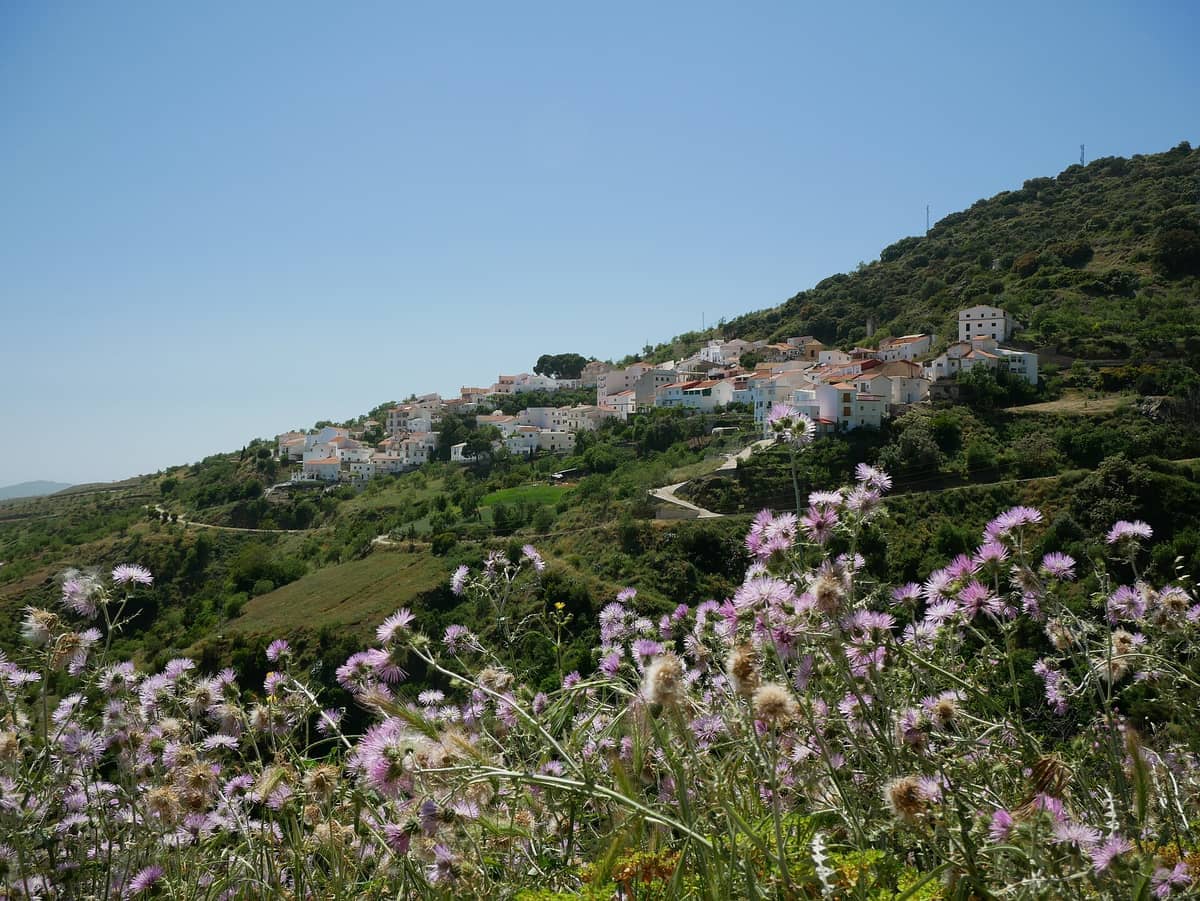
Las Alpujarras is a comarca of whitewashed villages clinging to the southern slopes of the Sierra Nevada, roughly 70 km from Granada city. With flat-roofed houses, stone irrigation channels, and terraced gardens still farmed as they were under Moorish rule, it offers a striking contrast to Granada's urban monuments. Entry to the villages is free, and the area rewards a full day or an unhurried overnight stay.
Quick Facts
- Location
- Southern slopes of Sierra Nevada, ~75 km southeast of Granada city. Gateway village: Pampaneira, 18411 Granada
- Getting There
- By car: ~1h 20min via A-44 toward Motril, then inland to Lanjarón, Órgiva and the Poqueira valley. By bus: ALSA operates roughly 3 daily services from Granada bus station to Pampaneira, Bubión, Capileira and Trevélez (verify current timetable with ALSA before travel)
- Time Needed
- Full day minimum; overnight stay recommended to see more than one valley
- Cost
- Free to enter all villages; parking generally free. Individual museums, guided tours, and spa facilities charge separately
- Best for
- Architecture lovers, hikers, slow-travel enthusiasts, and anyone wanting a complete change of pace from the Alhambra crowds
- Official website
- turgranada.es
What Las Alpujarras Actually Is
Las Alpujarras is not a single village or a ticketed attraction. It is a comarca, an administrative and geographical district, of several dozen settlements scattered across the southern face of the Sierra Nevada massif. The most-visited cluster sits in the Poqueira Gorge: three villages, Pampaneira, Bubión, and Capileira, stacked vertically above a deep ravine at elevations between roughly 1,050 and 1,400 metres. Further east, Trevélez sits even higher and is known for its cured jamón serrano. To the west, Lanjarón serves as the main gateway and has a spa tradition built around its mineral springs.
The visual grammar of these villages is immediately foreign to the Andalusian stereotype. There are no whitewashed walls with terracotta roof tiles here. Instead, houses are cubic and flat-roofed, the roofs sealed with a local grey clay called launa that expands with moisture to prevent leaks. Exterior walls are thick stone, often lime-washed white or left in pale ochre. Narrow lanes called callejones barely fit two people side by side, and stone-channelled acequias, the Moorish-era irrigation ditches, run audibly through the village margins.
ℹ️ Good to know
Las Alpujarras spans both Granada and Almería provinces. The Granada side (La Alpujarra Granadina) is better connected and more heavily visited. The Almería side is quieter but requires more planning to reach.
History Embedded in the Landscape
The landscape of Las Alpujarras is essentially a Moorish cultural artifact that survived the Reconquista. After the fall of Granada to the Catholic Monarchs in 1492, much of the Moorish population retreated to these mountains, where the difficult terrain offered some protection and continuity. The terraced agriculture, the acequia irrigation systems, the architectural forms, and the silkworm farming economy were all established or consolidated during this period.
This relative isolation did not last. The Morisco rebellions of the 1560s led to mass expulsion of the remaining Muslim population in 1570, with settlers from other parts of Spain brought in to repopulate the valley. Yet the physical infrastructure, the terraces, the water channels, the house forms, remained largely intact simply because it worked. Walking through Pampaneira today, you are moving through a landscape whose bones are late medieval and whose logic is still pre-industrial.
The region also shaped modern cultural memory. The British writer Gerald Brenan lived in Yegen, in the eastern Alpujarras, in the 1920s and documented village life in his book South from Granada. The area sits within the broader Moorish heritage corridor of Granada province, though it represents a rural and vernacular dimension of that heritage that the Alhambra palaces do not.
Tickets & tours
Live prices and dates from our booking partner. If you book, we may earn a commission at no extra cost to you.
Alpujarras tour from Granada
From 57 €Instant confirmationFree cancellationThe Alpujarra guided tour
From 97 €Instant confirmationFree cancellationAlhambra guided tour in Italian
From 49 €Instant confirmationFree cancellationAlhambra guided group tour with Nasrid Palaces and Generalife Palace
From 40 €
The Poqueira Gorge: Where Most Visitors Go
Pampaneira is the first village you reach ascending the Poqueira Gorge from Órgiva, and it shows the most tourist infrastructure: a small square with a church, craft shops selling Alpujarran textiles and rugs (jarapas), a few restaurants, and a visitor information centre for the Sierra Nevada National Park. In the morning, before 11 a.m., the square is quiet enough that you hear water moving through the irrigation channel below the churchyard wall. The smell of woodsmoke drifts from kitchen chimneys in cooler months.
Bubión, 3 km higher, is smaller and slightly less commercial. It has the best mid-range restaurant options in the gorge and a small ethnographic museum, the Casa Alpujarreña, that shows a traditional village interior without much fanfare. Capileira, at the top of the paved road, is the highest of the three and often has snow visible on the peaks directly above it for much of the year. From Capileira, trails lead into the Sierra Nevada high country, and in summer a shuttle service has historically operated up toward the Veleta peak area (verify current availability before visiting, as this service is seasonal and subject to change).
💡 Local tip
If you only have time for one village, make it Capileira. It sits highest, has the most dramatic mountain backdrop, and the steep lanes north of the church see almost no day-trip crowds after 2 p.m.
How the Experience Changes Through the Day
Morning light in the Poqueira Gorge is exceptional from late spring to early autumn. The Sierra Nevada peaks catch pink and orange tones while the gorge floor is still in shadow, and the contrast between the lit white walls and the dark ravine below is the kind of scene that justifies carrying a camera. By 10 a.m. on weekends, the day-trip coaches from Granada start arriving in Pampaneira, and the lower village fills quickly. Serious walkers have already left for the trails by then.
Midday is actually the most comfortable time to sit outdoors here, even in July, because the altitude keeps temperatures significantly cooler than Granada city. While Granada can hit 36°C in July, Capileira typically sits 8 to 12 degrees cooler. Restaurants open for lunch from around 1:30 p.m. and serve until 4 p.m. or later; the Alpujarran plato alpujarreño, a plate of fried eggs, blood sausage, cured ham, and potatoes, is the default local offering and genuinely substantial.
Late afternoon, after 4 p.m., the day-trippers thin out noticeably. The light turns warm and lateral across the stone walls, and the villages take on a different quality: locals reappear in doorways, cats emerge from wherever cats spend the middle of the day, and the lanes become quiet enough to hear your own footsteps on the cobbles. If you have overnight accommodation, this is when the place genuinely rewards the time.
Practical Walkthrough: Getting There and Moving Around
The most direct route from Granada city is the A-44 south toward Motril, then turning inland at the junction for Lanjarón and Órgiva. From Órgiva, a narrow but paved road climbs through the gorge to Pampaneira, Bubión, and Capileira in sequence. The drive takes about 1 hour 20 minutes from Granada city centre in normal conditions, though the final stretch through the gorge requires careful driving on tight bends.
Without a car, ALSA buses run from Granada bus station to the Poqueira villages and to Trevélez, with roughly three departures per day in each direction (verify current schedules directly with ALSA, as timetables change seasonally). This limits flexibility considerably: you will likely have time for one village cluster rather than several. A rented car gives you the freedom to combine two or three valleys in a day. For context on planning the wider region, the Las Alpujarras day trip guide from Granada covers itinerary options in more detail.
Parking in the villages is generally free and located at the village entrance or on the approach road. In Pampaneira, a small car park sits just below the plaza. In Capileira, there are two or three informal parking areas on the village perimeter. In peak summer weekends, these fill by 11 a.m., so arriving before 10 a.m. is advisable.
⚠️ What to skip
The mountain roads above Capileira close when snow conditions are severe, most often at some point between late autumn and early spring. Check road conditions with the Sierra Nevada park authority before driving up in winter.
What to Wear, Carry, and Watch For
Even in midsummer, bring a layer. The altitude difference between Granada and Capileira is substantial, and evenings cool quickly once the sun drops behind the peaks, typically around 7 p.m. in summer. In spring and autumn, a light waterproof is worth carrying: the southern Sierra Nevada can receive afternoon rain without much warning, and the launa roofs of the villages mean water channels through the lanes rapidly.
Footwear matters. The callejones are cobbled with uneven stones, often polished smooth by centuries of foot traffic and genuinely slippery when wet. Flat-soled or rubber-soled shoes are appropriate for village wandering; proper hiking boots are needed for any trail above the village perimeter. Visitors with mobility difficulties should note that the villages are built on steep gradients with no accessible alternatives to the cobbled lanes in most sections. Wheelchairs and pushchairs face significant challenges throughout.
Photography works best in early morning and late afternoon. The white walls and deep shadows create very high contrast in midday sun, which tends to flatten detail. The gorge itself is best photographed from the road between villages, where you get a sense of the vertical drop and the scale of the terraced cultivation. For walkers wanting to combine trails with the villages, the hiking near Granada guide covers the main Sierra Nevada access routes including those originating from Capileira.
Beyond the Poqueira: Trevélez and the Eastern Villages
Trevélez, at roughly 1,476 metres, is often cited as one of the highest permanently inhabited villages in Spain and is the main destination for those interested in the region's cured ham. The jamón de Trevélez has a protected geographical indication and is cured in the cold, dry mountain air. The village butchers and cure houses are not theatrical experiences, but buying a small leg to take home is a practical transaction that locals do unselfconsciously alongside tourists.
The eastern Alpujarras, the Contraviesa and Lecrin valleys, are quieter and less visited. Villages like Yegen (Brenan's former home) and Válor have minimal tourism infrastructure but genuine character. They require a car and a willingness to follow narrow roads with no roadside signage. The reward is the feeling that the landscape is not performing for anyone.
Those interested in combining this region with high-mountain experiences should note that the Sierra Nevada ski resort lies on the northern slopes of the same massif, accessible from Granada via a completely different road. The two landscapes, ski runs and Moorish villages, are separated by the same peaks and are genuinely distinct experiences. Details on the mountain itself are covered in the Sierra Nevada skiing guide.
Who Should Reconsider This Trip
Las Alpujarras is not for everyone. If you have limited time in Granada and have not yet visited the Alhambra or the Albaicin quarter, prioritise those first. The Alpujarras requires a full day at minimum and works best as a second or third day excursion when you have already absorbed the city. Visitors who struggle with winding mountain roads, altitude, or cobbled terrain may find the physical reality uncomfortable despite the visual appeal.
In peak summer (July and August), the Poqueira Gorge villages are genuinely crowded between 11 a.m. and 3 p.m. on weekends. If you visit then, arrive very early or go on a weekday. For a broader overview of when Granada province rewards a visit, the best time to visit Granada guide gives seasonal context that applies to the wider region.
Insider Tips
- Stay in Bubión or Capileira rather than Pampaneira if you have one night: Pampaneira empties pleasantly after 6 p.m., but the other two villages are quieter throughout and have better views up the gorge at dusk.
- The main street market in Órgiva (the principal town in the valley) is held on Thursday, drawing a mix of local farmers, expat residents, and craft sellers. It runs in the morning and is a good first stop before ascending to the high villages.
- Trevélez ham can be bought at the source for considerably less than Granada city shops charge. If you are driving, a small cooler bag in the boot lets you bring a reasonable amount home without it deteriorating.
- The GR7 long-distance trail passes through the Alpujarras. Even if you are not doing the full route, walking one section between two villages (for example, Pampaneira to Bubión on the trail rather than the road) takes about 40 minutes and gives a completely different perspective on the gorge and the terraced land.
- In winter (December to February), the villages are very quiet, wood fires smoke from every chimney, and accommodation prices drop significantly. The landscape is stark and occasionally snow-dusted. This is genuinely a good season to visit if you want solitude, though check road conditions before driving up.
Who Is Las Alpujarras Villages For?
- Slow travellers who want rural Andalusia without tourist infrastructure getting in the way
- Hikers using the villages as a base for Sierra Nevada trails
- Architecture and cultural history enthusiasts interested in Moorish vernacular building traditions
- Photographers working in morning or late afternoon light
- Visitors on a second or third day in Granada looking for a complete change of scene from the city monuments
Planning a trip? Discover personalized activities with the Nomado app.