Agios Sostis Beach: Mykonos Without the Circus
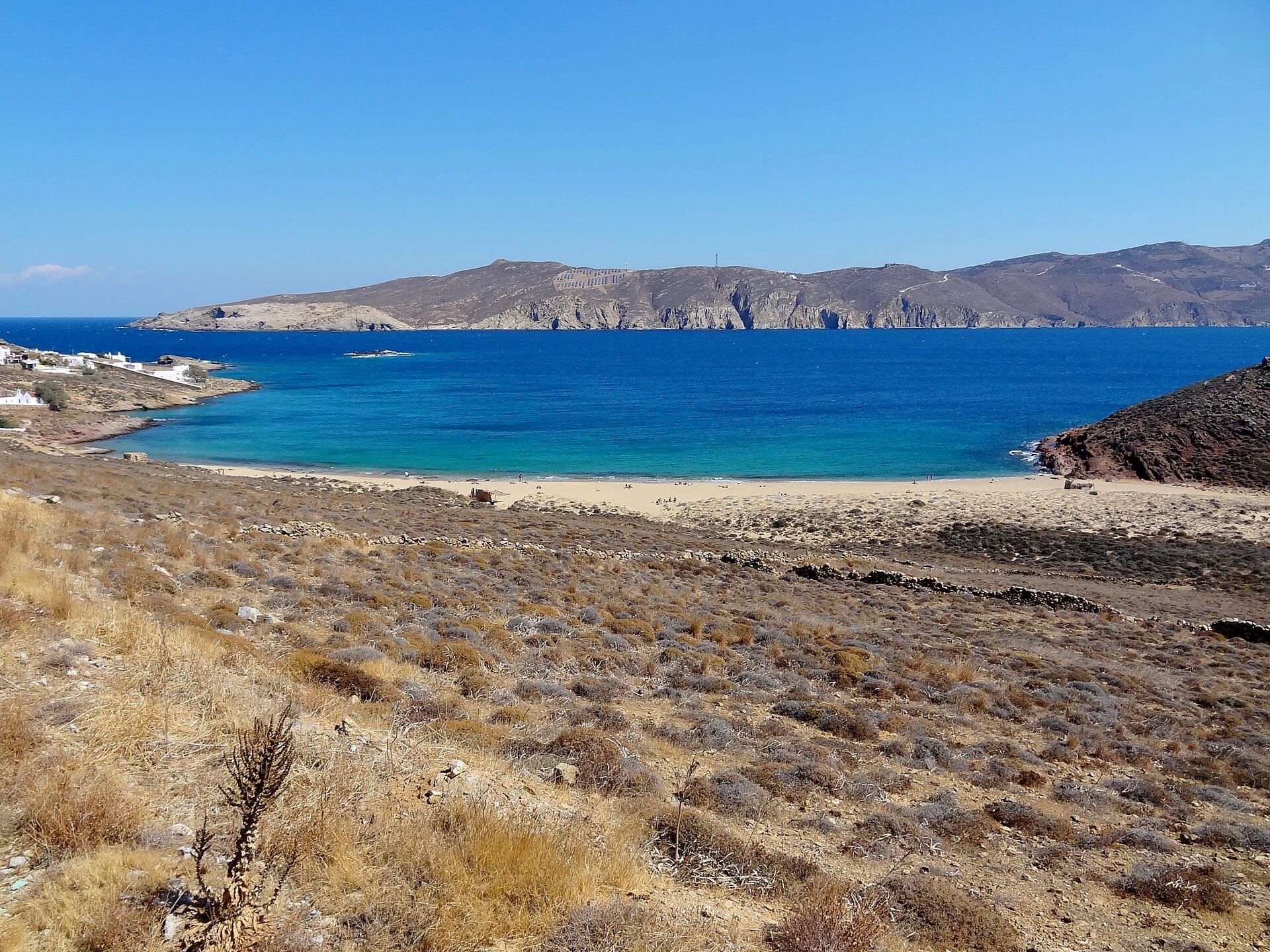
Agios Sostis Beach sits on the quiet north coast of Mykonos, offering roughly 800 meters of natural sandy shoreline with no beach clubs, no sunbed rows, and no entrance fee. A small whitewashed church watches over the bay from the hillside, and the water stays clear even on busy island days. It is the closest thing to pre-tourism Mykonos that still exists.
Quick Facts
- Location
- North coast of Mykonos, near the village of Agios Sostis, Cyclades, Greece
- Getting There
- 8–10 km / 15–20 min drive from Mykonos Town; small car and scooter parking on site. No direct bus stop at the beach.
- Time Needed
- 2–4 hours; full day if you bring a picnic
- Cost
- Free. No entrance fee, no sunbed hire available on the beach itself.
- Best for
- Travelers who want a natural, quiet beach without the organized resort experience
What Agios Sostis Beach Actually Is
Agios Sostis Beach is a natural, undeveloped sandy bay on the north coast of Mykonos, running roughly 800 meters from end to end. Its official Greek name is Παραλία Αγίου Σώστη (Paralía Agíou Sósti), and it takes its name from the small whitewashed chapel of Agios Sostis that sits on the hillside above the waterline, visible from the sand below.
What makes this beach stand out on an island where most shorelines are lined with color-coded sun loungers and DJ-equipped beach bars is precisely what is absent here: no sunbeds, no umbrellas for hire, no bar service, and no entrance charge. You bring your own towel, you find your own spot on the sand, and you swim in clear Aegean water without a cocktail menu in your face. For an island that has spent decades building one of the Mediterranean's most commercialized beach scenes, Agios Sostis feels like a document of what things looked like before.
ℹ️ Good to know
There are no facilities on the beach itself: no sunbed hire, no food vendors, and no toilets on the sand. Bring everything you need, including water, food, sun protection, and cash for the nearby taverna (the only service option in the area).
The Beach Itself: Texture, Conditions, and What the Water Is Like
The sand at Agios Sostis is golden and fine close to the waterline, coarser and more mixed with small pebbles toward the back of the bay. The beach curves in a gentle crescent, framed by low rocky outcrops on both sides. There are patches of rock in the shallower parts of the sea, so entering the water requires some attention, particularly in the center of the bay where you can wade in cleanly. Wearing water shoes is a sensible call if you have them.
The Aegean water here is typically clear and takes on a deep blue-green color by mid-morning when the sun is high enough to illuminate the shallows. The north coast of Mykonos receives more direct exposure to the meltemi, the seasonal northerly wind that sweeps across the Aegean from roughly late June through August. On windy days, Agios Sostis can have noticeable wave action and surface chop, which makes it excellent for bodysurfing but less suitable for calm paddling or swimming with young children. On calmer days, particularly in late May, early June, and September, the sea here is flat and almost mirror-like by morning.
⚠️ What to skip
The meltemi wind is strongest on the north-facing beaches of Mykonos in July and August. If you arrive and conditions look rough, the southern beaches such as Platis Gialos or Ornos are sheltered by the island's topography and will be calmer on the same day.
Tickets & tours
Live prices and dates from our booking partner. If you book, we may earn a commission at no extra cost to you.
Mykonos South Coast Cruise on a Traditional Caique
From 93 €Instant confirmationFree cancellationMykonos yacht cruise to Rhenia Island and guided tour of Delos
From 120 €Instant confirmationFree cancellationSunset sailing to Rhenia with Delos self-guided virtual tour
From 110 €Instant confirmationFree cancellationHalf-Day Mykonos, Delos and Rhenia Catamaran Cruise with Lunch
From 150 €Instant confirmationFree cancellation
How the Beach Changes Through the Day
In the early morning, before 9am, Agios Sostis is almost completely empty. The light comes in low from the east, catching the whitewash of the chapel on the hill, and the only sounds are the waves and occasional goat bells from the scrubby hillside behind the beach. The air still carries the cool dryness of a Cycladic night, and the sand is undisturbed. This is the hour for photographers: the chapel, the curve of the bay, and the absence of crowds make for compositions you simply cannot get at the busier south-coast beaches.
By late morning, particularly in July and August, local families and more determined independent travelers begin arriving. The beach never reaches the density of Paradise or Super Paradise, but the front row of sand fills up. By midday the sun is intense, there is no shade on the beach itself (the hillside brush offers minimal coverage), and without a hired umbrella the heat becomes the central fact of the experience. Anyone without their own sun shelter should plan to arrive early or bring a travel umbrella.
Late afternoon, from around 5pm onward, is the second sweet spot. The crowds thin as families pack up, the light softens into that particular warm gold that the Cyclades do better than almost anywhere, and the temperature becomes genuinely comfortable. The chapel catches the late sun directly, turning from white to pale amber. If you are only doing one session at this beach, late afternoon through sunset is the most rewarding window.
Historical and Cultural Context
The chapel of Agios Sostis, which gives the beach its name, is typical of the small whitewashed Greek Orthodox chapels that dot the Cycladic landscape. These structures are often built and maintained by individual families as acts of devotion, sometimes in fulfillment of a vow, and they appear in the most unexpected locations: on clifftops, beside fishing harbors, in the middle of fields. The one above this beach is small enough to hold only a handful of people, but it is structurally part of how Mykonos has understood its coastline for centuries, long before the island became an international resort destination.
The broader character of the north coast, where Agios Sostis sits, reflects an older rhythm of island life. While the south and southwest coasts of Mykonos were developed aggressively for beach tourism from the 1970s onward, the north was less sheltered and less accessible, which slowed commercial development. The result is a coastline that, in places like Agios Sostis, still reads as genuinely rural. The contrast with Paradise Beach, where club infrastructure now dominates the shoreline, is stark and deliberate for those who seek it out.
Getting There and Practical Walkthrough
Agios Sostis Beach sits roughly 8 to 10 kilometers from Mykonos Town by road, and the drive takes approximately 15 to 20 minutes depending on the route and traffic. The road through the island's interior passes through dry, rocky terrain with occasional farm buildings. A small parking area near the beach accommodates cars and scooters, though it fills up fast in peak summer. Arriving before 10am or after 4pm significantly improves your chances of finding space.
Public buses connect Mykonos Town with various parts of the island, but no route serves Agios Sostis Beach at all, so you cannot rely on getting close by bus and walking the final stretch. For most visitors, renting a scooter or ATV in Mykonos Town is the most flexible option; it is worth consulting a guide to getting around Mykonos before planning this trip, as road conditions and rental options vary by season.
Once you park, a short path leads down to the sand. The descent is manageable for most people but involves uneven terrain. There are no ramps or dedicated wheelchair access routes documented for this beach, and the natural, rocky approach makes it genuinely difficult for visitors with limited mobility. The beach is accessible 24 hours a day with no gates or barriers, but given the lack of lighting, evening or nighttime visits are not practical.
💡 Local tip
The only food and drink near Agios Sostis is a single taverna close to the beach, which is known for grilled fish and operates seasonally. It can get busy at lunchtime. If you want a table, go before noon or well after 1:30pm. Bringing your own water and snacks remains the safest approach for a full day.
Photography and Practicalities
The chapel of Agios Sostis is the compositional anchor for almost every photograph taken at this beach. Shoot it from the sand in the early morning with the sea in the foreground and you get a clean Cycladic image without telephone poles, beach bars, or sunbed rows cluttering the frame. A wide-angle lens or phone camera in landscape orientation handles the bay's full curve well. The light is best between 7am and 9am for warm tones, and again in the 90 minutes before sunset for that low-angle amber quality.
For those building a broader itinerary on the island, Agios Sostis pairs well with a morning visit followed by an afternoon drive through the interior toward Ano Mera, the island's main inland village, where you will find a quieter pace and the Monastery of Panagia Tourliani. Together, the two stops form a coherent half-day route through the less-touristed parts of Mykonos.
Who This Beach Is Not For
Agios Sostis is not the right choice for travelers who want a full beach service experience. If you want a sunbed, a cocktail delivered to the waterline, a DJ set, or proximity to Super Paradise Beach-style energy, this beach will feel sparse and underprovided. It is also a poor fit for visitors with mobility challenges, given the uneven access path and absence of any adaptive infrastructure. Families with very young children should note that the sea can be rough on windy days and there are no lifeguards present.
It is also worth being honest about what the 'undeveloped beach' category means in practice in high season on Mykonos. July and August bring enough visitors to Agios Sostis that the beach is by no means empty during peak hours. It is quieter than the south coast, but it is not a secret. If total solitude is the goal, the shoulder months of May, early June, or September offer a more genuine version of that experience. For context on when the island as a whole is most and least crowded, the best time to visit Mykonos guide covers seasonal patterns in detail.
Insider Tips
- The small taverna near the beach is the only food option in the area and it serves fresh grilled fish that locals and regulars rate highly. It operates seasonally and is busiest at midday. If you plan to eat there, arrive before noon to secure a table without waiting.
- On days when the meltemi is blowing hard, the north coast gets the full force of it. Check conditions in the morning before making the drive. If the flag at the beach is horizontal, the south coast will give you a far better swim.
- The chapel of Agios Sostis is occasionally open for services. If you find it open, step in briefly: the interior of a small Cycladic chapel, with its oil lamps, icons, and carved iconostasis, is a distinct experience that most beach-focused visitors miss entirely.
- Parking fills up quickly on summer mornings. Arriving before 9:30am almost always gets you a spot. After about 11am in July and August, you may need to park further back along the access road and walk down.
- Because there is no shade on the beach, a lightweight travel parasol or a large beach umbrella you bring yourself makes a significant difference for a full-day visit. Sunscreen alone is not enough when the Cycladic summer sun is directly overhead for six or more hours.
Who Is Agios Sostis Beach For?
- Independent travelers who want a natural beach experience without paying for sunbeds or navigating beach club crowds
- Photographers looking for uncluttered Cycladic compositions with the chapel, sand, and sea in one frame
- Couples and small groups looking for a more low-key beach day as a counterpoint to the island's nightlife and south-coast scene
- Shoulder-season visitors in May, June, or September who want the whole bay largely to themselves
- Anyone building a northern Mykonos day trip that combines coastline with a stop inland at Ano Mera
Nearby Attractions
Combine your visit with:
- Agios Ioannis Beach
Agios Ioannis Beach sits on Mykonos's southwest coast, roughly 4 km from Mykonos Town, with clear turquoise water and unobstructed views toward the sacred island of Delos. It's quieter than the island's party beaches, split into two sandy coves by a rocky outcrop, and best known as the filming location for the 1989 British film 'Shirley Valentine.'
- Panormos Beach
Panormos Beach occupies a broad horseshoe-shaped bay on the northern coast of Mykonos, about 6 km from Chora (Mykonos Town). Free to access, sandy underfoot, and noticeably calmer than the party beaches to the south, it draws travelers who want sea and sun without the high-season intensity.
Planning a trip? Discover personalized activities with the Nomado app.