Yanchep National Park: Koalas, Caves, and Bushland an Hour from Perth
Yanchep National Park packs a surprising range of natural experiences into 2,842 hectares of coastal bushland north of Perth. From a koala boardwalk and ancient limestone caves to reed-fringed wetlands and shaded walking trails, it rewards both a quick half-day visit and a longer exploration.
Quick Facts
- Location
- Corner of Indian Ocean Drive and Yanchep Beach Road, Yanchep WA 6035. Approx. 51 km north of Perth CBD.
- Getting There
- Car: ~45 min from Perth CBD. Bus: Transperth services stop roughly 3 km from the park entrance, with no formal footpath to the gate. Driving is strongly recommended.
- Time Needed
- 2–4 hours for the main highlights; a full day if you walk multiple trails and join a cave tour.
- Cost
- Entry fees apply. Check current prices at the official Explore Parks WA website before visiting, as fees can change.
- Best for
- Families with children, wildlife photographers, bushwalkers, and anyone wanting genuine nature within easy reach of Perth.
- Official website
- exploreparks.dbca.wa.gov.au/park/yanchep
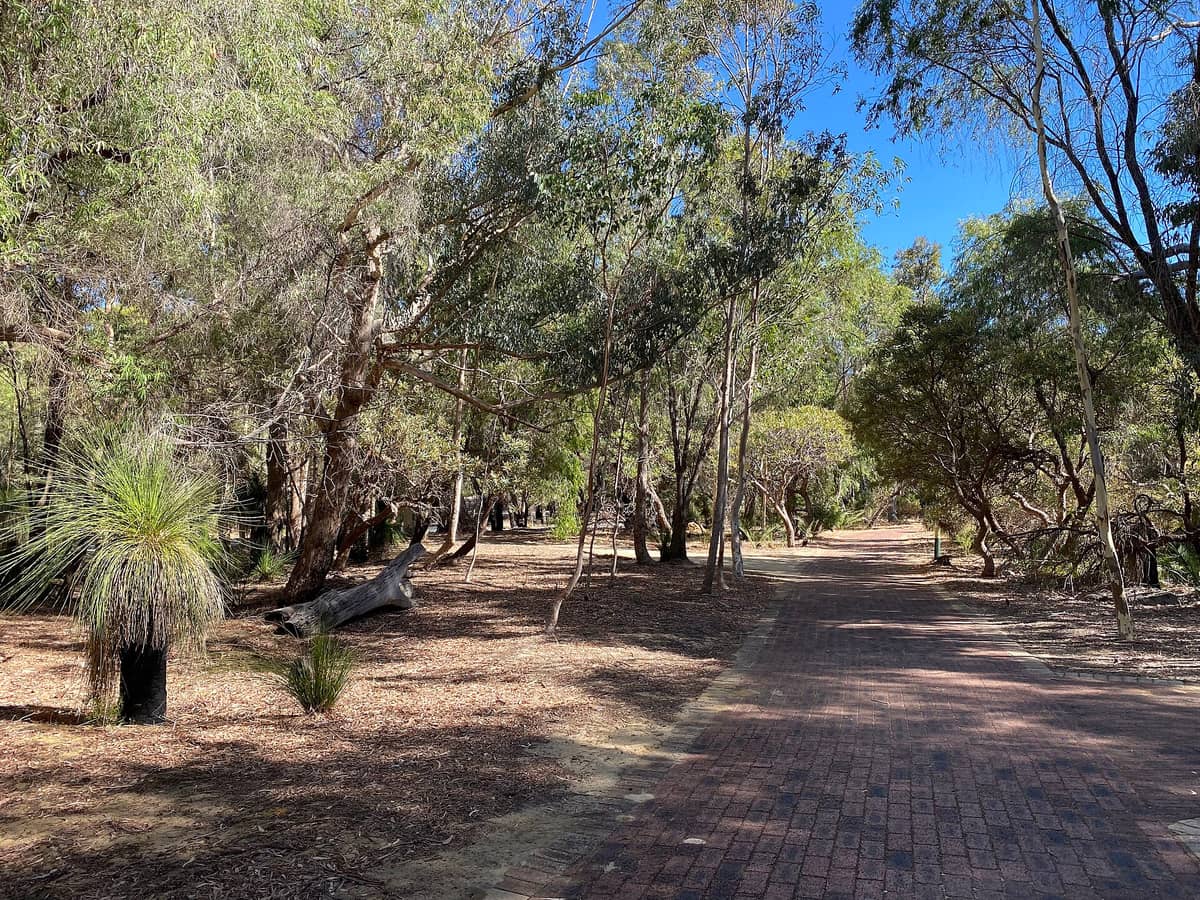
What Yanchep National Park Actually Is
Yanchep National Park sits on the Swan Coastal Plain about 51 kilometres north of central Perth, and it has been drawing day-trippers since the area was first gazetted as a government reserve in 1905. It was proclaimed a national park in 1969 and now covers 2,842 hectares of tuart and banksia woodland, limestone cave systems, and shallow wetlands that fill with birdlife in the cooler months. The name 'Yanchep' comes from the Noongar words for bulrush, either yandjip or yanget, reflecting the wetland plants that dominated the landscape long before any roads were built.
The park is managed by the Department of Biodiversity, Conservation and Attractions (DBCA) and is open every day of the year. What makes it unusual for a park this close to a major city is the breadth of its offer: you can watch koalas from a dedicated boardwalk, walk into a limestone cave, spot black swans on Loch McNess, and complete a several-kilometre bushwalk, all without leaving the park boundary.
💡 Local tip
Arrive before 10 am on weekends and public holidays. The koala boardwalk and cave tours fill up quickly, and the car park at McNess House Visitor Centre can reach capacity by mid-morning in spring and school holidays.
The Koala Boardwalk: The Park's Most Visited Feature
The koala colony at Yanchep has been a feature of the park since 1938. A walk-through enclosure lets visitors view the animals in a tree-top habitat. Koalas are not native to Western Australia, and this population descends from animals relocated here as part of a conservation programme.
In the cooler morning hours, koalas are occasionally active, shifting position or descending to a lower fork. By late morning they settle into their characteristic long daytime rest, and afternoon visits often yield little more than a curled silhouette wedged in a tree fork. If seeing movement matters to you, the first session after the park opens gives the best chance. The viewing enclosure is accessible to visitors; check with the park about current access arrangements for wheelchairs and prams.
Koala numbers and the animals' exact locations within the grove change seasonally, so there is no guarantee of a close sighting on any given day. Rangers at the visitor centre can usually tell you where the colony has been spotted most recently.
Tickets & tours
Live prices and dates from our booking partner. If you book, we may earn a commission at no extra cost to you.
Cabaret cave yoga and guided hike at Yanchep National Park
From 36 €Instant confirmationFree cancellationThe Bell Tower chiming experience
From 11 €Instant confirmationFree cancellationPinnacles and Swan Valley Full-day Guided Tour
From 201 €Instant confirmationFree cancellationPerth and Fremantle Guided Tour and Swan River Cruise
From 110 €Instant confirmationFree cancellation
Caves, Wetlands, and the Park's Quieter Layers
Beneath the limestone ridge that runs through Yanchep lies a network of caves formed over thousands of years. Crystal Cave is the main show cave open to the public, with guided tours departing from the visitor centre. The cave contains stalactites, stalagmites, and cave coral formations, and the tour takes roughly 45 minutes. Bookings are recommended, especially on weekends. The cave interior holds a constant cool temperature regardless of the season, making it a welcome relief on a hot summer's day and a place to layer up on a cold winter morning.
Loch McNess is the central wetland visible from McNess House, and in winter it fills to a point where black swans, coots, and herons wade the shallows in numbers that will surprise anyone expecting thin pickings from a day park. The light in the hour after sunrise reflects off the water and through the paperbarks at the lake's edge in a way that is hard to replicate photographically later in the day.
Wangi Mia is an open-air area used for cultural gatherings. For those looking to understand the park's deeper history, the McNess House visitor centre displays interpretive materials on both the natural ecology and the park's social history.
Trails and How the Park Changes Through the Day
Yanchep has a range of marked walking trails that extend well beyond the central visitor precinct. The Dwerta Mia Trail and longer loop options take walkers through coastal banksia woodland where the soil is sandy underfoot and the scrub stays low enough to open up periodic views. In spring, from roughly August to October, wildflowers emerge across the heath, and the park becomes part of Western Australia's broader wildflower season, drawing visitors who might otherwise skip it.
For context on timing a visit around wildflowers, the Perth wildflower season guide covers what to expect across the region, including parks north of the city.
The heat profile of a summer day changes the park dramatically. By 11 am in January or February, when Perth temperatures can peak above 30 degrees Celsius, exposed trail sections become uncomfortable. Shaded sections near the wetlands and under the tuart canopy stay more bearable, but plan any longer walks for before 9 am or after 3 pm in summer. Bring more water than you think you need; the visitor centre has facilities but trail sections have no water sources.
Winter mornings deliver the opposite problem: low cloud and mist can sit over the park until 9 or 10 am, softening light and reducing visibility across the wetlands. It also means the trails are damp underfoot. Wear shoes that can handle loose sandy soil and occasional mud in the wetter months.
Getting There and Practical Logistics
The honest answer on public transport is: do not rely on it unless you are very patient. Transperth buses serve the Yanchep area, but the nearest stop sits approximately 3 kilometres from the park entrance, and there is no formal pedestrian infrastructure for that stretch. Driving is the practical choice for most visitors. The trip from central Perth takes roughly 45 minutes via the Mitchell Freeway and Indian Ocean Drive under normal traffic conditions, though weekend mornings heading north can be slower.
Ride-hailing services are available in Perth, but coverage this far north of the city is unreliable, and waiting times for a return trip from a park this remote can be long. If you are travelling without a car, consider hiring one for the day or joining an organised day tour from the city.
For broader advice on moving around the Perth region by car or public transport, the getting around Perth guide covers options and what to book in advance.
ℹ️ Good to know
Entry fees apply to Yanchep National Park. The fee schedule can change; always check the current prices on the official Explore Parks WA website before your visit. Annual park passes can be cost-effective if you plan to visit multiple WA parks.
Photography, Accessibility, and Who Should Skip This
The window for usable photography at Yanchep is wide but has clear peaks. Early morning light on the wetlands, the cave's interior formations shot on a tripod during a guided tour, and wildflowers in the heath between August and October are the three most rewarding subjects. The koala boardwalk shoots into backlit canopy for much of the morning, so overcast days actually produce more even light for koala portraits than bright sunny ones.
Accessibility is well considered for a natural area of this size. Accessibility varies across the park. Check current access information with the park before planning a visit using a wheelchair or pram; trails beyond the central precinct may be unpaved and uneven. Trail sections beyond the central precinct are unpaved and uneven, and these are not suitable for wheelchair use.
Who might find the park disappointing: visitors expecting dramatic scenery in the style of the WA south-west will find Yanchep subtle. The terrain is flat, the vegetation is low, and the wetlands are modest in scale. If your benchmark is Karijini or the Stirling Range, Yanchep will read as underwhelming. It is also not a beach park. The name 'Yanchep Beach Road' can mislead; the ocean is nearby but the beach experience is separate from the park itself.
Travellers wanting to combine the park visit with a broader north-of-Perth day out can read the day trips from Perth guide for ideas on what pairs well with Yanchep in a single day.
Combining Yanchep with the Surrounding Area
Yanchep sits on a stretch of coast that includes some of Perth's less-visited beaches. Travellers who want to extend the day can continue north along Indian Ocean Drive or double back south towardLancelin Sand Dunes, which adds a very different landscape to the same drive. The dunes are roughly 40 minutes further north and offer sandboarding if you want to add something active for children or groups.
Families specifically planning for wildlife and outdoor experiences across multiple days should look at the Perth with kids guide, which places Yanchep alongside other family-focused options in the region and helps prioritise based on children's ages and interests.
Insider Tips
- Check with rangers at McNess House about recent koala sightings before walking the boardwalk. The colony moves within the grove and rangers usually know which trees have been occupied that morning.
- Cave tours operate on a schedule and can sell out on busy weekends. If a cave tour is a priority, either call ahead or arrive early to secure a spot before exploring the rest of the park.
- The park has a kiosk and basic food options near the visitor centre, but the range is limited. Bring a packed lunch if you plan to stay more than two hours, especially on weekdays when facilities may be running reduced hours.
- Yanchep is at its least crowded on weekday mornings outside school holidays. If your schedule allows a Tuesday or Wednesday visit, you may have the boardwalk largely to yourself.
- In spring, the drive along Indian Ocean Drive to Yanchep passes roadside wildflower displays that can be as striking as anything inside the park. Leave time to slow down and look before you arrive.
Who Is Yanchep National Park For?
- Families with young children wanting a structured wildlife experience within a manageable distance from Perth
- Photographers targeting koala portraits or wetland birdlife in natural light
- Walkers who want a half-day bushwalk through coastal heath without significant elevation change
- Visitors combining a wildflower drive with a national park stop during spring
- Travellers on a budget looking for a nature day out with relatively low entry costs compared to organised tours
Nearby Attractions
Combine your visit with:
- AQWA – The Aquarium of Western Australia
AQWA – The Aquarium of Western Australia at Hillarys Boat Harbour is the state's largest aquarium, built around a 98-metre underwater tunnel that replicates five distinct West Australian marine zones. It draws families, ocean enthusiasts, and travellers curious about the marine life that makes this coastline one of the most biodiverse in the Southern Hemisphere.
- Bold Park
Bold Park is a 437-hectare A-class nature reserve on Whadjuk Noongar Country, protecting some of the last intact coastal heath near central Perth. Free to enter and open daily, it offers walking trails, a panoramic hilltop lookout, and some of the richest concentrations of native wildflowers in the metropolitan area.
- City Beach
City Beach is a well-maintained stretch of Indian Ocean coastline about 12 kilometres from Perth's city centre. With patrolled swimming, solid amenities, and genuine surf, it draws a wide range of visitors without the commercial noise of some of Perth's busier coastal strips.
- Crown Perth
Crown Perth is Western Australia's largest integrated entertainment complex, sitting on the south bank of the Swan River in Burswood. From a 24-hour casino and three hotels to dozens of restaurants, bars and live event venues, it covers an enormous amount of ground — and rewards some planning before you arrive.
Planning a trip? Discover personalized activities with the Nomado app.