Pattaya Floating Market (Four Regions): What to Expect Before You Go
The Four Regions Floating Market in East Pattaya spreads across 100,000 square meters of canals, wooden walkways, and stilt-house shops representing Thailand's North, Northeast, Central, and Southern regions. Entry is 200 Baht, the food is genuinely good, and it works well as a half-day cultural detour from the beach.
Quick Facts
- Location
- 451/304 Moo 12, Sukhumvit Road, Nong Prue, Bang Lamung, Chonburi — East Pattaya
- Getting There
- 10-15 min by taxi or songthaew from Pattaya city center; Grab is available in Pattaya
- Time Needed
- 2-3 hours for a thorough visit; 90 minutes if skipping boat rides
- Cost
- 200 Baht entry fee; boat rides at additional cost (prices vary — confirm on arrival)
- Best for
- Families, food explorers, Thai culture seekers, photography
What the Pattaya Floating Market Actually Is
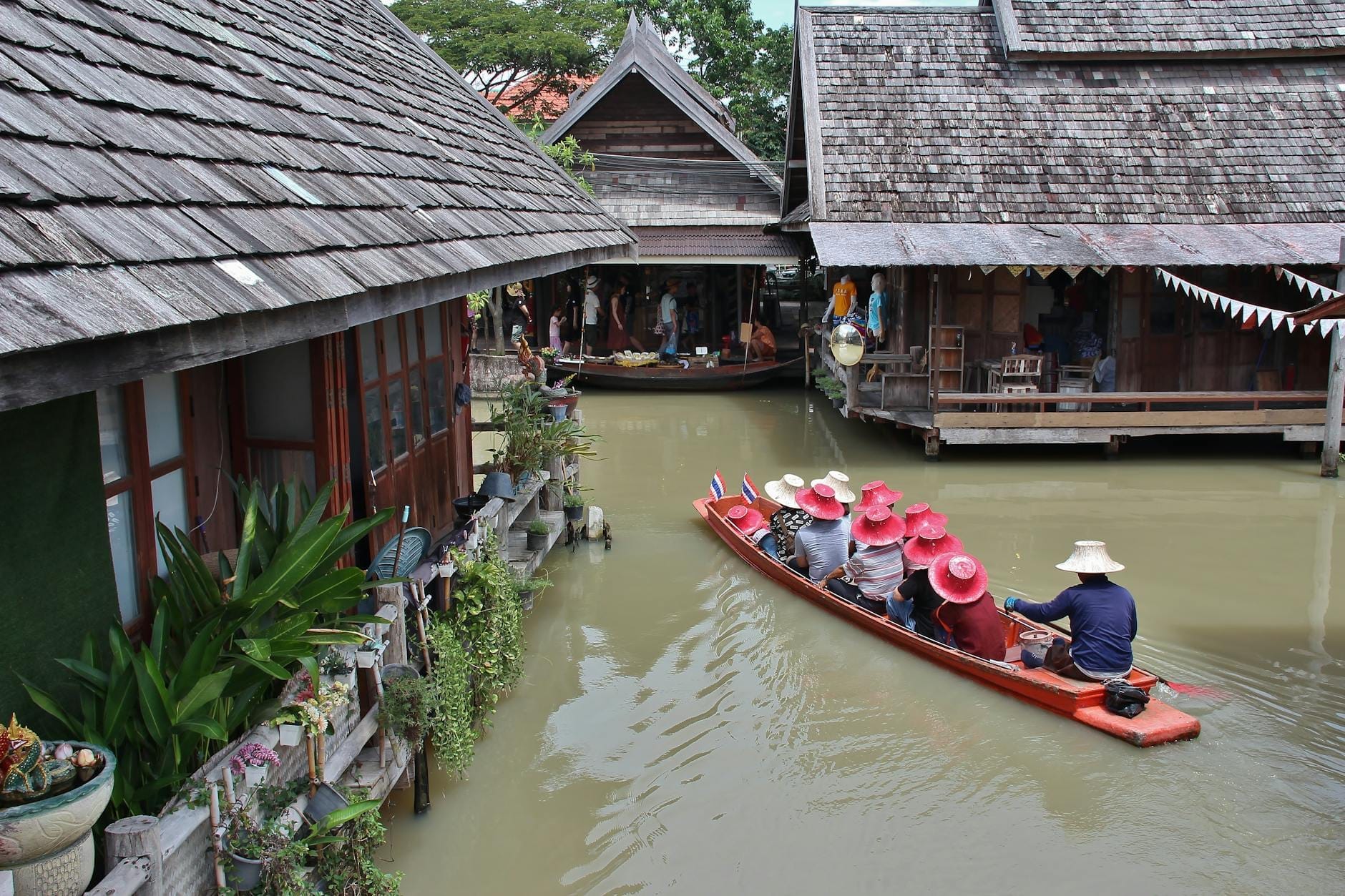
The Four Regions Floating Market — known in Thai as ตลาดน้ำ 4 ภาค — opened to the public in 2008 and is the largest artificial floating market in Thailand. It covers roughly 100,000 square meters and is organized around a network of canals, piers, and wooden walkways, with over 100 vendors selling food, handicrafts, and souvenirs from Thailand's four main geographic regions: North, Northeast, Central, and South.
Unlike Bangkok's Damnoen Saduak or Amphawa, this market was designed from the ground up for visitors rather than for local commerce. That's worth knowing before you arrive. The stilt houses, painted boats, and costumed vendors are curated and theatrical. What you get in return is a clean, navigable experience that genuinely covers Thai regional cuisine and craft traditions in one compact space — something you'd need multiple trips across Thailand to replicate organically.
ℹ️ Good to know
Opening hours: Daily 9:00 AM to 8:00 PM (some sources indicate until 7:00 PM). Arrive by 10:00 AM for the lightest crowds and the best food selection before vendors sell out of popular dishes.
Navigating the Four Zones
The market is divided into four distinct sections, each mimicking the architectural style and food culture of its corresponding region. The Northern zone tends to feature lacquerware and hill tribe crafts, and dishes like khao soi (curry noodle soup) and sai ua (Northern Thai sausage). The Northeastern section brings out somtam, grilled meats, and sticky rice served in the style of Isaan. Central Thailand's zone covers Bangkok-style street food staples, and the Southern section leans into seafood curries and the brighter, spicier flavor profiles of the Gulf and Andaman coasts.
Each zone is connected by elevated wooden walkways that run along the canals. The walkways are relatively wide and well-maintained, though some sections have minor unevenness underfoot from timber expansion in the heat. Wear flat, closed shoes or sandals with grip — flip-flops work but can catch on raised planks, especially after light rain.
Boat rides are available for an extra charge and take you through the canals while vendors paddle alongside offering snacks and drinks. The experience is gentle and slow-moving, well-suited to young children or anyone who wants to rest their feet midway through the visit. Prices for boat rides are set at the pier and tend to be reasonable, but confirm the exact fare before boarding.
Tickets & tours
Hand-picked options from our booking partner. Prices are indicative; availability and final rates are confirmed when you complete your booking.
Tuktuk Tour in Koh Sichang Island from Pattaya
From 106 €Instant confirmationFree cancellationIntroductory Group Muay Thai Boxing Lesson for Beginners in Pattaya
From 26 €Instant confirmationFree cancellationKoh Samet Island Self-Guided Tour from Pattaya
From 95 €Instant confirmationFree cancellationIntroductory private Muay Thai boxing lesson for beginners in Pattaya
From 79 €Instant confirmationFree cancellation
How the Atmosphere Changes Through the Day
Early morning arrivals, around 9:00 to 10:30 AM, find the market quietest. Vendors are setting up and the light over the canals is soft, making it the best window for photography. The smell of charcoal grills warming up mixes with the faint sweetness of sticky rice cooking in banana leaves — sensory details that disappear once the crowd noise picks up.
By midday, tour groups arrive in waves, primarily from Pattaya's resort strip and from group tour buses. The wooden walkways narrow psychologically as foot traffic increases, and popular food stalls develop queues. If you're visiting between 11:00 AM and 2:00 PM, prioritize food first before shopping, since crowd flow can make it harder to pause at stalls later.
Late afternoon, from around 4:00 PM onward, brings a second quiet window as coach tours depart and the light turns golden over the water. Some vendors begin packing up early, so food selection decreases, but the ambiance is noticeably more relaxed. This slot works well if you're combining the visit with dinner nearby in East Pattaya before heading back to the beach area.
💡 Local tip
Photography tip: Shoot toward the canal from the elevated walkways in the morning for reflections without glare. By afternoon, shoot from water level on the boat rides to capture vendors and stilt structures from a different angle.
Food: The Real Reason to Come
The food at the Four Regions Floating Market is the strongest argument for visiting. Across the four zones, you'll find dishes that are harder to track down on Pattaya's main tourist strip: proper pad see ew made to order, Southern-style massaman curry with visible layers of fat and spice, Isaan-style larb with toasted rice powder, and Northern Thai naem (fermented pork) served with fresh ginger and peanuts.
Most dishes are priced in small portions designed for grazing — a format that lets you eat across regions without committing to a full plate at one stall. Bring cash in small denominations (Thai Baht). While some vendors accept QR code payments, not all do, and ATMs inside the market are limited.
The market also sells packaged Thai snacks, dried fruits, and regional condiments that make practical souvenirs. If you're planning a broader culinary exploration of Pattaya, the Pattaya dining guide covers the full range of options across the city's neighborhoods.
Shopping and Crafts: What's Worth Buying
Beyond food, the market's shops carry a broad range of Thai handicrafts: hand-woven textiles from the North, celadon ceramics, traditional Thai puppets, silverware, and carved wooden items. Quality varies significantly from stall to stall. The better craft vendors tend to be positioned toward the interior sections of each zone rather than along the main walkway entrances, where more generic souvenir items dominate.
Bargaining is expected and generally good-natured. Start at roughly 60-70% of the asking price and settle somewhere in between. Vendors here are accustomed to international visitors and most have basic English for transaction purposes.
For context on how this market compares to other shopping experiences in the area, the Pattaya Night Bazaar and Terminal 21 Pattaya offer very different but complementary options if shopping is a priority during your trip.
Getting There and Practical Logistics
The market sits at 451/304 Moo 12 on Sukhumvit Road in the Nong Prue subdistrict of East Pattaya. From the main Pattaya Beach strip, the drive takes 15 to 20 minutes by taxi or Grab. Songthaews — the shared red pickup trucks that serve as Pattaya's main public transit — can get you close, but the final stretch may require a short motorbike taxi or walk. For groups or families with children, a direct taxi or Grab booking is the more practical choice.
Parking is available on-site for those arriving by private car or motorbike, which is worth noting if you're renting a vehicle during your stay. For an overview of how transport works across the city, the guide to getting around Pattaya is a useful reference before planning routes.
Accessibility across the market is reasonable for most visitors. The wooden walkway system covers the majority of the grounds, but the uneven surface and occasional steps between sections make it difficult for wheelchair users and can be slow going with a stroller. There are no elevators or ramp alternatives on the boat boarding areas.
⚠️ What to skip
Wear comfortable, grip-soled shoes. The wooden walkways can become slippery in light rain, and the canal edges in some sections have low or no railings.
Honest Assessment: Who This Is and Isn't For
The Pattaya Floating Market is not an authentic working market in the historical sense. It was purpose-built for tourism, and that shows in the uniformity of the zones and the theatrical presentation of some vendors. Travelers looking for an unscripted, off-the-beaten-track experience will likely find it feels staged. That said, staged doesn't mean bad. The food is real, the crafts are genuine, and the canal setting is photogenic in a way that photographs well without being dishonest.
For first-time visitors to Thailand who won't be traveling to Chiang Mai, the Northeast, or the deep South, this market offers a practical cultural overview in a single afternoon. For families with children, the boat rides, open layout, and variety of food formats make it one of the more manageable cultural stops in Pattaya.
Travelers who've already spent time in Thailand's regional markets, or who are looking for nighttime atmosphere, would be better served by the Pattaya Park Night Market or by planning a day trip to see attractions like the Nong Nooch Tropical Garden, which offers deeper engagement with Thai botanical and cultural heritage.
Insider Tips
- Arrive within the first hour of opening (9:00-10:00 AM) if food is your main reason for visiting. Some smaller stalls sell out of specialty regional dishes by early afternoon and don't restock.
- The boat ride is most rewarding when the canal is quieter, so book it as soon as you arrive rather than leaving it for the end of your visit when queues build up.
- Each zone has a small performance stage that may host traditional music or dance demonstrations at irregular intervals. There's no fixed schedule posted at the entrance, so ask a vendor in the zone you're in whether a show is coming up.
- The market's interior sections often have better-quality craft items than the stalls near the main entrance. Walk through the full depth of each zone before buying anything.
- Small Thai Baht bills are essential. Break any large notes at a 7-Eleven near your hotel before arriving, as vendors may struggle to give change for 500 or 1,000 THB notes early in the day.
Who Is Pattaya Floating Market (Four Regions) For?
- First-time visitors to Thailand wanting a regional food and culture overview in a single stop
- Families with children aged 4 and up who will enjoy the boat rides and open-air format
- Food-focused travelers interested in tasting dishes from multiple Thai regional cuisines side by side
- Photographers looking for canal reflections, colorful market boats, and traditional Thai architectural details
- Shoppers seeking Thai handicrafts and packaged food souvenirs with room to negotiate on price
Nearby Attractions
Other things to see while in East Pattaya & Surroundings:
- Buddha Mountain (Khao Chi Chan)
Khao Chi Chan, known informally as Buddha Mountain, is one of Thailand's most striking religious landmarks: a massive Buddha image laser-carved into a natural limestone cliff and inlaid with 999 kilograms of gold leaf. Located about 20 kilometers south of central Pattaya, it sits within a beautifully maintained garden complex that feels worlds away from the city's noise. Entry is free.
- Columbia Pictures Aquaverse
Columbia Pictures Aquaverse is Southeast Asia's first major Hollywood studio-branded water and theme park, opened in 2022 on the Gulf of Thailand coastline south of Pattaya. Spanning 14 acres, it blends film IP attractions with water rides and live shows, making it one of the more ambitious family entertainment projects in the region.
- Elephant Jungle Sanctuary Pattaya
Elephant Jungle Sanctuary Pattaya offers half-day small-group tours deep in the jungle near Sattahip, where rescued elephants roam freely and visitors interact through feeding, mud baths, and guided observation. It is one of the few elephant experiences near Pattaya that operates on a no-riding, no-performance philosophy.
- Gems Gallery Pattaya
Gems Gallery Pattaya is a sprawling 3.8-acre jewelry showroom and retail complex offering free entry, multi-language staff, and a dedicated Dark Ride experience. Whether you're a serious buyer or just curious, here's an honest look at what the attraction actually delivers.