Mount Dora Historic Downtown: A Complete Guide to Florida's Favorite Small-Town Escape
Mount Dora Historic District is a 210-acre National Register landscape of brick streets, Victorian storefronts, and lakeside charm, about 45 minutes northwest of Orlando. Free to enter and walkable in a half-day, it rewards visitors with antique shops, local cafes, and a genuine sense of a Florida that predates the theme parks.
Quick Facts
- Location
- Mount Dora, Lake County, FL 32757 — approx. 45 min northwest of Orlando via US-441
- Getting There
- Car is the practical option; limited public transit from Orlando. Parking available throughout downtown — check the City of Mount Dora website for current lots.
- Time Needed
- 2–4 hours for a relaxed walk; a full day if you add the museum, a boat tour, and lunch
- Cost
- Free to enter and walk the district; individual shops, restaurants, and museums charge separately
- Best for
- Antique hunters, architecture lovers, day-trippers from Orlando, couples, and slow-travel enthusiasts
- Official website
- www.mountdora.gov
What Is Mount Dora Historic Downtown?
The Mount Dora Historic District is a federally recognized National Register landscape encompassing approximately 210 acres across 62 city blocks, with 711 recorded resources — 565 of which are classified as contributing historic structures. That is not boilerplate: it means you are walking through one of Florida's most intact small-town commercial and residential streetscapes, shaped by a period of significance the National Park Service dates from roughly 1877 to 1959.
The city itself sits on the northeast shore of Lake Dora in Lake County, about 45 minutes northwest of Orlando by car. The town plan was laid out in 1884, and the downtown developed through the late 19th and early 20th centuries as a railroad stop and citrus distribution hub. You can still read that history in the low-rise commercial blocks on Donnelly Street, the Victorian cottages on the side streets, and the old rail-era proportions of the storefronts.
ℹ️ Good to know
No tickets, no gates. The Mount Dora Historic District is open to the public at all times. What varies is what's open inside — individual shops, restaurants, and the Mount Dora Historical Museum each set their own hours, so check ahead if a specific venue matters to your visit.
The Street-Level Experience: What You'll Actually See
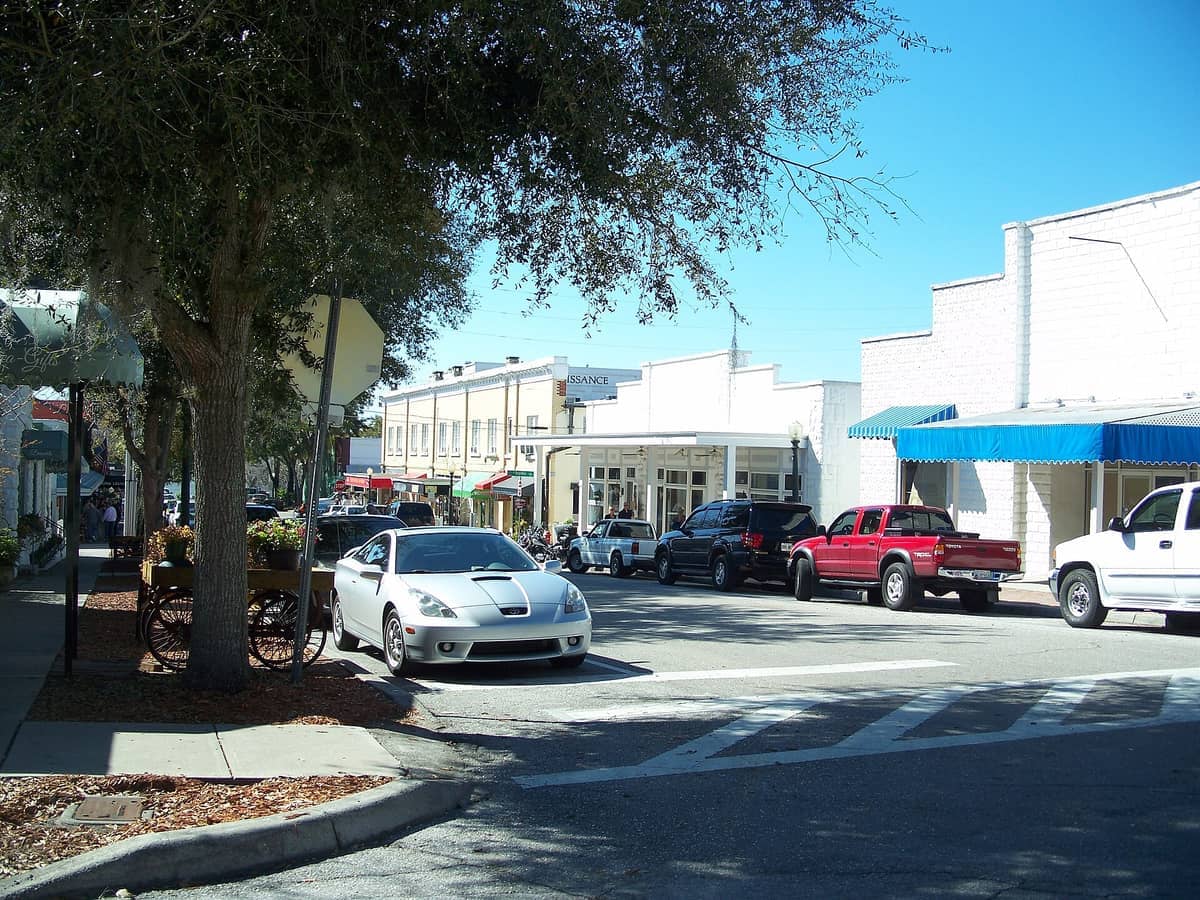
Start at the intersection of Donnelly Street and Fifth Avenue and you will immediately understand why this place draws visitors from across Central Florida. The streets are narrow by modern standards, lined with two- and three-story brick commercial buildings whose ground floors have been continuously occupied by retail businesses for over a century. The scale feels almost deliberately human: storefronts are wide enough for a full window display but not so wide they lose personality.
Antique dealers are the backbone of the retail scene here, and they're the real thing: multi-room shops packed with American furniture, vintage glassware, Florida memorabilia, and the occasional serious find. Alongside them you'll find independent galleries, clothing boutiques, candlemakers, wine bars, and the kind of lunch spots that prioritize a good sandwich over Instagram presentation. There's no single chain restaurant on the main block — a genuine rarity in Central Florida.
The residential streets one or two blocks off the commercial core are worth exploring. Craftsman bungalows and Victorian cottages sit behind generous front porches, many with original woodwork details. This isn't a museum neighborhood — people live here — so the pace changes noticeably once you step off Donnelly.
💡 Local tip
Photography tip: The warm late-afternoon light hits the west-facing brick facades on Donnelly Street particularly well between about 3:00 and 5:00 PM. Morning light works better for the lakefront and the residential streets to the east.
Tickets & tours
Hand-picked options from our booking partner. Prices are indicative; availability and final rates are confirmed when you complete your booking.
Pirates Cove Adventure Mini Golf
From 18 €Instant confirmationFree cancellationWild Florida 1-hour airbot adventure with transportation
From 107 €Instant confirmationFree cancellationKids Eat Free Card Orlando
From 28 €Instant confirmationFree cancellationManatees swimming and snorkelling experience by boat from Orlando
From 85 €Instant confirmationFree cancellation
How the Experience Changes by Time of Day
Early mornings — before 10:00 AM on weekdays — belong to the town itself. You'll see locals walking dogs, bakeries setting out their morning cases, and shop owners unlocking doors. The streets are quiet enough that you can hear the birds over Lake Dora. This is the best window for appreciating the architecture without navigating foot traffic.
Midday on weekends is the opposite. Mount Dora draws a steady stream of day-trippers from Orlando and the surrounding suburbs, and by noon on a Saturday the main commercial blocks are properly busy. This is when the antique shops hum, outdoor seating fills up, and parking lots near Donnelly Street can reach capacity. If you're coming on a weekend, arrive before 10:00 AM or after 3:00 PM to avoid the thickest crowds.
During festival seasons the calculus changes entirely. Mount Dora hosts a well-known annual antique fair (typically in February), an arts festival, and various holiday events that draw substantial crowds and require advance planning for parking. These events also bring vendors and exhibits that make the district feel different from a normal visit — worth timing around if that's your thing, but worth avoiding if you came for quiet exploration.
Historical and Cultural Context
Mount Dora's founding in the late 1870s and early 1880s coincided with Florida's first major wave of northern settlement and investment. The arrival of the railroad in Lake County connected towns like Mount Dora to national markets, and citrus became the economic engine. The downtown district you walk through today was largely built on that citrus economy: the packing houses are gone, but the commercial blocks that served growers, shippers, and seasonal workers remain.
The Mount Dora Historical Museum, operated by the Mount Dora Historical Society, occupies the town’s historic former city jail near downtown, while the old 1915 Atlantic Coast Line Railroad depot at the south end of the district now serves other civic functions. It is one of the few surviving depots of its type in Lake County and provides direct material context for the town's rail-era identity through exhibits and historic interpretation. Admission is charged separately from the district itself; verify current hours directly with the museum before visiting.
The town's relationship with the lake is also historically significant. Lake Dora connects through a chain of lakes to the broader Central Florida waterway system, which historically supported fishing, commerce, and recreation. Today the scenic boat tour tradition that visitors know from Winter Park has a parallel here: boat tours on Lake Dora offer a perspective on the town that you cannot get from the streets.
Getting There and Getting Around
Mount Dora sits about 45 minutes northwest of Orlando via US-441 North, passing through Apopka. The drive is straightforward and the approach along US-441 gives you a sense of how quickly the suburban sprawl of the Orlando metro gives way to lake-country Florida. There is no practical public transit connection from Orlando to Mount Dora, so a car is the realistic option for most visitors.
Downtown parking is managed by the city and includes both metered street spots and public lots. On a quiet weekday this is a non-issue. On festival weekends it becomes the most stressful part of the visit. The city provides current parking information on its official website, and checking ahead on busy event days is worth the two minutes it takes.
Once you're in the district, everything is walkable. The main commercial area on Donnelly Street and the surrounding blocks are compact enough that you can cover the core in under an hour, or spend half a day moving slowly between shops. Comfortable flat shoes are fine — the streets are mostly level, with brick paving on some blocks that can be uneven.
If you're planning a broader day trip from Orlando, Mount Dora pairs naturally with a visit to Bok Tower Gardens in Lake Wales, which is roughly an hour south, or with a stop at Wekiwa Springs State Park on the way back toward Orlando.
Accessibility and Practical Notes
The public streets and sidewalks in the historic district are maintained by the city, but this is a 19th-century street grid and surface conditions vary. Brick-paved sections can be uneven, and some older commercial buildings have step-entry storefronts without ramps. The city provides accessible parking, and the main commercial blocks are generally manageable, but visitors with mobility considerations should verify access with specific venues before visiting. Individual buildings are privately owned and accessibility provisions differ property by property.
Florida heat is a real factor from May through September. The brick streets and limited tree cover on the main commercial blocks retain heat in the afternoon. Plan outdoor walking for morning or evening during summer months, carry water, and note that many of the shops are air-conditioned if you need a break.
⚠️ What to skip
Summer weather reality: Mount Dora's open-air downtown can be genuinely uncomfortable between noon and 3:00 PM in July and August. Afternoon thunderstorms are also common during summer. If you're visiting in peak summer, prioritize morning arrival and have an indoor backup plan.
Is Mount Dora Worth the Trip from Orlando?
Honestly, this depends entirely on what you're after. If you've spent your Orlando trip inside theme parks and want a day that feels nothing like them, Mount Dora delivers that contrast effectively. The scale is different, the pace is different, and the commercial character — independent shops, local restaurants, genuine history — is the opposite of the controlled-experience model of Central Florida's major attractions.
If you're looking to understand what Florida looked like before the interstate era and the resort economy, the Mount Dora Historic District is one of the best surviving examples in the region. It's more cohesive than many small-town main streets and more authentically commercial than destinations that have been converted entirely into tourist infrastructure. For more ideas on seeing the less-obvious side of the region, the Orlando hidden gems guide covers several destinations in this vein.
Who might not enjoy it: visitors with very young children who need structured activities or rides will find limited purpose-built family entertainment here. Travelers on a tight theme-park-focused schedule will feel the 45-minute drive each way as a significant commitment. And anyone hoping for waterfront dining on Lake Dora should verify restaurant access to the lakefront before making the trip a centerpiece of their day.
For travelers planning their broader Central Florida itinerary, the day trips from Orlando guide puts Mount Dora in context alongside other worthwhile drives from the city.
Insider Tips
- The second Saturday of many months sees extended shopping hours and occasional special events in the district. Check the City of Mount Dora events calendar before you go rather than assuming standard retail hours apply.
- Parking near the lakefront at Grantham Point gives you a scenic arrival and a short walk into the commercial district — often less congested than the lots directly behind Donnelly Street on busy weekends.
- The side streets north and west of the main commercial blocks have the best residential architecture. Donnelly Street north of Fifth Avenue has a different character from the retail core and is worth a five-minute detour.
- Most antique dealers in the district are open Thursday through Sunday and have reduced hours or close on Monday and Tuesday. If antiques are your primary goal, avoid a Monday visit.
- Mount Dora's annual antique fair in February is one of the largest in the Southeast and draws enormous crowds. If you want to browse seriously, arrive at opening time on the first day. If you want a relaxed visit to the town itself, come any other week.
Who Is Mount Dora Historic Downtown For?
- Day-trippers from Orlando seeking a break from theme park culture
- Antique collectors and vintage shoppers
- Architecture and historic preservation enthusiasts
- Couples looking for a low-key, walkable afternoon
- Slow travelers who want to experience pre-resort-era Florida
Nearby Attractions
Combine your visit with:
- Blue Spring State Park
Blue Spring State Park in Orange City, Florida, is one of the state's most ecologically significant natural areas, drawing visitors year-round for manatee watching, swimming, tubing, and hiking. Located about 45 minutes from Orlando, it offers a genuine encounter with Florida's natural heritage that no theme park can replicate.
- Bok Tower Gardens
Bok Tower Gardens is a National Historic Landmark near Lake Wales, Florida, where a 205-foot Gothic and Art Deco carillon tower rises above one of the highest points on the Florida peninsula. Open since 1929, the sanctuary offers 250 acres of landscaped gardens, ancient oaks, and twice-daily bell concerts that carry across the surrounding pine scrub. It is one of the most genuinely peaceful places within day-trip distance of Orlando.
- Busch Gardens Tampa Bay
Busch Gardens Tampa Bay combines some of Florida's most intense roller coasters with one of North America's largest zoological collections. Located in north Tampa, it sits about 84 miles southwest of Orlando, making it a serious but rewarding day trip from the theme park capital of the world.
- Cocoa Beach
Cocoa Beach is Orlando's most accessible Atlantic beach, roughly an hour east on the Space Coast. It combines classic Florida surf culture with genuine rocket-launch proximity, free beach access, and a relaxed pace that stands apart from theme park crowds.