Lake Monger (Galup): Perth's Urban Wetland Worth a Morning
Lake Monger, officially renamed Galup in 2025, is a 70-hectare freshwater lake reserve in Wembley. Free to visit and open every day, it draws walkers, joggers, and birdwatchers looking for a genuine natural pause close to the Perth city centre.
Quick Facts
- Location
- Wembley, Perth WA (alongside the Mitchell Freeway)
- Getting There
- Check current Transperth routes to Wembley before travel; verify with the Transperth journey planner
- Time Needed
- 45 minutes to 2 hours depending on pace and birdwatching interest
- Cost
- Free entry
- Best for
- Birdwatchers, early-morning walkers, families with young children
- Official website
- www.cambridge.wa.gov.au
What Is Lake Monger (Galup) and Why Does It Matter?
Lake Monger, known by its Whadjuk Noongar name Galup, sits in the suburb of Wembley roughly four kilometres northwest of the Perth CBD. In 2025, the Geographic Names Committee endorsed the reinstatement of Galup as the lake's official name, recognising the deep connection the Whadjuk Noongar people have with this place long before European settlement. The English name Lake Monger remains widely used and traces back to 1831, when the lake was first recorded as Monger's Lake; the name was changed to Lake Monger in April 1932.
The reserve covers about 70 hectares in total, making it one of the larger freshwater wetlands accessible within Perth's urban footprint. For a city that pushes hard against the Indian Ocean on one side and dry bushland on the other, this kind of wetland habitat is genuinely uncommon. The lake functions as a working ecological system, not a manicured park pond, and that distinction shows in the variety of waterbirds that make use of it year-round.
ℹ️ Good to know
The lake's official name is now Galup. The English name Lake Monger remains widely used. When searching for it online or in map apps, either name should return the correct result, but verify with a current map source before navigating.
The Circuit Walk: What You Actually See
A sealed path runs around the perimeter of the lake, giving walkers and joggers a circuit that takes most people between 45 minutes and an hour at a relaxed pace. The path is wide enough to accommodate prams and bikes alongside pedestrians, though the mix of users means you should expect to share the space, particularly on weekend mornings.
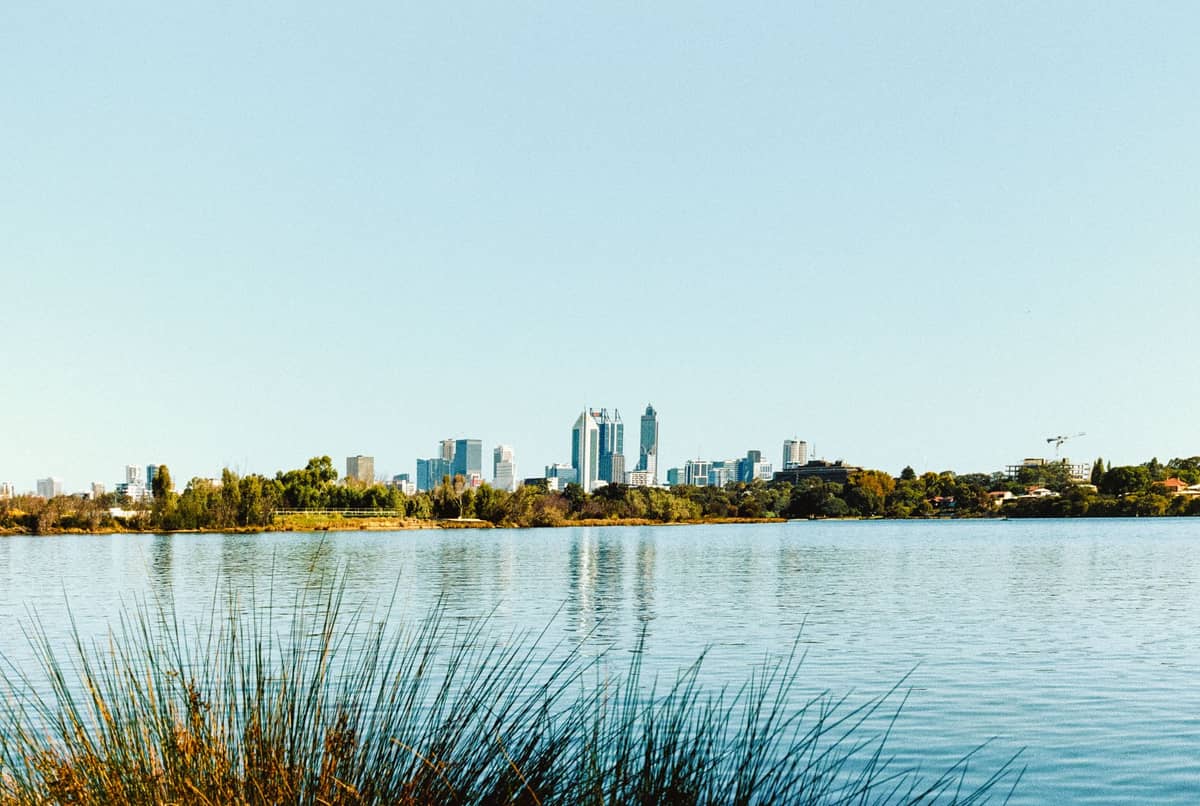
The western edge of the lake runs close to the Mitchell Freeway, and the sound of passing traffic is noticeable there. It is an honest urban reality: this is a reserve inside a metropolitan area, not a wilderness retreat. The eastern and northern sections of the circuit feel quieter, where vegetation buffers some of the road noise and the water extends openly in front of you. On still mornings, the surface reflects the sky with reasonable clarity, and the light between roughly 7am and 9am hits the water at an angle that makes the birdlife easy to observe.
Reeds and sedges fringe much of the shoreline, creating shallow-water habitat that supports wading birds. Look closely at the reed edges rather than the open water if you want to spot the more secretive species. The water itself has a greenish tint from algal growth in warmer months, which is a natural feature of shallow urban wetlands in Perth's Mediterranean climate.
Tickets & tours
Live prices and dates from our booking partner. If you book, we may earn a commission at no extra cost to you.
The Bell Tower chiming experience
From 11 €Instant confirmationFree cancellationPinnacles and Swan Valley Full-day Guided Tour
From 201 €Instant confirmationFree cancellationPerth and Fremantle Guided Tour and Swan River Cruise
From 110 €Instant confirmationFree cancellationPerth and Fremantle Tour in German with Hotel Pickup
From 84 €Instant confirmationFree cancellation
Birdwatching at Galup: What to Expect by Season
The lake's primary draw for a significant portion of its visitors is birdlife, and it delivers consistently. Black swans are the most immediately visible species, present year-round in numbers that are sometimes surprisingly large. Seeing twenty or thirty black swans on the water at once is not unusual. The species is the official bird emblem of Western Australia, so there is a certain aptness to encountering them this close to the city centre.
Beyond swans, the lake supports a broad range of waterbirds including various duck species, Australian pelicans, cormorants, herons, coots, and grebes. Waders appear along the shallower margins. The diversity tends to peak in the cooler months of April through September, when migratory and nomadic waterbirds move through the Perth region in higher numbers. Summer visits are still worthwhile, but expect smaller tallies and the added heat of a Perth summer, where maximum temperatures commonly reach 31 to 32 degrees Celsius in January and February.
💡 Local tip
Arrive before 8am for the best birdwatching conditions. Light is softer, foot traffic is lower, and waterbirds tend to feed and move more actively in the early hours before the lakeside fills with joggers and cyclists.
Historical and Cultural Context
The Whadjuk Noongar people are the traditional custodians of the land on which Galup sits. The lake and the broader wetland system of the Swan Coastal Plain were integral to Noongar life long before European arrival, providing food, water, and significant cultural connections to Country. The 2025 reinstatement of the name Galup is part of a broader pattern in Perth of returning Indigenous place names to prominence alongside their English counterparts.
The lake's more recent history includes the 1932 to 1933 dredging project that reshaped its southern edge and reduced its overall area. That intervention was typical of mid-twentieth-century urban water management, prioritising land reclamation over ecological preservation. Today the Town of Cambridge, the local council responsible for the reserve, manages the lake under a long-term plan that targets ecological restoration, improved water quality, and feral species control. The management approach reflects a shift in how Perth's urban wetlands are being treated: less as ornamental features, more as functioning ecosystems worth active investment.
For a broader sense of Perth's relationship with its natural areas, the Perth hiking guide covers walking options across the metropolitan region, including reserves with very different characters to Galup's flat lakeside circuit.
When to Go and What the Experience Is Like at Different Times
Early weekday mornings from April through October represent the optimum visiting window. Temperatures are comfortable, typically between 12 and 22 degrees Celsius depending on the month, the birdlife is active, and the lake has a quietness that weekend mornings can't match. By 9am on a Saturday, the circuit path carries a steady stream of joggers, dog walkers, and families, which shifts the atmosphere noticeably.
Midday visits in summer require heat preparation. Perth's summer temperatures combined with limited shade along parts of the circuit make the middle of the day uncomfortable and potentially risky without adequate water and sun protection. A hat, sunscreen, and a full water bottle are not optional additions in December through February. Sunrise and sunset visits in summer can be pleasant, with golden light over the water and lower temperatures, but verify the light conditions against the specific time of year before committing to a sunset walk.
Winter brings grey skies and occasional rain, but the lake takes on a different quality in wet conditions. Waterbird numbers are often at their highest, the surrounding vegetation looks its greenest, and the few visitors who do turn up tend to move purposefully rather than linger. A wet winter morning walk around Galup, properly dressed, is one of the less-crowded ways to experience the reserve.
⚠️ What to skip
Perth summers can be intense. The Bureau of Meteorology records mean maximum temperatures of around 31 to 32 degrees Celsius in January and February. The lakeside path has limited shade in some sections. If you visit in summer, start before 8am or wait until after 5pm.
Getting There and Practical Logistics
The reserve sits in Wembley alongside the Mitchell Freeway, which makes it straightforward to locate on a map but slightly awkward to access on foot without a clear starting point. Those driving will find parking along the surrounding streets; the available sources do not document a dedicated carpark, so allow time to find a spot on residential streets nearby. Transperth bus services connect Wembley to the Perth CBD and surrounding suburbs; check the current Transperth journey planner at transperth.wa.gov.au for routes and timetables, as service details can change.
If you are planning a day that combines the lake with other parts of the city, it sits at a manageable distance from the inner suburbs.Getting around Perth covers the transport options for navigating between suburban attractions efficiently.
No admission fee applies and no booking is required. The reserve has no set opening or closing hours documented in available sources, consistent with it being an open urban park. Toilets and basic facilities may be available within the reserve; verify current conditions locally before relying on them for a visit with young children.
Accessibility across the full circuit has not been formally documented in the sources available for this guide. The sealed path is likely manageable for prams and mobility aids on the flatter sections, but the full loop's accessibility should be confirmed with the Town of Cambridge or checked on-site before planning a visit around wheelchair access.
Is Lake Monger Worth Your Time?
For travellers whose Perth itinerary is built around beaches, the city centre, or day trips further afield, Lake Monger may not demand priority. It is not a spectacle in the sense of Kings Park's panoramic views or the Fremantle Markets' concentrated energy. What it offers is something quieter and more particular: a working urban wetland where the birdlife is genuinely impressive, the setting is authentic rather than curated, and the entry cost is zero.
Travellers with a half-morning to spare, particularly birdwatchers or anyone who finds a walk around water restorative, will find real value here. It pairs reasonably well with a visit to theKings Park Botanic Garden, which is a short drive south and offers a very different but complementary kind of natural experience. Those on a tight schedule with only two or three days in Perth should weigh it against the city's higher-intensity attractions first.
Families with young children tend to do well here: the flat path, the visible swans, and the open space make it an easy outing. ThePerth with kids guide includes further ideas for child-friendly natural spaces across the city.
People who actively dislike urban parks, expect wildlife reserve-level seclusion, or are visiting during a hot summer afternoon without early-morning flexibility will likely find the experience underwhelming. The freeway proximity and the residential context keep the atmosphere firmly urban, which is either part of the appeal or a dealbreaker depending on what you are looking for.
Insider Tips
- Bring binoculars even if you are not a dedicated birdwatcher. The variety of waterbirds at close range is one of the reserve's strongest assets, and many species are near enough to observe in detail without optical aids, but binoculars extend the experience considerably.
- The northern and eastern sections of the circuit are noticeably quieter than the western edge, which runs close to the Mitchell Freeway. If you want the most peaceful section of the walk, start from the eastern access point and go counterclockwise.
- April through September is reliably the best period for waterbird diversity. If you are visiting specifically to see the widest range of species, timing your trip to the cooler months will make a measurable difference.
- The lake's official name is now Galup. If you are discussing the site with locals, both names are understood and used interchangeably at present.
- The Town of Cambridge manages the reserve under an active ecological plan running to 2034. Restoration work may affect access to specific sections of the path at times; check the Town of Cambridge website for any current works before visiting.
Who Is Lake Monger For?
- Birdwatchers and wildlife photographers looking for accessible urban wetland habitat
- Joggers and walkers wanting a flat circuit with a natural setting close to the city
- Families with young children seeking an easy, free outdoor outing
- Travellers with a free morning who want something genuinely natural rather than touristy
- Anyone with an interest in Whadjuk Noongar cultural history and the ongoing restoration of Indigenous place names
Nearby Attractions
Combine your visit with:
- AQWA – The Aquarium of Western Australia
AQWA – The Aquarium of Western Australia at Hillarys Boat Harbour is the state's largest aquarium, built around a 98-metre underwater tunnel that replicates five distinct West Australian marine zones. It draws families, ocean enthusiasts, and travellers curious about the marine life that makes this coastline one of the most biodiverse in the Southern Hemisphere.
- Bold Park
Bold Park is a 437-hectare A-class nature reserve on Whadjuk Noongar Country, protecting some of the last intact coastal heath near central Perth. Free to enter and open daily, it offers walking trails, a panoramic hilltop lookout, and some of the richest concentrations of native wildflowers in the metropolitan area.
- City Beach
City Beach is a well-maintained stretch of Indian Ocean coastline about 12 kilometres from Perth's city centre. With patrolled swimming, solid amenities, and genuine surf, it draws a wide range of visitors without the commercial noise of some of Perth's busier coastal strips.
- Crown Perth
Crown Perth is Western Australia's largest integrated entertainment complex, sitting on the south bank of the Swan River in Burswood. From a 24-hour casino and three hotels to dozens of restaurants, bars and live event venues, it covers an enormous amount of ground — and rewards some planning before you arrive.
Planning a trip? Discover personalized activities with the Nomado app.