Fremantle Fishing Boat Harbour: Seafood, Working Boats, and Waterfront Life
Fremantle Fishing Boat Harbour is a working maritime precinct on Mews Road that doubles as one of Perth's most enjoyable spots to eat fish and chips by the water. Active trawlers, resident pelicans, and a string of seafood restaurants make it a practical and atmospheric stop when exploring Fremantle.
Quick Facts
- Location
- Mews Road, Fremantle, Western Australia
- Getting There
- Fremantle Train Station (approx. 10-min walk); Transperth buses serve the area
- Time Needed
- 1 to 2 hours for a casual visit; longer if dining
- Cost
- Free to enter and explore; paid parking applies in some areas
- Best for
- Fresh seafood, waterfront walks, family outings, maritime atmosphere
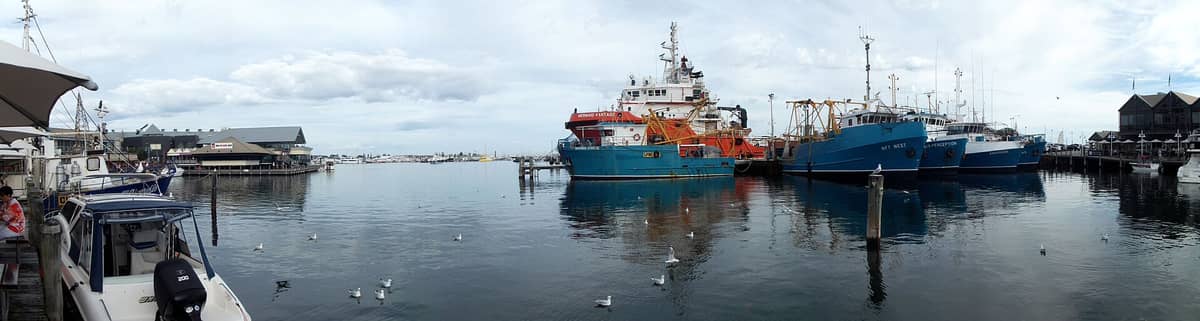
What the Fishing Boat Harbour Actually Is
Fremantle Fishing Boat Harbour is not a tourist marina dressed up to look busy. It is a fully operational commercial fishing precinct, home to the trawlers and cray boats that supply much of Western Australia's seafood catch. The harbour was officially proclaimed on 30 July 1924. A 300-metre breakwater had been constructed in 1919, and it has operated as a working port since its establishment. That working character is precisely what gives the place its texture: the smell of salt and diesel, the shriek of gulls over a moored boat, the stacked cray pots drying in the afternoon sun.
For visitors, the harbour sits at the southern edge of the Fremantle waterfront on Mews Road, coordinates 32.062°S, 115.742°E. It is a short walk from the main historic centre of Fremantle, which means it fits naturally into a broader afternoon in the port city rather than requiring a separate dedicated trip.
ℹ️ Good to know
There is no admission fee to walk the harbour precinct. Individual restaurants and takeaway stalls set their own hours and prices, so check directly with specific venues before visiting, especially on weekday mornings when some may open later.
How the Harbour Changes Through the Day
Arrive early in the morning and the harbour is purely a working place. Crew members move equipment, boats return from overnight runs, and the fish processing operations are active. There is little in the way of visitor atmosphere at this hour, but for anyone interested in commercial fishing, it is genuinely instructive to watch the machinery of the industry up close.
By late morning, the transition begins. The seafood restaurants along the harbour strip start preparing for the lunch crowd, outdoor tables are set up, and the pelicans, which are a near-permanent fixture here, position themselves strategically near the fish-and-chip outlets. These birds are large, confident, and completely habituated to people. They are part of the spectacle.
Midday to mid-afternoon is the peak period for visitors. Families take up the outdoor seating areas, children watch the boats, and queues form at the popular takeaway counters. The light over the water is strong and flat at this time, which makes it less rewarding for photography but perfectly comfortable for eating outside. By late afternoon, the light softens, the crowds thin slightly, and the harbour takes on a calmer quality that suits a longer, slower meal.
Tickets & tours
Live prices and dates from our booking partner. If you book, we may earn a commission at no extra cost to you.
Perth and Fremantle Guided Tour and Swan River Cruise
From 110 €Instant confirmationFree cancellationPerth and Fremantle Tour in German with Hotel Pickup
From 84 €Instant confirmationFree cancellationPerth, Fremantle, Rottnest Island, and Swan River Guided Tour
From 166 €Instant confirmationFree cancellationPerth and Fremantle Guided Tour with Hotel Pickup
From 84 €Instant confirmationFree cancellation
The Seafood: What to Expect and What to Know
The harbour's primary draw for most visitors is its concentration of seafood restaurants and takeaway operations. Several well-established venues line the waterfront, most offering grilled and battered fish, prawns, calamari, and the Western Australian rock lobster (Panulirus cygnus) that is caught commercially from this port. Eating seafood at the Fishing Boat Harbour is not cheap by any measure, particularly for lobster, but the proximity to the source is genuine: Eating seafood at the Fishing Boat Harbour is not cheap by any measure, particularly for lobster, and the working harbour setting keeps fishing vessels close to the waterfront restaurants.
The classic Fremantle experience is a paper tray of fish and chips eaten at a waterside picnic table, ideally while defending it from pelicans. This is unpretentious and entirely satisfying. For a sit-down meal, the indoor restaurants offer a broader menu including barramundi, salmon, and seasonal shellfish, with wine lists that include Western Australian producers. Prices for a full sit-down seafood meal for two with drinks can be significant; check menus posted at entrances before committing.
💡 Local tip
If you are visiting on a weekend afternoon, expect queues at the most popular takeaway counters. Arriving before noon or after 2pm reduces wait times considerably. The outdoor picnic tables fill fast on sunny days, so plan accordingly if you want to eat outside.
Walking the Precinct: What You See
The walkable area of the harbour is compact enough to cover in 20 to 30 minutes at a gentle pace. The main strip of restaurants and shops faces the water, with a low promenade running alongside the moored vessels. You can see cray boats and trawlers up close, examine the nets and gear stacked dockside, and watch the pelicans work the area with impressive persistence. The boats themselves, many weathered and heavily used, are more interesting to look at than anything in a museum diorama. For a broader sense of Fremantle's maritime history, theWA Maritime Museum is a short distance away on Victoria Quay and provides considerable historical depth to what you observe here.
The harbour connects loosely to the broader Fremantle waterfront, and it is reasonable to combine a visit here with a walk toward Bathers Beach or through the historic town centre. The physical separation from the CBD-style retail of Fremantle's High Street gives the harbour a different quality: less polished, more functional, and arguably more honest as a representation of what Fremantle actually does.
Fremantle rewards visitors who take time to move between its distinct zones. The harbour, the heritage prison, the markets, and the arts district each have a different register. A well-pacedFremantle day trip can incorporate the harbour as a lunch stop without it needing to be the centrepiece of the visit.
Getting There and Parking
Fremantle Train Station is the most convenient public transport option, connecting directly to Perth CBD via the Fremantle Line on the Transperth network. From the station, the Fishing Boat Harbour is approximately a 10-minute walk south through the town centre, or slightly longer along the waterfront path. Check the Transperth journey planner for current timetables before travel, as service frequency varies by time of day and day of week.
For those arriving by car, the Department of Transport notes 273 free parking bays on Capo D'Orlando Drive for penholders, with additional paid parking managed by the City of Fremantle in the surrounding area. Parking in central Fremantle can be tight on weekends and during events, so arriving early or using public transport is the more reliable option.
⚠️ What to skip
Fremantle hosts regular markets, festivals, and events that can fill parking in the entire precinct. If visiting on a weekend, check the Fremantle events calendar in advance and allow extra time if driving.
Practical Considerations: Weather, Accessibility, and Limitations
Perth has a Mediterranean climate, which means the harbour is most comfortable to visit in spring (September to November) and autumn (March to May), when temperatures are moderate and the outdoor eating areas are genuinely pleasant. Summer visits, from December through February, require preparation: mean maximum temperatures in Perth run around 31 to 32°C in January and February, and the exposed waterfront offers limited shade. Bring water, apply sunscreen generously, and consider a visit in the early morning or late afternoon rather than the midday heat.
Winter visits from June to August are mild by most standards, with mean maximum temperatures around 18 to 20°C, but the harbour's outdoor character means rain affects the experience directly. Many of the eating areas are at least partially covered, but the atmosphere shifts when the weather closes in.
On accessibility: the harbour area has public toilets and parking, but the official sources do not specify step-free access routes or accessible toilet facilities in detail. The promenade surface is generally flat, but the working nature of parts of the precinct means some areas may be uneven. Visitors with mobility requirements should confirm current conditions with individual venues before visiting.
For those planning a longer time in the area, the Bathers Beachadjoins the harbour precinct and is one of the few beaches in Western Australia where alcohol can be consumed, adding to its popularity on warm afternoons. TheFremantle Markets on South Terrace are another natural pairing, particularly on Friday, Saturday, and Sunday when they are fully operational.
Who Should Reconsider Visiting
The Fishing Boat Harbour is worth your time if seafood, working maritime environments, or casual waterfront dining appeals to you. It is less compelling if none of those things interest you. As a standalone attraction divorced from eating or maritime observation, the precinct is relatively small and covers quickly. Visitors expecting a polished marina with curated retail and entertainment will find the raw, functional character of the harbour underwhelming. It is a working port first, a visitor destination second, and it does not try to disguise that order of priority.
Travellers with limited time in Fremantle should also be selective. The harbour competes for time with Fremantle's historic centre, which contains architecturally significant colonial-era buildings, the Fremantle Prison World Heritage site, and a strong cultural and arts scene. If you are choosing between them, the historic centre has broader appeal; the harbour is best treated as an addition rather than a replacement.
Insider Tips
- The pelicans at the harbour are effective thieves. Keep takeaway food covered and held close when walking, particularly near the water's edge where the birds gather in numbers.
- The late afternoon light, roughly from 4pm onward in summer, is the best time for photography at the harbour. The warm western light reflects well off the water and the boats, and the crowds thin enough to compose cleaner shots.
- Several of the restaurant menus change seasonally based on the catch. Western Australian rock lobster is most plentiful and relatively less expensive during the commercial season from mid-November to June, though prices are never low. Ask staff about what came in that week.
- If you want to watch the working side of the harbour rather than the restaurant strip, walk toward the northern end of the precinct early in the morning. The commercial operations are most visible before the lunch crowd arrives.
- Combining the harbour with the WA Maritime Museum on Victoria Quay gives you both the working present and the historical context of Fremantle's relationship with the sea. The museum is a short walk away and worth the additional time.
Who Is Fremantle Fishing Boat Harbour For?
- Seafood lovers who want to eat close to the source
- Families with children who enjoy watching boats and wildlife
- Visitors combining the harbour with a broader afternoon in Fremantle
- Photographers interested in working maritime scenes and natural light over water
- Travellers who prefer unpretentious, functional environments over curated tourist precincts
Nearby Attractions
Other things to see while in Fremantle:
- Bathers Beach
Tucked against Fremantle's heritage-listed West End, Bathers Beach is a 300-metre stretch of white sand where the Indian Ocean meets one of Australia's most storied port cities. Free to enter, easy to reach, and genuinely useful for a salt-aired half-day break — but it rewards those who understand its rhythms.
- Fremantle Arts Centre
Housed in one of Western Australia's most striking Gothic heritage buildings, Walyalup Fremantle Arts Centre is a working arts hub with free gallery admission, a courtyard café, craft studios, and a well-regarded live music program. It's a rare place where serious cultural programming meets an accessible, unhurried atmosphere.
- Fremantle Markets
Occupying a restored 1897 heritage hall in the heart of Fremantle, the Fremantle Markets run every Friday through Sunday with free entry. More than 170 stalls sell fresh produce, handmade crafts, street food, vintage clothing, and artisan goods under one ornate roof.
- Fremantle Prison
Fremantle Prison is one of Australia's most significant convict-era landmarks, a UNESCO World Heritage Site that operated as a place of incarceration for almost 140 years, closing in 1991. Whether you join the daytime cell-block tour or descend into the underground tunnels, the scale and weight of this place stays with you long after you leave.
Planning a trip? Discover personalized activities with the Nomado app.