Caversham Wildlife Park: Perth's Best Native Animal Experience
Caversham Wildlife Park sits inside Whiteman Park in the Swan Valley, about 18 kilometres northeast of Perth's CBD as the crow flies. It offers hands-on encounters with kangaroos, koalas, wombats, and dozens of other Australian native species. For families and first-time visitors wanting genuine contact with Australian wildlife, it ranks as one of the most accessible options in the greater Perth region.
Quick Facts
- Location
- 233 Drumpellier Drive, Whiteman WA 6068 (inside Whiteman Park Village)
- Getting There
- Train to Whiteman Park Station on the Ellenbrook Line, then walk or use the weekend shuttle; by car, park in Car Park 8. Check Transperth for current bus connections.
- Time Needed
- At least 3 hours; arrive before 2:00 p.m. to see everything
- Cost
- Adults A$39, Children (3–14) A$18. Confirm current prices before visiting; verify before visiting.
- Best for
- Families with children, international visitors seeking wildlife encounters, those new to Australian fauna
- Official website
- www.cavershamwildlife.com.au
What Caversham Wildlife Park Actually Is
Caversham Wildlife Park is a privately operated wildlife park located within the grounds of Whiteman Park, a large regional park about 18 kilometres northeast of Perth as the eagle flies. The park focuses almost entirely on Australian native animals, and its central appeal is straightforward: you can walk among free-roaming kangaroos, feed them by hand, and get genuinely close to species that most visitors to Australia only ever glimpse from a distance.
The animal collection includes kangaroos, wallabies, wombats, koalas, Tasmanian devils, dingoes, emus, reptiles, and a range of native birds. Unlike a conventional zoo with moated enclosures, significant sections of Caversham are walk-through, so the gap between visitor and animal is often nothing more than a handful of feed pellets.
The park sits within Swan Valley, Perth's wine and produce region. If you are planning a day in that direction, Caversham pairs well with a winery lunch or a stop at one of the valley's food producers. The drive from the Perth CBD takes roughly 30 to 35 minutes under normal conditions.
💡 Local tip
The park recommends allowing at least three hours to see and do everything. Last entry is at 3:30 p.m. and the park closes at 4:30 p.m. daily, except Christmas Day.
The Kangaroo Paddock: The Core Experience
The large free-roaming kangaroo area is the part of Caversham most visitors remember longest. Kangaroos and wallabies move freely around a grassy paddock, and you walk among them carrying a cup of feed. On a cool morning, the animals are active, alert, and curious. By midday, particularly in warmer months, many of them settle into long rest stretches, lying flat in the shade with the unhurried confidence of animals that have made peace with tourists.
A resting kangaroo stretched across a dirt path, indifferent to being photographed from half a metre away, is one of those small encounters that lands differently than a zoo exhibit. Children who have never seen an animal this size behave with this level of ease tend to go quiet for a moment. Adults do too.
Photography in the paddock is excellent in the first two hours after opening. The light is gentler, the animals are upright and moving, and the area has not yet accumulated its peak crowd. By late morning on school holidays or long weekends, the paddock becomes noticeably noisier and the animals retreat further into their resting state.
Tickets & tours
Live prices and dates from our booking partner. If you book, we may earn a commission at no extra cost to you.
The Bell Tower chiming experience
From 11 €Instant confirmationFree cancellationPinnacles and Swan Valley Full-day Guided Tour
From 201 €Instant confirmationFree cancellationPerth and Fremantle Guided Tour and Swan River Cruise
From 110 €Instant confirmationFree cancellationPerth and Fremantle Tour in German with Hotel Pickup
From 84 €Instant confirmationFree cancellation
Koala and Wombat Encounters
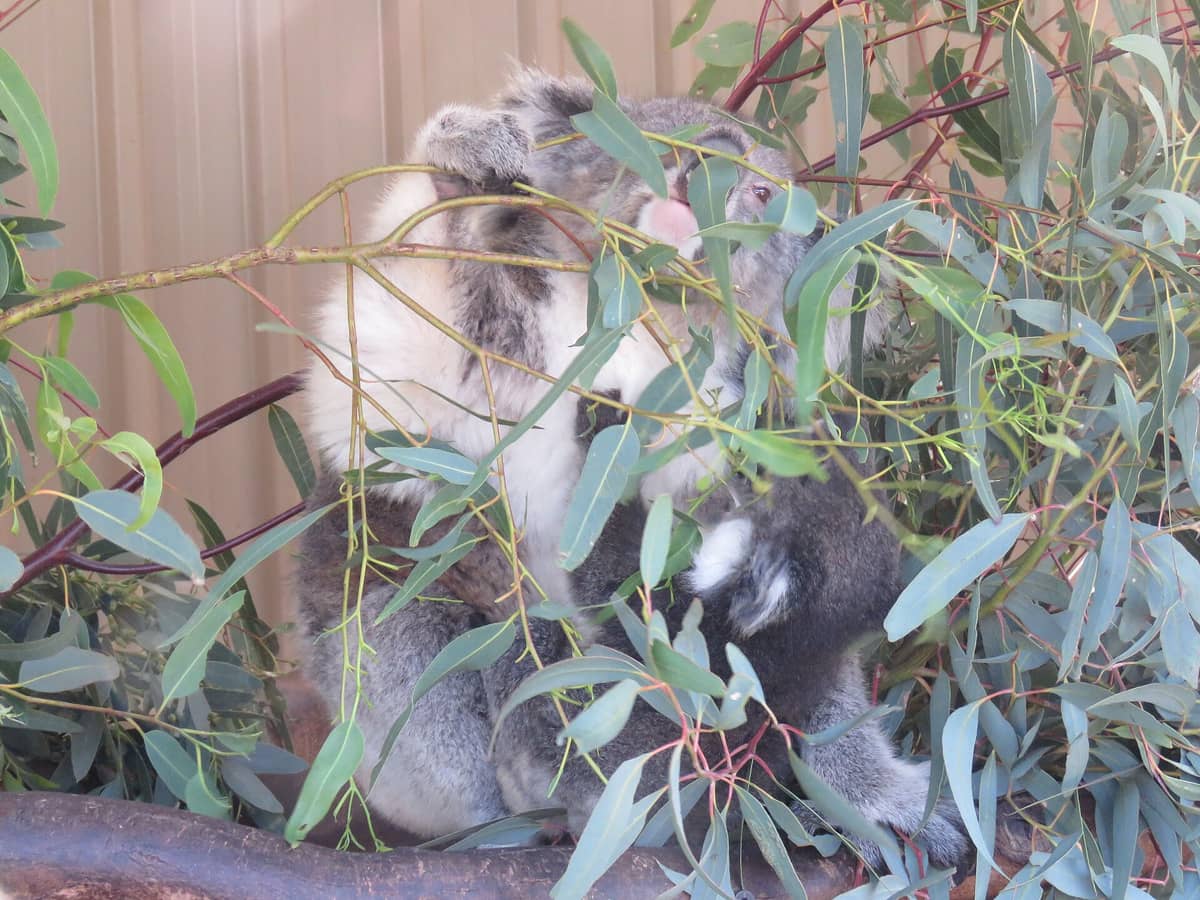
Caversham offers koala photo experiences and wombat encounters as scheduled sessions run by keepers. Queensland is the only Australian state where visitors can hold koalas routinely; in Western Australia, including at Caversham, limited koala holding sessions are available, alongside photo experiences. The experience is briefer than some visitors expect, but it is professionally managed and unhurried.
Wombats, which are rarely seen in the wild given their nocturnal habits, are one of the more surprising highlights for first-time visitors. They are heavy, solid, and surprisingly fast when they decide to move. Getting close to one in daylight, with a keeper present to explain their ecology, gives context that no nature documentary fully replicates.
ℹ️ Good to know
Keeper talks and animal encounter sessions run on a schedule. Check the daily program board at the entrance when you arrive, as session times can shift. Missing a Tasmanian devil talk or a wombat encounter because you did not check on arrival is one of the most common avoidable disappointments here.
Tasmanian Devils, Dingoes, and the Rest of the Collection
The Tasmanian devil enclosure draws consistent attention. These animals are threatened in the wild by a transmissible facial cancer that has severely reduced their population on Tasmania; captive facilities like Caversham play a role in broader conservation awareness even if they are not active breeding programs for every species on site. At feeding time, the sound a Tasmanian devil produces while eating is genuinely startling, which explains why early European settlers named them as they did.
The dingo exhibit gives visitors a chance to see Australia's native wild dog in a setting that makes clear how different it is from the domestic breeds it superficially resembles. Reptile sections include snakes and lizards, with keeper talks offering handling demonstrations. The bird section covers a range of parrots, cockatoos, and other native species, some of which occupy walk-through aviaries where the noise level rises sharply and unpredictably.
For visitors building a broader wildlife day, the Perth Zoo in South Perth covers a wider taxonomic range including international species, while Caversham's strength is depth of access to Australian native animals specifically.
Practical Walkthrough: Getting There and Moving Around
Caversham Wildlife Park is inside Whiteman Park's Village area. The address is 233 Drumpellier Drive, Whiteman WA 6068. Driving is by far the most practical option: use Car Park 8, which is the closest to the park entrance. Whiteman Park is a large site and the distance between car parks and individual attractions within it can catch visitors off guard if they park in the wrong area.
Public transport connections to Whiteman Park are available. The Ellenbrook Line serves Whiteman Park Station, and buses also stop at the station interchange. A weekend shuttle connects the station with the Village. Check the Transperth journey planner for current options; most independent visitors and families also arrive by car or arranged transport. Ride-hailing services operate from Perth but confirm availability for the return journey before you need it, as coverage in outer suburban areas can be inconsistent.
Paths within the park are described as wheelchair and pram accessible. Wheelchair hire is not available at the park, so bring your own if needed. Accessible toilets and baby-changing facilities are in two separate toilet blocks within the park. There is a cafe on site for light meals and drinks.
⚠️ What to skip
Perth summers are hot. Between December and February, midday temperatures can exceed 35°C. If you visit in summer, arrive early, bring water, wear sun protection, and plan to leave by early afternoon. The animals are also least active in peak heat, which reduces the quality of encounters.
Honest Assessment: What Works and What Doesn't
Caversham Wildlife Park does what it sets out to do well. For international visitors who want close contact with Australian native animals in a managed, safe, and professionally staffed environment, it is hard to fault the core offering. The kangaroo paddock in particular delivers an experience that most wild encounters in Australia cannot reliably replicate.
The admission price of A$39 per adult is not insubstantial for a half-day attraction, and some visitors, particularly those who have already visited similar facilities in Queensland or elsewhere in Australia, find it less revelatory than first-timers. The grounds are compact enough that you can cover the full park in under two hours if you are moving at a reasonable pace, which can feel brief relative to the cost.
Visitors primarily interested in landscape, history, or food should note that Caversham is a wildlife park, not a broader nature experience. For a walk through natural bushland,John Forrest National Parkin the Perth Hills offers a different kind of day entirely. And for a full Swan Valley outing that layers Caversham with food and wine, see theSwan Valley guide for itinerary suggestions.
Who should skip it: travellers who have visited several Australian wildlife parks already and are looking for novelty. Also, adults travelling without children who have no particular interest in animals will likely find the value proposition harder to justify at current ticket prices.
Getting the Most from Your Visit: Timing and Photography
Weekday mornings, particularly Tuesday through Thursday, offer the most relaxed experience. School groups arrive in waves on weekdays, but the park is large enough that you can avoid congestion by moving through sections at your own pace. Weekends during school holidays are the busiest periods; expect queues at popular encounter sessions and a louder, more chaotic atmosphere in the kangaroo paddock.
For photography, the soft light in the first ninety minutes after opening produces the best results. Animals are active, shadows are manageable, and the crowds have not yet arrived. A standard smartphone camera handles the kangaroo paddock well given the close distances involved. For enclosures with mesh or glass barriers, switch to portrait mode or get as close to the barrier as possible to reduce interference.
If you are building a family-focused day around Caversham, the wider Whiteman Parkgrounds offer tram rides, a motor museum, and woodland walking trails. The combination makes for a full day without returning to central Perth. ThePerth with kids guide covers additional family-friendly options across the city.
Insider Tips
- Check the daily schedule board at the entrance immediately on arrival. Keeper talks for Tasmanian devils, koalas, and wombats run at specific times and you cannot catch them if you miss the slot.
- Feed cups for the kangaroo paddock are included in admission. When your cup runs out, the kangaroos lose interest quickly. If you want extended interaction, move slowly and crouch down to make yourself less imposing.
- The reptile house is considerably cooler than the outdoor sections and makes a useful midday break if temperatures climb. It is also one of the least crowded areas in the park.
- Parking in Car Park 8 is critical. Whiteman Park is large and the walk from other car parks to the wildlife park entrance is significantly longer than most visitors anticipate.
- Autumn (March to May) offers a practical balance: temperatures are mild enough for comfortable outdoor movement, animals are active for longer in the day, and crowds are lighter than during school holidays.
Who Is Caversham Wildlife Park For?
- Families with children aged 3 to 12 who want hands-on animal experiences
- International visitors on a first trip to Australia seeking native wildlife encounters
- Visitors combining a day in Swan Valley with wineries or food producers
- Travellers with limited time who want a single, concentrated wildlife experience near Perth
- Anyone who wants to see a wombat or Tasmanian devil up close in a safe, well-managed setting
Nearby Attractions
Other things to see while in Swan Valley:
- Whiteman Park
Covering nearly 4,000 hectares on Perth's northeastern fringe, Whiteman Park delivers a rare combination of open bushland, wildlife encounters, heritage transport rides, and family-friendly attractions. General park entry is free, and the scale of the place genuinely surprises first-time visitors.
Planning a trip? Discover personalized activities with the Nomado app.